Naivete of the heart

IN EXILE
By Father Ron Rolheiser, OMI
Darkness is only bad because there is light. Sin can only happen if first there is love.

Karl Rahner makes a very insightful comment about the text in the Gospels where Jesus is being crucified and says of his executioners: “Forgive them Father for they know not what they do!”

Rahner suggests that they knew exactly what they were doing. They knew they were putting an innocent man to death, that they were shedding innocent blood. So why does Jesus say what he said?

What was their innocence? What was their naivete?

Rahner’s answer: They didn’t know what they were doing because they didn’t know how much they were loved. And that can make for a naivete of the heart. How so?
There’s a place inside us, a place of which we are rarely consciously aware, where each of us is being held unconditionally in love by God. The people who crucified Jesus didn’t know what they were doing because they weren’t aware of that. That was their blindness, their ignorance. Despite what it looks like on the surface, they didn’t know what they were doing.

This is also true for us. Far too often we crucify others and ourselves because of this ignorance: we don’t know how much we are loved. Consequently, we’re sometimes cruel in our judgments and prone to do things which compromise our dignity. We struggle not to be one of the executioners at the crucifixion because, at the end of the day, we are acting out of ignorance. We don’t know any better, like the naivete of the child who hurts herself in ignorance.

But this isn’t a new insight.

Theology has classically drawn a distinction between culpable and inculpable ignorance. The latter, also called invincible ignorance, was seen to excuse one from sin and responsibility. Hence, there was the teaching that you could do things that were wrong but not sinful because you were acting in ignorance. This was predicated on the belief that you could act morally and responsibly only if you actually knew what you were doing. To sin, you had to act “knowingly.” Granted, that’s a tricky caveat.

However, looking at our world today, I would risk saying that in a number of important moral matters, we are acting in invincible ignorance. Simply put, we don’t know any better. Only the type of ignorance that allowed sincere people to crucify Jesus can explain why we, good and sincere people, can be so massively blind, communally and individually, to the poor, to the economic and social demands made by our faith. The real reason we can live so comfortably as the gap between the rich and the poor widens is not because we are bad and without conscience, but rather, as Rahner says, we don’t know how much we are loved.

The same holds true for our attitude towards sex. We have been able to trivialize sex, split it off from the sacredness of marriage, and turn it into an extension of dating (or simply recreational sex) only because of a certain invincible ignorance. We don’t know any better, not because we lack conscience, but because we lack any real sense of the deep love of God and the dignity it gives us.
Like Jesus’ executioners, we have an astounding capacity to rationalize, trivialize and compensate precisely because we don’t know what we’re doing. We don’t have a conscious sense of God’s love for us. Hence, it’s easy to lose perspective, feel excluded, and do things that we would never do if we were more aware of our full dignity.

Small wonder we settle for second-best or for most anything that promises comfort and security. Jesus, no doubt, is looking at us and saying: “Forgive them Father for they know not what they do!”

But is that true? Can we really plead ignorance and innocence and say that we don’t know any better?

I say yes, though it’s not that we’re stupid or lack intelligence. This is a naivete of the heart. We are inculpably unaware of how much God loves us.

Too few of us, at any existential level, have ever heard God say to us: “I love you!” Too few of us have ever heard felt what Jesus must have felt at his baptism when he heard his Father say: “You are my beloved child; in you I take delight!” Indeed, too few of us have ever heard another person, soul to soul, say to us, I love you unconditionally! In you I take delight! Is it a surprise then that, like Jesus’ executioners, we have an amazing capacity, in good conscience, to sometimes be blind and not true to ourselves?

Darkness is only bad because there is light. Sin can only happen if first there is love. Betrayal is only possible if first one has heard the words: “I love you.” Jesus’ executioners acted in a darkness that came from never having heard that. The same, I suspect, is true for many of us.

(Oblate Father Ron Rolheiser is a professor of spirituality at Oblate School of Theology and award-winning author.)
In Lampedusa on July 4, Pope Leo urges Christians to provide safe harbor to migrants

By Courtney Mares

LAMPEDUSA, ITALY – Pope Leo XIV traveled to the tiny Italian island of Lampedusa July 4, laying a wreath at the graves of migrants who drowned trying to reach Europe and celebrating an open-air Mass in which he called on Catholics to be Good Samaritans offering compassion to those who suffer attempting make the perilous journey by sea. 

“I have not come to give speeches, but to celebrate the Eucharist, the supreme sign of Christ’s presence among us. Jesus’ gesture of breaking bread to give himself gives meaning and strength to our daily acts of assistance and sharing,” Pope Leo told the crowd before offering Mass in a field overlooking Lampedusa’s main port.

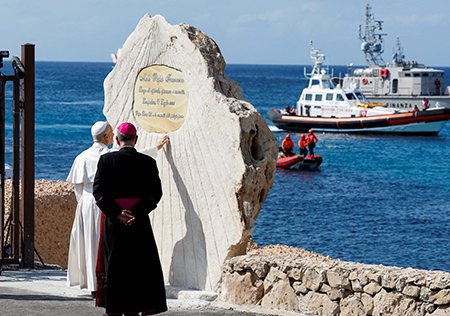
Pope Leo XIV blesses a plaque at Molo Favaloro in Lampedusa, Italy, and dedicates the pier to Pope Francis as he visits the island, a key entry point for migrants crossing the Mediterranean Sea, during a pastoral trip July 4, 2026. (OSV News photo/Reuters, Remo Casilli)

“Yes, this is a place where gestures speak more than words,” he added. “But gestures, to be human, require a heart. This is why we have gathered here: to draw from Christ the love that only He can give us, so that the world of today and tomorrow may be more human, for everyone.”

Lampedusa has for years been one of the main gateways to Europe for migrants crossing the Mediterranean from Tunisia and Libya, a journey that has claimed thousands of lives.

In April, the Italian coast guard recovered 19 bodies and rescued 58 people after intercepting a distressed dinghy about 80 nautical miles south of Lampedusa, according to the Associated Press. Last August, a boat carrying nearly 100 migrants capsized in international waters near the island, killing at least 26 people.

During his homily, Pope Leo described the seas surrounding Lampedusa as “as dangerous as the one that led down from Jerusalem to Jericho” in Jesus’ parable of the Good Samaritan in the Gospel of Luke. 

“Here you have seen not just one, but thousands of human beings fallen into the hands of robbers who have taken everything from them, beat them brutally and walked away, leaving them half-dead,” he said. “The sea has claimed the lives of others … we feel their presence, which challenges us no less than that of those who have landed in need of attention and aid.”

The pope landed on the island, which sits closer to the coast of North Africa than to mainland Italy, just before 9 a.m. His first stop was a cemetery, where he laid a floral wreath on the tombs of migrants who died at sea. The pope then visited the “Porta d’Europa,” or “Gateway to Europe,” a monument on the island, where he walked hand in hand with migrant children on the windy summer day. 

About 14,000 migrants arrived on Italy’s shores in the first six months of 2026, according to the UNHR. Nearly 60% of that number arrived in Lampedusa, which is only about 8 square miles in size.

While walking along the island’s rocky coastline, the wind blew the pope’s zucchetto off his head, which his personal secretary Msgr.  Edgard Rimaycuna quickly retrieved. 

From there, the pope traveled to the Favaloro Pier, where he blessed a plaque dedicating the pier to the late Pope Francis and greeted a group of migrants accompanied by the Red Cross before celebrating the Mass with about 4,000 people in attendance. 

“I have come to thank you, brothers and sisters of Lampedusa, for the solidarity that so many of you have shown,” the pope told the crowd at the Mass. “The miracle of compassion … is an inner revolution that brings forth within us God’s ‘heart’ and broadens our thoughts, hearts and lives.”

Among those present at the papal Mass was 24-year-old Giuseppe Capizzi, who traveled eight hours on an overnight ferry with about 70 other people from his parish of St. Francis in Cancicatti, Sicily, to attend Mass with the pope.

“I’ve been looking forward to this day for a long time, and I’m absolutely thrilled,” Capizzi told OSV News. 

Father Mikolaj Dobosz from Warsaw, Poland, traveled even farther to be present at the Mass. 

The Polish priest, who has devoted the past few years to welcoming Ukrainian refugee mothers and children at his parish, said that he felt this was an important moment to pray with the pope for migrants and for people who are suffering. 

“We work in Poland a lot with migrants, not from Africa or (the) Middle East, but from Ukraine mainly. I work with kids from Ukraine, and I’m really happy to pray with the pope for the people who are suffering,” Father Dobosz said.

One of the few Americans in the crowd for the papal Mass on U.S. Independence Day was Father Daniel Groody, a professor of theology at the University of Notre Dame and a member of the Vatican Dicastery for Integral Human Development. 

“Pope Leo, especially now on the Fourth of July, is signaling what true freedom is about. True freedom is about the capacity to love,” Father Groody told OSV News.

“I think he’s continuing the tradition of the Church that has always recognized that everybody is created in the image and likeness of God, and that he really wants to bring out the dignity that’s often diminished in today’s society.”

Pope Leo’s visit comes 13 years after Pope Francis visited Lampedusa in July 2013, drawing attention to the island by choosing it as the destination of his first trip outside Rome after his election as pope, as a gesture of solidarity with migrants smuggled from North Africa. 

During his visit, Pope Francis celebrated Mass on an altar built from the wood of wrecked migrant boats and condemned what he called the “globalization of indifference” toward people risking their lives to reach Europe.

Migration has remained a concern for Pope Leo since his May 2025 election. In June, he met with migrants and local aid organizations in Spain’s Canary Islands, another major entry point for people crossing from Africa, where he called on governments to establish legal and safe pathways for migration, strengthen rescue and assistance efforts, while also speaking of the “right not to have to migrate,” or the right of people to remain in their homelands free of hunger, war, persecution and violence.

“It’s just a great expression that Pope Leo, at the beginning of his pontificate, really has decided to come here to Lampedusa, as Pope Francis did, to recognize the Church must always be on the margins,” Father Groody said. 

“The Church must always be accompanying those who are struggling to live a more dignified life and to really highlight the importance of the connection between faith and justice that’s really integral to our faith.”

Salvatore Sortino, who directs the International Organization for Migration’s coordination office for the Mediterranean, said that even as overall crossing numbers have declined since Pope Francis’ visit, the proportion of migrants who die at sea or fall victim to accidents during the journey has risen. 

On Lampedusa, the IOM works with Italian authorities and humanitarian partners throughout the reception and assistance process, identifying trafficking victims and other vulnerable migrants so they can be referred to appropriate authorities and transferred to suitable facilities on the Italian mainland.

“The importance of search-and-rescue operations remains a central element of protection in the Mediterranean,” Sortino told Vatican Radio. “But opening legal pathways is eventually the real answer.”

Pope Leo’s Lampedusa visit came a day after the pope delivered a virtual address to a gathering at the National Constitution Center in Philadelphia, which awarded him its 2026 Liberty Medal for advancing religious liberty and freedom of conscience, in which he spoke passionately about the importance of the “right to life” from the moment of conception to natural death.

In his homily in Lampedusa, the Pope Leo said that Jesus’ parable of the Good Samaritan “tells us that love is always rooted in freedom, and freedom lies in the decisions we make.”

He said that “before any intellectual consideration or ideological conviction, the encounter with those who lie before us, stripped of everything, calls us to be close to them.”

“There are also those who choose not to be a neighbor,” the pope commented, adding, “it is time to recognize and affirm that religious affiliation must never become a reason for discrimination, as if faith had boundaries rather than being a universal call to salvation.”

“There is no love of God without love of neighbor, and there is no neighbor if I do not draw near. To pause, to be moved, to bend down, to weep before another’s pain – as Jesus did – means entering into the dynamic of love, the very movement in which God has revealed himself,” Pope Leo said.

An image of Our Lady of Portosalvo, Italian for “Our Lady of Safe Harbor,” to whom Lampedusa’s historic Marian shrine is dedicated, stood near the altar throughout the Mass. 

“St. Augustine liked to describe human life as a voyage across a stormy sea and one’s destiny as a safe and secure harbor,” Pope Leo said. “In God we all have a safe haven, and every Christian community is called to be a reflection of it on earth.”

(Courtney Mares is Vatican editor for OSV News. Follow her on X @catholicourtney.)

Bishop Kopacz outlines future structure for Metro Jackson Catholic schools

Editor’s note: The following letter was shared by Bishop Joseph R. Kopacz with the Catholic community of the Diocese of Jackson on June 23, 2026, regarding the future governance structure of Metro Jackson Catholic schools.

By Bishop Joseph R. Kopacz

Dear Friends in Christ,

Just over a year ago, I wrote to you expressing my support for a comprehensive study of our four metro Jackson Catholic schools and three early learning centers. Since that time, a dedicated 23-member committee – comprised of pastors from parishes with schools, the Vicar General, the Executive Director of the Office of Catholic Education, and lay representatives from each metro parish – has prayerfully carried out this work.

The committee developed a request for proposals, selected our consultant (Partners in Mission), listened carefully to the voices of our Catholic community, and conducted a thorough assessment. They have now presented their recommendations, which I have accepted and shared with our pastors. I am grateful for their faithful service and am pleased to share with you our path forward.
Two primary recommendations will guide us:

– The formation of an organization of Metro-Jackson schools including St. Joseph Catholic School (Grades 7-12), St. Richard Catholic School (Pre-K3-6), St. Anthony Catholic School (Pre-K3-6), and Sister Thea Bowman Catholic School (Pre-K3-6). A unified system will provide a seamless path for our children, from early childhood through high school. Our early learning centers are expected to join the organization after the new structure is fully operational.

– The organization will be structured within the Diocese of Jackson and work with the Office of Catholic Education. The metro schools will be administered through a board of directors made up of both clergy and lay faithful. This board will be entrusted with providing strategic direction, fundraising, and governance of the schools. The board will hire and evaluate the President, establish the central administrative office, and ensure the long-term financial sustainability and mission effectiveness of the organization.

I have authorized the formation of the new entity and the necessary legal and canonical steps have begun. The committee will continue its work by collaborating with Diocesan legal representatives regarding formation of the organization, shaping the board, and beginning the search for a president. We will move forward thoughtfully and faithfully, with both urgency and prudence trusting always in the Lord’s guidance.

As we take these steps, we remain rooted in what makes Catholic education a vital part of the Church’s mission: forming young people in the light of Jesus Christ, nurturing the whole person, and striving always for excellence in both faith and learning.

I am confident that these efforts will strengthen our schools and serve our families well for many years to come. Above all, it is my hope that our students will come to know, love, and follow Jesus Christ, living lives of faithful intentional discipleship.

Please join me in praying for our schools, our leaders, our teachers, and especially our students. May the Lord, who has begun this good work in us, bring it to fulfillment.

We are not alone

REFLECTIONS ON LIFE
By Melvin Arrington
Several weeks ago the U.S. government began releasing previously classified documents concerning unidentified flying objects, or UFOs, a move that has sparked renewed interest in the question of whether there is intelligent life beyond the planet we call home.

The fact that UFOs are once again in the news takes me back to the era of Sputnik, when rocket launches and speculation on aliens from other galaxies visiting Earth triggered the imagination of children of my generation and filled our heads with dreams of future space travel.

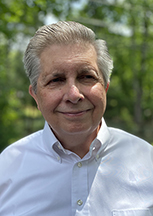
Melvin Arrington

When I was a child, I enjoyed watching TV programs about rocket ships and alien worlds. One of my favorites was the old 1930s Flash Gordon movie serials that often ran on TV in those days. And my reading material of choice was science fiction comic books. Well into adulthood I still believed and hoped that someday, someplace, our space explorations would eventually discover other planets inhabited by scientifically advanced peoples.

However, as I got older and, I hope, wiser, my childhood notions gradually developed into more mature thinking. Now, I’m fairly confident that planet Earth is the only place in the known universe capable of sustaining higher life forms. But occasionally uncertainty creeps in, as on that afternoon a few years ago when, while driving to work, I actually saw a UFO in broad daylight.

To clarify, I saw some type of thin, oblong-shaped object moving along in the sky that I couldn’t identify, a description that seems to fit the definition of a UFO. Whatever it was, I doubt it was an alien spacecraft. It was probably just a fast-moving cloud illuminated by rays of sunlight, which would explain its unusually bright and shiny glow. Or maybe not. Who knows?

The major consideration that changed my mind about life beyond our planet was my discovery of the astonishing level of fine-tuning that went into the creation of the universe. The Great Designer has fashioned everything with such amazing precision that living things not only survive on Earth but flourish. He has arranged all the necessary elements to just the right degree and in the exact position that even the slightest variation in any one of these factors – for example, electromagnetism, the force of gravity, or the speed of light – would so disrupt this delicate balance that our planet would cease to exist.

According to Francis Collins, who headed the Human Genome Project and served as director of the National Institutes of Health, “The chance that all of these constants would take on the values necessary to result in a stable universe capable of sustaining complex life forms is almost infinitesimal. And yet those are exactly the parameters that we observe.” In other words, God made a perfect world for us to live in, the only such place throughout all the galaxies, and He created it only for us and for no one else. So, in that sense, we truly are alone in the vastness of the universe.

But just because I no longer believe in aliens traveling to Earth in UFOs doesn’t mean I think we should feel abandoned in the cosmos. God created us and placed us here to be in communion with Him and with one another. However, there are a lot of lonely elderly people who have no one to love them or even think about them. I know many nursing home residents who have been discarded by their families. In most cases, someone just dropped them off at the nursing facility the same way people leave dogs at animal shelters. To them, loneliness is the normal state of affairs, day after day, year after year.

But these precious souls are not really alone because God is never far from any of them. He is as near as a prayer or a Bible on a nightstand. And in the Eucharist He is as close to us as He can possibly be in this life.

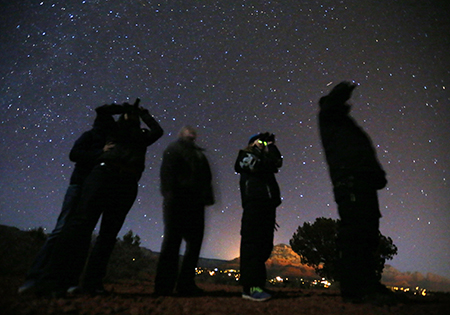
People use night vision goggles to look at the night sky during an Unidentified Flying Object (UFO) tour in the desert outside Sedona, Arizona, in this Feb. 14, 2013, file photo. (CNS photo/Mike Blake, Reuters)

The scriptures consistently demonstrate that God desires to be in an intimate relationship with us. Both the Old Testament and the New bear this out in verse after verse. Among the many examples are these lines from the first chapter of the Book of Joshua, where the Lord says: “I will always be with you; I will never abandon you” (v. 5), and “the Lord, your God, is with you wherever you go” (v. 9). And in Psalm 23, one of the best-loved chapters in the entire Bible, we read that in our darkest moments, when all seems hopeless, God is there accompanying us in our time of trials: “Even though I walk through the valley of the shadow of death, I will fear no evil, for you are with me; your rod and your staff comfort me” (v. 4). Likewise, in Psalm 73 we find this simple phrase of reassurance: “I am always with you” (v. 23).

In a similar vein, Jesus, at the conclusion of Matthew’s Gospel, says: “I am with you always, until the end of the age” (Matt. 28:20). Also, in the fourteenth chapter of John’s Gospel, Our Lord promises to send the Holy Spirit: “I will not leave you orphans; I will come to you” (v. 18). Later, in His High Priestly Prayer, Jesus prays to the Father that all who believe in Him “may all be one, as you, Father, are in me and I in you, that they also may be in us” (John 17:21).

As we look up into the night sky and speculate on whether we are the only rational beings in the universe, whether there are any other creatures like us in this galaxy or anywhere else out there, we can be confident that we are not alone. We can take great comfort in God’s promises that He loves us, that He is always near, and that He will never abandon us. He who knows the number of hairs on our heads, He who knows when a single sparrow falls to the ground, is surely watching over us. May we always watch over and care for each other, especially for the lonely and the cast-offs and all those who have no one to call on.

(Melvin Arrington is a Professor Emeritus of Modern Languages for the University of Mississippi and a member of St. John Oxford.)

School Sisters of Dominican Sisters of Sinsinawa celebrate jubilees

By Tricia Buxton
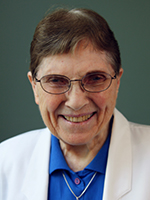
SINSINAWA, Wis. – Three Dominican Sisters of Sinsinawa celebrate jubileesm who served in the Diocese of Jackson.

75 Years – Sister Barbara Bartek
Dominican Sister of Sinsinawa Barbara Bartek, OP, will celebrate her 75 th jubilee Oct. 24, 2026. Born to Dr. Julius and Bernadette (Connor) Bartek in Omaha, Nebraska, she joined the Dominican Sisters of Sinsinawa in 1951 and received the religious name Sister Katharina. She earned her BA in biology from Rosary College (now Dominican University), River Forest, Ill., and MS in biology from St. Mary College, Winona, Minnesota.

Sister Barbara’s ministry has been dedicated to teaching, administration, pastoral ministry and health care. In Illinois, Sister Barbara taught at St. Barnabas School and St. Jarlath School in Chicago; Holy Trinity School, Bloomington; and Trinity High School, River Forest. She then served as principal and teacher at Sacred Heart Academy in Washington, D.C. In Colorado, she served as principal and teacher at SS. Peter and Paul Grade School, Wheat Ridge, and years later as pastoral associate at St. Dominic Parish, Denver. In Wisconsin, Sister Barbara served at St. John Cathedral High School, Milwaukee, and at Dominican High School, Whitefish Bay, as teacher and as principal. She served in various ministries at Sinsinawa Mound, the Motherhouse for the Sinsinawa Dominican Sisters. Elsewhere, she was prioress at St. Dominic Villa, Dubuque, Iowa, and then served as clinic case worker at DePorres Health Center, Marks, Mississippi.

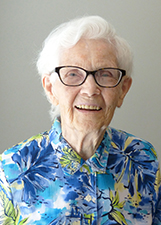
50 Years – Sister Mary Jane Quinn
Sister Mary Jane Quinn, OP, will celebrate her 50th jubilee Oct. 24, 2026. Born to Marie (Magner) and Martin Quinn in Minneapolis, Minnesota, she made her profession with the Dominican Sisters of Sinsinawa in 1976. She received a certificate as radiology technologist from St. Catherine School of Radiology, Kenosha, Wis.; a certificate in gerontology from St. Mary of the Woods College, Ind.; a BA in social work from Carthage College, Kenosha; a certificate in CPE from Winchester House, Libertyville, Ill.; and her CPE from Emmanuel College, Boston.

Sister Mary Jane’s ministry has been dedicated to pastoral and clinical care. She was radiology tech at St. Catherine Hospital, Kenosha, and x-ray tech at Mercy Hospital, Merced, Calif.She served the Sinsinawa Dominican Congregation as vocation director for two years and then served in clinical pastoral care in Indiana, Illinois, and Massachusetts. She was clinic coordinator at Jonestown Health Center, Marks, Mississippi. She then served in pastoral care at Catholic Eldercare, Minneapolis; Holy Name Care Center, Spokane, Washington and at the Dominican Motherhouse, Sinsinawa, Wisconsin.

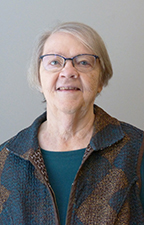
50 Years – Sister Sal Stanaway
Sister Selina “Sal” Stanaway, OP, will celebrate her 50th jubilee Oct. 24, 2026. Born to Agnes (Monahan) and William Stanaway in Butte, Montana, she made profession with the Dominican Sisters of Sinsinawa in 1976. Sister Sal graduated with a BA in English from Carroll College, Helena, Montana; an MEd from University of Montana-Missoula; an MA in catechetics and liturgy from the College of St. Thomas, St. Paul, Minnesota; an MA in community service and administration from Regis College, Denver; and an MSW from the University of Tennessee, Memphis.

Her ministry has been dedicated to social work. She taught theology, English, and religion at Bishop Lynch High School, Dallas, Texas. Sister Sal then served as caseworker at the Brady Center, Richardson, Texas, and DePorres Delta Ministries, Marks, Mississippi, where she also served as social services director. She served the Sinsinawa Dominican Congregation as provincial councilor of the southern province and as social worker at St. Dominic Villa, Sinsinawa, Wisconsin.

(To honor Sisters visit sinsinawa.org/donate online.)

Mass of Thanksgiving for America’s 250th anniversary held at National Shrine in Washington

By Kurt Jensen
WASHINGTON (OSV News) – Independence Day is a reminder that Americans’ “inalienable rights” mentioned in the Declaration of Independence – life, liberty and the pursuit of happiness – are gifts from God, Cardinal Donald W. Wuerl said July 4 in the nation’s capital.

Cardinal Wuerl, the retired archbishop of Washington, delivered the homily at a Mass of Thanksgiving for America’s 250th anniversary held at the Basilica of the National Shrine of the Immaculate Conception in Washington. The quietly dignified service was a cool reprise from the 100-degree heat and high humidity outside.

“We can claim to be free because we have been created free and equal by God,” Cardinal Wuerl said.

And that, he said, can be traced, in American history, all the way back to the Mayflower Compact in New England in 1620. The compact, he reminded the congregation, only had two elements: “The law of God and the need of the common good.”

In addition, American identity “doesn’t rest on blood ties, ethnic origin or national heritage.”

“Our beginnings as a nation celebrate our freedom,” the cardinal observed, calling on the congregation to “do our part now to honor that promise for everyone.”

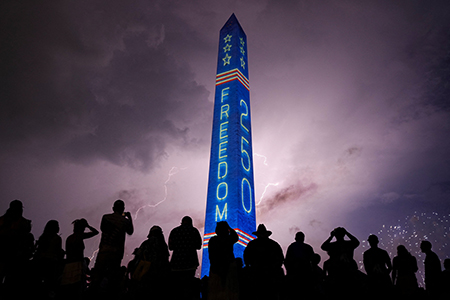
Lightning strikes behind the illuminated Washington Monument as people gather to watch the fireworks during the Freedom 250’s Salute to America as the United States celebrates its 250th anniversary on Independence Day in the early morning of July 5, 2026, after the celebration was delayed by bad weather. (OSV News photo/Nathan Howard, Reuters)

In 1776, “We as a people collectively started down the pathway that eventually resulted in our national independence. We claimed our freedom as a nation and our civil liberties as a people,” he said.

This event, he added, “calls for our reflection, our celebration and our prayers of thanksgiving as we renew today our appreciation of our historic heritage and focus on the present effort today to live up to all those ideals that have so identified us as a nation and as a people.”

Thomas Jefferson, when he authored the declaration, told others that it did not contain ideas original to himself, but rather expressed “the common beliefs of people of his day,” Cardinal Wuerl said.

Jefferson would call the Declaration “an expression of the American mind and spirit, deeply rooted in the thoughts and faith of the American people,” he said.

As a result, the cardinal added, the many references of “our faith in God” should not come as a surprise to anyone.

“Even in this quintessentially civil declaration, we should not be surprised to find so many references to our faith in God,” he said.

So on the Fourth of July, “We renew our identity as a people who claim a God-given right: To life, liberty and the pursuit of happiness. Our beginnings as a nation have religious roots, deep in the convictions of the people in those original 13 states and those who we refer to as our founders,” he said.

Cardinal Wuerl, a native of Pittsburgh, was archbishop of Washington from 2006 to 2018.

One of the principal concelebrants was Archbishop Gabriele Caccia, the new Apostolic Nuncio to the United States.

Delivering a message from Pope Leo IV, Archbishop Caccia said July 4, 1776, was “the defining moment in the history of the United States of America, and giving voice to the ideas of liberty, equality, pursuit of happiness, justice, and democratic types of government.”

Religious freedom, and the ability to practice one’s faith openly without fear, has long been central to the American promise, Archbishop Caccia said.

FEATURE PHOTO: … Cooking for Country and Community…

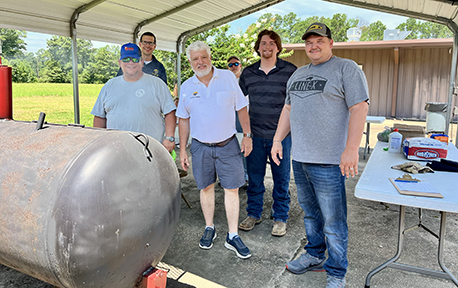
PEARL – Members of the Knights of Columbus worked behind the scenes preparing hot dogs and hamburgers for St. Jude’s July 5 celebration of the nation’s 250th anniversary. Pictured are Jose Arellano, Jeff Paczak, Nat Zummo, and (back, from left) Basil Demarest, Caleb Hall and Jeff Alderman. The parish celebrated the occasion with food, fellowship and they even completed their goal of 250 hours of Eucharistic adoration honoring the anniversary. (Photo by Beth Paczak)

Calendar of Events

SPIRITUAL ENRICHMENT
ALEXANDRIA, La. – Genesis of Eve Catholic Women’s Conference, Sept. 18-20 at the Randolph Riverfront Center. Spend time with Jesus in an Adoration service, access priests for confession, shop amazing Catholic artists, authors and vendors; and hear faith-filled Catholic speakers, including Kendra Tierney Norton, Rachel Bullman, Katie Prejean McGrady and Father Brice Higgenbotham. All are welcome. Open to ages 18+. General admission cost: $295.29. Details: visit www.genesisofeve.org.

CAMDEN – Sacred Heart, “Woke in Christ” Mission Revival, Sunday, Aug. 23 at 9 a.m. and Aug. 24-25 at 7 p.m. Guest priest is Father Anthony Bozeman, SSJ. Come be renewed. Encounter Christ. Live the mission. Refreshments will be served. All are welcome. Details: church office (662) 468-2354.

GRAND COTEAU, La. – St. Charles College, The Chosen retreat experience, Dec. 10-13. Calling all women to relax, restore and reconnect, using the hit series – The Chosen. Details: www.gcretrets.org or text Betsy at (985) 517-1019.

OXFORD – St. John the Evangelist, Catechist Workshop, Saturday, Aug. 1, from 8:30 a.m. to 2 p.m, with speaker, Dr. Tom Neal. Details: register at https://bit.ly/oxford-catechist-event-26.

MADISON – Millions of Monicas will be praying at St. Catherine’s Village chapel (200 Dominican Drive), the second Tuesday of each month at 6 p.m. When you arrive at the gate, let the team know you are joining the Millions of Monicas ministry. Please, mark your calendars for the following meeting dates: Aug. 11, Sept. 8, Oct. 13, Nov. 10 and Dec. 8, 2026. Details: call (601) 613-8526.

OLIVE BRANCH – Queen of Peace, Millions of Monicas, Thursdays from 6:15-7:15 pm. Join with other mothers as we pray to grow in holiness and for our children’s faithful return to the Church. Details: church office (662) 895-5007.

RIPLEY – St. Matthew, Liturgical workshop in Spanish, Saturday, July 25 from 8:30 a.m. to 12 p.m. All are welcome. Details: church office (662) 993-8832 or stmatthewcatholicchurch@ripleycable.net.

YOUNG ADULTS – Young adults are invited to join the Archdiocese of New Orleans on a Pilgrimage to Seoul, South Korea, August 1-10, 2027. Details: contact James Behan at (504) 836-0551 ext. 3228 or email: yam@arch-no.org.

PARISH & YOUTH EVENTS
BATESVILE – St. Mary, Rummage Sale, Aug. 7-8. Details: church office at (662) 563-2273.

GREENVILLE – St. Joseph, “Rainforest Falls: Exploring the Nature of God” Vacation Bible School, July 27-29. Details: church office (662) 335-5251.

JACKSON – Cathedral of St. Peter, ABIDE High School Youth Group Kickoff Event, Saturday, Aug. 29 from 7-9 p.m. in Bolton. Bring a chair and join us for food, games and fellowship. Group for 9th-12th graders. Details: Jodi at (601) 383-4720.

MERIDIAN – Catholic Youth of Meridian, Summer Retreat at Pine Lake Camp, July 25 from 9 a.m. to 3 p.m. from 5th through 12th graders. Cost: $15 Enjoy fun summer activities, build friendships and encounter Christ. Details: Kristen at (850) 305-1771.

OLIVE BRANCH – Queen of Peace, Indoor Yard Sale, Save the Date – Saturday, Aug. 1. Details: church office (662) 895 5007.

Queen of Peace, Family Bowling, Sunday, July 26 at 2 p.m. at Strik Zone in Southaven. Cost: $15.50 per person (must prepay). Fee includes two hours of bowling and shoe rental. Invite your family and friends – we need a minimum of 30 participants. Details: church office (662) 895-5007.

PONTOTOC – St. Christopher, Vacation Bible School, Saturday, July 25 for ages 14-17 from 8:30 a.m. to 3:30 p.m. Details: Sister Raquel – raquelssnd@gmail.com.

DIOCESE EVENTS
ENGAGED ENCOUNTER 2026: Aug. 28-30; and Oct. 2-4. Details: couples may register at https://jacksondiocese.flocknote.com/signup/230073 or email debbie.tubertini@jacksondiocese.org.

FALL FAITH FORMATION DAY: Save the Date – Sept. 19 at St. Francis of Assisi in Madison. Come for a day of learning, prayer and community for catechists, faith formation leaders, and all those involved in forming disciples of all ages.

MIDDLE SCHOOL FALL RETREAT – Registration is now open for the annual Middle School Fall Retreat. This year’s theme is “Others First” at Lake Forest Ranch, Oct. 17-18 for 7th and 8th graders. The retreat will be presented by Cooper Ray – Catholic speaker and worship leader. Cost: $75 per person with a registration deadline of Sept. 11. Contact your parish youth leader to sign up.

YOUNG ADULT PILGRIMAGE – Young adults ages 21-35 are invited on an unforgettable pilgrimage to the National Shrine of Our Lady of Champion in Wisconsin, the site of the only Church-approved Marian apparition in the United States. This eight-day pilgrimage, taking place May 15-22, 2027, includes visits to the Shrine of the Blessed Sacrament, Ave Maria Grotto, Gethsemane Abbey, Saint Meinrad Seminary, the Basilica of Saint Louis King of France, Sister Thea Bowman’s gravesite and more. Daily Mass, prayer and fellowship will make this a journey to remember. Registration deadline: July 31. Cost: $925, includes admission to all pilgrimage stops, transportation, lodging and donations to shrines. Excludes cost of meals. Details: amelia.rizor@jacksondiocese.org.

Vatican declares SSPX in schism. What does it mean?

By Paulina Guzik
VATICAN CITY (OSV News) – The Vatican has declared the Society of St. Pius X to be “in schism” after the traditionalist group consecrated four bishops without the papal mandate, marking the most serious rupture in the Church since Archbishop Marcel Lefebvre’s unauthorized episcopal consecrations in 1988.

In a bombshell move, the Vatican also declared sacraments of penance and marriage invalid if they proceeded within the society.
The decree also said, “Clerics and lay faithful are warned not to adhere to the schism of the Priestly Society of Saint Pius X, as they would ipso facto incur the penalty of latae sententiae excommunication.”

In a case of history repeating itself after the 1988 excommunication of the society’s founder along with four bishops he then consecrated without the papal mandate, the Vatican on July 2 excommunicated four SSPX bishops consecrated without the authorization of the pope at the society’s seminary in Écône, Switzerland, along with two bishops leading the liturgical celebration July 1.

“Despite the warnings addressed to the Superior General” of SSPX, Bishop Alfonso de Galarreta led the consecration liturgy on July 1, accompanied by Bishop Bernard Fellay, and thus “committed an act of a schismatic nature through the episcopal consecration of four priests, without pontifical mandate and against the will of the Supreme Pontiff,” the Dicastery of the Doctrine of Faith said in a July 2 decree, released in Italian.

The rebel bishops, the DDF said, “have ipso facto incurred a latae sententiae excommunication reserved to the Apostolic See,” with latae sententiae meaning “automatic,” or “by the deed itself” in Latin.

The four newly consecrated SSPX bishops – Fathers Pascal Schreiber, Michael Goldade, Michel Poinsinet de Sivry, and Marc Hanappier – were also excommunicated, the DDF said in a document signed by Cardinal Victor Manuel Fernández, prefect of the DDF, Archbishop John Kennedy, secretary of the disciplinary section, and Msgr. Armando Matteo, secretary of the doctrinal section of the dicastery.

The apostolic mandate is required to proceed with bishops’ consecrations, which the society did not have for the July 1 ceremony – a fact that they publicly acknowledged.

At the episcopal consecrations, Father Foucauld Le Roux, secretary general of the society, read the declaration in which the society “sets forth the reasons justifying these consecrations in the current circumstances of the Church,” claiming “The authorities of the Church have been animated by a spirit contrary to that of the Faith, and act against holy Tradition.”

Father Davide Pagliarani, superior general of the society, in his homily on July 1 called the consecration an “exceptional” measure “proportionate to this necessity” and in line with “a duty to keep the faith that the Church has always taught.”

Saying that “some might consider that we are facing a dilemma,” Father Pagliarani said SSPX did not choose “between faith and the Church.”

The explanatory memorandum that followed the decree from the DDF included measures affecting both ministers of the society and lay faithful, preceded by the note that from the time of St. Paul VI “until the most recent discussions held at this Dicastery, the multiple attempts to bring the adherents of the movement initiated by Archbishop Lefebvre back into full communion with the Catholic Church have proven futile.”

Noting that “this situation has been further aggravated by the recent episcopal consecrations celebrated without pontifical mandate, against the will of the Holy Father, in open violation of canon law,” the dicastery said that the “act constitutes the crime of schism, with canonical consequences for the sacred ministers and lay faithful involved.”

In a memorandum signed by the same group of prelates as the decree, the DDF said that “the sacred ministers belonging to the Priestly Fraternity of Saint Pius X are in schism and must therefore be considered schismatic,” citing the 1988 letter of St. John Paul II “Ecclesia Dei” and the 1996 Explanatory Note from the Pontifical Council (now Dicastery) for Legislative Texts on the excommunication for schism incurred by the adherents of the movement of Archbishop Lefebvre (1905-1991).

According to Canon 751, “schism is the refusal of submission to the Supreme Pontiff or of communion with the members of the Church subject to him.”

According to point five of the 1996 Explanatory Note, the “latae sententiae excommunication for schism concerns those of the lay faithful who ‘formally adhere’ to the said schismatic movement,” noting that the “formal adherence to the schism” must “imply two complementary elements.” One is of “internal nature,” consisting in “freely and consciously sharing the substance of the schism,” that following SSPX’s founder’s path “is placed above obedience to the Pope” and the second of “external nature,” the most evident sign of which will be “the exclusive participation in the Lefebvrian ‘ecclesial’ acts, without taking part in the acts of the Catholic Church.”

According to canon lawyer Father Jan Dohnalik, chancellor of the Archdiocese of Kraków, Poland, the line “exclusive participation” means that “occasional participation of the lay people does not mean automatically participating in the schism –but consciously and permanently choosing to participate in SSPX liturgies does. For instance if a family or friend of the bishop consecrated without the papal mandate just came to that July 1 Mass to participate, they are not automatically in schism with the Catholic Church, but if they deliberately choose to participate in SSPX liturgies in the future, ignoring the papal power of the Roman Pontiff – that’s participating in a schism.”

The long list of documents regarding SSPX spanning almost four decades prove the long process of the Vatican to try to reach an agreement with the traditionalist group.

For decades – since 1988 when St. John Paul excommunicated the society’s founder, Archbishop Lefebvre and four bishops consecrated without papal mandate in his “Ecclesia Dei” apostolic letter – the Vatican had sought several ways to reintegrate SSPX members into the life of the Catholic Church.

Pope Benedict lifted the excommunications of the four bishops in 2009, opening the way for more regular talks.

During the 2015-2016 Year of Mercy, Pope Francis made special provisions to validate the absolution offered by SSPX priests through the sacrament of confession. After the Holy Year ended, he extended that provision “lest anyone ever be deprived of the sacramental sign of reconciliation through the church’s pardon.”

In April 2017, the late pontiff continued pursuing initiatives aimed at a reconciliation with the SSPX by allowing their bishops to ensure the validity of marriages celebrated in the traditionalist communities.

Bishop Galarreta is an embodiment of the Vatican’s longtime mercy toward SSPX. He was consecrated as a bishop by Archbishop Lefebvre in 1988 and was excommunicated by St. John Paul, but in 2009, Pope Benedict declared the remission of the excommunication. And now in 2026, he has been excommunicated for the second time after leading the liturgical celebration of the bishops’ consecrations on July 1.

After the July 1 ceremony, the Vatican took measures to extend its decree to the whole society, including the laity, and said that lay faithful “who formally adhere to the Priestly Fraternity of Saint Pius X … are to be considered schismatic and excommunicated.”

The Holy See warned that “the sacred ministers of the Priestly Fraternity of Saint Pius X are administering the sacraments illicitly,” declaring invalid the sacrament of penance and marriage administered by SSPX priests.

The celebration of the Mass and the confection of the Eucharist, because they are done by an ordained priest, are still valid, though illicit. The sacraments of penance and marriage need an authorization, or faculty, which the society lacks.

According to Canon 966, “The valid absolution of sins requires that the minister have, in addition to the power of orders, the faculty of exercising it for the faithful to whom he imparts absolution” – a priest can be given this faculty “either by the law itself or by a grant made by the competent authority.”

According to Canon 1111, “As long as they hold office validly, the local ordinary and the pastor can delegate to priests and deacons the faculty, even a general one, of assisting at marriages within the limits of their territory” – with bishops consecrated without the papal mandate, the local authority to grant such faculty is not in place.

Father Dohnalik pointed out that the faithful of the Church must be warned that receiving the holy sacraments in the Society of St. Pius X “is associated with a real threat to the life of faith, and that such important sacraments as penance and marriage are simply invalid.”

“The Church, as a caring mother, will welcome with sincere affection and lively solicitude all those who wish to return to full communion,” the DDF prelates concluded, pointing to the apostolic nuncios as ones that “will have procedures that the Ordinaries can use in different cases.”

The canon lawyer emphasized in a conversation with OSV News that the move coming from the pontiff whose episcopal motto is “In Illo uno unum” – or literally “In the One, we are one” – was a much needed step for the unity of the Church.

“Precisely because the unity of the Church is so dear to the Holy Father’s heart, he had to announce the threat posed by this tragic step taken by the Lefebvrists,” Father Dohnalik said, adding that the pope was acting “as a good shepherd who does not shy away from danger but wants to protect his flock.”

The canonist remembered that on the feast of Sts. Peter and Paul, Pope Leo urged the superior of the society to retreat from the path of division and refrain from moving forward with the schismatic act “because to tear the seamless garment of Christ is a sin of extreme gravity.”

“Concerned for the faithful who may not understand the immense spiritual harm associated with separation from communion with the pope and the Church, the Holy Father made this sad but necessary move to declare excommunication, which merely reveals the dramatic consequences of this schismatic act,” Father Dohnalik told OSV News.

The DDF noted in the memorandum that “all the faithful are exhorted to remain steadfast in communion with the Roman Pontiff, with the Bishops in communion with him and with the whole Church” and to “abstain from participating in the celebrations and activities” promoted by SSPX.

(Paulina Guzik is international editor for OSV News. Follow her on X @Guzik_Paulina)

9 things to know about the SSPX excommunications

(OSV News) – On July 1, the Society of St. Pius X, widely known as the SSPX, illicitly consecrated new four bishops without authorization from the Holy See, leading Pope Leo XIV to declare its bishops, clergy and formally affiliated laity to be in schism with the Catholic Church. Here’s a short primer on the SSPX, what happened and why it matters.

  1. The SSPX formed in reaction to the Second Vatican Council. Archbishop Marcel Lefebvre (1905-1991), a Frenchman who as a bishop had been a key Church leader in French Africa, founded the society of priests in 1970 in Fribourg, Switzerland. Its priests celebrate the sacraments according to the 1962 Roman Missal, which was issued prior to the Second Vatican Council, but which was replaced by revised liturgical texts in 1969. The society has now twice been excommunicated for consecrating bishops without the permission of the Holy See.

The society is based in Menzingen, Switzerland, with an international seminary in Écône, Switzerland, where the July 1 consecrations took place. In the United States, about 100 SSPX priests live in 20 houses, or “priories,” and are active around 120 locations, called “missions” or “chapels,” according to its website. Its U.S. headquarters are in Platte City, Missouri, about 30 miles north of Kansas City.

According to the SSPX, Archbishop Lefebvre chose St. Pius X, who had served as pope 1903-1914, as the society’s patron because of that pope’s commitment to the integrity of the priesthood.

  1. Before the most recent schism, the SSPX had an irregular status with respect to the Catholic Church that first began decades ago. The society appears to have lost its ecclesiastical permission to exist by the competent ecclesiastical authority in 1975. A year later, Archbishop Lefebvre was suspended after ordaining priests against the express will of ecclesiastical authorities.

In 1988, St. John Paul II excommunicated Archbishop Lefebvre and four bishops he consecrated that year without papal mandate. Their episcopal ordinations were valid but illicit, or unauthorized.

All subsequent acts of orders by those bishops have been affected. Acts of jurisdiction are invalid – such as the witnessing of marriages and absolution of sins. Other sacramental actions are considered valid, though illicit.

In its July 2 decree issuing the excommunication, the Holy See explicitly stated that sacraments of penance and marriage proceeded within the society are invalid.

  1. The SSPX should not be confused with other “TLM” communities. Many Catholic communities in communion with the Holy See celebrate Mass according to the 1962 Roman Missal, commonly called the traditional Latin Mass.

In 2007, Pope Benedict XVI issued “Summorum Pontificum,” which expanded permission to priests to celebrate the preconciliar Mass. In 2021, Pope Francis issued “Traditionis Custodes,” legislation that tightened use of the preconciliar form of the Mass. However, many bishops, including in the United States, have continued to make this form of the Mass available within the new parameters.

Priests who are members of the Priestly Fraternity of St. Peter, for example, exclusively celebrate sacraments according to the 1962 missal and are in communion with the Holy See. (The society was formed in 1988 by priests who left the SSPX after Archbishop Lefebvre’s illicit bishop consecrations that year.) FSSP priests are active internationally and minister in 39 U.S. dioceses.

Other examples of religious orders dedicated exclusively to celebrating liturgy and sacraments in the form of the Roman rite celebrated prior to Vatican II that have regular status within the Catholic Church are the Institute of Christ the King Sovereign Priest and the Institute of the Good Shepherd.

  1. SSPX leaders say the society is not in schism, and they believe all sacraments and acts of jurisdiction are valid. However, Archbishop Lefebvre’s contentions with the Catholic Church included his refusal to adopt the post-conciliar reform of the order of the Mass, which the SSPX considers deficient or having “heretical elements.”

Archbishop Lefebvre and his followers also questioned, and in some cases publicly rejected, the very orthodoxy of teachings of the Second Vatican Council, especially the Declaration on Religious Freedom, “Dignitatis Humanae.” While some argued that this declaration amounted to a change in doctrine, the Church recognized it as a development of doctrine on the dignity of the human person.

In a statement that included a 28-page “Profession of Faith” published June 24, the SSPX said the Catholic Church is facing pressures from within and without “which push her in every possible direction, except – it seems to us – the right one.” Other Catholic teaching the SSPX dismissed in that statement included aspects of ecumenism, postconciliar liturgical reforms, synodality and religious freedom.

  1. The Holy See has sought a path to full reconciliation. For decades, Vatican officials have sought ways to fully reintegrate SSPX members into the life of the Catholic Church. Talks between the Holy See and the society began under St. John Paul and continued during the pontificates of Pope Benedict XVI and Pope Francis. Pope Benedict lifted the excommunications of the four bishops in 2009, opening the way for more regular talks. The Vatican made clear the society at that point was in an irregular canonical state, but not in schism.

During the 2015-2016 Year of Mercy, Pope Francis made special provisions to validate the absolution offered by SSPX priests through the sacrament of confession. After the Holy Year ended, he extended that provision “lest anyone ever be deprived of the sacramental sign of reconciliation through the Church’s pardon.”

In April 2017, the late pontiff continued pursuing initiatives aimed at a reconciliation with the SSPX by allowing their bishops to ensure the validity of marriages celebrated in their traditionalist communities.

St. John Paul’s 1988 apostolic letter “Ecclesia Dei,” issued in response to the illicit consecrations, established a pontifical commission by the same name with the “task of collaborating with the bishops, with the departments of the Roman Curia and with the circles concerned, for the purpose of facilitating full ecclesial communion of priests, seminarians, religious communities or individuals” who were associated with SSPX and “who may wish to remain united to the Successor Peter in the Catholic Church.”

In 2019, Pope Francis suppressed the “Ecclesia Dei” commission and moved its responsibilities to the Dicastery for the Doctrine of the Faith.

  1. The Holy See told SSPX leaders not to consecrate new bishops. In February, Father Davide Pagliarani, superior general of the SSPX, announced the society would proceed with the consecration of new bishops July 1, following a breakdown in communication with the Vatican after requests for an audience with Pope Leo went unanswered.

Cardinal Victor Manuel Fernández, prefect of the Dicastery for the Doctrine of the Faith, offered to continue dialogue with the SSPX on the condition that the society suspend its decision to consecrate new bishops. After the SSPX chose not to accept, Cardinal Fernandez said the consecration of bishops without a papal mandate would be considered “a schismatic act” and would incur excommunication.

The Church’s Code of Canon Law defines schism as “the refusal of submission to the Supreme Pontiff or of communion with the members of the Church subject to him” (Canon 751).

  1. Pope Leo publicly appealed for the SSPX not to proceed with the consecrations. Pope Leo issued a plea June 30 for the SSPX not to proceed with the consecrations. “I urge you to consider carefully the spiritual good of the faithful, because the schismatic act you are about to undertake would deprive them of the licit and, in some cases, even valid reception of the Sacraments, which they love and seek for their sanctification,” Pope Leo wrote. Father Pagliarani’s response indicated that the society planned to move ahead with the consecrations while insisting the group was “neither schismatic nor hostile to the Church.”

After the SSPX moved ahead with the illicit consecrations July 1, the Vatican’s Dicastery for the Doctrine of the Faith, or DDF, declared July 2 that the SSPX’s six bishops were excommunicated, and warned clergy and laypeople not to “adhere to the schism” and thereby also incur excommunication.

  1. One of the four illicitly consecrated bishops July 1 is from the United States. A native of North Dakota, Bishop Michael Goldade grew up in St. Marys, Kansas, an enclave of the SSPX community. He is the rector of the SSPX St. Thomas Aquinas Seminary in Dillwyn, Virginia.
  2. The DDF has issued procedures for those who decide to leave the SSPX to reestablish communion with the Catholic Church. The instructions provide specific actions that must be taken by a priest ordained in the SSPX community or affiliated with the SSPX after his licit ordination. Procedures for laypeople are more nuanced, as their steps to regain communion depend on their level of attachment to the SSPX community and ideas.