Tome Nota

Vírgenes y Santos

Presentación de la Bienaventurada Virgen María.
21 de noviembre

Santa Cecilia.
22 de noviembre

Nuestro Señor Jesucristo, Rey del Universo.
23 de noviembre

San Andrés Düng-Lac.
24 de noviembre

Día de Acción de Gracias.
27 de noviembre

Envíenos sus fotos a
editor@jacksondiocese.org

Síganos en Facebook:
@DiócesisCatólicadeJackson
Únase a lista de correos electrónicos
Mande un texto: MSCATHOLIC a 84576

LÍNEA DIRECTA DE PREVENCIÓN DE FRAUDE
El Departamento de Asuntos Temporales de la Diócesis de Jackson ha contratado a Lighthouse Services para proporcionar una línea directa anónima de fraude financiero, cumplimiento, ética y recursos humanos. Esta línea directa permite un método adecuado para reportar sucesos relacionados con la administración temporal dentro de parroquias, escuelas y la oficina de cancillería.

www.lighthouse-services.com/jacksondiocese
Hispanohablante USA: 800-216-1288

El Papa asegura a los pobres que son amados por Dios y exhorta a los gobiernos a actuar

Por Cindy Wooden

CIUDAD DEL VATICANO (CNS) — Antes de reunirse con cientos de personas para almorzar, el papa León XIV celebró una misa con motivo del Jubileo de los Pobres y rezó para que todos los cristianos compartieran «el amor de Dios, que acoge, cura las heridas, perdona, consuela y sana”.

Ante miles de migrantes, refugiados, personas sin hogar, desempleados y miembros de la comunidad trans presentes en la Basílica de San Pedro o que observaban desde la Plaza de San Pedro, el papa León les aseguró: “En medio de la persecución, el sufrimiento, las luchas y la opresión en nuestras vidas personales y en la sociedad, Dios no nos abandona”.

Más bien, “se revela como aquel que se pone de nuestro lado”, dijo el papa en su homilía del 16 de noviembre, día en que la Iglesia celebra la Jornada Mundial de los Pobres.

Voluntarios de organizaciones benéficas católicas del Vaticano, diocesanas y con sede en Roma se unieron a las personas a las que ayudan para asistir a la misa. La organización benéfica francesa Fratello organizó una peregrinación internacional que llevó a cientos de personas a Roma para asistir a la misa, visitar las principales basílicas de Roma y participar en servicios de oración.

El papa León XIV y sus invitados disfrutan del primer plato, una lasaña de verduras, en un almuerzo con motivo del Jubileo de los Pobres, el 16 de noviembre de 2025, en la sala de audiencias del Vaticano. (Foto CNS/Vatican Media)

El Vaticano informó que 6,000 personas asistieron a la misa en la basílica y otras 20,000 la siguieron por pantallas en la plaza de San Pedro. Cuando el papa León dirigió el rezo del Ángelus, había unas 40,000 personas en la plaza.

Después del Ángelus, como parte de la celebración del 400 aniversario de su fundación, los Padres Vicentinos patrocinaron y sirvieron el almuerzo al papa y a sus invitados. Las Hijas de la Caridad y voluntarios de organizaciones vicentinas ayudaron a servir la comida y repartieron 1,500 mochilas llenas de alimentos y productos de higiene.

El almuerzo consistió en un primer plato de lasaña de verduras, seguido de chuletas de pollo con verduras y, para terminar, baba, un pequeño pastel napolitano empapado en almíbar. También se ofrecieron panecillos, fruta, agua y refrescos.

Antes de la misa, el padre Tomaž Mavric, superior general de los vicentinos, entregó simbólicamente al papa León las llaves de las casas de la “Campaña de las 13 Casas” de los vicentinos. El nombre del proyecto, que ha construido viviendas para los pobres en todo el mundo, es un homenaje a San Vicente de Paúl y a su decisión en 1643 de utilizar una donación del rey francés Luis XIII para construir 13 pequeñas casas cerca de la sede vicenciana en París para cuidar de los niños abandonados.

En su homilía durante la misa, el papa León señaló cómo la Biblia está «tejida con este hilo dorado que narra la historia de Dios, que siempre está del lado de los pequeños, los huérfanos, los extranjeros y las viudas».

En la vida, muerte y resurrección de Jesús, «la cercanía de Dios alcanza la cima del amor», afirmó. «Por eso, la presencia y la palabra de Cristo se convierten en alegría y júbilo para los más pobres, ya que él vino a anunciar la buena nueva a los pobres y a predicar el año de gracia del Señor».

Aunque el Papa agradeció a los católicos que ayudan a los pobres, dijo que quería que los propios pobres escucharan “las palabras irrevocables del mismo Señor Jesús: “Dilexi te”, te he amado”.

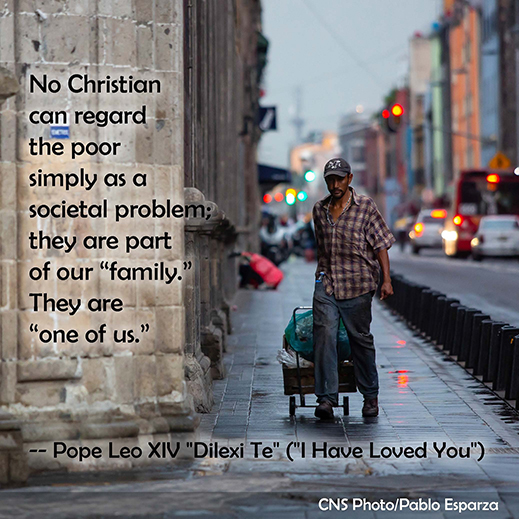
“Sí, ante nuestra pequeñez y pobreza, Dios nos mira como nadie más y nos ama con amor eterno”, dijo el Papa. “Y su Iglesia, incluso hoy, quizás especialmente en nuestro tiempo, todavía herida por viejas y nuevas formas de pobreza, espera ser “madre de los pobres, lugar de acogida y justicia””, afirmó, citando su exhortación sobre el amor a los pobres.

Aunque hay muchas formas de pobreza —material, moral y espiritual—, lo que las atraviesa a todas y afecta especialmente a los jóvenes es la soledad, dijo.

“Nos desafía a mirar la pobreza de manera integral, porque si bien a veces es necesario responder a necesidades urgentes, también debemos desarrollar una cultura de la atención, precisamente para derribar los muros de la soledad”, dijo el Papa. “Estemos, pues, atentos a los demás, a cada persona, dondequiera que estemos, dondequiera que vivamos”.

La pobreza es un reto no solo para quienes creen en Dios, dijo, y pidió a «los jefes de Estado y a los líderes de las naciones que escuchen el clamor de los más pobres».

“No puede haber paz sin justicia”, dijo el papa León, “y los pobres nos lo recuerdan de muchas maneras: a través de la migración, así como a través de sus gritos, que a menudo son sofocados por el mito del bienestar y el progreso que no tiene en cuenta a todos y, de hecho, olvida a muchas personas, abandonándolas a su suerte”.

Joy in simplifying

By Effie Caldarola

A few years ago, Marie Kondo, a Japanese organizing consultant, established a career by encouraging people to declutter.

“What gives me joy?” she told us to ask ourselves. If it doesn’t give you joy, out it goes.

I’ve repeated that little mantra, often with a touch of sarcasm, as I prepare our old house for a major interior paint job. Everything comes off the walls and shelves, nothing remains on the counters.

Effie Caldarola

We’re stripping rooms to only the furniture the painters can easily cover. Everything else migrates to the attic, where I ask the inevitable question, “Where does all this stuff come from?” Photos, clothes, knick-knacks, piles of books, souvenirs. Gifts, family memorabilia.

Moving everything around has propelled me to want to declutter. Organize. Get rid of “stuff.” And deciding — what’s treasure and what’s “stuff?”

During this season leading up to Thanksgiving and Advent, this project becomes spiritual as well as material.

I have a spot by the window where I pray in the morning, and the approach of autumn — and now winter — stirs something within me.

Maybe in part it’s the turmoil in our country and world right now. It’s a time of seeing things pass, of letting go, of feeling a sense of uncertainty. I watch the lush green foliage that climbs up my neighbor’s garage. It turned bright red, then its leaves wilted and fell. Now only the naked stems remain.

This is the cycle of life, I remind myself. Things pass away. I feel that cycle now more clearly as I get older. I don’t say that in a gloomy way; I see opportunity in the paring down, the digging through the junk to the essentials, whether in my overburdened attic or in my overburdened soul.

And my faith teaches me to remember that seeds are falling into the dormant soil, seeds of rebirth.
Lately, I have begun praying each morning with the day’s Scripture. I read slowly, and I stop when something touches me specifically. Some days, I find the readings less inspiring or more difficult than other days, but I dig for the nuggets, and I let the prayer follow.

St. Paul tells me, “The Spirit comes to the aid of our weakness; for we do not know how to pray as we ought, but the Spirit intercedes with inexpressible groanings.”

I sense that groaning as the darkness encroaches and the air grows colder. I sense it as I peruse my attic room. How can I connect my morning prayer to this room, this collection of my life? How can I know what to let go?

Just this morning, I gave a friend some old issues of a Catholic magazine. I still had them tucked away as I was going to “finish” them — someday. She was delighted. Move on, I remind myself. The next issue will be in the mailbox soon.

Simplify, my prayer tells me. As Christmas beckons, I face the inevitable shopping list, and I pray about how to pare down, to simplify, to make gifting more about experiences than about more plastic and more stuff. This is an environmental and moral issue.

Sort, throw, save, give away. Make room for those things valued most. As I write these words, I see how they pertain both to the clutter and detritus of my material goods, but also to the clutter of my interior life, my soul.

Buy less. Give more. Worry less. Pray more.

There’s peace in sitting in the morning silence, seeing the naked stems of a once flourishing plant and realizing this, too, brings me joy.

(Effie Caldarola is a wife, mom and grandmother who received her master’s degree in pastoral studies from Seattle University.)

Texas bishops: Court’s order on DACA ‘undermines’ right to work, support a family

AUSTIN, Texas (OSV News) — The Texas Catholic bishops Nov. 4 issued a warning about the effects of a soon-to-be-released plan to implement a federal appeals court order that will result in the loss of Deferred Action for Childhood Arrivals protections for an estimated 86,000 immigrants in the state.

The implementation “is imminently expected to change” the presence of DACA beneficiaries “from lawful to unlawful,” they said in a statement issued by the Austin-based Texas Catholic Conference of Bishops, the church’s public policy arm in the state.

“We, the Catholic bishops of Texas, firmly resolve to respond with compassion and a call for justice for those who, through no fault of their own, are now being forced to abandon their homes, their livelihood and their communities,” the statement said.

Commonly known as DACA, the program has been the focus of a seven-year back-and-forth legal battle in federal courts since 2018, with numerous rulings, appeals and modifications to its status.

The latest development came on Jan. 17 of this year, when the 5th U.S. Circuit Court of Appeals issued an order after its review of a ruling by the U.S. District Court for the Southern District of Texas that declared the DACA program to be unlawful.

Beatrice Cruz of Arizona holds a sign in support of the Deferred Action for Childhood Arrivals policy after a hearing on the DACA program, outside the federal courthouse in Houston June 1, 2023. Texas Catholic bishops say a federal court is poised to change lawful presence of 86,000 DACA recipients in Texas to unlawful; this means, they say, anyone who has DACA or is eligible to receive it would need to consider implications of moving to or from Texas. (OSV News photo/Adrees Latif, Reuters)

“While largely affirming the lower court’s ruling, the Fifth Circuit narrowed the ruling to apply only to Texas,” according to an Oct. 30 memo issued by the U.S. Conference of Catholic Bishops. “It also separated the issues of protection from deportation and work authorization. The case was returned to the lower court for implementation of the Fifth Circuit’s order, and further guidance from the district court is expected soon.”

The case is now before U.S. District Court Judge Andrew Hanen in Brownsville, Texas, who will determine how to apply the appeals court ruling.

On May 1, 2018, Texas — joined by Alabama, Arkansas, Louisiana, Nebraska, South Carolina and West Virginia — filed suit in the district court challenging the legality of the program. The suit, Texas v. United States, accused then-President Barack Obama and his administration of unlawfully and unilaterally granting what amounts to “citizenship” to “otherwise unlawfully present aliens” when it approved the DACA program in 2012.

The plaintiffs argued that DACA recipients increase state costs for education, health care and law enforcement; the district court ruled that Texas had standing to challenge the program and that it was unlawful. The 5th Circuit affirmed that Texas had standing to challenge DACA “based on the financial burden imposed by the presence of DACA recipients” and also found the program to be “substantively unlawful.”

Launched by an executive order from Obama, the program enables employment authorization and temporary protection from deportation to immigrants (commonly called “Dreamers”) brought into the U.S. by their parents as minors without legal authorization. Those eligible must have arrived before age 16, resided continuously in the U.S. since June 15, 2007, and have been under age 31 as of June 15, 2012.

According to KFF (formerly the Kaiser Family Foundation), as of Sept. 30, 2024, there were about 538,000 DAC recipients from nearly 200 different countries of origin in the U.S.

Federal officials proposed an implementation plan of the 5th Circuit’s order on Sept. 29, the USCCB memo said. Briefing by the parties has been scheduled through Nov. 24, with the district court’s detailed plan expected shortly after that.

Under the government’s plan, DACA recipients living in Texas who have a two-year renewable work permit would be given 15 days’ notice that the authorization is being revoked.

Similarly, according to data from the USCCB, “those with a work permit based on DACA who lived in other states and moved to Texas would be given that same 15 days’ notice going forward. However, the district court may introduce a different timeline for any changes to take effect.”

The 5th Circuit’s order “undermines each of these persons’ basic human right to seek work and to support a family,” the Texas bishops said. “It is contrary to the facts to claim that our state is harmed by DACA recipients lawfully working here. Instead, this kind of unprecedented and disruptive action by our government will harm our communities by fomenting fear, severing relationships, disrupting business and removing some of the most upstanding individuals from our community.”

“This decision will impact virtually every community in Texas by removing the lawful presence for DACA recipients who live in Texas,” they said.

DACA recipients would still be allowed to find employment in other states, according to The Texas Tribune. The news outlet also reported that Judge Hanen will also review a Department of Justice plan “that would see the government start accepting new DACA applications for the first time in four years,” though those applicants could not apply for work permits in Texas.

“The present distress in our country regarding immigration is the result of decades of unwillingness on all sides to enact reasonable and meaningful immigration reform, reform which respects both national security needs and the human right of each person to work and raise a family in peace,” the bishops said.

Implementation of the 5th Circuit’s order, they continued, “will harm our communities by fomenting fear, severing relationships, disrupting business and removing some of the most upstanding individuals from our community.”

Across the U.S., Christians account for approximately 80% of all of those at risk of Trump’s mass deportation effort, with the single largest group of affected Christians being Catholics, according to a joint Catholic-Evangelical report published by World Relief.

The report found one in six Catholics (18%) are either vulnerable to deportation or live with someone who is.

The Catholic Church’s Latino community is the most potentially affected by the Trump administration’s immigration enforcement operations. According to Pew Research Center data released in June, more than four out of 10 Catholics in the U.S. are immigrants (29%) or the children of immigrants (14%); but eight out of 10 Hispanic Catholics are either born outside the U.S. (58%) or are the children of immigrants (22%). 

ICE enforcement methods have become a major flashpoint with the Catholic Church, as various groups have charged ICE treatment of detained migrants is violating their human dignity, and that the rights of detained Catholics to receive the Eucharist and other sacraments have not been respected. The Department of Homeland Security has rejected such claims.

The Texas bishops reminded federal and state authorities “of the importance of proper training and supervision” for agents with U.S. Immigration and Customs Enforcement.

“No violent actions should ever be taken or justified to harm law enforcement officials or their families,” the bishops said. “The human dignity of law enforcement officers themselves is violated when they are expected to consider brutal and inhumane methods to enforce these decisions.

“We are pastors of ICE agents and DACA recipients, undocumented persons and families whose security is threatened,” they said. “This decision will only exacerbate fear and distrust, pit community members against one another, and cause significant economic disruption for many communities.”

The bishops added, “We want to say unequivocally to all our immigrant sisters and brothers, and in a particular way to those who arrived as children: We have heard your cries. We are with you in these difficult days.”

Mexican church leaders demand action after mayor murdered

(OSV News) — The Mexican bishops’ conference has condemned the murder of a mayor, who was assassinated after pleading for federal assistance in combating drug cartels — which extort avocado growers in his municipality in western Michoacán state.

Carlos Manzo, the mayor of Uruapan, was shot dead at a candlelighting ceremony for Day of the Dead on Nov. 1. Manzo was shot seven times, according to Mexico’s public security secretary, Omar García Harfuch, while photos from the event in the town square showed him holding his young son in his arms. Two suspects were arrested in the case, García Harfuch added.

Manzo’s slaying “adds to a series of murders of people who have dared to speak out and confront the absence of the rule of law in their communities, businesses and other spaces. Today, it is no longer enough to apprehend the killer: We must resolutely combat the root causes of all these murders,” the bishops’ conference said in a Nov. 2 statement.

“The ordinary presence of armed groups, which control the public life of citizens in various regions of the country, is the real crime to be faced: the roadblocks, the dispossession of lands, the constant threats to producers, merchants and rulers reflect a serious weakening of the constitutional order that the governments at the municipal, state and federal levels, are obligated to guarantee.”

The brazen murder sparked outrage in Mexico, where drug cartel violence has plagued swaths of the country for nearly two decades. The violence has especially plagued Michoacán, which has a long history of marijuana growing. But analysts say that now criminal groups now extort the growers of avocados and limes, illegally log forests and import chemical precursors for synthetic drugs through the port of Lázaro Cárdenas.

A priest in Michoacán described a desperate situation in the state with criminal groups colluding with politicians and fighting each other to control lucrative crime territories.

“The people are saying, ‘Enough, padre,” the priest, who ministers in a conflictive part of Michoacán, told OSV News. The priest, who previously lent spiritual support to self-defense groups that formed to fight drug cartels in 2013, asked for anonymity to speak candidly. “Believe me: We’re just a minute, a moment away from Michoacán burning,” the priest said.

Manzo became known for accompanying police as they patrolled Uruapan. He spoke out against organized crime and urged President Claudia Sheinbaum to take action.

“This country has already slipped out of the president’s control,” Manzo told Mexican media outlet Latinus. “The country is slipping away from us. Crime has become part of the landscape. … We are facing crime alone. There is no strategy, there is no state.”

Confronting criminal groups can be perilous. Bernardo Bravo, head of a citrus growers’ association in the city of Apatzingán, was recently found murdered after he organized a protest by citrus growers tired of paying extortion.

“These crimes wound Mexican society and demand an immediate and coordinated response from the authorities to rebuild peace in Michoacán,” said a Nov. 2 statement from the National Dialogue for Peace, an initiative to pacify Mexico, sponsored by the bishops’ conference, the Jesuits and the Conference of Religious Superiors of Mexico.

Sheinbaum condemned the killing of Manzo, who previously served in Congress as a member of her ruling Morena party and won the mayor’s office as an independent. She drew controversy on Nov. 3, however, for saying at her morning press conference that violence in Michoacán originated with former President Felipe Calderón — who she insisted stole the 2006 election and started cracking down on drug cartels in Michoacán to “legitimize” his win.

“And we have always said it is about addressing the causes and zero impunity, intelligence, investigation and prosecutions,” Sheinbaum said.

Calderón’s crackdown on drug cartels shortly followed his taking office in December 2006. It was preceded by a drug cartel known as La Familia Michoacana bursting into a bar in Uruapan and tossing five human heads onto a dance floor.

Manzo’s murder captured international attention and came as U.S. pressure on Mexico to stop the flow of drugs like fentanyl has mounted.

“The U.S. stands ready to deepen security cooperation with Mexico to wipe out organized crime on both sides of the border,” Christopher Landau, deputy secretary of state, said on X. “May his soul rest in peace and may his memory inspire prompt and effective action.”

(David Agren writes for OSV News from Buenos Aires.)

The meaning of Thanksgiving

By Marcellino D’Ambrosio

(OSV News) — For Americans, the term “Thanksgiving” conjures up images of turkey and cranberry sauce, parades and football games. These are “traditions” that have come to mark an event made a perpetual institution of American life by President Abraham Lincoln.

But why did Lincoln proclaim the last Thursday in November as a national holiday? Because it was clear to him that the blessings of food, land, family and freedom enjoyed by Americans are all gifts from the Creator. But Americans, he realized, had forgotten this. A special day was needed for us to forget our differences and remember our blessings. And from remembering naturally follows giving thanks to the source of those blessings.

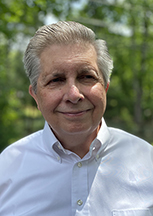
Marcellino D’Ambrosio, seen in this undated photo, is the co-creator of a new online study course and accompanying book titled “What We Believe: The Beauty of the Catholic Faith” from Ascension. And author of several books and articles, he currently is a professor of theology at Catholic Distance University, a private online Catholic university based in Charles Town, West Virginia. (CNS photo/courtesy Ascension)

The Israelites had an annual thanksgiving feast, as well. It was really a combination of two feasts, Passover and Unleavened Bread, and occurred in early spring. This is when the first crop, barley, began to be harvested and when the ewes gave birth to their lambs. The pagan Canaanites had already celebrated the feast of unleavened bread at this time to thank the gods for the harvest and offer them the first fruits as a sacrifice of gratitude. The pagan bedouins — wandering from place to place with their flocks — celebrated the spring gift of lambs by sacrificing some of them to the gods in gratitude for the gift of fertility.

The ancients did not need divine revelation to know that divine forces brought about the world and all its creatures. That’s just plain common sense. That we owe these divinities a debt of gratitude is justice, pure and simple.

But for the Jews, Passover was not just giving thanks for the blessings of creation. For them, God was not just the author of nature, with its seasons and life cycles. No, God was also the master of history. Among all ancient peoples, only the Jews believed that God entered into human history, manifested his love and power, and acted decisively to save his chosen people.

So while the pagans thanked their gods for the blessings each spring for food and fertility, the Israelites thanked the Lord for food, but even more, for freedom. They remembered not only that creation comes from him, but that salvation from slavery comes from him as well. This remembering happens each year in a solemn way at a special Passover meal that is the climax of the Jewish year.

On the night before he died, Jesus celebrated this solemn memorial by deepening its meaning yet further. Liberation from Pharaoh’s oppression was certainly something to celebrate. But there was a crueler slavery that a change of geography and regime could not alter. This slavery to Satan was kept in force through the shackles of sin. Just as he acted through Moses to free his people from Pharaoh, God was now about to act decisively to liberate his people from the ancient curse. He would act personally, not through proxies.

But this liberation would be costly. The only way that it could be won would be if God were to give not only his blessings, but his very self. To do this, God had become man, capable of offering the supreme sacrifice. And before he did it in actual fact, he did it in sacrament by offering himself under the unassuming forms of bread and wine. Before delivering himself into the hands of the Romans to be their victim, he delivered himself into our hands to be our nourishment.

For his aim was not just to open the way to future bliss in heaven. His aim was to pour into our wounds the balm of Gilead that would begin the healing process here and now. The bite of the serpent had injected venom. His body and blood would be the antidote, the “medicine of immortality,” in the words of St. Ignatius of Antioch.

Blood brings nourishment and life to every cell of our bodies. It also carries away impurities that poison our system. The Eucharist offers us a transfusion — we put aside our old life and receive his ever-new life, his divine vitality for our tired, toxic blood.

The life of a thing was in its blood. It was poured out at the foot of the altar and could never be consumed, for it belonged to God alone. But here God pours out his own blood at the altar of the cross and gives it to us as our drink, for the transformation of our lives.

“Do this in memory of me.” We are commanded to remember the supreme love of Christ for us that holds nothing back, that gives everything for our freedom. So naturally the sacrificial banquet of remembrance is called the Eucharist, or “thanksgiving.” The priest introduces the great central prayer of the celebration with these words: “Let us give thanks to the Lord our God.” And we respond, “It is right and just.”

During the Eucharistic Prayer, I always silently add in thanks for my personal blessings. I think of the natural blessings of home and work, of food on the table and the health of my family. I also thank God for my own salvation history, especially for plucking me out of danger as a teenager, running with a wild crowd. I thank God for bringing me together with a woman who loves him and loves me, and for having kept us faithful to him and each other for many years. I thank him for our own family’s salvation history.

If you haven’t already established the habit of adding your personalized thank-yous to the priest’s Eucharistic Prayer, try it next time you’re at Mass. It’s a very appropriate mode of participating in that part of the Eucharist.

But true thanksgiving is not just a matter of words and warm sentiments. Gratitude for a gift means offering a gift in return. He gave his whole, entire self to us — his body, blood, soul and divinity. The only adequate response would be to offer ourselves.

Note what Paul says in his letter to the Romans: “I appeal to you therefore, brethren, by the mercies of God, to present your bodies as a living sacrifice, holy and acceptable to God, which is your spiritual worship” (Rom 12:1).

So thanksgiving cannot be separated from sacrifice. The Mass is a celebration of his love and the freedom it won for us through his sacrifice. Through it, the love of God is poured into our hearts and enables us to love with his love. In the power of that love, we offer ourselves back to him and enter into that sacrifice which we celebrate. True thanksgiving means self-giving. This is the meaning of Eucharist.

(Marcellino D’Ambrosio is a speaker, author, pilgrimage director and theologian who directs the Crossroads Initiative.)

CSA feature: Catelin Britt – saying ‘yes’ to God’s call

At St. Elizabeth Catholic Church in Clarksdale, faith is growing strong among the parish’s young people thanks to Catelin Britt’s “yes” to God’s call – and the vital support of the Catholic Service Appeal (CSA).
For the past eight years, Catelin has served the parish in various ways and now leads as the Coordinator of Religious Education. Her journey in ministry began long before she joined the Catholic Church.

“It started when I was in ninth grade,” Catelin said. “I was asked to be a WYLD Life leader for middle school students. Sharing faith with them and walking through life together really shaped me.”

When she entered the Catholic Church in 2017, Catelin jumped right into parish life. “I was asked to help with Vacation Bible School and said yes right away,” she recalls. “It was chaotic, tiring, but so fulfilling!” That experience led to more opportunities – teaching First Communion prep, Sunday School, and eventually youth ministry. “Whenever I’ve been asked to share my faith, I’ve always said yes. God calls us to use our gifts to evangelize.”

Serving youth has also deepened her own faith. “I spend a lot more time in prayer now, especially for each child in our program,” Catelin said. “It’s also pushed me to keep learning about my faith so I can better guide them.”

Over the past few years, Catelin has witnessed incredible growth among the parish’s youth. “We’ve seen more participation not just in youth group, but at Mass,” she said. “We even have several young men discerning entering the church, inspired by their peers’ love for the faith.”

Thanks to support from the Catholic Service Appeal, ministries like Catelin’s continue to thrive. “The CSA eases financial burdens and allows us to focus on the kids,” she said. “Every dollar helps create opportunities for them to grow in faith. Generosity truly changes lives – and it’s helping form the church of today and tomorrow.”

To support youth ministry and other vital diocesan programs, visit jacksondiocese.org and make your gift to the Catholic Service Appeal today.

The annual Catholic Service Appeal unites Catholics across the Diocese of Jackson to support 14 vital ministries that serve local communities. From faith formation and youth ministry to seminarian education and clergy healthcare, these initiatives help carry the Gospel’s message to those in need throughout the diocese. Give today to help these ministries thrive.

CLARKSDALE – Catelin Britt (far left), coordinator of religious education at St. Elizabeth Parish, stands with the parish’s 2024 Confirmation class on April 6. Pictured with Catelin Britt, Bishop Joseph Kopacz and Father Raju Macherla are Kevin Elias, Angel Zuniga, Dominic Birdsong, Priscila Lopez, Bella Favi, Ayden Lutts and Bailey Martin. (Photo courtesy of the parish)

Click here to DONATE to the CSA in support of faith formation

Faith and friendship flourish in Saltillo

By Joanna Puddister King
SALTILLO, Mexico – Bishop Joseph Kopacz and Bishop Louis Kihneman of Biloxi traveled together to Saltillo, Mexico, October 15–20, continuing a long tradition of friendship and shared faith between Mississippi and the Diocese of Saltillo.

The trip marked Bishop Kopacz’s eleventh visit to the mission founded by Father Patrick Quinn more than 50 years ago. Father Quinn, who served in Mississippi before being assigned to Mexico in 1969, worked tirelessly to build bridges of faith between the people of Saltillo and the faithful of Mississippi. Today, his legacy continues to thrive through the Mission of San Miguel and the many chapels that extend across the desert landscape.

During their five-day pilgrimage, the bishops celebrated the Eucharist in city parishes and rural communities, visited Father Quinn’s tomb at Parroquia del Perpetuo Socorro, and joined local families in joyful processions honoring the Holy Infant of Good Health. At San Miguel, they gathered with parishioners for Mass before walking through the streets in celebration, surrounded by color, song, and faith-filled joy.

The visit also included confirmation Masses in Garambullo and Tanque del Cerro, meals and fellowship with local priests, and time spent at small desert ranchos where the people welcomed the bishops with open hearts. On the fourth day, rain fell over the desert for the first time in Bishop Kopacz’s eleven years of visits – a moment that filled the communities with thanksgiving and praise.

While in Saltillo, the bishops also visited Father Adolfo Suárez, a diocesan priest from St. Michael Parish in Forest and its missions, who has been serving at the Mission of San Miguel since April. Father Adolfo returned to Mexico earlier this year due to U.S. immigration limits that affect many foreign-born priests and religious serving in dioceses across the country.

Bishop Kopacz continues to raise awareness about the Religious Worker Protection Act (RWPA) – bipartisan legislation that would allow priests, sisters and other ministers like Father Adolfo to remain in the U.S. while awaiting permanent residency. “These faithful men and women serve our parishes and our people with dedication and love,” Bishop Kopacz said. “Their ministry is essential to the life of our church.”
“Every visit to Saltillo is a reminder of the universality of our church,” Bishop Kopacz added. “We may live far apart, but we share the same faith, the same hope, and the same joy in Christ.”

The Mission of Saltillo remains a living partnership between the Dioceses of Jackson and Saltillo – a bond strengthened through prayer, presence and a shared mission to serve God’s people.

St. James Magnolia marks over 150 years of faith

By Joanna Puddister King and Tereza Ma
MAGNOLIA – The small but spirited Catholic community of St. James the Greater Parish in Magnolia gathered Saturday, Oct. 5 to celebrate 153 years of faith, friendship and perseverance – a legacy that began as a rural mission and continues today as a thriving parish in southern Pike County.

Though billed as the parish’s 150th anniversary celebration, the event had been postponed several years due to the pandemic. When parishioners finally gathered, the joy and gratitude were unmistakable.
Bishop Joseph R. Kopacz presided at an outdoor Mass beneath white tents set up beside the historic wooden church, which could not accommodate the large crowd that came to celebrate. Concelebrating with Bishop Kopacz were Father Suresh Thirumalareddy, pastor; Father Bill Henry, a former pastor; and Father P.J. Curley, who once served in the region.

Bishop Joseph Kopacz concelebrates an outdoor Mass marking St. James Parish’s 150th anniversary with Father Bill Henry, Father Suresh Thirumalareddy and Father P.J. Curley.

The Mayor of Magnolia, Marvin Brumfield, joined the celebration and presented a proclamation recognizing St. James for its historic presence and contributions to the community.

Parishioners and guests from across Pike County gathered for music, fellowship and a hearty Southern meal following Mass. The afternoon included a silent auction, children’s face-painting, and food prepared by parishioners and friends from nearby parishes.

“It’s small, but powerful,” said parishioner Vicki Todd, who moved to Magnolia permanently nine years ago partly because of the charm of St. James. “We’ve spent months preparing for this day. People believe in St. James Parish – our little bitty church is just as beautiful as can be.”

Music minister Celena Johnson, who has led music since 2019, coordinated a combined choir of parishioners and musicians from St. James and St. Alphonsus Parish in McComb, reflecting the deep ties between the two faith communities. “I’m so blessed to have them,” she said. “We just keep it in the family.”

From its beginnings in the 1860s, St. James has depended on that sense of family. The parish traces its roots to Father Henry Picherit, who celebrated Mass in local homes before the first church was completed in 1874 and dedicated to St. James the Greater. Priests from Osyka, McComb, and Chatawa served the mission through the decades, including Redemptorists and the School Sisters of Notre Dame, whose presence at nearby Chatawa formed deep spiritual ties that endure today.

Several sisters who once lived or served in Chatawa returned for the anniversary, including Sister Gemma Marie Dittle, who praised Father Suresh’s leadership. “He’s so devoted and loves to teach and serve. It was a beautiful celebration,” she said. Sister Marie Clare Powell, 99, attended in honor of a lifelong friend – Sister Mary Clared – who played the organ for nearly 30 years. “We were classmates – she was one of the most faithful members of St. James,” she recalled.

MAGNOLIA – Parishioners and guests gathered under large white tents outside St. James the Greater Parish to celebrate the church’s long-awaited 150th anniversary, a celebration delayed several years by the pandemic. Among those attending were the School Sisters of Notre Dame – Sister Gemma Marie Dittle, Sister Sue, and Sister MarieClare Powell – who traveled from St. Anthony Gardens in Covington, Louisiana. The sisters were once a vibrant part of parish life through their ministry at St. Mary of the Pines in nearby Chatawa, which closed in 2020. The festive day also included music, food, and fellowship as parishioners and friends rejoiced in the enduring faith community of Magnolia. (Photos by Tereza Ma)

St. James remained a mission of St. Alphonsus McComb until Nov. 1, 2019, when Bishop Kopacz elevated it to parish status, recognizing its steady growth and service to Catholics throughout southern Pike County.

Bishop Kopacz said, “From the early days when the Redemptorists established this small mission church, you have grown into a beautiful expression of devoted, faith-filled followers of Christ sharing His Good News with one another and your neighbors in Pike County.”

For parishioners, the milestone was more than a look back – it was a renewal of their commitment to one another. “May God continue to bless you for your dedication and zeal for His church,” Bishop Kopacz, said.

Journey of Hope inspires faithful to “live God’s dream” through service and discipleship

By Joanna Puddister King
JACKSON – Catholic Charities’ annual Journey of Hope took on a new format this year, reaching across the diocese with two gatherings that drew nearly 800 people to celebrate faith, service and hope.

More than 550 guests attended the Oct. 22 luncheon at the Country Club of Jackson, while another 250 gathered the following day at St. James Parish in Tupelo, where the focus centered on the outreach of Catholic Charities’ Vardaman office in Northeast Mississippi.

“Each event reflected how Catholic Charities and our programs are guided by our faith,” said Michael Thomas, development director for Catholic Charities of Jackson. “The goal is always that everyone leaves with a positive sense of what Catholic Charities is doing throughout our state to better the lives of so many.”

JACKSON – Father Burke Masters speaks to a crowd of over 550 gathered at the Country Club of Jackson for Catholic Charities annual Journey of Hope event on Wednesday, Oct. 22. (Photo by Joanna Puddister King)

Featured speaker Father Burke Masters, a former Mississippi State University baseball standout, Chicago Cubs chaplain and priest of the Diocese of Joliet, told guests that discipleship requires the same commitment and discipline once demanded of him on the field.

Scouts, he said, used to rate ballplayers on six “tools”: hitting, power, running, fielding, throwing and baseball IQ. “I was good at everything but great at nothing,” he recalled with a smile. “Not all of us can become Major League ballplayers, but all of us can become better disciples of Jesus Christ.”

He offered a spiritual parallel – the six tools of a disciple: grow, give, serve, worship, imitate Jesus, and build community. “Everybody looks for meaning and purpose,” he said. “And I can’t imagine anything more meaningful or purposeful than eternal life.”

Father Masters urged guests to make time for daily formation. “We practiced five hours a day to be the best baseball players we could be,” he said. “How much time do you and I invest in our spiritual lives?”
He also challenged listeners to approach worship with gratitude. “You don’t have to go to church – you get to go,” he said. “You get to worship the God of the universe.”

Thomas said proceeds from the Jackson event will benefit all Catholic Charities programs, while donations from Tupelo will remain in the Vardaman regional office, supporting ministries that serve families and individuals across the northeast region. “Donors know that they have a vested interest in what is accomplished in their own communities,” he said.

This year’s events highlighted Catholic Charities’ mission to bring hope and healing statewide through more than two dozen programs, from adoption and counseling to domestic-violence intervention and outreach for immigrants and refugees.

TUPELO – Wayne Hereford of WTVA interviews Father Burke Masters after his Journey of Hope talk at St. James Parish. (Photo by Tereza Ma)

Thomas credited widespread collaboration for the Jackson events’ success, noting leadership from St. Paul, Flowood; St. Francis of Assisi, Madison; and St. Richard, Jackson, who “led parish participation this year and set an example we hope others will follow.”

He also expressed appreciation for Christina Bach, executive director of Catholic Charities; Father Tim Murphy and the St. James staff in Tupelo; Michele Harris, board chair; and Julie Gibert, who chaired the development committee. “Everyone worked so hard to bring back our Journey of Hope and make it a success in both Jackson and Tupelo,” Thomas said.

Thomas said the dual-location format may continue in future years depending on the speaker, noting how fortunate organizers were that Father Masters could address both gatherings.

“Great things are happening with our programs,” he added. “Our Kinship Navigator Program is expanding to Greenwood and Jackson; and Born Free has a new director.”

In closing, Father Masters shared a story about receiving a replica Chicago Cubs World Series ring from seminarians while serving as vocation director. He often shows it to students, who “ooh and ahh” before he explains it is a $15 imitation. “It looks real, but it’s not,” he said, adding that his real focus is on a greater prize. “The crown of eternal glory doesn’t collect dust, it doesn’t fade away, and it lasts forever. Let’s live today as disciples preparing for that face-to-face meeting with God.”