What Palm Sunday means

By D.D. Emmons , OSV News

(OSV News) — It is a time of despair, perplexity and contradiction. The very people who applaud Christ’s entrance into Jerusalem that morning, shouting out “Hosanna” and words of adoration will, within a week, be crying, “Crucify him.” They will go from acclaiming him as the new King of Israel to urging his life be traded in favor of a convicted criminal; they will first praise him and then mock him. Even friends entering Jerusalem at his side will desert Jesus.

All this discord will take place during one week beginning on what we call Palm Sunday.

Christians carry palm branches in 2017 while walking the traditional path that Jesus took on his last entry into Jerusalem during the Palm Sunday procession on the Mount of Olives in Jerusalem. (OSV News photo/Debbie Hill)

As we read in the Gospels, Jesus went to Jerusalem to join with throngs of other Jews to celebrate the Passover feast as had been prescribed in the Old Testament books of Exodus and Deuteronomy. According to the Gospel of St. John, Jesus and many of his followers journeyed the less than two miles from Bethany on that Sunday, arriving outside Jerusalem. As was the custom, pilgrims that had already arrived in the city went out to greet newly arriving groups; some had never seen Jesus but had heard about the miracles attributed to him and were caught up in the excitement.

Those arriving with and greeting Jesus were large in number as explained by John’s Gospel: “When the great crowd … heard that Jesus was coming to Jerusalem, they took palm branches and went out to meet him, and cried out: ‘Hosanna! / Blessed is he who comes in the name of the Lord, (even) the king of Israel'” (12:12-13).

This adulation was not lost on the Pharisees who were present. They said to Jesus, “Teacher, rebuke your disciples.” He said in reply, “I tell you, if they keep silent, the stones will cry out” (see Lk 19:39-40). The Pharisees reported the events back to the Jewish high council, the Sanhedrin, which regarded Jesus’ ever growing popularity as a threat to their cozy relationship with the Romans. They were, in fact, planning to murder him.

Previously, Our Lord had deliberately avoided popular acclaim, even fled, but this, upon entering Jerusalem, he accepts. Yet his actions are different than the people expected. He doesn’t present himself as a rival to Caesar; he is not the political messiah or the warrior king the multitude had clamored for. Instead of entering Jerusalem on a war horse or chariot, he enters on a donkey, a sign of peace; and not just any donkey, but one on which no one had ever sat, the prerogative of a king. Seeing him on the donkey, the Jews surging around him recalled the words of the Prophet Zechariah 500 years earlier:

“Exult greatly, O daughter Zion! / Shout for joy, O daughter Jerusalem! / Behold: your king is coming to you; /a just savior is he, / Humble, and riding on a donkey, / on a colt, the foal of a donkey. / He shall banish the chariot from Ephraim / and the horse from Jerusalem” (Zec 9:9-10).

Pope Benedict XVI explained these Old Testament words as they related to Jesus: “He is a king who destroys the weapons of war, a king of peace and a king of simplicity, a king of the poor. … Jesus is not building on violence; he is not instigating a military revolt against Rome.”

Riding on the borrowed donkey, Jesus made his humble entrance into the city while the crowds were scattering their garments before him and waving their palm branches. This joyful scene belies the traitorous acts, sorrow and agony that will soon follow, belies that this triumphant hero will be crucified like a criminal.

St. Bernard of Clairvaux (1090-1153) offered a homily about Christ’s entry into Jerusalem: “How different the cries, ‘Away with him, away with him, crucify him,’ and then, ‘Blessed is he who comes in the name of the Lord, hosanna, in the highest!’ How different the cries are that now are calling him ‘King of Israel’ and then in a few days’ time will be saying, ‘We have no king but Caesar!’ What a contrast between the green branches and the cross, between the flowers and the thorns! Before they were offering their own clothes for him to walk upon, and so soon afterwards they are stripping him of his, and casting lots upon them.”

Palms were symbols of life among the nomadic tribes, who, when crossing the desert, rejoiced at seeing the palm tree as it indicated an oasis with life-giving water was near. Palms have long been a sign of victory, success and glory. Victorious armies or leaders returning from the battlefield or a long military campaign were welcomed by the populace jubilantly waving palm branches. Despite Jesus’ peaceful manner, when the Jews waved the palms at him and spread their clothing over which he rode, they were affording him the honors of a conquering hero and simultaneously defying the Roman occupiers.

On Palm Sunday, we still go out to meet him, carry the blessed palms, joyfully sing out our hosanna and join in his triumphant entrance into Jerusalem. But soon our joy turns to somberness as, clutching our palm, we hear the narrative of Christ’s passion. We realize, once again, that his triumph, his true victory, will come through the cross. We know, as Jesus did, how Holy Week will end. We know that joy will turn to sorrow and back to joy. We know that through the horror of his suffering, followed by the glory of his resurrection, good will trump evil and life will trump death.

The palms we take home and put in a special place serve to remind us that Palm Sunday is not lost to the ages but that by Christ’s victory we, too, can achieve everlasting life.

Soon after the Resurrection, Christians wanted to visit the sites of Christ’s passion and even reenact the incidents that had taken place, such as his entry into Jerusalem. But such activity would not be possible until the fourth century when Constantine became emperor of the Roman Empire and ended all religious persecution. Later in that century, a Spanish pilgrim named Eigera visited Jerusalem. In her diary, she recorded how Christians re-created the events of Holy Week. She wrote that they gathered outside the city on the Sunday before Easter and listened to one of the Gospels telling of Christ’s triumphant entrance into Jerusalem. Then they marched together through the city gates while carrying olive or palm branches. Our Palm Sunday processions are akin to what Eigera witnessed 17 centuries ago.

By the ninth century, the procession with blessed palms had expanded beyond Jerusalem, and during the Middle Ages they became widespread throughout Europe. In the 17th century, Christians were not only processing into church with palms but, during Mass, holding the palms while the Passion was being read.

Through the centuries, Palm Sunday and the procession of people holding palms would be celebrated in a variety of ways. In some locations the Blessed Sacrament was part of the procession, in other places the congregation started in the parish cemetery and then went into the church. Palms were sometimes blessed in one church and the people, carrying the palms, marched to another church for Mass. Most typical was the blessing of the people and the palms at a place outside the church and then processing in. For some time, even through the middle of the 20th century, the priest wore red vestments during the palm blessing and procession and then changed to a violet garment for Mass.

In 1955, the Church standardized and simplified the different entrances used on Palm Sunday: either an organized procession that begins somewhere outside the church, a solemn procession starting inside the church, or no procession at all. An entrance procession beginning at a location outside the church is used only once during the weekend Masses; it is not repeated at every Mass. The church calls this day Palm Sunday of the Passion of the Lord.

(D.D. Emmons writes from Pennsylvania.)

Sister Thea Bowman had a ‘loving heart,’ ‘ prophetic spirit’ and ‘boundless stamina,’ bishop says

By Jennifer Brinker / St. Louis Review

JACKSON, Miss. (OSV News) — Servant of God Thea Bowman was a beacon for the Church to embrace more authentically the essence of what it means to be Catholic, Bishop Joseph R. Kopacz told Massgoers at the Cathedral of St. Peter the Apostle in Jackson.

“To love the Lord your God with your whole heart, mind, soul and strength, and your neighbor as yourself portrays her lifelong commitment,” he said in his homily at a Feb. 9 Mass of thanksgiving marking the conclusion of the diocesan phase of Sister Thea’s canonization cause. “Her loving heart, her prophetic spirit, her brilliant mind and boundless stamina, even in illness, inspired many.”

The Mass was attended by friends and acquaintances of Sister Thea, representatives from her religious order, the Franciscan Sisters of Perpetual Adoration, members of the historical commission who were part of the diocesan investigation and students from Sister Thea Bowman School in Jackson.

An official closing session of the diocesan phase of the canonization process followed the Mass, where the cause’s leaders ceremoniously sealed several boxes containing the diocesan phase’s documents and findings. In all, 10 boxes containing two sets of documents including more than 15,000 pages each, will be sent to the apostolic nunciature in Washington and then transferred to the Vatican’s Dicastery for the Causes of Saints, which will further investigate the cause.

Jackson’s Bishop Kopacz, the main celebrant at the Mass, was among several bishops who witnessed the closing session. Concelebrants included Archbishop Mark S. Rivituso and retired Archbishop Thomas J. Rodi of Mobile, Alabama, and Bishop Steven J. Raica and retired Bishop Robert J. Baker of Birmingham, Alabama.

Bishop Joseph R. Kopacz places a seal on the boxes for the cause for Sister Thea Bowman, with the assistance of postulator, Emanuele Spedicato on Feb. 9 at the Cathedral of St. Peter the Apostle. (Photo by Tereza Ma/Mississippi Catholic)

Bishop Kopacz in 2018 opened the cause for Sister Thea, a native of Mississippi who was born in Yazoo City and raised in Canton. She was the only African American member of the Wisconsin-based Franciscan Sisters of Perpetual Adoration. Before she died of cancer in 1990 at age 52, she was a widely known speaker, evangelizer and singer.

Nearly eight years after the cause was opened, Bishop Kopacz described the moment of closing the diocesan phase of the investigation as a blessing, especially for those who have been inspired by Sister Thea’s life.

“There’s considerable joy in the African American community,” he said. “It radiates throughout the whole diocese. Our Hispanic population is very proud of Sister Thea Bowman, too. They look to her as someone who had done a lot in her life and inspires them, in spite of obstacles, to continue forward. She had a great passion and love for God, and she saw the Church as the body of Christ as being for all. She taught people to be proud of their culture, and yet see the universality of the Church.”

Among the documents and findings related to Sister Thea are interviews with more than 40 witnesses as well as her writings, articles and other items pertaining to her life, said Emanuele Spedicato, the postulator for the cause who has been charged with sending the documents to Rome.

There are main components of a canonization investigation, which include a proven reputation for holiness, a rigorous examination of the candidate’s writings and life, the testimony of witnesses regarding heroic virtue and the investigation of at least one miracle attributed to their intercession.

Notary for the cause, Fabvienen Taylor witnesses Emanuele Spedicato place the final documents in the boxes for the cause for Servant of God Sister Thea Bowman.

Once the Vatican accepts the acts of the diocesan investigation, the sealed boxes will be opened and then begins the work of summarizing the information, said Spedicato, who will be tasked with writing the “positio,” which lays out the case for sainthood. From there, it is sent to the Dicastery for the Causes of Saints and then ultimately to the pope.

“The most exciting part is being here today and showing the people the formalities (of the investigation) that are not only formalities but it’s for a purpose,” Spedicato said.

Sister Thea is among seven Black Catholics with active sainthood causes — dubbed the “Saintly Seven.”

Of the seven, four have been declared “Venerable”: Mother Mary Lange, who founded the Oblate Sisters of Providence, the first Catholic order of African American women religious, in Baltimore; Father Augustus Tolton from Chicago, the first Catholic priest in the United States known to be Black; Pierre Toussaint from New York City, known for his works of charity; and Mother Henriette Delille, foundress of the Sisters of the Holy Family in New Orleans.

Two others, like Sister Thea, have the title “Servant of God”: Julia Greeley, who was born into slavery and after her emancipation later moved to Denver, where she was known for her works of charity; and Father Martin de Porres Maria Ward, a Conventual Franciscan and Boston native who served the poor and the sick on mission in Brazil well into the late 1990s.

Myrtle Otto

Among those who attended the Mass at the Jackson cathedral was Myrtle Otto, one of Sister Thea’s pupils at Holy Child Jesus School in Canton.

After joining the Francsican Sisters of Perpetual Adoration, Sister Thea returned to the school where she once was a student to teach music and English literature. She often stressed the importance of receiving a good education but also knew how to have fun, too, Otto said.

“We respected her in the utmost,” she said, adding that Sister Thea’s legacy should live on in how we treat others.

“Always learn to be kind,” Otto said. “Always learn to give people what’s due to them. She was a strong woman, and she taught us how to be strong. Regardless of what goes on, you pray and you go on and you’ll be successful. She’s now gone to glory with God.”

Several members of the Franciscan Sisters of Perpetual Adoration leadership were in attendance, including Sister Georgia Christensen, who knew Sister Thea from the time they were junior professed sisters.

Years ago during one of her assignments at a predominantly Black school in California, Sister Thea had come to help out for a brief period and was encouraging with the students, Sister Georgia recalled.

“She always had a spirit of joy about her,” she told the St. Louis Review, news outlet of the St. Louis Archdiocese, which Sister Thea visited on numerous occasions in the 1980s.

“She was able to break into song at any time, just praising God and making others happy. It touches the soul, and what it says is her life was a life worth living,” Sister Georgia recalled.

As part of their community’s perpetual adoration, the Franciscan sisters include a prayer at the end of every hour with the line: “All praise and all thanksgiving, be every moment thine.”

“I couldn’t help but think of that here today,” Sister Georgia said. “This is a moment of glory to God and Thea was the cause of it.”


Jennifer Brinker is a reporter at the St. Louis Review and Catholic St. Louis, the news outlets of the Archdiocese of St. Louis. This story was originally published by the St. Louis Review and distributed through a partnership with OSV News.

Hope Rising: Diocese launches 2026 Catholic Service Appeal

By Joanna Puddister King
JACKSON – As the Diocese of Jackson approaches Commitment Sunday for the 2026 Catholic Service Appeal (CSA), Catholics across the diocese are invited to prayerfully reflect on their commitment to prayer, participation, and generosity in support of ministries that serve communities throughout the diocese.

Commitment Weekend, including the in-pew collection, will take place Feb. 14–15 in parishes across the diocese.

The theme for the 2026 Appeal, Hope Rising, reflects both the spiritual foundation of the CSA and its tangible impact across the diocese. Rooted in the Gospel and inspired by the Beatitudes, the Appeal supports ministries that bring Christ’s compassion to life in parishes, missions and communities large and small.

Bishop Joseph R. Kopacz has emphasized that hope is not an abstract idea, but something made visible through the shared mission of the Church. When Catholics live out the Beatitudes, he notes, hope does not merely glimmer – it rises. Through the Catholic Service Appeal, the faithful become a living witness of Christ’s compassion, serving those in need and strengthening the Church across the Diocese of Jackson.

Funds raised through the CSA support a wide range of diocesan ministries, including the formation of future priests, care for retired clergy, prison ministry, faith formation programs, and the charitable outreach of Catholic Charities. Together, these ministries serve individuals and families facing hardship, accompany those seeking healing and reconciliation, and nurture faith at every stage of life.

The Appeal is the primary means by which the diocese funds ministries that no single parish could sustain alone. Through the Catholic Service Appeal, each parish works toward a shared goal to help sustain diocesan ministries, and through this shared participation, Catholics across the Diocese of Jackson help ensure that pastoral care, education, charitable outreach and evangelization remain accessible in every corner of the diocese.

While the CSA is a financial appeal, diocesan leaders stress that it begins with prayer. Parishioners are encouraged to reflect on how God is calling them to participate – through prayer, service, and, as they are able, financial support.

As one diocesan family, Catholics are invited to be the hands and heart of Christ. When the faithful walk together in faith and generosity, hope truly rises for those they serve.

For more information about the 2026 Catholic Service Appeal, visit csa.jacksondiocese.org or contact Rebecca Harris, director of stewardship and development at rebecca.harris@jacksondiocese.org.

Final Communiqué of the Co-ordination of Episcopal Conferences in Support of the Church of the Holy Land17 – 21 January 2026

“You are the salt of the earth; you are the light of the world” Matthew 5:13-14

Our pilgrimage was to a Land where people are suffering trauma. We began with a visit to Bedouin communities living on the margins of society in the Occupied West Bank. They shared their experiences of a life on the periphery, being observed but often not encountered, their movement heavily restricted by rapidly expanding settlements encircling them on the surrounding hills.

We heard stories about Israeli settler attacks and their continual violence and intimidation, theft of livestock and demolition of property, leaving many unable to sleep at night for fear of further violence. When we asked them who sees their struggles and their cry to live in peace with their neighbors, they replied: “Nobody sees us.”

A family praises God at Taybeh Parish – Christ the Redeemer Church, located in the center of the West Bank. Bishops from the Holy Land Co-ordination pilgrimage attended Mass in January 2026 and visited with the community. (Photo by Marcin Mazur/Catholic Church of England and Wales)

Our journey continued with Mass in the only completely Christian town in Palestine. They, too, told us of their suffering: endless attacks from extremist settlers, uprooting of their olive trees, the seizure of their land and intimidatory acts that make their daily life unbearable, driving many into mass emigration. In the twelve months since our last visit, the Land of Promise is being diminished and challenged. Gaza remains a catastrophic humanitarian crisis. The people of the West Bank we encountered are demoralized and fearful. The courageous Israeli voices which speak out for human and civil rights are increasingly threatened; advocating for marginalized voices is a costly solidarity. We fear that soon, they too will be silenced.

As Christians, it is our calling and duty to give a voice to the voiceless, and to bear witness to their dignity, so that the world may know their suffering and be moved to advocate for justice and compassion.
The settlements in the West Bank, illegal under international law, continue to expand by commandeering the land of others. The universality of human rights applies to all without exception. Instead, it is relentlessly replaced by a system where dignity and protection depend on one’s civil status.

We affirm Israel’s right to exist and for Israelis to live in peace and security; equally, we call for these same rights to be upheld for all those rooted in this land. We hope that efforts for peace will prevail over violence, and that there will be no more acts of terrorism and war. We also urge our governments to exert pressure on Israel to uphold the rules-based international order and to revive meaningful negotiations toward a two-state solution for the benefit and security of all.

We were deeply moved by the faith and steadfastness of local Christians and also by people of other faiths who work to sustain the hope of their communities. They remind us that it is our shared vocation to be “salt of the earth” and “light of the world” and to strive for peaceful coexistence and security across the Holy Land.

We also witnessed the courage of those Jewish and Palestinian voices who, despite immense challenges and their own trauma, continue to advocate for justice, dialogue and reconciliation. Hearing from parents who have lost a child to conflict and can still find a way to forgive, offers a powerful witness to the possibility of peace and reconciliation. Few experiences are more devastating. When such a mother or father pleads for an end to violence, the world must listen – and act.

The people of the Holy Land cry out for our help and prayers; they long for an end to their suffering. Stand with them. Recognize their plea for dignity. Help foster genuine dialogue between communities. Heed the call of Cardinal Pierbattista Pizzaballa, the Latin Patriarch of Jerusalem, to come on pilgrimage as a sign of our love, support and solidarity with them.

As we leave this Land, we do so with our hearts full of compassion for those who are suffering and inspired by those who, by their pursuit of justice, keep the hope of peace alive.
Our Lady Queen of Palestine and of all the Holy Land, pray for us.

Rt. Rev. Nicholas Hudson
Bishop of Plymouth

Moderator of the Holy Land Coordination

Chair of the International Affairs Department, Bishops’ Conference
 England and Wales

Rt. Rev. Nicolo Anselmi
Bishop of Rimini

Italy

Most Rev. Udo Bentz
Archbishop of Paderborn

Germany


Rt. Rev. Peter Burcher
Bishop Emeritus of Reykjavik

Denmark, Finland, Iceland, Norway, Sweden, Switzerland

Rt. Rev. James Curry
Auxiliary Bishop of Westminster

International Affairs Department, Bishops’ Conference
England and Wales

Rt. Rev. Paul Dempsey
Auxiliary Bishop of Dublin

Ireland

Rt. Rev. Michel Dubost C.I.M.
Bishop Emeritus of Evry-Corbeil-Essonnes
France

Most Rev. Antoine Herouard
Archbishop of Dijon
Co-President of Justice & Peace, Europe

Vice-President of COMECE

France

Rt. Rev. Joseph Kopacz

Bishop of Jackson
International Justice and Peace Department, Bishops’ Conference

United States of America


Most Rev. William Nolan
Archbishop of Glasgow
Justice and Peace Scotland
Scotland

Rt. Rev. Christian Rodembourg M.S.A.
Bishop of Saint-Hyacinthe

Canada

Most Rev. Joan Enric Vives Sicilia
Bishop Emeritus of Urgell

Spain

Rt. Rev. Abdallah Elias Zaidan
Bishop of the Maronite Eparchy of Our Lady of Lebanon

Chair of the Committee on International Justice and Peace, Bishops’ Conference
United States of America

Learning the heart of the priesthood

GUEST COLUMN
By Joe Pearson
There were many sleepy eyes as we seminarians gathered for Mass at 3:15 a.m. before departing for our mission trip to Costa Rica. The chapel was dark and quiet, without the usual buzz of the choir rehearsing, but there was an air of excitement and anticipation.

The prayer over the Offerings for that Mass, the Memorial of St. Francis Xavier, was a fitting send-off: “Receive, O Lord, these offerings we bring you in commemoration of St. Francis Xavier, and grant that, as he journeyed to distant lands out of longing for the salvation of souls, so we, too, bearing effective witness to the Gospel, may, with our brothers and sisters, eagerly hasten toward you. Through Christ our Lord.”

Joe Pearson

As part of our priestly formation, each year the class of first-configuration seminarians travels to the Diocese of Limón on the western coast of Costa Rica. The week consists of evangelization, manual labor and the celebration of liturgy with the people.

Our flight arrived in the capital city of San José, and from there we bused to our base camp in Limón. We were joyfully greeted by Father Pablo Escriva de Romani, a missionary priest originally from Madrid, Spain, who would be our leader for the week. We immediately gathered for an hour of Eucharistic exposition and evening prayer.

“It is important to remember we are evangelists, not social workers,” Father Pablo said over dinner that first night, a point he reiterated throughout the trip. The source of our strength was prayer. Our purpose was not merely to perform charitable acts but to encounter people. Our motivation was not simply that it is good to help those in need. We have encountered the gratuitous love of our Lord, and as a consequence we are compelled to share that love with our neighbors, especially the poor, with whom Christ aligns himself in a unique way.

The next day, we set out a few miles down the road to work in conjunction with the Missionaries of Charity, the religious order founded by St. Mother Teresa. Through them, we were connected with two refugee families whose homes were in desperate need of repair. We spent the day tearing out rotting floors and digging holes for the concrete pillars that would support new ones. Throughout our work, we spoke with the families, and at the end of the day we gathered to pray with them and thank them for the opportunity to serve.

From there, our trip transitioned as we drove to remote villages of the indigenous people to minister to them and celebrate Mass. I rode with Father Pablo as we bounced along rough mountain roads in his old 4Runner. His excitement was contagious. He grinned from ear to ear, like a child awaiting Christmas morning. His love for the people was tangible.

For more than 40 years, the indigenous communities had not been visited by a priest until Father Pablo began doing so about 10 years ago. The people knew they were Catholic in name but little else about the faith. Over years of loving, zealous care, Father Pablo has helped build up a vibrant community.

I was deeply moved by the faith of the indigenous people. Many walked miles along rugged mountain paths from neighboring villages when they heard Mass would be offered on Sunday. They prayed fervently late into the night before the Blessed Sacrament.

At the end of our trip, we set aside a full day for a silent retreat to reflect on our experiences and the graces the Lord offered during our time on mission. It is true that the Lord is never outdone in generosity. As missionaries, we prepare to give of ourselves and to witness selflessly and boldly to the Gospel. Yet so often it is the people we encounter who witness to us by their faith, leaving us spiritually edified.

Over the course of the mission trip, we experienced the essence of the priesthood: offering worship to God and, out of longing for the salvation of souls, inviting all to share in the joy of the Gospel. And what a joy it is. As we invite others to hasten toward the Savior, we simultaneously hasten toward him ourselves. There is no greater gift, no greater happiness.

(Joe Pearson is a seminarian for the Diocese of Jackson in the first-configuration class at St. Joseph Seminary College in St. Benedict, Louisiana.)

Pope sets Jubilee to mark 800th year since St. Francis’ death; saint’s body to be displayed

(CNS) – Pope Leo XIV has proclaimed a special Jubilee Year coinciding with the 800th anniversary of the death of St. Francis of Assisi.

The Apostolic Penitentiary, a Vatican tribunal that deals with matters of conscience, issued a decree published by the Franciscan Friars Jan. 10, declaring a yearlong celebration in honor of the Poverello, or the Little Poor One.

According to the decree, Pope Leo has established that from Jan. 10, following the closing of the church’s Jubilee Year, until Jan. 10, 2027, a special Year of St. Francis may be proclaimed, in which every Christian, “following the example of the Saint of Assisi, may himself become a model of holiness of life and a constant witness of peace.”

Noting previous jubilee celebrations related to the works of St. Francis – such as the eighth centenary commemorations of the first Nativity scene, as well as his composition of the “Canticle of the Creatures” and his receiving of the stigmata – the decree stated that “2026 will mark the culmination and fulfillment of all previous celebrations.”

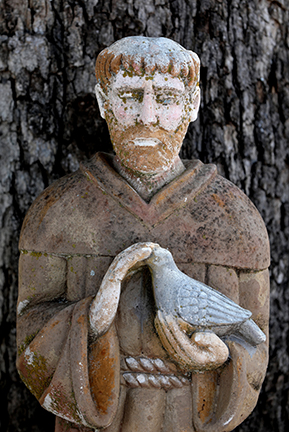
MADISON – The sun shines on a statue of St. Francis of Assisi at Cajun Fest at St. Francis of Assisi parish in 2021. Pope Leo XIV has proclaimed a special Jubilee Year coinsiding with the 800th anniversary of the death of St. Francis. (Photo from archives)

In its decree, the Apostolic Penitentiary also announced that plenary indulgences will be granted to Catholics “under the usual conditions (sacramental confession, Eucharistic communion and prayer for the intentions of the Holy Father), which can also be applied in the form of suffrage for the souls in Purgatory.”

The indulgence will be granted to those who participate in a pilgrimage “to any Franciscan conventual church, or place of worship in any part of the world named after St. Francis or connected to him for any reason,” it stated.

The sick, the elderly and caretakers unable to leave their homes can also obtain a plenary indulgence under the usual conditions “if they join spiritually in the Jubilee celebrations of the Year of St. Francis, offering their prayers to the Merciful God, the pains or sufferings of one’s life.”

In a statement announcing the decree’s promulgation, the Franciscan Friars invited Catholics to take part in the Jubilee celebrations and hope that St. Francis’ example would inspire participants “to live with authentic Christian charity towards our neighbor and with sincere longings for concord and peace among peoples.”

May this year of St. Francis “be for each one of us a providential occasion for sanctification and evangelical witness in the contemporary world, for the glory of God and the good of the whole Church,” the statement read.

In a Jan. 10 letter to the ministers general of the Conference of the Franciscan Family, Pope Leo said St. Francis’ message of peace was needed now more than ever.

“In this age, marked by so many seemingly interminable wars, by internal and social divisions that create mistrust and fear, he continues to speak. Not because he offers technical solutions, but because his life points to the authentic source of peace,” the pope wrote.

That peace, the pope added, “is not limited to the relations between human beings,” but extends to “the entire family of Creation.”

“This insight resonates with particular urgency in our time, when our common home is threatened and cries out under exploitation,” he wrote. “Peace with God, peace among human beings, and with creation are inseparable dimensions of a single call to universal reconciliation.”

Pope Leo concluded his letter with a prayer to St. Francis, asking the saint’s intercession “to give us the courage to build bridges where the world raises up boundaries.”

“In this time afflicted by conflict and division, intercede for us so that we may become peacemakers: unarmed and disarming witnesses of the peace that comes from Christ,” the pope wrote.

The pope’s letter was read during a Jan. 10 celebration marking the start of the Franciscan Jubilee Year at the Basilica of St. Mary of the Angels in Assisi, which houses the Chapel of the Transit, marking the site where St. Francis died.

Archbishop Domenico Sorrentino of Assisi, who was present at the ceremony, said the start of the centenary celebration was “an explosion of true joy” that comes from the heart and “from the commitment of each one of us to rediscover Francis in all his dimensions.”

“The wish I make to everyone and to the entire Church is to rediscover this saint of ours, to rediscover Jesus, the only source of joy and peace,” the bishop said.

Among the notable events taking place in Assisi during the Franciscan Jubilee Year will be the first public display of St. Francis’ body.

In October, the Basilica of St. Francis announced that Pope Leo had granted permission to display the saint’s body from Feb. 22 to March 26.

According to the basilica’s website for the historic event, as of December, some 250,000 pilgrims have so far registered for the veneration of St. Francis’ remains.

The overwhelming number of people coming for the public display, the basilica said, is a testament to “the universality of the message of the Saint of Assisi and the timeless appeal of his figure.”

A free but mandatory online reservation system has been set up on the centenary website, available in both Italian and English.

(Junno Arocho Esteves is an international correspondent for OSV News. Follow him on X @jae_journalist.)

Happiness cannot be bought, hoarded, only shared with others, pope says

By Carol Glatz
VATICAN CITY (CNS) – A lack of faith in Christ leads to many delusions, such as believing the arrogant will always rule and only money can buy happiness, Pope Leo XIV said.

The beatitudes, which show how to love as Christ does, “become for us a measure of happiness, leading us to ask whether we consider it an achievement to be bought or a gift to be shared; whether we place it in objects that are consumed or in relationships that accompany us,” the pope said Feb. 1.

“The Beatitudes lift up the humble and disperse the proud,” he said.

Before praying the Angelus with visitors in St. Peter’s Square, the pope reflected on the day’s Gospel reading: the beatitudes from Jesus’ Sermon on the Mount, which begin, “Blessed are the poor in spirit, for theirs is the kingdom of heaven,” according to the Gospel of St. Matthew (5:1-12).

The beatitudes, which single out the lowly for God’s favor, “remain a paradox only for those who believe that God is other than how Christ reveals him,” Pope Leo said.

El Papa León XIV saluda a la gente durante el rezo del Ángelus en la plaza de San Pedro del Vaticano, el 1 de febrero de 2026. (Foto CNS/Matteo Pernaselci, Vatican Media)

For example, the pope said, “Those who expect the arrogant to always rule the earth are surprised by the Lord’s words. Those who are accustomed to thinking that happiness belongs to the rich may believe that Jesus is deluded.”

“However, the delusion lies precisely in the lack of faith in Christ. He is the poor man who shares his life with everyone, the meek man who perseveres in suffering, the peacemaker persecuted to death on the cross,” he said.

Jesus shows that history “is no longer written by conquerors, but rather by God, who is able to accomplish it by saving the oppressed,” Pope Leo said. “The Son looks at the world through the Father’s love.”

He said the faithful should not follow today’s “experts in illusion,” as Pope Francis said, because “they are unable to give us hope.” Instead, God gives hope “primarily to those whom the world dismisses as hopeless.”

It is, in fact, because of Christ “that the bitterness of trials is transformed into the joy of the redeemed,” Pope Leo said. “Jesus does not speak of a distant consolation, but of a constant grace that always sustains us, especially in times of affliction.”

Calendar of Events

SPIRITUAL ENRICHMENT
DIOCESE – Engaged Encounter 2026 dates, Feb. 27 – March 1; May 1-3; Aug. 28-30; Oct. 2-4. Details: couples may register at https://jacksondiocese.flocknote.com/signup/230073 or email debbie.tubertini@jacksondiocese.org.

DCYC 2026, March 20-22 in Vicksburg. The conference will feature keynote talks, music, liturgy, games, small groups, Bishop Chanche Youth Awards and much more. Open to ninth through twelfth grades. Details: Contact your parish youth ministry office.

Young Adult Spring Retreat, Saturday, April 11 from 11:30 a.m. to 5 p.m. at Locus Benedictus in Greenwood. Ages 21-35 are invited to a day of celebration and spiritual renewal. Cost: $20/includes lunch. Register at https://bit.ly/2026YASpringRetreat. Details: amelia.rizor@jacksondiocese.org or (601) 949-6931.

GLUCKSTADT – St. Joseph, Lenten Retreat: A Journey with Jesus, Saturday, Feb. 21 beginning at 8:30 a.m. in the parish hall; ends after 4 p.m. Mass in the church. Please RSVP by Wednesday, Feb. 18. Details: church office (601) 856-2054.

HERNANDO – Holy Spirit, Millions of Monicas – Praying with confidence for our children, each Monday from 5-6 p.m. in the church. Join with other mothers and grandmothers as we pray for our children’s faithful return to the church. Details: church office (662) 429-7851.

JACKSON METRO AREA – Theology on Tap, Tuesday, March 3 with Diocesan Chancellor Mary Woodward. Meet at Blaylock Photography, 117 N. Wheatley, Ridgeland at 7 p.m. Details: amelia.rizor@jacksondiocese.org.

MERIDIAN – St. Patrick, Lenten Retreat with Father Sebastian Myladil – “The Paschal Mystery: From the Cross to New Life,” March 1-3. Details: church office (601) 693-1321.

PARISH & YOUTH EVENTS
CANTON – Holy Child Jesus, Sister Thea Bowman Annual Musical Celebration, Saturday, March 28 at 3 p.m. Details: Cherie at arievans29@yahoo.com or (601) 259-1363.

JACKSON – Cathedral of St. Peter, Bishop Chanche Awards, Saturday, Feb. 28 at 11 a.m.

JACKSON – Sister Thea Bowman School, 20th annual $5,000 Draw Down, Saturday, April 25 at 6:30 p.m. Tickets: $120 and second chance insurance $15. Details: school office (601) 352-5441.

JACKSON AREA – Young Adult Basketball League, play March 5 – April 30. Teams for men 18-35. League registration fee: $35. Deadline: Feb. 23. Games at First Baptist Jackson Gym from 6-9 p.m. on Thursdays. Details: amelia.rizor@jacksondiocese.org or (601) 949-6931.

MADISON – St. Joseph School, Annual Draw Down, Saturday, Feb. 21, 2026, at Reunion Country Club. Details: school office (601) 898-4800.

OLIVE BRANCH – Queen of Peace, Spaghetti Luncheon, Sunday, Feb. 22 from 11 a.m. to 2 p.m. with silent auction. Cost: $10 adults; $6 child; $35 family. Dine in or carry out. Details: church office (662) 895-5007.

PARISHES OF NORTHWEST MS – World Youth Day in South Korea, Aug. 3-7, 2027. Join the Priests of the Sacred Heart on an unforgettable pilgrimage that includes Mass with Pope Leo and more. For ages 16-23. Cost: $1,333 plus fundraising. Application packets available in the parish office. Registration deadline is Feb. 22, 2026. Details: Contact Vickie at (662) 895-5007.

SOUTHAVEN – Sacred Heart School, Open House, Sunday, Feb. 22 from 2-4 p.m. Come meet our staff and learn about our diverse, loving school community. Details: school office (662) 349-0900.

LENTEN OPPORTUNITIES
CLINTON – Holy Savior, Stations and Mass at 5:30 p.m.; and Lenten meals following 5:30 p.m. Mass, every Friday (no meal on March 13). Lenten Penance Service, Wednesday, March 4 at 6 p.m.

GLUCKSTADT – St. Joseph, Stations, Every Friday during Lent at 6 p.m. or after Mass.

HERNANDO – Holy Spirit, Penance Service, Wednesday, March 25 at 7 p.m.

JACKSON – St. Richard, Knights of Columbus, Fish Fry Dinners, Feb. 27, March 20 and March 27 from 6-7 p.m. following Stations. Dine in, carry out or order in advance at https://bit.ly/STRfish2026. Dinner includes fried fish, fries, coleslaw, hush puppies and dessert. Cost: adults $15; children $8; families $45. Details: church office (601) 366-2335.

MADISON – St. Francis, Rosary at 6 p.m.; Stations at 6:30 p.m.; and Lenten meals at 7 p.m., Fridays during Lent.

OLIVE BRANCH – Queen of Peace, Soup and Stations, every Friday during Lent. Supper at 5:30 and Stations begin at 7 p.m. Last Friday of Lent will be Knights Fish Fry. Penance Service, Wednesday, March 18 at 7 p.m.

OXFORD – St. John, Knights Fish Fry, Friday, Feb. 20 from 5:30-7 p.m. Details: church office (662) 234-6073.

PEARL – St. Jude, Stations, every Friday during Lent at 10:30 a.m. and 6 p.m. Lenten Penance Service, Wednesday, Feb. 25 at 6 p.m.

SOUTHAVEN – Christ the King, Stations, Every Friday during Lent at 7 p.m. Penance Service, Wednesday, March 4 at 7 p.m.

CHANCERY EMPLOYMENT OPPORTUNITIES
JACKSON – Event Planning Coordinator: The Diocese of Jackson is seeking a faith-filled and organized Event Planning Coordinator to assist with planning and coordinating diocesan gatherings, meetings and donor events. Applicants should have prior event planning experience, strong communication and organizational skills, and availability for occasional evenings, weekends and travel. To apply, submit a résumé and cover letter to Rebecca Harris at Rebecca.harris@jacksondiocese.org. Find more information at https://bit.ly/CDJjobs.

Coordinator of Operations: The Office of Catholic Education for the Diocese of Jackson is seeking a detail-oriented and service-minded Coordinator of Operations to support the day-to-day operational needs of diocesan schools and Early Learning Centers. Responsibilities include compliance tracking, recordkeeping, accreditation support, school safety coordination, systems support, and event logistics. Applicants should have strong organizational and communication skills, comfort with databases and office software, and experience in administration or school-related operations. To apply, submit a résumé and cover letter to Joni House at joni.house@jacksondiocese.org.

Briefs

People pray during a Mass at the Basilica of St. Mary in Minneapolis Feb. 1, 2026, to celebrate the 100th anniversary of the church being named a minor basilica by Pope Pius XI. Archbishop Bernard A. Hebda of St. Paul and Minneapolis was the main celebrant. (OSV News photo/Dave Hrbacek, The Catholic Spirit)

NATION
MINNEAPOLIS (OSV News) – A century ago, Pope Pius XI granted a grand Minneapolis church dedicated to the Immaculate Conception the title of “basilica.” It was the first church in the United States to receive the designation. To mark the anniversary, Archbishop Bernard A. Hebda celebrated a Feb. 1 Mass that included a reading of the 1926 proclamation, a centennial letter from Pope Leo XIV, and the introduction of a processional hymn commissioned for the event. In 1926, the Holy Father conferred on the Pro-Cathedral of St. Mary the title minor basilica “by reason of the piety of its worshippers as well as by the splendor of its ritual and the richness of its adornment,” according to the basilica’s website. Currently there are 94 minor basilicas in the United States and more than 1,700 worldwide, in addition to four major basilicas in Rome and the Vatican. Among the privileges of the basilica designation is an attachment to the papal household and the right to use the papal coat of arms. In 1966, St. Paul VI changed the name of the Archdiocese of St. Paul to the Archdiocese of St. Paul and Minneapolis, and elevated the Basilica of St. Mary to the archdiocese’s co-cathedral.

VATICAN
VATICAN CITY (CNS) – Pope Leo XIV has added the feast day of St. John Henry Newman, who is “a radiant light for the Church on pilgrimage through history,” to the General Roman Calendar so that “his Optional Memorial be celebrated by all on 9 October.” Cardinal Arthur Roche and Archbishop Vittorio Francesco Viola, respectively prefect and secretary of the Dicastery for Divine Worship and the Discipline of the Sacraments, announced the pope’s decision in a decree published by the Vatican Feb. 3. Cardinal Roche said the inclusion of St. Newman in the General Roman Calendar “is intended to present his figure as an outstanding example of the constant search for the truth that enlightens and saves” and to help the faithful contemplate him “as a man led by the ‘kindly light’ of God’s grace to find peace within the Catholic Church.” Bishops’ conferences around the world will need to translate from Latin the prayers issued by the dicastery for Mass on his feast day as well as those used in the Liturgy of the Hours and in the Roman Martyrology, and have the translations confirmed by the dicastery.

WORLD
MANAGUA, Nicaragua (OSV News) – Nicaragua’s Sandinista regime has blocked a Catholic diocese from carrying out door-to-door evangelization, ordering all pastoral activity to remain inside parish grounds. The restriction affected the Diocese of León, where parishioners planned missions on Jan. 24, according to exiled lawyer Martha Patricia Molina, who documents religious persecution in the country. The move is the latest in a sweeping crackdown on the Catholic Church that intensified after the bishops mediated – and later withdrew from – talks following anti-government protests in 2018. Since then, at least 305 clergy and religious, including four bishops, have been forced into exile, and more than 5,000 Catholic charities, schools, and religious groups have lost legal status. While some religious orders have quietly left the country, the government continues to detain clergy and restrict ministry. Church leaders and human rights monitors say recent prisoner releases are strategic gestures, not signs of real religious freedom. Exiled Auxiliary Bishop Silvio José Baez of Managua spoke of freedom and democracy “coming increasingly closer” in Latin America. He said in his Jan. 25 homily at St. Agatha’s parish in Miami that it’s “time to speak to illuminate the darkness of the moment, feed the hope of the people and denounce the oppressive structures that have prevailed until now, but that are about to disappear.”

Handmade with care: St. Jude Artisan Guild serves those in need

By Staff Reports
PEARL – The St. Jude Artisan Guild, a ministry of St. Jude Catholic Church, met Saturday, Jan. 24, to prepare Comfort Kits for individuals experiencing homelessness. The kits include handmade items designed to provide warmth, dignity and practical support.

The Artisan Guild is a small group of parishioners led by Linda Tynes-Artman that uses artistic skills to support other parish ministries, primarily Feed My Sheep. Last year, the group collected used linens – including blankets, drapes and other heavy materials – with strong support from St. Jude parishioners. Guild members transformed the donated materials into ponchos and oversized tote bags, which serve as staple items in the Comfort Kits. Members also created pouches to hold feminine hygiene items for distribution.

PEARL – Members of the St. Jude Artisan Guild, a ministry of St. Jude Church, display handmade items prepared for Comfort Kits during a recent work session. Pictured, from left, are Ascuncion M. Canon, Linda Tynes-Artman, Dusty Avilez, Marlene Williams, Christi Doucet, Myra Woodward and Deniza Buenaventura. (Photos courtesy of Linda Tynes-Artman)

The St. Jude Feed My Sheep Ministry distributed 39 Comfort Kits at the Opportunity Center. Each kit contained a poncho, tote bag, hat and scarf. The items were shared with guests receiving essential services such as showers, laundry, mail, computer access, and case management for housing and employment.

The donations helped provide comfort, dignity and practical assistance to individuals who rely on the Opportunity Center as a safe daytime “home base,” particularly during times of need. Shared with unhoused individuals, “these kits reflected God’s love in action and the strength of a community caring for one another,” said Tynes-Artman.

The Artisan Guild meets on the third Saturday of each month at 10 a.m. in the old rectory and plans to begin work in February on new additions to the Comfort Kits, including sleep mats and knapsacks.
Tynes-Artman expressed appreciation on behalf of the Guild saying, “We are so grateful to parishioners for their generous donations late last year and look forward to continued collaboration in the year ahead.”

(For more information on the Artisan Guild at St. Jude parish contact (601) 939-3181.)