WASHINGTON (OSV News) – Bishop Daniel E. Thomas of Toledo, Ohio, chairman of the U.S. Conference of Catholic Bishops’ Committee on Pro-Life Activities, urged the faithful to mark Respect Life Month with prayer, deeper reflection and action.
Respect Life Month is observed every October by the U.S. Catholic Church. This year’s theme is Mary, Mother of Life.
“Our Blessed Mother is our model for upholding the sanctity of all human life in every stage and circumstance. We entrust all our efforts to protect mothers and babies to her motherly care, which we greatly need at this time,” Bishop Thomas said in a Sept. 29 statement.
“Today, with easier access to abortion pills, the abortion rate is tragically climbing, along with increased health risks,” he said.
The Trump administration has sought to pause multiple state lawsuits seeking to roll back Biden administration-era eased restrictions on mifepristone, a drug commonly used for first trimester abortion, but which is also used in some miscarriage care protocols.
Thus far the administration has left that regulation in effect while seeking to block those challenges, pending a promised FDA safety review, resulting in frustration from pro-life advocates.
“The Food and Drug Administration has enabled a nationwide mail-order abortion industry by allowing the abortion pill to be prescribed in telehealth appointments, sold both at neighborhood pharmacies and online, and often shipped in the mail, circumventing state laws that protect life in the womb,” Bishop Thomas said.
“This means that more women, many of whom have been misinformed about the nature and risks of the abortion pill, will have an abortion alone at home, without any medical supervision,” he continued. “It also sets up additional opportunities for exploitation by violent partners or human traffickers. These affronts to human dignity demand our response.”
Bishop Thomas’ statement echoed joint remarks he and Archbishop Paul S. Coakley of Oklahoma City, USCCB president, made in early August ahead of the Aug. 18 launch of a nationwide call to prayer and action to mobilize Catholics to address the rising abortion rate and the increased availability of an abortion-inducing drug.
“Every abortion involves the death of a child and harm to the mother. Now with easier access to abortion pills, the abortion rate is tragically climbing, along with increased health risks,” the prelates said.
In his Sept. 29 statement, Bishop Thomas thanked “the many thousands of Catholics across the country who have embraced the nationwide invitation to prayer and action on abortion pills.”
He said he wanted to ask the faithful to “continue our prayers and advocacy throughout the month of October” and invited them to visit the Respect Life Prayer and Action website, https://www.respectlife.org/abortion-pills.
Updates
Tennessee Catholic bishops join call for clemency for inmate who survived execution attempt
By Kate Scanlon
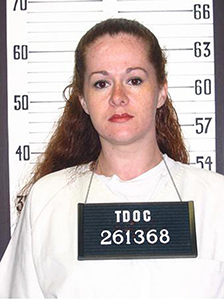
After Tennessee officials failed in their Sept. 30 attempt to execute death row inmate Christa Gail Pike for a 1995 murder, a number of faith leaders, including Tennessee’s Catholic bishops, have called for her sentence to be commuted to life imprisonment.
The state’s Gov. Bill Lee also halted the one remaining execution for the rest of the year pending an investigation, he said.
Officials administered two doses of a lethal drug to Pike, but her attorneys told media outlets that she remained “alive and loudly snoring” after the attempted lethal injection and was later taken by ambulance from the prison to a hospital.
Pike, now 50, the first woman Tennessee planned to execute in 200 years, was convicted of first-degree murder in 1996 for beating, torturing and killing Colleen Slemmer, who was 19 at the time. Pike admitted to the murder, which she carried out with her then-boyfriend, who received a life sentence without the possibility of parole.
“Carrying out a lawfully imposed sentence is among the State’s most serious responsibilities, and the people of Tennessee expect it to be done in a manner that is not only legal and constitutional, but is effective,” Lee said to The Associated Press.
But Richard Garnett, director of the Notre Dame Program on Church, State and Society, said in written comments, “The failed attempt to execute Christa Pike illustrates, yet again, the delusion that by making executions look more ‘medical,’ ‘technical’, or ‘scientific’ we are somehow changing what they are, namely, killings of helpless human beings – who have, to be sure, committed horrible crimes – by our governments, in our names.”
In a letter to Lee dated Oct. 1, Tennessee faith leaders, including the state’s Catholic bishops, urged him to commute Pike’s sentence to life imprisonment in the wake of the incident.
The letter said they “respectfully and urgently ask you to commute the death sentence of Christa Gail Pike and ensure that the State of Tennessee does not attempt to execute her again.”
They said, “Such an act does not deny justice. It declares that justice need not become vengeance and that the State of Tennessee can choose restraint, human dignity, and mercy.”
“We make this appeal mindful of the horrific murder of Colleen Slemmer and the immeasurable grief endured by her family and those who loved her,” the letter said. “Nothing in our request diminishes the gravity of that crime, the preciousness of Colleen’s life, or the legitimate responsibility of the state to hold those who commit violence accountable. Yet accountability need not require another death.”
Krisanne Vaillancourt Murphy, executive director of Catholic Mobilizing Network, that advocates for the abolition of capital punishment in line with Catholic teaching, said in a statement, “We are stunned and bewildered by this unprecedented news.”
“We pray for Ms. Pike’s current condition, and we pray for the victim Colleen Slemmer’s family as this situation must surely be retraumatizing,” she said.
“For Tennessee to have two botched executions in a matter of months is beyond alarming. It is the epitome of ‘cruel and unusual punishment’ under the Eighth Amendment.”
Noting Lee’s suspension of executions for the rest of the year pending an investigation, Vaillancourt Murphy said, “We pray this is the needed wake up call for Gov. Lee – in fact, for everyone – to recognize the barbarism of capital punishment.”
“The Church teaches that the death penalty is ‘inadmissible’ because every human life is sacred, no matter the harm one has caused or suffered, and because we have more effective ways to protect society than to take another life,” Vaillancourt Murphy said.
The Tennessee Department of Correction said in a statement that it “followed every step of the State’s lawful, established execution protocol approved by the Attorney General’s Office.”
“The lethal injection chemical in the protocol has consistently been effective, and the protocol does not allow for additional procedures beyond what was carried out this evening,” the statement said. “Christa Pike has been transported to an off-site medical facility.”
Shortly before the scheduled execution, Pike’s lawyers filed last-minute challenges, arguing the courts did not consider Pike’s history of trauma from sexual abuse in her sentencing; however, the Supreme Court allowed the execution to proceed.
But Valliancourt Murphy said, “It is sobering to know that were Ms. Pike sentenced today, she would not receive the death penalty because of how young she was when she murdered Ms. Slemmer.”
“Ms. Pike’s case had already attracted particular attention for being the first woman to face execution in Tennessee for 200 years, for the almost three decades she has spent in solitary confinement and today remains alive, surviving a botched execution at 50 years old,” she continued.
The Catholic Church’s official magisterium opposes the use of capital punishment as a violation of the inherent sanctity of human life, and advocates for the practice’s abolition worldwide.
The late Pope Francis revised the Catechism of the Catholic Church in 2018 to clarify the church’s teaching that capital punishment is morally “inadmissible” in the modern world “because it is an attack on the inviolability and dignity of the person.”
Earlier this year, Pope Leo XIV delivered a video message to Catholic death penalty abolitionists marking 15 years since the abolition of the death penalty in his home state of Illinois.
“The Catholic Church has consistently taught that each human life, from the moment of conception until natural death, is sacred and deserves to be protected,” Pope Leo said in his April message. “Indeed, the right to life is the very foundation of every other human right.”
(Kate Scanlon is a national reporter for OSV News covering Washington. Follow her on X @kgscanlon.)
Pope Leo shares childhood memories of Blessed Fulton J. Sheen on flight to Paris
By Courtney Mares
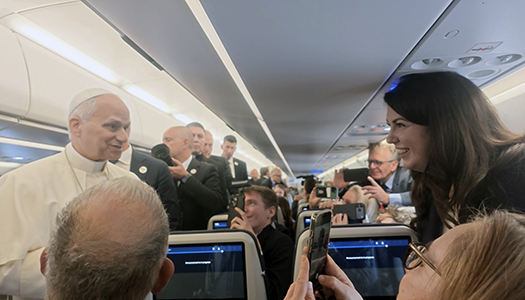
ABOARD PAPAL PLANE (OSV News) — On the papal flight to Paris Sept. 25, Pope Leo XIV recalled spending time with his family as a child watching Blessed Fulton J. Sheen, who was beatified the day before in St. Louis, sharing the truths of the faith on television.
“We watched him as a family,” the pope said in response to a question from OSV News. “It was a way of … spending some time together as a family with the truths, with the teachings that he shared in such an enthusiastic, lively way.”
“The message that he had was something that really came home to people and I think helped us as a family,” he added.
The 71-year-old pope also joked, “I’m that old.”
Pope Leo acknowledged that he would have liked to attend the beatification of Blessed Sheen, whom he noted was also originally from Illinois.
“I received messages during the beatification ceremony yesterday writing and saying, ‘Why weren’t you here?’ That would’ve been so great,” he said of the beatification of Archbishop Sheen, which took place in St. Louis Sept. 24 with an estimated 50,000 people in attendance.
Speaking with journalists aboard the papal plane, a chartered ITA Airways jet, en route from Rome to Paris, the pope also spoke about the challenge of artificial intelligence and the record number of adult baptisms in France this year, calling it evidence of the “spiritual thirst” present in the country and the “authentic searching for something that is deeper, more meaningful in young people’s lives.”
“I, above all, am traveling to France, as to anywhere else in the world, as a follower of Jesus Christ wanting to proclaim peace, the peace of Christ throughout the world. It is a message which at this time, as we all know, is particularly important,” the pope told the more 80 journalists on board from 10 different countries.
Asked by a CNN reporter about his fellow colleagues who had issues accessing the White House in recent weeks, the pope responded that he was “very happy that here you are all welcome and good coverage, I think, is very important and that we have it … for everyone.”
In response to questions about his fluency in French, the pope answered he has been practicing a little bit, but specified he is not using the language-learning app Duolingo anymore.
Pope Leo XIV has previously spoken about watching Blessed Fulton J. Sheen’s television program as a child, and has praised Blessed Sheen for bringing the Gospel to millions of Americans through his radio and television broadcasts.
“Archbishop Sheen was a light of faith, hope, and love that shone through the radio and television media for decades,” Pope Leo said during an audience with members of the Pontifical Mission Societies on June 1.
“I myself am a witness of his evangelization when I was growing up,” the pope added. “His broadcasts touched millions with the hope of the Gospel and his initiatives and efforts resulted in enormous spiritual and material aid to the Churches in areas of first evangelization.”
Pope Leo has said that he watched Archbishop Sheen’s television program as a child. The American pope was elected last year on Archbishop Sheen’s birthday.
Born in El Paso, Illinois, on May 8, 1895, Blessed Sheen was ordained a priest for the Diocese of Peoria on Sept. 20, 1919. He went on to become one of the most recognized Catholic voices in American history, rising to national prominence during the 1930s and 1940s as host of “The Catholic Hour” on NBC radio.
Beginning in 1952, then-Bishop Sheen reached tens of millions of viewers each Tuesday evening through his television program “Life Is Worth Living.” Armed with little more than his intellect, charisma, a cape and a chalkboard, he won an Emmy Award for best television personality after his first season and later, in December 1953, he famously thanked his writers: “Matthew, Mark, Luke and John.”
Throughout his 60-year priesthood, Bishop Sheen sought to conform himself more closely to Christ by observing a daily Eucharistic Holy Hour, what he called “the hour that makes my day.”
He also was intensely devoted to the Mother of God.
For 16 years, Archbishop Sheen served as the national director of the Society for the Propagation of the Faith, one of the four Pontifical Mission Societies, during which he sought to form American Catholics in missionary spirituality and identity and help raise funds to spread the faith and build the Church across the globe.
Archbishop Sheen died Dec. 9, 1979, in New York City, in the presence of the Blessed Sacrament, after nearly two years of declining health following open-heart surgery.
“May the example and intercession of this holy bishop, known for his evangelizing work through the media, inspire many others likewise to find new ways of spreading the Gospel message with joyful enthusiasm,” Pope Leo said in his greeting to English-speaking pilgrims at the end of his Sept. 23 audience.
Pope Leo is visiting three cities in France from Sept. 25 to 28 in an apostolic journey that will bring him from the French capital to the Marian shrine of Lourdes and the northeastern city of Metz near the German border.
(Courtney Mares is Vatican editor for OSV News. Follow her on X @catholicourtney.)
‘You were never meant to carry this alone’: Experts say helping postpartum moms is a pro-life issue
By Katie Yoder
Nicole Kristensen still remembers facing difficult births and struggling postpartum as a mom. Today, she draws from her experience to help other women before, during and after giving birth.
“Even though I struggled, having a community was the biggest thing, and that is a huge part of what I’m trying to achieve these days as a doula,” said the Catholic doula and coach, who serves communities in New York and Connecticut.
Kristensen, owner of Holystic Maternity Care, and other postpartum experts and Catholic leaders spoke with OSV News about the Church’s role in postpartum support and walking with new mothers who are struggling.
Their comments come at a time when mothers are speaking out about the difficulty of the postpartum experience amid the high-profile Massachusetts trial of Lindsay Clancy, which ended in a mistrial Sept. 4. The case brought greater awareness to postpartum psychosis, a serious maternal mental health disorder.
These experts agreed that the Church and Catholics have a responsibility to be involved in postpartum support as a pro-life issue. The Church is already present there, they said, but Catholics can do more. Many of them emphasized the importance of parish involvement.
While these experts came from different backgrounds and ministries, they wanted new moms who are struggling to know they are not alone.
“The Church belongs in the area of postpartum support because Jesus commands us to care for the most vulnerable, and postpartum women and their babies fit that description,” said Kat Talalas, assistant director for pro-life communications at the U.S. Conference of Catholic Bishops’ Secretariat of Pro-Life Activities.
– The landscape of postpartum care –
Today, several national resources exist for women who are struggling postpartum. Women with maternal mental health concerns can contact the 988 Suicide & Crisis Lifeline or the National Maternal Mental Health Hotline. Other nonprofits that advocate for mothers postpartum include Postpartum Support International and the Policy Center for Maternal Health.
Maternal mental health disorders, also known as perinatal mental health disorders, are common and affect up to 1 in 5 families in the United States each year, according to the policy center. The center calls anxiety and depression the most common childbirth complications. At the same time, these kinds of disorders are not universally screened for or sufficiently treated.
Symptoms of postpartum depression include sadness, difficulty concentrating, difficulty enjoying favorite activities and difficulty in baby bonding, according to the center. Symptoms of maternal anxiety include extreme fear, worry and nervousness.
– A pro-life issue –
Experts agreed the Church should accompany new mothers, especially those who are struggling.
“During the months following childbirth all women take months, sometimes even years, to fully heal,” said Caroline Hartley, a family nurse practitioner and founder of Fiat Integrative Health, a practice that provides medical care and mental health services in Franklin, Tennessee. “Hormones collapse, sleep is disrupted and isolation is common. About 1 in 7 women experience postpartum depression, and nearly half are never diagnosed.”
The mother of seven added: “If Catholics disappear at that point, our pro-life witness is incomplete.”
Many of these experts and leaders identified postpartum support as a pro-life issue.
“It is absolutely imperative and I would say obligatory that the body of Christ be present to support postpartum mothers and families,” said Mary Haseltine, a Catholic doula and mother of seven.
Haseltine is also the founder of Made for This, which provides pregnancy, birth and postpartum resources, and the author of “Made for This: The Catholic Mom’s Guide to Birth.”
“Not only is this part of the general Gospel mandate to take care of those in need,” she said, “but if we as a Church are going to ask families to promise to be open to life as we do in our wedding vows and purport to be a people that value the dignity and beauty of every life and build a culture of life, it is essential.”
– A work in progress –
These experts recognized the Church’s involvement in postpartum support. They pointed to Catholic hospitals, pregnancy centers and doulas. They also named ministries such as Elizabeth Ministry International, a Catholic apostolate that supports women and families through the joys and challenges of the childbearing years, and Walking with Moms in Need, a parish-based initiative by the U.S. bishops that serves vulnerable pregnant and parenting women.
“While Walking with Moms is mostly geared towards low-income women, the resources in the inventory and the support offered by the parish could be offered to any mother who is struggling,” Talalas with the U.S. bishops said.
At least one-third of U.S. dioceses participate in Walking with Moms in Need and have parishes that participate, Talalas said, adding that the number is likely higher.
Parishes with Walking with Moms in Need ministries take active roles in supporting mothers postpartum. The ministry at Sts. Philip and James Parish in Exton, Pennsylvania, recently donated postpartum personal care supplies to The 4th Trimester Mommie, a maternal health nonprofit.
Wisconsin-based Elizabeth Ministry International currently has over 800 registered chapters. Members offer prayers, peer support, mentoring, educational materials, spiritual nourishment and inspirational resources.
Krys Crawley, executive director of Elizabeth Ministry International, said her organization hopes to have chapters established at every parish worldwide.
“Our Catholic understanding of human dignity tells us that both the mom and the child are infinitely valuable,” said Crawley, who is also the founder and executive director of Life’s Connection, a community health and education center that provides pregnancy and postpartum support.
Hartley said that Fiat and similar organizations embrace an integrated model where they care for both baby and mother. Catholic doulas such as Haseltine and Kristensen also support women before, during and after birth. Both provide free postpartum resources online.
Haseltine also offers a biblically-based plan for postpartum rest and a directory of Christian birthworkers to connect women with support. Kristensen provides an ebook to prepare for a peaceful postpartum and lists helpful postpartum supplies.
– A parish-centric solution –
These experts, however, said the Church can do more. Many encouraged parishes to take an active role. They recommended parishes start Walking with Moms in Need and Elizabeth Ministry chapters, or expand them if they already exist. Others suggested creating spaces where mothers can connect, build community and help one another.
Many advised creating meal trains and offering childcare for new mothers and growing families. They suggested regularly checking in on mothers and keeping a list of resources that could be useful to them.
“One of the biggest shifts the Church can make is to not treat postpartum struggle as a private problem, but proactively support moms,” Hartley said.
— ‘You are not failing the gift you have been given’ —
These experts also shared their advice for struggling mothers. They recommended mothers turn to their family, friends and parishes. Some advised praying. Many encouraged mothers to not be afraid or ashamed to reach out for help. They wanted mothers to know the Church and Catholic ministries want to accompany them.
“If you are a new mother and you are struggling, hear this: You are not a bad mother, and you are not failing the gift you have been given,” Hartley said.
“Loving your baby and feeling fog, dread, rage, emptiness or no bond can exist at the same time,” she added. “That does not mean you are ungrateful. It means your body and mind have been through something enormous, and they have not caught up.”
Hartley and others urged women who are struggling to tell their husbands, friends, priests, midwives, counselors and clinicians.
“You said yes to life and that yes still includes you and your needs,” she said. “You were never meant to carry this alone.”
(Katie Yoder is an OSV News correspondent. She writes from Maryland.)
Briefs
NATION
WASHINGTON (OSV News) – Catholic education leaders are applauding proposed regulations for the Federal Scholarship Tax Credit, which incentivizes private contributions to K-12 scholarships benefiting students in public, charter or private schools, including religious. On Oct. 1, the U.S. Treasury Department and the IRS jointly announced the proposed regulations for the program, also known as the Education Freedom Tax Credit, which was enacted in 2025 and is set to launch Jan. 1. The “transformative” tax credit “will create opportunities for families to access much-needed resources to expand their options for choosing the best tools and learning environment for their children,” said Bishop David M. O’Connell of Trenton, New Jersey, chairman of the U.S. Conference of Catholic Bishops’ Committee on Catholic Education, in an Oct. 2 statement. The Oct. 1 announcement “provides additional clarity for states, donors, and scholarship-granting organizations,” said Steven F. Cheeseman, president and CEO of the National Catholic Educational Association, in an Oct. 1 statement. Cheeseman highlighted the announcement’s confirmation that married couples filing jointly will be able to claim up to $3,400 in tax credit for eligible contributions, “rather than the previously understood $1,700 household limit.” With 30 states signed up, Cheeseman urged state governors to opt in quickly, saying, “The tax credit doesn’t stop at state lines, but the scholarships do.”
WASHINGTON (OSV News) – The 2027 National March for Life theme is “The Truth is Pro-Life,” the March for Life Education and Defense Fund announced Sept. 29. Hayden Sledge, chief of staff at March for Life, told reporters that “the soil is prime for us to make the case for the truth, for life.” “Every January, people of different ages, backgrounds, faiths, and life experiences come together in Washington around one shared truth that every human life has worth,” she said. During the second Trump administration, President Trump has delivered video messages to the rally, while Vice President Vance has made in-person remarks. The 2027 event will take place while the pro-life movement faces several key challenges, such as preserving the Hyde Amendment, the recent approval of a new generic abortion drug, a policy permitting the distribution of that drug by mail and a rising abortion rate.
VATICAN
VATICAN CITY (Vatican News) – The Vatican will publish the private diary of Pope Francis, offering readers a new window into the late pope’s inner life. The Vatican announced Oct. 5 that “The Private Diary of Pope Francis” will feature notes Pope Francis kept from 1992 to 2024. The book is written by Cardinal Víctor Manuel Fernández, prefect of the Dicastery for the Doctrine of the Faith, who presents and comments on Pope Francis’ writings. The book will be released Nov. 24 in five languages and distributed in 94 countries. The Vatican Publishing House will publish the Italian edition, with Penguin Random House handling the Spanish, English and Portuguese editions. Éditions Albin Michel will publish the French edition. Andrea Tornielli, editorial director of the Vatican’s Dicastery for Communication, said the diary will allow readers to gain “an even deeper understanding” of the Argentine pope’s inner life. The Vatican Publishing House plans to present the book to international publishers at the Frankfurt Book Fair, taking place Oct. 7 through 11. Pope Francis’ notes span more than three decades, including his years as a bishop in Argentina and his 12-year pontificate.
VATICAN CITY (OSV News) – Pope Leo XIV has opened a Vatican meeting of bishops from around the world focused on the challenges facing marriage and family life today. Catholic bishops’ conference presidents and heads of the Eastern Catholic churches gathered Oct. 7 for the opening session of the closed-door summit, marking the 10th anniversary of Pope Francis’ “Amoris Laetitia” (“The Joy of Love”). Pope Leo told participants that the “beauty and fragility of families” would be at the heart of their discussions. He pointed to a growing distance between how sexuality and intimacy are lived and the Christian understanding of marriage. The pope said young people still desire love, fidelity and belonging, even as many struggle to see lifelong commitment as the path toward those hopes. He urged bishops to consider what kind of Church people encounter when their families experience wounds, loneliness or apparent failure, emphasizing the need for grace, forgiveness and new beginnings. The Oct. 7-14 meeting will include testimony from families from five continents. Bishops will discuss marriage, family challenges and pastoral accompaniment before publishing a final synthesis document Oct. 14.
WORLD
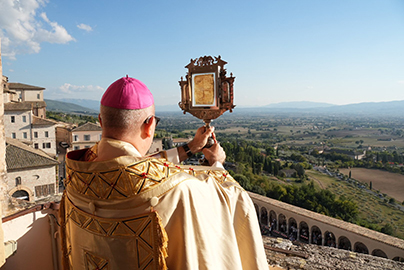
ASSISI, Italy (OSV News) – Church bells rang across Assisi at midnight Oct. 4, marking 800 years since the death of St. Francis of Assisi. The feast day celebrations began on Oct. 3 with a night procession and a solemn commemoration of the “Transitus” (“passage”), the traditional Franciscan prayer service in the Basilica of St. Mary of the Angels marking St. Francis’ transition into eternal life. The basilica houses the chapel where St. Francis died on the night of Oct. 3, 1226. About 3,000 people took part in the procession on the eve of the beloved saint’s feast day, singing hymns and prayers as they retraced the route made by St. Francis of Assisi’s coffin 1226, walking about 2 miles uphill from the Basilica of St. Mary of the Angels to the Basilica of St. Francis where he is currently buried. At a midnight Mass, Cardinal Ángel Fernández Artime reflected on Francis’ radical poverty, saying that in the end, “Love will remain. Christ will remain.” The following morning, Cardinal Matteo Zuppi celebrated Mass with Italian President Sergio Mattarella in attendance. Cardinal Zuppi urged Christians to follow Francis as peacemakers by disarming “our hands and our hearts.” Mattarella also invoked St. Francis amid today’s wars, expressing hope that his example would help convert hearts hardened by hatred and point humanity toward peace. The Franciscan Jubilee Year continues through Jan. 10, 2027.
WARSAW, Poland (OSV News) – Two days after surviving a knife attack that killed a fellow priest, Father Adrian Mantykiewicz returned to the altar at the Benedictine sisters’ abbey in Jaroslaw, Poland, with a message centered on forgiveness. Celebrating the abbey’s first Mass since the Sept. 24 attack, in which five people were stabbed, Father Mantykiewicz said: “As a disciple of Jesus Christ, in my own name, in Father Marek’s name and in Father Stanislaw’s name, I want to say very clearly that we forgive.” Father Stanislaw Zbojniewicz died of his injuries, while Father Marek Pienkowski remained hospitalized in serious but stable condition. Father Mantykiewicz, who was treated and released the same day, urged prayers for the suspect, a 31-year-old Ukrainian citizen. “I ask you to pray for our attacker and for the grace of conversion for him,” he said. “He needs this prayer most of all.” Warning against blaming an entire people for one man’s actions, Father Mantykiewicz appealed for respect and solidarity between Poles and Ukrainians, recalling the abbey’s support for refugees following Russia’s 2022 invasion of Ukraine. Prosecutors have filed murder, attempted murder and grievous bodily harm charges against the suspect, identified as Ihor M.
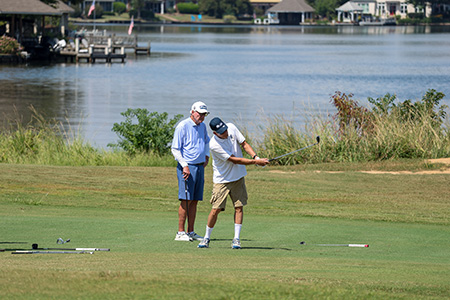
FEATURE PHOTO: … Fore a Good Cause …
Calendar of Events
SPIRITUAL ENRICHMENT
CAMDEN – Sacred Heart, Sister Thea Bowman, Servant of God – her legacy, speaker Karla Luke. Nov. 7, 10 a.m. to 3 p.m. Cost $10. Registration open through Oct. 23. Details: amelia.breton@jacksondiocese.org.
MADISON – Millions of Monicas will be praying at St. Catherine’s Village chapel (200 Dominican Drive), the second Tuesday of each month at 6 p.m. When you arrive at the gate, let the team know you are joining the Millions of Monicas ministry. Please, mark your calendars for the following meeting dates: Nov. 10 and Dec. 8, 2026. Details: call (601) 613-8526.
MERIDIAN – St. Patrick, St. Anne and St. Catherine Brunch, Saturday, Oct. 24 at 10 a.m. in the Father Vally room. Join us as we remember and support those who have suffered from miscarriage, infertility or loss of a child. Details: church office (601) 693-1321.
OLIVE BRANCH – Queen of Peace, Millions of Monicas, Thursdays from 6:15-7:15 pm. Join with other mothers as we pray to grow in holiness and for our children’s faithful return to the Church. Details: church office (662) 895-5007.
PASS CHRISTIAN – Dedeaux Sacred Heart Retreat Center, Annual Eagle Awakening XIV Retreat, Friday, Oct. 30 through Nov. 1. Any college students and young adults are invited to attend. Meet at St. Thomas Aquinas in Hattiesburg and bus transportation to and from Dedeaux will be provided. Cost: $50 (includes lodging for two nights, transportation, meals, t-shirt and retreat supplies). Scholarships available upon request for those in need. Details: contact Coral at usmcatholic@gmail.com to register.
WASHINGTON, D.C. – Mother Teresa Institute and the St. John Paul II National Shrine is honored to host a temporary exhibit, entitled “Works of Love Are Works of Peace,” on the life and mission of St. Teresa of Calcutta, featuring more than 80 photographs by Collopy. Exhibt open through Nov. 11. Details: https://www.jp2shrine.org/exhibits.
PARISH & YOUTH EVENTS
GREENVILLE – Greenville Cemetery, Light the Cemetery – A Community Evening of Remembrance, Monday, Nov. 2 at 3 p.m. Bring a candle in a plastic cemetery holder and join us as we remember and honor our loved ones. All are welcome. Details: St. Joseph Church office (662) 335-5251.
JACKSON – St. Richard School, Krewe de Cardinal Raffle. Two cash prize drawings: $2,000 Prize drawn at Cardinal Fest on Oct. 24; and $3,000 Prize drawn at Krewe de Cardinal on Jan. 30, 2027. Purchase chances at https://strraffle.rallyup.com/kdcraffle2027/Campaign/Details. Details: H.berry.nicholas@gmail.com.
MADISON – St. Francis, Feed My Faith: A Night in Italy with Father Leo Patalinghug, Saturday, Nov. 14 at 6:30 p.m. in the Family Life Center. Enjoy a live cooking demo with Father Leo, dinner, dessert and beverages. Books available for purchase and signing. Cost: $40/each. Sponsorships available. Details: church office (601) 856-5556.
St. Francis, Parish Mission with Father Leo Patalinghug, Nov. 15-16 at 6:30 pm. in the Sanctuary. Bring your family and friends for an inspirational presentation on living our lives in an exciting with with our God-given gifts. Books availble for purchase and signing. Free dinner provided from 5:45-6:30 in the Family Life Center before the mission talk each night. Details: parish office (601) 856-5556.
PEARL – St. Jude, St. Jude Fest, Sunday, Oct. 25 at 5 p.m. We will hold a rosary procession outdoors. Please bring a potluck dish. Details: church office (601) 939-3181.
SHAW – St. Francis of Assisi, Spaghetti Dinner, Tuesday, Oct. 20 from 4-7 p.m. Drive-thru only. Must purchase $20 ticket in advance. Details: church office (662) 754-5561.
DIOCESE EVENTS
HOMEGROWN HARVEST – Clyde Muse Center in Pearl, Saturday, Oct. 24 6-8 p.m., VIP reception 5-6 p.m. Join us for a special evening celebrating and supporting future priests and enjoy some barbecue and blues, silent auction and presentations from our seminarians. Cost: $100/admits two. Details: https://bit.ly/HomegrownHarvest26.
SEARCH RETREAT 2027 – Camp Wesley Pines, Gallman, Jan. 15-17. Search is for 10-12th graders looking to go deeper in their faith. Cost: $125. Registration deadline is Dec. 1. Details: Apply to attend at https://jacksondiocese.flocknote.com/signup/275730.
YOUNG ADULT FALL RETREAT, – “Come Lord Jesus: Trusting God’s Timing,” Saturday, Nov. 7 from 10:30 a.m. to 5:30 p.m. at St. James Tupelo. Cost: $20. Details: Register by Friday, Oct. 30 at https://jacksondiocese.flocknote.com/signup/272464. Questions? Contact amelia.rizor@jacksondiocese.org or (601) 949-6931.
THEOLOGY ON TAP – Nov. 3 with Father Will Foggo, Dec. 1 Trivia on Tap, Dec. 17 Christmas Party. Meeting at Blaylock Photography, 117 N. Whetley, Ridgeland, 39157. Must be 21 and older.
IN MEMORIAM
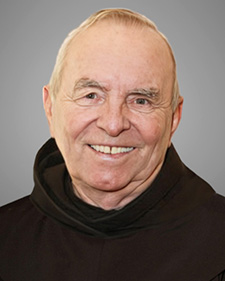
+Father Adam Szufel, OFM
Father Adam Szufel, OFM, 89, of St. Petersburg, Florida, passed away on Sept. 5, 2026. A Franciscan friar for 70 years, he faced his final days with courage, humility, joy and trust in God’s presence as he battled esophageal cancer. He is remembered for being a dedicated friar who was loving, kind, peaceful, deeply generous to the poor and a devoted U.S. Air Force chaplain. From 2011 to 2016, he served at St Francis of Assisi Church in Greenwood, Mississippi. A funeral Mass for Father Adam was held on Sept. 15 at St. Mary, Our Lady of Chrace Church in St. Petersburg, Florida.
Mississippi Catholic
October 16
Octubre 16
September 18
Septiembre 18
August 21
Agosto 21
July
Julio
June
Junio
May
Mayo
April 17
Abril 17
March 13
Marzo 13
February 13
Febrero 13
January 16, 2026
Enero 16, 2026
December 26
Diciembre 26
December 12
Diecember 12
November 21
Noviembre 21
November 7
Noviembre 7
October 24
Octubre 24
October 10
Octubre 10
September 26
September 12
United in Mission
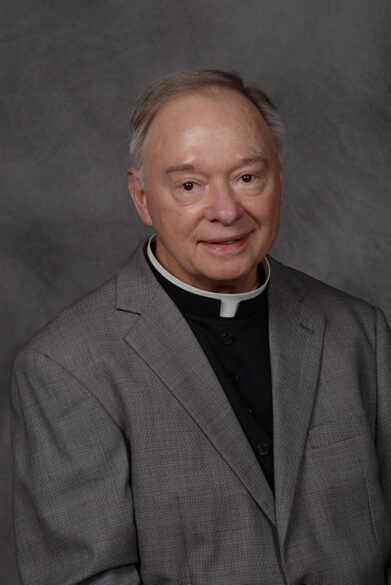
El Padre Robert Dore recordado por su silenciosa bondad y 37 anos de servicio sacerdotal
Por Joanna Puddister King
VICKSBURG – Los dolientes llenaron la iglesia de St. Michael más allá de su capacidad el 1 de octubre, ocupando salas laterales y permaneciendo de pie donde hubiera espacio, para despedir al padre Robert Hayden Dore, un sacerdote cuyos 37 años de ministerio tocaron comunidades parroquiales en toda la Diócesis de Jackson.
El padre Dore, de 71 años, murió el 24 de septiembre en su hogar en Vicksburg tras una breve batalla contra el cáncer. Había servido como párroco de St. Michael desde 2017.
El obispo Joseph R. Kopacz celebró la Misa de Exequias y pronunció la homilía, acompañado por sacerdotes de la diócesis y amigos sacerdotes del padre Dore. Miembros de su familia, feligreses actuales y anteriores, y miembros de la comunidad de la escuela católica de Vicksburg —incluyendo estudiantes del último año— se reunieron para orar por el sacerdote a quien habían conocido como pastor, amigo y presencia constante.
En su homilía, el obispo Kopacz reflexionó sobre las lecturas bíblicas y la esperanza cristiana que sostuvo la vida y el ministerio del padre Dore. Antes de entrar al sacerdocio, el padre Dore trabajó como enfermero. Su vocación continuó esa labor de cuidar a los demás a través de los sacramentos y acompañando a las personas en la enfermedad, el dolor la vida cotidiana y su fe.
El obispo recordó llamadas telefónicas, así como visitas y momentos de oración con el padre Dore durante las últimas semanas de su vida. Incluso mientras su enfermedad avanzaba, el padre Dore permaneció agradecido por las oraciones ofrecidas por él y procuró mantener informada a su familia parroquial a través de su hermana, Lorraine.
“Él estaba tan agradecido por sus oraciones,” dijo el obispo Kopacz.
El obispo relacionó los últimos días del padre Dore con las oraciones que los sacerdotes ofrecen cada noche en la Liturgia de las Horas, confiándose a Dios y pidiendo una noche tranquila y una muerte en paz.
“Qué gran regalo es nuestra fe para todos nosotros,” dijo. “Caminamos por fe, no por vista.”
Nacido el 16 de octubre de 1954 en Jacksonville, Florida, el padre Dore era hijo de Noel Hayden Dore Jr. y Louise Ann May Dore. Su familia, originaria de Natchez, vivía en Jacksonville mientras su padre servía en el Cuerpo de Marines. Más tarde regresaron a Natchez, donde el padre Dore creció.
Se graduó de Cathedral School en 1973 y obtuvo un título en enfermería en Hinds Junior College en Raymond. Posteriormente ingresó al programa de pre-teología en el Seminario St. Pius X en Erlanger, Kentucky, antes de continuar su formación en el Seminario de la Universidad de St. Mary en el lago de Mundelein, Illinois, donde obtuvo una Maestría en Divinidad.
El padre Dore fue ordenado el 10 de junio de 1989 y celebró su primera misa al día siguiente en la iglesia de St. Mary en Natchez, ahora Basílica de St. Mary.
Su ministerio incluyó servicio como vicario parroquial en St. Joseph en Greenville y St. Paul en Vicksburg. Sirvió como párroco en St. Therese en Chatawa, St. James en Magnolia y Annunciation en Columbus antes de regresar a Vicksburg como párroco de St. Michael.
Otras responsabilidades incluyeron servir como decano del Decanato II, capellán de las Hermanas Escolares de Notre Dame en Chatawa y capellán auxiliar en la Base Aérea de Columbus. También fue capellán estatal de los Caballeros de Colón y, al momento de su muerte, capellán del Consejo 898.
En reflexiones compartidas con el Vicksburg Post, feligreses y líderes escolares recordaron el carácter tranquilo del padre Dore, su bondad y su atención hacia los demás.
Dean Andrews lo describió como “un sacerdote feliz y amigable” que hacía sentir bien a la gente. Su esposa, Kelly Andrews, dijo que el padre Dore había sido como un miembro de su familia.
Mary Arledge, directora de St. Francis Xavier Elementary School, recordó su presencia calmada y su apoyo al personal y a los estudiantes.
“Era muy callado, calmado y un hombre humilde,” dijo Arledge al Vicksburg Post.
La despedida continuó el 2 de octubre en la ciudad natal del padre Dore, Natchez. En la Basílica de St. Mary, los dolientes se reunieron para Laudes, o la Oración de la Mañana, del Oficio de Difuntos. El padre Aaron Williams cantó gran parte del servicio y el padre Alex Waraksa pronunció la homilía. El Rito de Sepultura siguió en Greenlawn Memorial Park.
El padre Dore fue precedido en la muerte por sus padres. Le sobreviven sus hermanas, Lorraine Dore Arnold y Rhonda Dore, así como sus sobrinas, sobrinos, sobrinas nietas, sobrinos nietos, tatarasobrinos y primos.
Al concluir la Misa de funeral, el obispo Kopacz encomendó al padre Dore a la misericordia de Dios y oró por quienes quedaron para llorarlo:
“Ayúdanos a quienes permanecemos, a consolarnos unos a otros con las promesas de la fe.”