Únase a lista de correos electrónicos Mande un texto: MSCATHOLIC a 84576
LÍNEA DIRECTA DE PREVENCIÓN DE FRAUDE El Departamento de Asuntos Temporales de la Diócesis de Jackson ha contratado a Lighthouse Services para proporcionar una línea directa anónima de fraude financiero, cumplimiento, ética y recursos humanos. Esta línea directa permite un método adecuado para reportar sucesos relacionados con la administración temporal dentro de parroquias, escuelas y la oficina de cancillería.
WASHINGTON (OSV News) — Mientras Estados Unidos se prepara para conmemorar el 250.º aniversario de la firma de la Declaración de Independencia el 4 de julio, la Conferencia de Obispos Católicos de Estados Unidos (USCCB, por sus siglas en inglés) ha animado a los católicos a participar en iniciativas que incluyen 250 horas de adoración eucarística y 250 obras de misericordia.
Para celebrar la ocasión, “America 250”, las iniciativas animan a rezar por la unidad y la sanación de los Estados Unidos, según una guía de recursos publicada por la USCCB. La conferencia ya había anunciado que los obispos estadounidenses consagrarían los Estados Unidos al Sagrado Corazón de Jesús en junio.
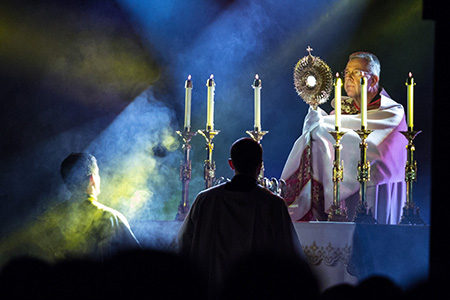
Una foto de archivo muestra a jóvenes rezando mientras un sacerdote sostiene la custodia durante la adoración en Nashville, Tennessee. Mientras Estados Unidos se prepara para conmemorar su 250.º aniversario el 4 de julio de 2026, la Conferencia de Obispos Católicos de Estados Unidos anima a los católicos a participar en iniciativas que incluyen 250 Horas de Adoración y 250 Obras de Misericordia colectivas como parte de los preparativos del aniversario. (Foto OSV News/cortesía de FOCUS)
En su encíclica “Dilexit Nos”, el Papa Francisco “nos instruye a ‘alimentar nuestra vida con la fuerza de la Eucaristía’ en la Sagrada Comunión y la Adoración Eucarística, para que podamos comprender más profundamente el amor de Cristo por todos y vivir nosotros mismos este amor”, afirma la guía. “Nuestra contemplación del Sagrado Corazón nos lleva a profundizar en el misterio de nuestra salvación y en nuestro amor por Cristo, que se encuentra en los rostros de nuestras hermanas y hermanos, especialmente los más necesitados”.
La guía indica que las parroquias pueden participar en las 250 horas de adoración ofreciendo una hora santa semanal o mensual hasta el aniversario nacional del 4 de julio. Señala que esto podría incluir continuar con las prácticas actuales o invitar a nuevas personas a unirse. Sugiere esfuerzos similares para llevar a cabo 250 obras de misericordia.
Incluye recursos para Horas Santas por la vida, la paz, el matrimonio, la libertad religiosa, las vocaciones, el fin del racismo, así como una Hora Santa del Sagrado Corazón.
“Considere la posibilidad de organizar una hora santa o una serie de horas santas en su parroquia utilizando las plantillas proporcionadas. … Es posible que tenga otras formas de invitar a los miembros de su comunidad a dedicar un tiempo a la oración por nuestro país con Jesús verdaderamente presente en el Santísimo Sacramento”, dice la guía. “Para prepararse para la consagración de Estados Unidos al Sagrado Corazón, las parroquias también pueden incorporar la Letanía del Sagrado Corazón de Jesús en su Hora Santa”.
Como ejemplos de obras de misericordia, la guía anima a las parroquias a encontrar formas de ayudar a las mujeres que se enfrentan a un embarazo no deseado; donar a bancos de alimentos y a armarios comunitarios, y a programas para mejorar de la comunidad; recaudar fondos para un proyecto de desarrollo en el extranjero; apadrinar a una familia de refugiados; dar clases particulares a niños; o hacer voluntariado en hogares para personas sin hogar.
“Las siete obras de misericordia corporales nos llegan directamente de las Escrituras del Evangelio de Mateo”, dice la guía. “Arraigadas en nuestra vida de fe, las acciones a las que Jesús nos llama, como dar de comer al hambriento, dar de beber al sediento, dar cobijo a la persona sin hogar, visitar al enfermo y al preso, enterrar al difunto y dar limosna, son elementos centrales de nuestra identidad católica”.
La guía cita la exhortación apostólica “Dilexi Te” del Papa León XIV, que a su vez se inspira en la “Dilexit Nos” del Papa Francisco: “Contemplar el amor de Cristo ‘nos ayuda a prestar más atención al sufrimiento y a las carencias de los demás, nos hace fuertes para participar en su obra de liberación, como instrumentos para la difusión de su amor’”.
(OSV News) — Katie Holler, a Catholic mother of two, had for months been following news of the Trump administration’s increasingly hardline immigration policies, but she still remembers when she felt compelled to do something more.
It was May 2025, and U.S. Customs and Border Protection Acting Commissioner Pete Flores had just signed a memo immediately rescinding four Biden-era policies, including those designed to protect vulnerable CBP detainees such as pregnant women, infants and nursing mothers.
“At the time, I was newly postpartum with my second baby,” Holler told OSV News. “It was just like a breaking point for me, where I said, ‘I don’t want my church to be involved in this in any way. I don’t want us to be supportive of this. This is cruel; not honoring people’s dignity. This is not pro-life.'”
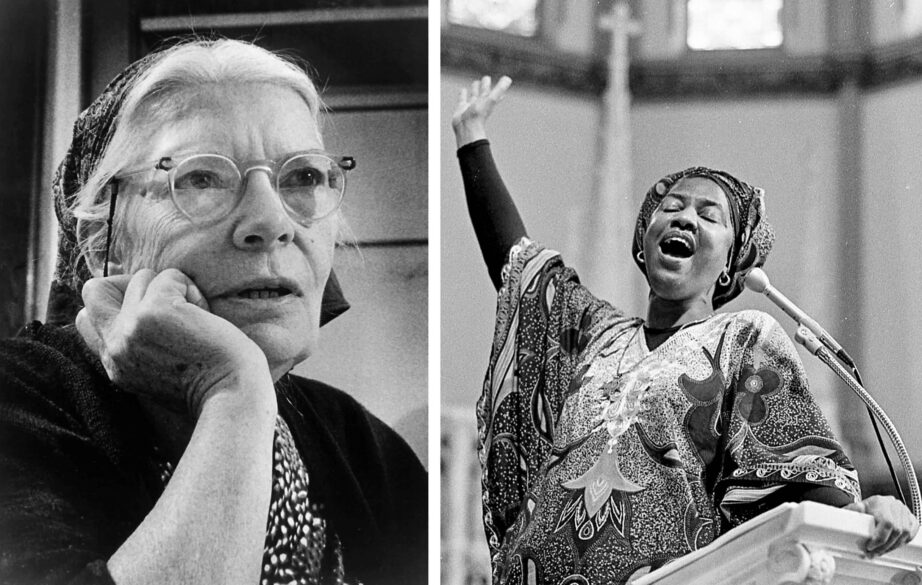
Dorothy Day, co-founder of the Catholic Worker Movement, and Thea Bowman, a Franciscan Sister of Perpetual Adoration from Canton, Miss., are pictured in a combination photo. The Dorothea Project draws its name from the women, whose causes are open for sainthood. (OSV News photo/courtesy Milwaukee Journal/Michael Hoyt, Catholic Standard)
So Holler, a social worker from Steubenville, Ohio, launched the Dorothea Project, a women’s action and advocacy group dedicated to educating the public about Catholic social teaching, with the mission of empowering communities “to speak truth and act in defense of vulnerable people whenever human rights and human dignity are violated.”
Its moniker joins the names of the group’s two spiritually feisty patrons, both of whom have causes for canonization underway: Dorothy Day, co-founder of the Catholic Worker Movement, and Sister Thea Bowman, a Franciscan Sister of Perpetual Adoration who fought against racial injustice. Mary the Mother of Sorrows completes the troika of benefactresses.
The bipartisan movement has grown to over 1,000 members who feel they are “called to live our faith out loud,” according to the Dorothea Project website, which also highlights conscience formation, ongoing formation and spiritual solidarity.
In less than a year, they have written more than 200 letters to Church leaders in more than 75 dioceses, and 16,000-plus Hail Marys have been prayed for the vulnerable and imprisoned.
Holler said while the backgrounds of Dorothea Project members vary, she has become accustomed to “hearing stories from women who were previously supportive of this administration and reached a point where they felt, ‘This is not what I was sold, and I didn’t want to be supportive of it — the detention of infants, the detention of children, the separation of mothers and fathers from their children.'”
The Dorothea Project has petitioned 75 of the nation’s bishops to “help lead our local Church in defending the vulnerable and promoting policies that reflect the Gospel as well as Catholic Social Teaching.”
“In light of the Church’s teachings on human dignity, the preferential option for the poor, and the call to welcome the stranger … now is the time for bold and courageous leadership in defense of the marginalized,” they wrote.
“You need both the lay faithful and the clergy to be strong, and to be effective in defending people,” Holler told OSV News.
Asked if simply raising awareness of Catholic social teaching is enough, Holler pauses.
“I don’t know if it is,” she admitted. “Because we’re living in a day and age where people can easily disregard things as, ‘Oh, that’s fake news,’ or ‘Oh, that’s AI’ — it’s easy to find justification if you hold on to certain values more than our faith.”
The group’s new campaign seeks to launch parish and community Dorothea Project chapters, and to produce a voter’s guide based on Catholic social teaching themes.
“We want to build relationships with people, our communities, to bring Catholic social teaching without an agenda; without a political angle — just, ‘This is what the Church teaches. This is what our faith says,'” Holler said. “And if we believe this to be true, then we need to do something.”
Lauren Garcia, the group’s project leader who lives in Central Florida, told OSV News she watched headlines with a rising sense of anxiety, while feeling “helpless.” When she discovered the Dorothea Project, she appreciated its collective power.
“As one person — and a busy mom — me just doing one thing or calling one senator doesn’t feel like much,” Garcia said. “But when you bring it together with a group of other women who are very action-oriented — not just talking about, ‘Did you see that this happened?’ and then it kind of stops there, but actually doing stuff — it feels like even if I can only give that one phone call or that one letter, it’s part of a bigger effort.”
Lindsay Mayernik, a Dorothea Project member in St. Paul, Minnesota, organized other women to pray the rosary outside Minneapolis’ Whipple Federal Building in August. The epicenter of the Immigration and Custom Enforcement’s Minnesota operations, federal agents have been accused of barring faith leaders from entering to offer prayer and pastoral guidance to detainees.
“They said, ‘Why are you here?'” recalled Mayernik. “I said, ‘We’re going to pray the rosary.’ And they let us — we just stood near the door and said a rosary, and it was fine. But now that’s not what Whipple looks like anymore,” she noted, referring to recent protests that have resulted in chaos and arrests.
Holler is clear that the Dorothea Project respects the fact that countries naturally have a right to regulate their borders, as the Catechism of the Catholic Church articulates.
But, she stresses, that the “Dorothea Project urges Catholic women to speak against immigration-related injustice to be informed by mercy and justice.”
“When we hear stories of infants being detained and getting sick to the point where they have to go to the hospital, that doesn’t seem like mercy or justice,” she said. “When we hear stories of these detention centers not having clean water — especially water clean enough for infant formula — that’s not mercy or justice. When there’s bug- or mold-ridden food, that’s not mercy or justice.”
Holler hopes Dorothea Project efforts will equip unsure Catholics to discern what that looks like.
“So,” she said, “even if from a broad spectrum, Catholics can say, ‘Yes, we need immigration enforcement and that needs to happen in some way,’ I hope and I pray we can also say, ‘But this isn’t it. This is missing the mark.'”
(Kimberley Heatherington is an OSV News correspondent. She writes from Virginia.)
(OSV News) — ¿Está viva la Eucaristía en tu vida? Si no es así, ¿te gustaría que lo estuviera?
Las celebraciones del sagrado Triduo Pascual son un buen punto de partida.
Jueves Santo
El Triduo Pascual comienza con la Misa de la Cena del Señor el Jueves Santo. “Pascual” deriva de la palabra hebrea pascha, que significa “pasar por encima” o “atravesar”. “Triduo” significa “tres días”, o al menos 72 horas, desde la Misa vespertina de la Cena del Señor hasta las vísperas del Domingo de Pascua. En conjunto, las liturgias del Triduo Pascual presentan los tres días de la obra salvífica de Jesús de reconectar –o tender un puente– entre el cielo y la tierra para que nosotros, los bautizados, podamos pasar al cielo con él.
La labor de tender puentes es pontifical. Un “pontifex” es alguien que tiende puentes. En la antigua Roma precristiana, se llamaba pontifex al sacerdote, ya que se situaba en la brecha que separaba a los dioses de los hombres e intentaba lograr la reconciliación entre ellos. Pero estos sacerdotes (como muchos otros sacerdotes precristianos) no eran más que sombras y anticipaciones del Pontifex Maximus, Cristo, el mayor de todos los constructores de puentes que vendrían. El Jueves Santo da comienzo al gran proyecto de construcción de puentes de Jesús.
Normalmente, la Misa crismal se celebra en las diócesis de todo el mundo en este día. Además de bendecir los santos óleos y consagrar el santo crisma, esta Misa reúne a los sacerdotes –tanto ordenados como bautizados– en torno al sumo sacerdote por excelencia, el obispo diocesano. Tras su homilía, el obispo pide a todos los fieles que recen por sus sacerdotes, pero no sin antes renovar ellos mismos sus promesas sacerdotales. Su invitación a hacerlo describe el Jueves Santo como “el aniversario de aquel día en que Cristo nuestro Señor confirió su sacerdocio a sus apóstoles y a nosotros”.
El Jueves Santo, como indican sus palabras, es un aniversario del sacerdocio, ya que en este día, en el Cenáculo, se hizo realidad el sacerdocio de la Nueva Alianza, el de Jesús y sus apóstoles.
Pero, si el sacerdocio nace el Jueves Santo, también lo hace su “gemelo”: la Eucaristía. También llamado “natalis calicis” o “cumpleaños del cáliz”, el Jueves Santo proporciona el material que los sacerdotes necesitan para tender puentes: la ofrenda, la oblación o el sacrificio. Los sacerdotes necesitan sacrificios, y los sacrificios necesitan sacerdotes: no se puede tener uno sin el otro.
La primera lectura de la Misa de la Cena del Señor relata las instrucciones de Dios a Moisés y a los israelitas sobre la primera ofrenda de la Pascua: se come pan sin levadura junto con un cordero de un año, sin mancha, cuya sangre, marcando las casas, rescata a sus primogénitos. Cada detalle antiguo encuentra su cumplimiento en Cristo: el verdadero pan del cielo, el Cordero de Dios, el Hijo unigénito del Padre. Cuando la Iglesia celebra la Misa hoy, cuando obedece el mandato de Cristo de “hacer esto en memoria mía”, ese mismo Hijo, el Cordero, vive bajo las apariencias del pan y el vino.
La Iglesia nos ofrece otra visión eucarística sobre el sacrificio durante la preparación de las ofrendas y el altar en esta Misa vespertina. En primer lugar, en una de las únicas ocasiones en que el misal nombra (e imprime) un canto concreto para la procesión de ofrendas, la Iglesia pone en nuestros labios cantores el “Ubi Caritas”: “Donde prevalece la caridad y el amor”. Los versos de este himno del siglo VIII cantan la unidad en el amor que debe caracterizar a los creyentes cristianos: esforcémonos por mantener nuestras mentes libres de divisiones; que haya un fin a la malicia, las disputas y las peleas, y que Cristo nuestro Dios more aquí entre nosotros. Nuestra ofrenda, entonces, no es solo para suministrar material para el Cuerpo Eucarístico de Cristo, sino que tiene como objetivo unificar “en caridad y amor” al cuerpo místico de Cristo.
Para enfatizar la conexión entre la Eucaristía y la Iglesia, la procesión de ofrendas de esta noche permite que “se manifieste por la presentación del pan y el vino para la celebración de la Eucaristía, o de otros dones con los que se ayude a las necesidades de la iglesia o de los pobres”. Es más, en este “cumpleaños del cáliz”, la Iglesia sugiere que durante la comunión, el sacerdote confíe la Eucaristía de la mesa del altar a los diáconos, acólitos u otros ministros extraordinarios, para que después pueda ser llevada a los enfermos que van a recibir la sagrada comunión en sus casas. En resumen, el cuerpo de Cristo que es el sacramento da vida al cuerpo de Cristo, que es también la Iglesia.
¿Qué nos enseña, entonces, el Jueves Santo –y qué forma en nosotros– sobre el Santísimo Sacramento? Que el misterio eucarístico da vida y sentido no solo al sacerdocio, sino a toda la Iglesia y a sus miembros.
El padre Gerard Quirke, sacerdote de la Arquidiócesis de Tuam, eleva el cáliz durante la Misa de Pascua en una roca con vistas a la bahía de Keem en la isla Achill de Irlanda, el 4 de abril de 2021. (Foto OSV News/Seán Molloy, cortesía de Irish Catholic)
Viernes de la Pasión del Señor
El Viernes Santo también nos enseña lecciones eucarísticas, aunque de una manera diferente a la Misa de la Cena del Señor del Jueves Santo, o a cualquier otra Misa. De hecho, el Viernes Santo no hay Misa, sino una liturgia que conmemora la pasión y la cruz de Cristo.
Cuando consideramos la cruz de Cristo como un árbol, tal y como lo hace la tradición, las verdades eucarísticas darán fruto en nuestras almas. De alguna manera, toda la historia de la salvación cuenta una historia de árboles. Al principio, en el centro del jardín del Edén, se encontraba un “árbol de la vida” del que nuestros primeros padres podían comer a su antojo y, gracias a él, entrar en una unión más estrecha con la propia vida divina de Dios. Al final de los tiempos, en el cielo, el Señor promete que dará al “vencedor” el derecho a “comer del árbol de la vida que se encuentra en el Paraíso de Dios” (Ap 2, 7). Entre estos dos “árboles de la vida” se eleva la adorable cruz de Cristo, con los brazos extendidos hacia atrás, al principio, y hacia adelante, al final, abrazando todas las cosas bajo sus ramas.
Parte de la belleza del Árbol de la Vida del Viernes Santo se encuentra en su fruto. El mismo Jesús lo dice: Todo árbol se conoce por su fruto (cf. Lc 6, 44). Los santos encontraron mucho en qué pensar en esta imagen.
El monje del siglo VIII San Teodoro el Estudita observa: “El fruto de este árbol no es la muerte, sino la vida; no es la oscuridad, sino la luz. Este árbol no nos expulsa del paraíso, sino que nos abre el camino para nuestro regreso. … Un árbol causó una vez nuestra muerte, pero ahora un árbol nos da la vida. Engañados una vez por un árbol, ahora hemos repelido a la astuta serpiente mediante un árbol. ¡Qué transformación tan asombrosa!”. La cruz de Cristo, el verdadero Árbol de la Vida, invierte la espiral descendente del mundo hacia la muerte y lo redirige hacia las alturas del cielo.
San Alberto Magno diría algo muy parecido en el siglo XIII: Cristo “no podría haber ordenado nada más beneficioso, pues (la Eucaristía) es el fruto del árbol de la vida. Quien reciba este sacramento con la devoción de una fe sincera nunca saboreará la muerte”.
Desde que probó por primera vez el fruto prohibido, el hombre ha padecido una especie de trastorno alimentario sobrenatural. Parte de su sanación consistirá en una dieta espiritual de sustancia sobrenatural: el cuerpo y la sangre de Cristo, servidos para nosotros en la cruz. El Viernes Santo hace que esta dimensión del misterio eucarístico nos resulte apetecible.
La Vigilia Pascual
Sin duda, no hay celebración más notable en todo el año litúrgico que la Vigilia Pascual. La oscuridad de la noche, la magnífica iluminación del fuego pascual, la gran procesión hacia la iglesia son solo el preludio de la poesía del Exsultet y el largo relato de la historia de la salvación en las numerosas lecturas. Pero estas palabras también conducen al evento principal de la noche: la iniciación de las almas en la plena comunión de la Iglesia.
Para algunos, el bautismo será la puerta por la que entrarán en la Iglesia. Para otros, la profesión de fe y la confirmación con el santo crisma marcarán su entrada. Para ambos, la primera recepción de la Eucaristía completará su iniciación.
Vimos cómo la Misa de la Cena del Señor del Jueves Santo incluía ofrendas para los pobres junto con el pan y el vino para la Misa. Aunque las instrucciones para la procesión de ofrendas de la Vigilia Pascual no hablan de ofrendas únicas, sí cuentan con el servicio de los sacerdotes recién bautizados de la Iglesia. (Recordemos que, a través del bautismo, todos los fieles participan del sacerdocio de Cristo).
Es deseable, dice la rúbrica, que el pan y el vino sean llevados por los recién bautizados o, si son niños, por sus padres o padrinos. Parte del significado de este acto ritual se ha visto anteriormente: los sacerdotes, incluso entre los bautizados, ofrecen sacrificios, y los sacrificios se ofrecen a Dios a través de las manos consagradas de los sacerdotes. Pero una figura potencialmente oscura mencionada en la Primera Plegaria Eucarística –“Abel el Justo”– nos da una conciencia aún mayor de lo que está sucediendo en este momento.
Caín y Abel, los hijos de Adán y Eva, ofrecieron ambos ofrendas a Dios: Caín, el fruto de su cosecha, y Abel, el primogénito de su rebaño (cf. Gn 4, 4), pero solo la ofrenda de Abel fue aceptada. ¿Por qué fue así? Ya hemos visto cómo el designio de Dios favorecía al primogénito, así como a los frutos de la cosecha primaveral, ambas cosas que Caín podía reclamar. Sin embargo, había algo más significativo en la ofrenda de Abel, quien daba, a saber, lo mejor que tenía.
Abel es llamado “el justo”. La justicia es una virtud que da a otro lo que le corresponde. Cuando se trata de lo que le debemos a Dios, no hay nada que podamos ofrecer que sea acorde con su grandeza y con las cosas buenas que nos ha dado, ¡que son todas! “¿Con qué pagaré al Señor todo el bien que me hizo?”, pregunta el salmista (116, 12). Respuesta: No podemos. Pero podemos dar lo mejor de nosotros, porque lo mejor de nosotros es lo que Dios merece por justicia.
San Cipriano explica que “Cuando Caín y Abel ofrecieron por primera vez sus sacrificios, Dios no tuvo tanto en cuenta los dones como el espíritu del donante: Dios se complació con la ofrenda de Abel porque se complació con su espíritu. Así, Abel, el hombre justo, el pacificador, en su sacrificio irreprochable enseñó a los hombres que cuando ofrecen su ofrenda en el altar deben acercarse como él lo hizo, con temor de Dios, sencillez de corazón, gobernados por la justicia y la armonía pacífica. Dado que este era el carácter de la ofrenda de Abel, era justo que él mismo se convirtiera después en un sacrificio”.
Abel es, por tanto, un modelo para la primera Misa del neófito como católico que recibe la primera comunión. Abel también sigue vivo como recordatorio para cada uno de nosotros que hemos asistido a Misa muchas veces y ya hemos recibido nuestra primera comunión. En cada Misa, estamos llamados a dar a Dios lo mejor de nosotros mismos, con sencillez de corazón, uniendo todo nuestro ser a Cristo en el sacrificio eucarístico.
El sacrificio pascual de Jesús se hace realmente presente ante nuestros ojos orantes en el altar en cada Misa. E incluso después de la Misa, su cuerpo, su sangre, su alma y su divinidad permanecen entre nosotros en el sagrario. El Triduo nos sintoniza con esta realidad cada año.
Christopher Carstens es director de la Oficina de Culto Sagrado de la Diócesis de La Crosse, Wisconsin, y autor de “A Devotional Journey into the Easter Mystery” (Un viaje devocional al misterio de la Pascua).
(OSV News) — Is the Eucharist alive in your life? If not, would you like it to be?
The celebrations of the sacred Paschal Triduum are a great place to start.
Holy Thursday
The Paschal Triduum begins with the Mass of the Lord’s Supper on Holy Thursday launches the Paschal Triduum. “Paschal” derives from the Hebrew word pascha, to “pass over” or “pass through.” “Triduum” means “three days,” or at least 72 hours — from the evening Mass of the Lord’s Supper to vespers on Easter Sunday. Together, the Paschal Triduum’s liturgies present the three days of Jesus’ salvific work of reconnecting — or bridging — heaven and earth so that we, the baptized, might pass over to heaven with him.
The work of bridge-building is pontifical. A “pontifex” is one who builds a bridge. A priest in ancient, pre-Christian Rome was called a pontifex since he stood in the breach that separated gods from men and attempted to effect a reconciliation between them. But these priests (like many other pre-Christian priests) were only shadows and anticipations of the Pontifex Maximus — Christ — that greatest of all bridge builders to come. Holy Thursday commences Jesus’ great bridge-building project.
Normally, the chrism Mass is celebrated in dioceses around the world on this day. In addition to blessing the holy oils and consecrating the sacred chrism, this Mass gathers priests — both ordained and baptized — around the high priest par excellence, the diocesan bishop. Following his homily, the bishop asks all of the faithful to pray for their priests, but not before these men renew their own priestly promises. His invitation to do so describes Holy Thursday as “the anniversary of that day when Christ our Lord conferred his priesthood on his apostles and on us.”
Holy Thursday, as his words indicate, is an anniversary of the priesthood, for on this day in the Upper Room, the priesthood of the New Covenant — that of Jesus and of his apostles — was actualized.
But, if the priesthood is born on Holy Thursday, so is its “twin” — the Eucharist. Also called the “natalis calicis” or “birthday of the chalice,” Holy Thursday supplies the material that priests need in order to build bridges: the offering, oblation or sacrifice. Priests need sacrifices — and sacrifices need priests: You can’t have one without the other.
The first reading from the Mass of the Lord’s Supper recounts God’s instructions to Moses and the Israelites about that first Passover offering: Unleavened bread is eaten along with a year-old, unblemished lamb whose blood, marking the houses, ransoms their firstborn sons. Each ancient detail finds fulfillment in Christ: the true bread from heaven, the Lamb of God, the Father’s only begotten Son. When the Church celebrates Mass today — when it obeys Christ’s command to “do this in memory of me” — that same Son, the Lamb, lives under the appearances of bread and wine.
The Church offers us another Eucharistic insight about the sacrifice during its preparation of the gifts and altar at this evening Mass. First, in one of the only occasions when the Missal names (and prints) a particular song for the offertory procession, the Church puts on our singing lips the “Ubi Caritas”: “Where charity and love prevail.” The verses of this eighth-century hymn sing of the unity in love that should characterize Christian believers: “let us strive to keep our minds free of division; may there be an end to malice, strife and quarrels, and let Christ our God be dwelling here among us.” Our offering, then, is not merely to supply material for the Eucharistic Body of Christ, but it is meant to unify “in charity and love” the mystical body of Christ.
To emphasize the connection between Eucharist and Church, the offertory procession on this night allows “gifts for the poor (to) be presented with the bread and wine.” What’s more, on this “birthday of the chalice,” the Church suggests that “during Communion, the priest entrusts the Eucharist from the table of the altar to deacons or acolytes or other extraordinary ministers, so that afterwards it may be brought to the sick who are to receive holy Communion at home.” In short, the body of Christ that is the sacrament gives life to the body of Christ, which is also the Church.
What, then, does Holy Thursday teach us — and form within us — about the Blessed Sacrament? That the Eucharistic mystery gives life and purpose not only to the priesthood but to the entire Church and its members.
Father Gerard Quirke, a priest of the Archdiocese of Tuam, raises the chalice during Easter Mass at Rock overlooking Keem Bay on Ireland’s Achill Island April 4, 2021. (OSV News photo/Seán Molloy, courtesy Irish Catholic)
Friday of the Passion of the Lord
Good Friday also teaches Eucharistic lessons, albeit in a different way than Holy Thursday’s Mass of the Lord’s Supper — or any other Mass. In fact, there is no Mass at all to be found on Good Friday but, rather, a liturgy commemorating Christ’s passion and cross.
When we consider Christ’s cross as a tree, as the tradition does, then Eucharistic truths will bear fruit in our souls. In some fashion, the entire history of salvation tells a story of trees. In the beginning, at the center of Eden’s garden, stood a “tree of life” from which our first parents were welcome to eat from at their pleasure and, by it, come into closer union with God’s own divine life. At the end of time, in heaven, the Lord promises that he will give “the victor” the “right to eat from the tree of life that is in the garden of God” (Rv 2:7). Standing between these two “trees of life” rises the adorable cross of Christ, arms extended back to the beginning and forward to the end, embracing all things beneath its boughs.
Part of the beauty of Good Friday’s Tree of Life is found in its fruit. Jesus himself says as much: Every tree is known by its fruit (cf. Lk 6:44). The saints found much food for thought in such an image.
The eighth-century monk St. Theodore the Studite observes, “The fruit of this tree is not death but life, not darkness but light. This tree does not cast us out of paradise, but opens the way for our return. … A tree once caused our death, but now a tree brings life. Once deceived by a tree, we have now repelled the cunning serpent by a tree. What an astonishing transformation!” The cross of Christ, the true Tree of Life, reverses the world’s downward spiral to death and redirects it to the heights of heaven.
St. Albert the Great would say much the same in the 13th century: Christ “could not have commanded anything more beneficial, for (the Eucharist) is the fruit of the tree of life. Anyone who receives this sacrament with the devotion of sincere faith will never taste death.”
Ever since he first tasted the forbidden fruit, man has had a kind of supernatural eating disorder. Part of his healing will be a spiritual diet of supernatural substance: the body and blood of Christ, served up for us on the cross. Good Friday makes this dimension of the Eucharistic mystery palatable for us.
The Easter Vigil
Surely, there is no more remarkable celebration throughout the entire Church year than the Easter Vigil. The blackness of night, the magnificent illumination of the Easter fire, the grand procession into the church are just a prelude to the poetry of the Exsultet and the long recounting of salvation history in the many readings. But these words, too, lead to the evening’s main event: the initiation of souls into the full communion of the Church.
For some, baptism will be the doorway through which they pass into the Church. For others, a profession of faith and being confirmed by sacred chrism will mark their entry. For both, the first reception of the Eucharist will make their initiation complete.
We saw how Holy Thursday’s Mass of the Lord’s Supper included gifts for the poor along with the bread and wine for the Mass. While the instructions for the offertory procession at the Easter Vigil don’t speak of unique gifts, they do enlist the service of the Church’s newly baptized priests. (Recall that through baptism, all the faithful share in Christ’s priesthood.)
“It is desirable,” the rubric says, “that the bread and wine be brought forward by the newly baptized or, if they are children, by their parents or godparents.” Part of the insight behind this ritual action was seen above: Priests — even among the baptized — offer sacrifices, and sacrifices are given to God through the consecrated hands of priests. But a potentially obscure figure mentioned in the First Eucharistic Prayer — “Abel the Just” — gives us even greater awareness of what’s happening at this moment.
Cain and Abel, the sons of Adam and Eve, both offered gifts to God — Cain, the yield of his harvest, and Abel, a firstling from the flock (cf. Gn 4:4) — but only Abel’s was found acceptable. Why was this the case? We’ve seen before how God’s design favored the firstborn son as well as fruits of the springtime harvest — both of which Cain could claim. Yet there was something more meaningful in Abel’s offering — namely, his best.
Abel is called “the just.” Justice is a virtue that renders another his due. When it comes to what we owe God, there is nothing we can offer to commensurate his greatness and for the good things he has given us — which is everything! “How can I repay the Lord for all the great good done for me?” the psalmist asks (116:12). Answer: We can’t. But we can give our best, because our best is what God deserves as a matter of justice.
St. Cyprian explains: “When Cain and Abel first offered their sacrifices, God considered not so much the gifts as the spirit of the giver: God was pleased with Abel’s offering because he was pleased with his spirit. Thus, Abel the just man, the peacemaker, in his blameless sacrifice taught men that when they offer their gift at the altar they should approach as he did, in the fear of God, simplicity of heart, ruled by justice and peaceful harmony. Since this was the character of Abel’s offering, it was only right that he himself should afterward become a sacrifice.”
Abel thus stands as a model for the neophyte’s first Mass as a Catholic receiving first Communion. Abel also lives on as a reminder to each of us who has been to Mass many times and already received our first Communion. At every Mass, we are called to give to God our best, in simplicity of heart, joining our entire selves to Christ in the Eucharistic sacrifice.
Jesus’ Paschal sacrifice is made really, truly present before our praying eyes on the altar at every Mass. And even after Mass, his body, blood, soul and divinity remain in our midst in the tabernacle. The Triduum attunes us to this reality each year.
(Christopher Carstens is director of the Office for Sacred Worship in the Diocese of La Crosse, Wisconsin, and the author of “A Devotional Journey into the Easter Mystery.”)
(OSV News) — Es un momento de desesperación, perplejidad y contradicción.
Las mismas personas que aplauden la entrada de Cristo en Jerusalén esa mañana, gritando “Hosanna” y palabras de adoración, en menos de una semana estarán gritando “Crucifícalo”. Pasarán de aclamarlo como el nuevo rey de Israel a pedir que se intercambie su vida por la de un criminal condenado; primero lo alabarán y luego se burlarán de él. Incluso los amigos que entran en Jerusalén a su lado abandonarán a Jesús.
Toda esta discordia tendrá lugar durante una semana que comienza el día que llamamos Domingo de Ramos.
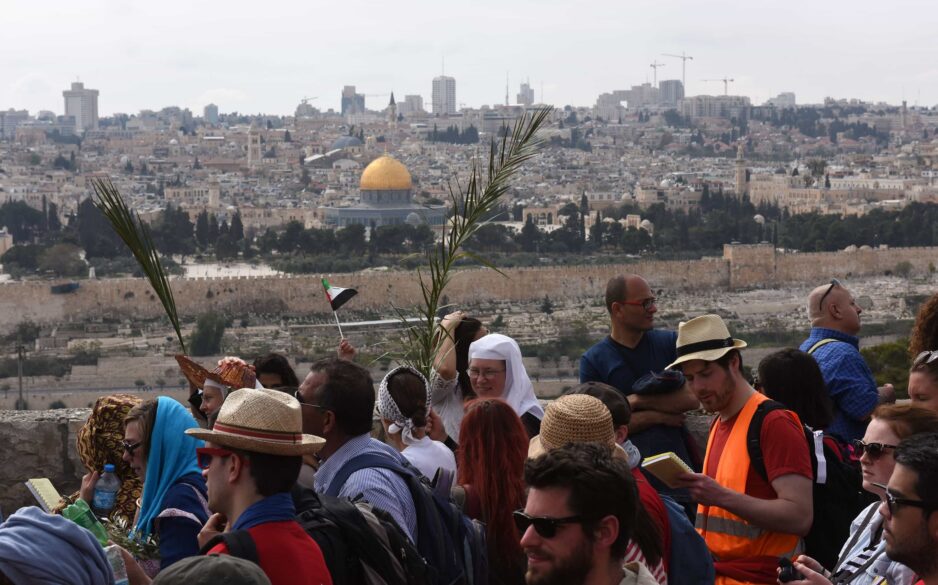
En 2017, los cristianos portan ramas de palma mientras recorren el camino tradicional que siguió Jesús en su última entrada a Jerusalén durante la procesión del Domingo de Ramos en el Monte de los Olivos, en Jerusalén. (Foto OSV News/Debbie Hill)
Como leemos en los Evangelios, Jesús fue a Jerusalén para unirse a multitudes de otros judíos y celebrar la fiesta de la Pascua, tal y como se prescribía en los libros del Antiguo Testamento de Éxodo o y Deuteronomio.
Según el Evangelio de San Juan, Jesús y muchos de sus seguidores recorrieron menos de dos millas desde Betania ese domingo, llegando a las afueras de Jerusalén. Como era costumbre, los peregrinos que ya habían llegado a la ciudad salieron a recibir a los grupos recién llegados; algunos nunca habían visto a Jesús, pero habían oído hablar de los milagros que se le atribuían y se dejaron llevar por el entusiasmo.
Los que llegaban con Jesús y lo saludaban eran numerosos, como explica el Evangelio de San Juan: “La gran multitud (…) se enteró de que Jesús se dirigía a Jerusalén. Y, tomando hojas de palmera, salieron a su encuentro y lo aclamaban diciendo: “¡Hosanna! Bendito el que viene en nombre del Señor, el rey de Israel'” (12,12-13).
Esta adulación no pasó desapercibida para los fariseos que estaban presentes. Le dijeron a Jesús: “Maestro, reprende a tus discípulos”. Él respondió: “Les aseguro que si ellos callan, gritarán las piedras” (véase Lc 19, 39-40). Los fariseos informaron de los acontecimientos al Sanedrín, que consideraba la creciente popularidad de Jesús como una amenaza para su cómoda relación con los romanos. De hecho, estaban planeando asesinarlo.
Anteriormente, Nuestro Señor había evitado deliberadamente la aclamación popular, incluso había huido, pero ahora, al entrar en Jerusalén, la acepta. Sin embargo, sus acciones son diferentes de lo que el pueblo esperaba. No se presenta como un rival de César; no es el mesías político ni el rey guerrero que la multitud había reclamado. En lugar de entrar en Jerusalén en un caballo de guerra o en un carro, entra en un burro, símbolo de paz; y no en cualquier burro, sino en uno en el que nadie se había sentado nunca, la prerrogativa de un rey. Al verlo en el burro, los judíos que se agolpaban a su alrededor recordaron las palabras del profeta Zacarías 500 años antes:
“¡Alégrate mucho, hija de Sión! / ¡Grita de júbilo, hija de Jerusalén! / Mira que tu Rey viene hacia ti; / él es justo y victorioso, / es humilde, y está montado sobre un asno, / sobre la cría de un asna. / Él suprimirá los carros de Efraím / y los caballos de Jerusalén” (Zac 9, 9-10).
El Papa Benedicto XVI explicó estas palabras del Antiguo Testamento en relación con Jesús: Es un rey que destruye las armas de guerra, un rey de paz y un rey de sencillez, un rey e e de los pobres. (…) Jesús no se basa en la violencia; no instiga una revuelta militar contra Roma.
Montado en el asno prestado, Jesús hizo su humilde entrada en la ciudad mientras la multitud esparcía sus vestiduras ante él y agitaba ramas de palmera. Esta escena alegre oculta los actos traicioneros, el dolor y la agonía que pronto seguirán, oculta que este héroe triunfante será crucificado como un criminal.
San Bernardo de Claraval (1090-1153) ofreció una homilía sobre la entrada de Cristo en Jerusalén: “¡Qué diferentes son los gritos de ‘Fuera, fuera con él, crucifícalo’ y luego ‘Bendito el que viene en nombre del Señor, hosanna, en las alturas’! ¡Qué diferentes son los gritos que ahora lo llaman ‘Rey de Israel’ y que dentro de unos días dirán: ‘¡No tenemos más rey que César!’. ¡Qué contraste entre los ramos verdes y la cruz, entre las flores y las espinas! Antes le ofrecían sus propias vestiduras para que caminara sobre ellas, y tan pronto después le despojaban de las suyas y echaban suertes sobre ellas”.
Las palmas eran símbolos de vida entre las tribus nómadas, que, al cruzar el desierto, se regocijaban al ver la palmera, ya que indicaba que cerca había un oasis con agua vivificante. Las palmas han sido durante mucho tiempo un signo de victoria, éxito y gloria. Los ejércitos o líderes victoriosos que regresaban del campo de batalla o de una larga campaña militar eran recibidos por la población que agitaba jubilosamente ramas de palmera. A pesar de la actitud pacífica de Jesús, cuando los judíos le agitaban las palmas y extendían sus ropas sobre las que él cabalgaba, le estaban otorgando los honores de un héroe conquistador y, al mismo tiempo, desafiando a los ocupantes romanos.
El Domingo de Ramos, seguimos saliendo a su encuentro, llevando las palmas bendecidas, cantando con alegría nuestro hosanna y uniéndonos a su entrada triunfal en Jerusalén. Pero pronto nuestra alegría se convierte en tristeza cuando, aferrándonos a nuestras palmas, escuchamos la narración de la pasión de Cristo. Nos damos cuenta, una vez más, de que su triunfo, su verdadera victoria, vendrá a través de la cruz. Sabemos, cómo lo sabía Jesús, cómo terminará la Semana Santa. Sabemos que la alegría se convertirá en tristeza y volverá a ser alegría. Sabemos que a través del horror de su sufrimiento, seguido de la gloria de su resurrección, el bien vencerá al mal y la vida vencerá a la muerte.
Las palmas que llevamos a casa y colocamos en un lugar especial sirven para recordarnos que el Domingo de Ramos no se ha perdido en el tiempo, sino que, gracias a la victoria de Cristo, nosotros también podemos alcanzar la vida eterna.
Poco después de la Resurrección, los cristianos quisieron visitar los lugares de la pasión de Cristo e incluso recrear los incidentes que habían tenido lugar, como su entrada en Jerusalén. Pero tal actividad no sería posible hasta el siglo IV, cuando Constantino se convirtió en emperador del Imperio Romano y puso fin a toda persecución religiosa. Más adelante en ese siglo, una peregrina española llamada Eigera visitó Jerusalén. En su diario, registró cómo los cristianos recreaban los acontecimientos de la Semana Santa.
Escribió que se reunían fuera de la ciudad el domingo antes de Pascua y escuchaban uno de los Evangelios que narraba la entrada triunfal de Cristo en Jerusalén. Luego marchaban juntos a través de las puertas de la ciudad llevando ramas de olivo o de palma. Nuestras procesiones del Domingo de Ramos son similares a las que Eigera presenció hace 17 siglos.
En el siglo IX, la procesión con palmas bendecidas se había extendido más allá de Jerusalén y, durante la Edad Media, se generalizó en toda Europa. En el siglo XVII, los cristianos no solo entraban en la iglesia con palmas, sino que, durante la Misa, las sostenían mientras se leía la Pasión.
A lo largo de los siglos, el Domingo de Ramos y la procesión de personas con palmas se celebraron de diversas maneras. En algunos lugares, el Santísimo Sacramento formaba parte de la procesión; en otros, la congregación comenzaba en el cementerio parroquial y luego entraba en la iglesia. A veces, las palmas se bendecían en una iglesia y la gente, llevándolas consigo, marchaba a otra iglesia para la Misa. Lo más habitual era la bendición de la gente y las palmas en un lugar fuera de la iglesia y luego entrar en procesión. Durante algún tiempo, incluso hasta mediados del siglo XX, el sacerdote vestía ornamentos rojos durante la bendición de las palmas y la procesión y luego se cambiaba a una vestimenta morada para la Misa.
En 1955, la Iglesia estandarizó y simplificó las diferentes entradas utilizadas el Domingo de Ramos: una procesión organizada que comienza en algún lugar fuera de la iglesia, una procesión solemne que comienza dentro de la iglesia o ninguna procesión. La procesión de entrada que comienza en un lugar fuera de la iglesia se utiliza solo una vez durante las misas del fin de semana; no se repite en todas las misas. La iglesia llama a este día Domingo de Ramos de la Pasión del Señor.
(OSV News) — It is a time of despair, perplexity and contradiction. The very people who applaud Christ’s entrance into Jerusalem that morning, shouting out “Hosanna” and words of adoration will, within a week, be crying, “Crucify him.” They will go from acclaiming him as the new King of Israel to urging his life be traded in favor of a convicted criminal; they will first praise him and then mock him. Even friends entering Jerusalem at his side will desert Jesus.
All this discord will take place during one week beginning on what we call Palm Sunday.
Christians carry palm branches in 2017 while walking the traditional path that Jesus took on his last entry into Jerusalem during the Palm Sunday procession on the Mount of Olives in Jerusalem. (OSV News photo/Debbie Hill)
As we read in the Gospels, Jesus went to Jerusalem to join with throngs of other Jews to celebrate the Passover feast as had been prescribed in the Old Testament books of Exodus and Deuteronomy. According to the Gospel of St. John, Jesus and many of his followers journeyed the less than two miles from Bethany on that Sunday, arriving outside Jerusalem. As was the custom, pilgrims that had already arrived in the city went out to greet newly arriving groups; some had never seen Jesus but had heard about the miracles attributed to him and were caught up in the excitement.
Those arriving with and greeting Jesus were large in number as explained by John’s Gospel: “When the great crowd … heard that Jesus was coming to Jerusalem, they took palm branches and went out to meet him, and cried out: ‘Hosanna! / Blessed is he who comes in the name of the Lord, (even) the king of Israel'” (12:12-13).
This adulation was not lost on the Pharisees who were present. They said to Jesus, “Teacher, rebuke your disciples.” He said in reply, “I tell you, if they keep silent, the stones will cry out” (see Lk 19:39-40). The Pharisees reported the events back to the Jewish high council, the Sanhedrin, which regarded Jesus’ ever growing popularity as a threat to their cozy relationship with the Romans. They were, in fact, planning to murder him.
Previously, Our Lord had deliberately avoided popular acclaim, even fled, but this, upon entering Jerusalem, he accepts. Yet his actions are different than the people expected. He doesn’t present himself as a rival to Caesar; he is not the political messiah or the warrior king the multitude had clamored for. Instead of entering Jerusalem on a war horse or chariot, he enters on a donkey, a sign of peace; and not just any donkey, but one on which no one had ever sat, the prerogative of a king. Seeing him on the donkey, the Jews surging around him recalled the words of the Prophet Zechariah 500 years earlier:
“Exult greatly, O daughter Zion! / Shout for joy, O daughter Jerusalem! / Behold: your king is coming to you; /a just savior is he, / Humble, and riding on a donkey, / on a colt, the foal of a donkey. / He shall banish the chariot from Ephraim / and the horse from Jerusalem” (Zec 9:9-10).
Pope Benedict XVI explained these Old Testament words as they related to Jesus: “He is a king who destroys the weapons of war, a king of peace and a king of simplicity, a king of the poor. … Jesus is not building on violence; he is not instigating a military revolt against Rome.”
Riding on the borrowed donkey, Jesus made his humble entrance into the city while the crowds were scattering their garments before him and waving their palm branches. This joyful scene belies the traitorous acts, sorrow and agony that will soon follow, belies that this triumphant hero will be crucified like a criminal.
St. Bernard of Clairvaux (1090-1153) offered a homily about Christ’s entry into Jerusalem: “How different the cries, ‘Away with him, away with him, crucify him,’ and then, ‘Blessed is he who comes in the name of the Lord, hosanna, in the highest!’ How different the cries are that now are calling him ‘King of Israel’ and then in a few days’ time will be saying, ‘We have no king but Caesar!’ What a contrast between the green branches and the cross, between the flowers and the thorns! Before they were offering their own clothes for him to walk upon, and so soon afterwards they are stripping him of his, and casting lots upon them.”
Palms were symbols of life among the nomadic tribes, who, when crossing the desert, rejoiced at seeing the palm tree as it indicated an oasis with life-giving water was near. Palms have long been a sign of victory, success and glory. Victorious armies or leaders returning from the battlefield or a long military campaign were welcomed by the populace jubilantly waving palm branches. Despite Jesus’ peaceful manner, when the Jews waved the palms at him and spread their clothing over which he rode, they were affording him the honors of a conquering hero and simultaneously defying the Roman occupiers.
On Palm Sunday, we still go out to meet him, carry the blessed palms, joyfully sing out our hosanna and join in his triumphant entrance into Jerusalem. But soon our joy turns to somberness as, clutching our palm, we hear the narrative of Christ’s passion. We realize, once again, that his triumph, his true victory, will come through the cross. We know, as Jesus did, how Holy Week will end. We know that joy will turn to sorrow and back to joy. We know that through the horror of his suffering, followed by the glory of his resurrection, good will trump evil and life will trump death.
The palms we take home and put in a special place serve to remind us that Palm Sunday is not lost to the ages but that by Christ’s victory we, too, can achieve everlasting life.
Soon after the Resurrection, Christians wanted to visit the sites of Christ’s passion and even reenact the incidents that had taken place, such as his entry into Jerusalem. But such activity would not be possible until the fourth century when Constantine became emperor of the Roman Empire and ended all religious persecution. Later in that century, a Spanish pilgrim named Eigera visited Jerusalem. In her diary, she recorded how Christians re-created the events of Holy Week. She wrote that they gathered outside the city on the Sunday before Easter and listened to one of the Gospels telling of Christ’s triumphant entrance into Jerusalem. Then they marched together through the city gates while carrying olive or palm branches. Our Palm Sunday processions are akin to what Eigera witnessed 17 centuries ago.
By the ninth century, the procession with blessed palms had expanded beyond Jerusalem, and during the Middle Ages they became widespread throughout Europe. In the 17th century, Christians were not only processing into church with palms but, during Mass, holding the palms while the Passion was being read.
Through the centuries, Palm Sunday and the procession of people holding palms would be celebrated in a variety of ways. In some locations the Blessed Sacrament was part of the procession, in other places the congregation started in the parish cemetery and then went into the church. Palms were sometimes blessed in one church and the people, carrying the palms, marched to another church for Mass. Most typical was the blessing of the people and the palms at a place outside the church and then processing in. For some time, even through the middle of the 20th century, the priest wore red vestments during the palm blessing and procession and then changed to a violet garment for Mass.
In 1955, the Church standardized and simplified the different entrances used on Palm Sunday: either an organized procession that begins somewhere outside the church, a solemn procession starting inside the church, or no procession at all. An entrance procession beginning at a location outside the church is used only once during the weekend Masses; it is not repeated at every Mass. The church calls this day Palm Sunday of the Passion of the Lord.
JACKSON, Miss. (OSV News) — Servant of God Thea Bowman was a beacon for the Church to embrace more authentically the essence of what it means to be Catholic, Bishop Joseph R. Kopacz told Massgoers at the Cathedral of St. Peter the Apostle in Jackson.
“To love the Lord your God with your whole heart, mind, soul and strength, and your neighbor as yourself portrays her lifelong commitment,” he said in his homily at a Feb. 9 Mass of thanksgiving marking the conclusion of the diocesan phase of Sister Thea’s canonization cause. “Her loving heart, her prophetic spirit, her brilliant mind and boundless stamina, even in illness, inspired many.”
The Mass was attended by friends and acquaintances of Sister Thea, representatives from her religious order, the Franciscan Sisters of Perpetual Adoration, members of the historical commission who were part of the diocesan investigation and students from Sister Thea Bowman School in Jackson.
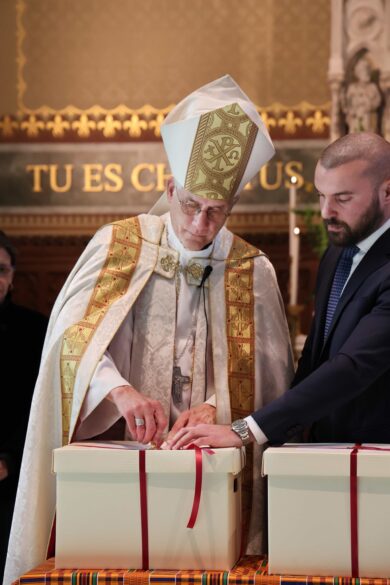
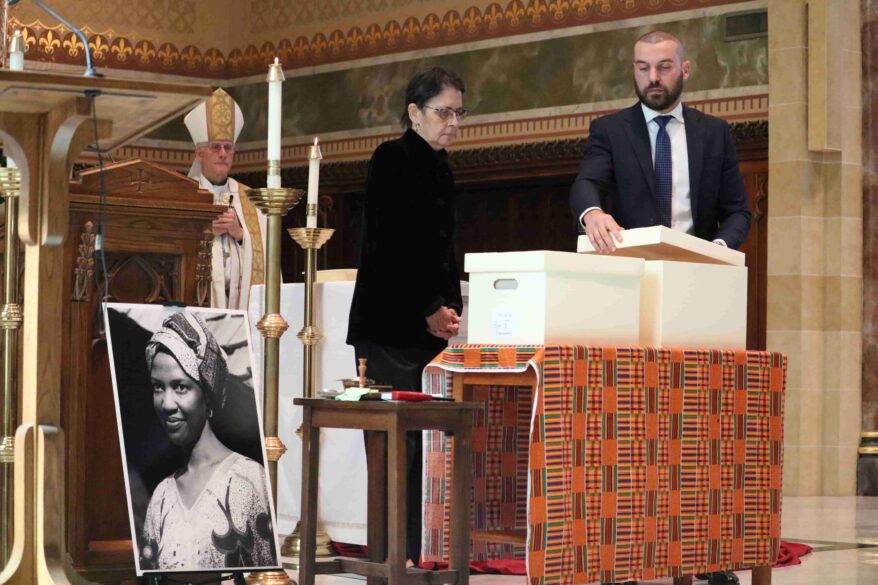
An official closing session of the diocesan phase of the canonization process followed the Mass, where the cause’s leaders ceremoniously sealed several boxes containing the diocesan phase’s documents and findings. In all, 10 boxes containing two sets of documents including more than 15,000 pages each, will be sent to the apostolic nunciature in Washington and then transferred to the Vatican’s Dicastery for the Causes of Saints, which will further investigate the cause.
Jackson’s Bishop Kopacz, the main celebrant at the Mass, was among several bishops who witnessed the closing session. Concelebrants included Archbishop Mark S. Rivituso and retired Archbishop Thomas J. Rodi of Mobile, Alabama, and Bishop Steven J. Raica and retired Bishop Robert J. Baker of Birmingham, Alabama.
Bishop Joseph R. Kopacz places a seal on the boxes for the cause for Sister Thea Bowman, with the assistance of postulator, Emanuele Spedicato on Feb. 9 at the Cathedral of St. Peter the Apostle. (Photo by Tereza Ma/Mississippi Catholic)
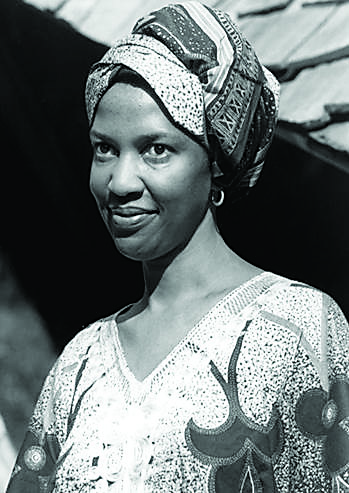
Bishop Kopacz in 2018 opened the cause for Sister Thea, a native of Mississippi who was born in Yazoo City and raised in Canton. She was the only African American member of the Wisconsin-based Franciscan Sisters of Perpetual Adoration. Before she died of cancer in 1990 at age 52, she was a widely known speaker, evangelizer and singer.
Nearly eight years after the cause was opened, Bishop Kopacz described the moment of closing the diocesan phase of the investigation as a blessing, especially for those who have been inspired by Sister Thea’s life.
“There’s considerable joy in the African American community,” he said. “It radiates throughout the whole diocese. Our Hispanic population is very proud of Sister Thea Bowman, too. They look to her as someone who had done a lot in her life and inspires them, in spite of obstacles, to continue forward. She had a great passion and love for God, and she saw the Church as the body of Christ as being for all. She taught people to be proud of their culture, and yet see the universality of the Church.”
Among the documents and findings related to Sister Thea are interviews with more than 40 witnesses as well as her writings, articles and other items pertaining to her life, said Emanuele Spedicato, the postulator for the cause who has been charged with sending the documents to Rome.
There are main components of a canonization investigation, which include a proven reputation for holiness, a rigorous examination of the candidate’s writings and life, the testimony of witnesses regarding heroic virtue and the investigation of at least one miracle attributed to their intercession.
Notary for the cause, Fabvienen Taylor witnesses Emanuele Spedicato place the final documents in the boxes for the cause for Servant of God Sister Thea Bowman.
Once the Vatican accepts the acts of the diocesan investigation, the sealed boxes will be opened and then begins the work of summarizing the information, said Spedicato, who will be tasked with writing the “positio,” which lays out the case for sainthood. From there, it is sent to the Dicastery for the Causes of Saints and then ultimately to the pope.
“The most exciting part is being here today and showing the people the formalities (of the investigation) that are not only formalities but it’s for a purpose,” Spedicato said.
Sister Thea is among seven Black Catholics with active sainthood causes — dubbed the “Saintly Seven.”
Of the seven, four have been declared “Venerable”: Mother Mary Lange, who founded the Oblate Sisters of Providence, the first Catholic order of African American women religious, in Baltimore; Father Augustus Tolton from Chicago, the first Catholic priest in the United States known to be Black; Pierre Toussaint from New York City, known for his works of charity; and Mother Henriette Delille, foundress of the Sisters of the Holy Family in New Orleans.
Two others, like Sister Thea, have the title “Servant of God”: Julia Greeley, who was born into slavery and after her emancipation later moved to Denver, where she was known for her works of charity; and Father Martin de Porres Maria Ward, a Conventual Franciscan and Boston native who served the poor and the sick on mission in Brazil well into the late 1990s.
Myrtle Otto
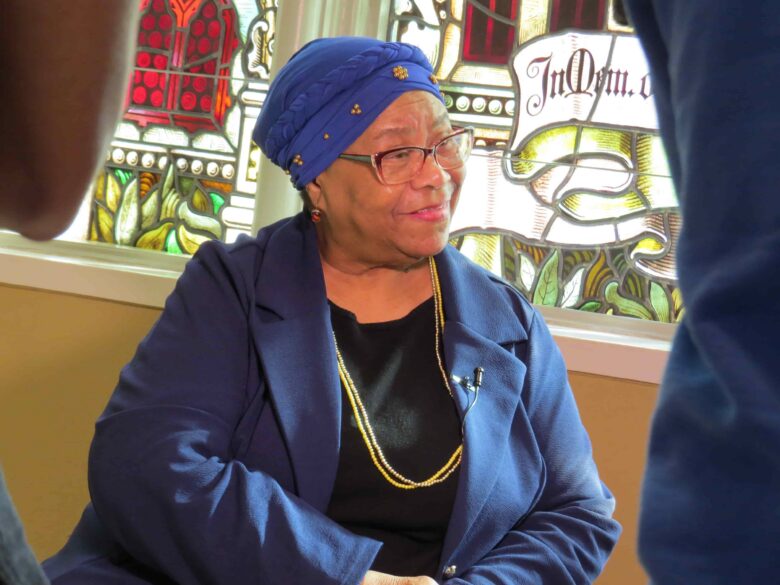
Among those who attended the Mass at the Jackson cathedral was Myrtle Otto, one of Sister Thea’s pupils at Holy Child Jesus School in Canton.
After joining the Francsican Sisters of Perpetual Adoration, Sister Thea returned to the school where she once was a student to teach music and English literature. She often stressed the importance of receiving a good education but also knew how to have fun, too, Otto said.
“We respected her in the utmost,” she said, adding that Sister Thea’s legacy should live on in how we treat others.
“Always learn to be kind,” Otto said. “Always learn to give people what’s due to them. She was a strong woman, and she taught us how to be strong. Regardless of what goes on, you pray and you go on and you’ll be successful. She’s now gone to glory with God.”
Several members of the Franciscan Sisters of Perpetual Adoration leadership were in attendance, including Sister Georgia Christensen, who knew Sister Thea from the time they were junior professed sisters.
Years ago during one of her assignments at a predominantly Black school in California, Sister Thea had come to help out for a brief period and was encouraging with the students, Sister Georgia recalled.
“She always had a spirit of joy about her,” she told the St. Louis Review, news outlet of the St. Louis Archdiocese, which Sister Thea visited on numerous occasions in the 1980s.
“She was able to break into song at any time, just praising God and making others happy. It touches the soul, and what it says is her life was a life worth living,” Sister Georgia recalled.
As part of their community’s perpetual adoration, the Franciscan sisters include a prayer at the end of every hour with the line: “All praise and all thanksgiving, be every moment thine.”
“I couldn’t help but think of that here today,” Sister Georgia said. “This is a moment of glory to God and Thea was the cause of it.”
Jennifer Brinker is a reporter at the St. Louis Review and Catholic St. Louis, the news outlets of the Archdiocese of St. Louis. This story was originally published by the St. Louis Review and distributed through a partnership with OSV News.
By Joanna Puddister King JACKSON – As the Diocese of Jackson approaches Commitment Sunday for the 2026 Catholic Service Appeal (CSA), Catholics across the diocese are invited to prayerfully reflect on their commitment to prayer, participation, and generosity in support of ministries that serve communities throughout the diocese.
Commitment Weekend, including the in-pew collection, will take place Feb. 14–15 in parishes across the diocese.
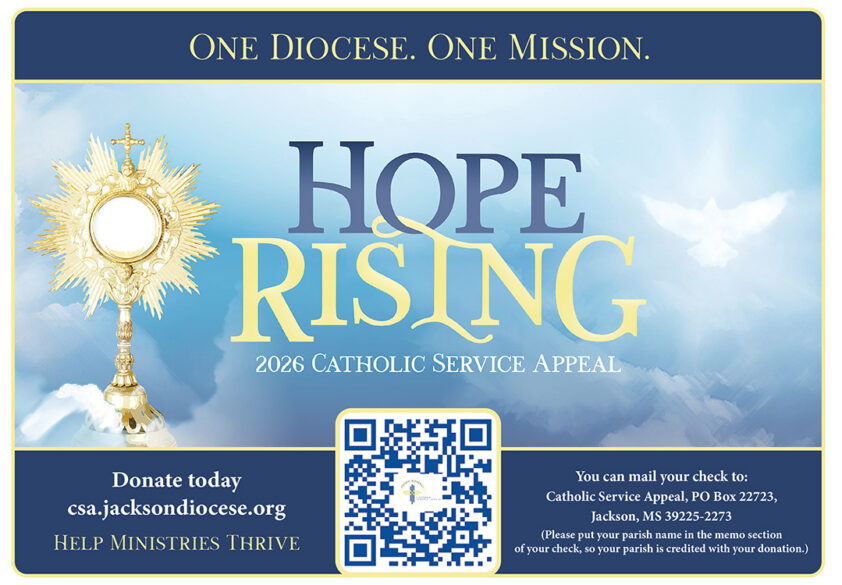
The theme for the 2026 Appeal, Hope Rising, reflects both the spiritual foundation of the CSA and its tangible impact across the diocese. Rooted in the Gospel and inspired by the Beatitudes, the Appeal supports ministries that bring Christ’s compassion to life in parishes, missions and communities large and small.
Bishop Joseph R. Kopacz has emphasized that hope is not an abstract idea, but something made visible through the shared mission of the Church. When Catholics live out the Beatitudes, he notes, hope does not merely glimmer – it rises. Through the Catholic Service Appeal, the faithful become a living witness of Christ’s compassion, serving those in need and strengthening the Church across the Diocese of Jackson.
Funds raised through the CSA support a wide range of diocesan ministries, including the formation of future priests, care for retired clergy, prison ministry, faith formation programs, and the charitable outreach of Catholic Charities. Together, these ministries serve individuals and families facing hardship, accompany those seeking healing and reconciliation, and nurture faith at every stage of life.
The Appeal is the primary means by which the diocese funds ministries that no single parish could sustain alone. Through the Catholic Service Appeal, each parish works toward a shared goal to help sustain diocesan ministries, and through this shared participation, Catholics across the Diocese of Jackson help ensure that pastoral care, education, charitable outreach and evangelization remain accessible in every corner of the diocese.
While the CSA is a financial appeal, diocesan leaders stress that it begins with prayer. Parishioners are encouraged to reflect on how God is calling them to participate – through prayer, service, and, as they are able, financial support.
As one diocesan family, Catholics are invited to be the hands and heart of Christ. When the faithful walk together in faith and generosity, hope truly rises for those they serve.
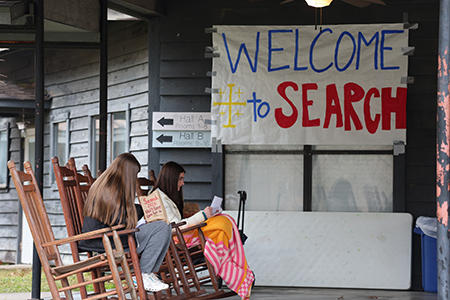
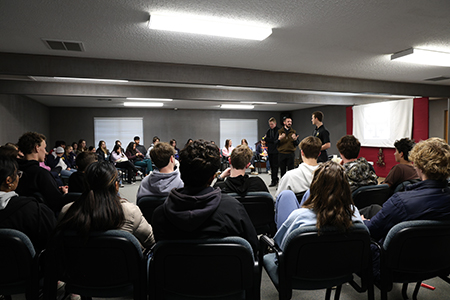
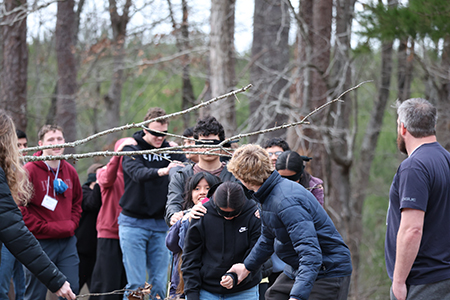
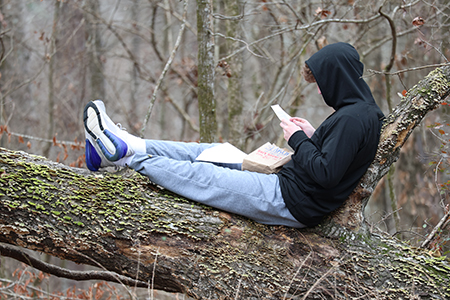
By Joanna Puddister King GALLMAN – High school juniors and seniors from across the Diocese of Jackson gathered at Camp Wesley Pines near Hazlehurst Jan. 16–18 for the annual diocesan SEARCH Retreat. SEARCH is a Catholic youth retreat modeled after the Cursillo retreat for adults, designed specifically for high school juniors and seniors who desire to deepen their faith and relationship with Christ.
A retreat “for teens, led by teens,” SEARCH is an experience like none other, with a strong focus on vocations. It engages youth in a special way and calls them to live out their Catholic faith in a bold, real, active and healthy way.
“Much of what happens in the retreat is kept a mystery, but a few things are certain – you will have fun, you will be challenged to grow in your faith, and chances are you will make a few new friends,” said Abbey Schuhmann, coordinator of the Office of Youth Ministry for the Diocese of Jackson.
The retreat team is primarily made up of a youth staff of teens who have previously attended a SEARCH retreat. Once a teen attends a SEARCH weekend, he or she has the opportunity to apply to staff future retreats, Schuhmann explained.
While the teens lead the retreat, adult leaders and clergy serve largely behind the scenes. Deacon Will Foggo assisted throughout the weekend and led adoration and benediction, helping guide the teens in prayer and worship. Seminarians Joe Pearson and Henry Haley were also present, offering witness talks and spending time with participants to share about vocational discernment and life in seminary.
The SEARCH model gives youth the opportunity to demonstrate and carry out servant leadership. The retreat would not be possible without the support of adult volunteers who have served in this ministry for many years.
“We are especially grateful to Ann and Jeff Cook for continuing to serve as volunteer adult SEARCH coordinators,” Schuhmann said. “Without their dedicated service, this ministry would not be where it is today.”
The SEARCH ministry continues to grow in the diocese, with each retreat welcoming new participants into what has become a strong and enduring SEARCH family.