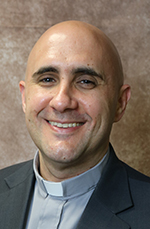
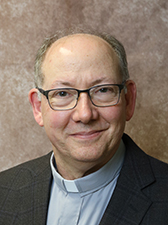
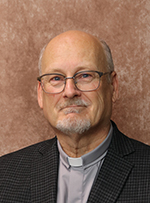
Happy Ordination Anniversary

June 1
Father Anthony Okwum, SSJ

June 3
Father Guy Wilson, ST

June 4
Father Joe Tonos
Dcn. Jeff Artigues
Dcn. Denzil Lobo
Dcn. John McGinley
Dcn. John McGregor
Dcn. Ted Schreck

June 6
Father PJ Curley

June 7
Father Aloys Jost, OFM
Father Kevin Slattery

June 8
Father Thomas Delaney

June 10
Father Robert Dore

June 11
Father Patrick Farrell
Father Thomas Lalor

June 12
Father Gerry Hurley
Father Frank Cosgrove
Father Kent Bowlds

June 13
Father Mike O’Brien
Father Mario Solorzano

June 14
Father Tom McGing
Msgr. Mike Flannery

June 15
Father David Szatkowski, SCJ

June 16
Father Jeffrey Waldrep

June 18
Father Anthony Quyet

June 26
Dcn. David Gruseck

June 27
Father Andrew Nguyen
Father Cesar Sanchez
Father Marco Sanchez, ST

June 28
Father Stephen Okojie

July 16
Dcn. Mark Bowden
Dcn. Dien Hoang
Dcn. Wesley Lindsay
Dcn. John Pham
Dcn. David Rouch
Dcn. Tony Schmidt

Thank you for answering the call!

Secret to building peace lies in recognizing dignity of every person, pope tells lawmakers

By Carol Glatz
MADRID (CNS) – In a highly anticipated and historic speech to Spain’s parliament, Pope Leo XIV urged modern-day leaders to be guided by ancient and Catholic principles that gave birth to universal human rights based on the inalienable dignity of the human person.

While Church and state legitimately remain separate, many virtues and aims of good governance and just laws are rooted in values profoundly marked and inspired by the Christian tradition, he told hundreds of lawmakers and leaders of judiciary branches June 6 in Spain’s Congress of Deputies.

When lawmakers ask themselves “how to ensure that what is possible is just, that what is legal is truly humane, and that the will of the majority safeguards those goods that belong to all and respects that which no majority can legitimately violate,” he said, the answer needs to “stand before the dignity of the person and pass that test without shame.”

Pope Leo XIV delivers a speech during a joint session of the Spanish Parliament at the Congress of Deputies in Madrid, June 8, 2026, during his June 6-12 apostolic journey to Spain. (OSV News photo/Stefano Rellandinii, pool via Reuters)

Even though “society and the Church herself did not always live up to these insights found in their own Christian tradition,” he said, Spain’s Christian thinkers introduced the idea of “the irreducible value of every human being and the moral limits of power,” which led to the core principles of international human rights.

Even today, the pope said, the whole world “continues to ask itself how to build peace on the recognition of the person and not on the imposition of force.”

Recalling Pope Francis’ criticism of a lingering “throwaway culture,” which fails to recognize the inherent dignity of every human being, Pope Leo challenged the lawmakers to consider their serious “responsibility of legally ordering social coexistence.”

“If life ceases to be recognized as a fundamental value, what future can our societies have? Can a community that casts into the shadows the unborn child, the elderly, the sick, those who suffer in silence, or those who depend entirely on the care of others be called fully just?”

When “the most vulnerable are the first victims,” he said, “the law loses its deepest meaning: to serve and protect every person.”

“For this reason, the moral greatness of a nation is manifested, above all, in its capacity to accompany, protect and love those lives that are most fragile.”

“I invite you, then, to lift your gaze to the world around you, not to turn away from reality, but to remember that every decision by public authorities affects real people, especially those who have less power to make their voices heard,” Pope Leo said.

Sacred Heart reconciles divisions and transforms hardened hearts

By Jean Gonzalez
ORLANDO, Fla. (OSV News) – A sea of white robes and zucchettos of pink and magenta in the pews. A statue of Jesus welcoming the faithful with his exposed Sacred Heart upon the foot of the altar.

A setting fit for a June 11 Mass that united U.S. bishops gathered for their spring plenary June 10-12. They left the second of two days of public sessions at Omni Resort in ChampionsGate for a half-hour drive up Interstate 4 for the spiritual refuge that is the Basilica of the National Shrine of Mary, Queen of the Universe in Orlando.

And the Mass was a momentous one as it served to formally consecrate the United States to the Sacred Heart of Jesus, as part of the celebration of the 250th anniversary of the signing of the Declaration of Independence.

Archbishop Paul S. Coakley of Oklahoma City incensed the altar after processing in from the thick humidity and cloudy skies of a typical Orlando afternoon outside the shrine. The president of the U.S. Conference of Catholic Bishops was joined on the altar by bishops and deacons of the Orlando Diocese.

A statue of the Sacred Heart of Jesus is displayed before the U.S. Catholic bishops consecrate the country to the Sacred Heart of Jesus at the Basilica of Mary Queen of the Universe in Orlando, Fla., June 11, 2026, during their spring plenary assembly. (OSV News photo/Bob Roller)

“Clothe us, Lord God, with the virtues of the heart of your son, and set us aflame with his love,” the archbishop prayed in opening the Mass.

More than 200 bishops present, along with about 150 observers, mostly benefactors and staff of the Diocese of Orlando. The monstrance used ahead of Mass for Eucharistic adoration was from the Servants of the Pierced Hearts, a Miami-based religious institute.

The relics of St. Margaret Mary Alacoque – the French Visitation sister who experienced visions of Jesus revealing his Sacred Heart – were also present at the Mass, on loan for the consecration from the Knights of Columbus.

In his homily, Archbishop William E. Lori of Baltimore described the Sacred Heart of Jesus not as an “abstract devotion,” but as a “visible sign of love.”

He explained why the Church consecrates. He described it as an act of faith and acknowledgment of the need for God’s mercy, wisdom and guidance. It is also an act of hope. It is “a heart that has known joy and sorrow, friendship and betrayal, suffering and sacrifice,” he said.

The act of consecration is an act of faith and hope, the archbishop said, but it is also an acknowledgment of God’s faithful work and love in the world and how we as people and as a Church have not always “clearly reflected that love.”

“Indeed, it is sometimes obscured almost beyond recognition,” the archbishop added. “To be sure, there have been moments of extraordinary witness and holiness. But there have also been moments of failure, division and sin. Consecration requires the humility to acknowledge both.”

And why the Sacred Heart? Because it reveals a savior who “desires not merely our obedience, but our friendship; not simply our service, but our communion with Him,” he said.

“To consecrate ourselves to the Sacred Heart is ultimately to accept Christ’s invitation to remain in His love and to allow that love to shape every aspect of our lives, public and private,” Archbishop Lori said. “It is a declaration that the future does not belong merely to political movements, economic forces, or human plans. The future belongs to God.”

The act of consecration does not just happen among the shepherds, but also the sheep. In speaking to the laity both in the pews at the shrine and watching on the livestream, Archbishop Lori said the act of consecration is one the faithful and leaders do together.

“This consecration is not something the bishops do for you. It is something we do together,” he said. “The renewal of the Church and our nation will not come through declarations alone. It will come through disciples who remain in Christ’s love and bear the good fruit of holiness in families, parishes, communities and in their daily lives.”

The Sacred Heart reconciles divisions and transforms hardened hearts, the archbishop said.

“It means building communities – ecclesial and civil – where truth is proclaimed clearly and charity is practiced generously. It means resisting the temptation to define ourselves by division, ideology or resentment,” Archbishop Lori said. “We consecrate our nation, not because it is perfect, but because it is beloved by God. We entrust to the Heart of Christ our achievements and failures, our hopes and anxiety, our present challenges and our future aspirations.”

(Jean Gonzalez, editor with Florida Catholic Media, is helping cover the bishops’ spring plenary for OSV News.)

Briefs

Pope Leo XIV stands before the blessing and inauguration of the Tower of Jesus Christ at the Basilica of the Sagrada Familia during Pope Leo XIV’s apostolic journey in Barcelona, Spain, June 10, 2026. (OSV News photo/Simone Risoluti, Vatican News)

NATION
ORLANDO, Fla. (OSV News) – In preparation for the 500th anniversary of Our Lady of Guadalupe’s appearance to St. Juan Diego in five years, the dioceses of the U.S. will be participating in the Intercontinental Guadalupan Novena. Bishop Oscar Cantú of San Jose, California, chairman of the bishops’ Subcommittee on Hispanic/Latino Affairs, addressed his fellow bishops June 11 during their spring plenary, sharing that one theologian had referred to Our Lady of Guadalupe as the “Queen of Marian Apparitions.” Franciscan Father Stefano Cecchin, president of the Pontifical International Marian Academy, told the bishop during a conference in Mexico City earlier this year that other apparitions talked about the rosary, repentance or unity of the family. “But the message in Guadalupe included an entire array of theological messages that included ecclesiology, Christology, the role of the laity, the role of the hierarchy, enculturation,” Bishop Cantú recalled Father Cecchin telling him. Four years ago, the Mexican Episcopal Conference began a “Novena of Years” in anticipation of the quincentennial, and they have invited all dioceses throughout the Americas to join them for the remaining five years leading to the quincentennial.

SAN ANTONIO (OSV News) – As the NBA Finals spotlight the San Antonio Spurs and New York Knicks, an unexpected group has captured national attention: the Salesian Sisters of St. John Bosco in San Antonio. Dubbed the “Spurs Nuns,” the sisters have gone viral during the Spurs’ playoff run, appearing courtside, offering prayers and enthusiastically cheering for their hometown team. But Sister Bernadette Mota says the attention remains secondary to the community’s mission. Speaking with OSV News, she emphasized that the sisters’ primary calling is serving young people and those in need, not basketball fame. For the Salesian Sisters, as national media attention to them has grown, they have welcomed the spotlight, seeing it as an opportunity to highlight their ministries and the needs of the young people they serve.

VATICAN
VATICAN CITY (OSV News) – Pope Leo XIV told Catholic university leaders on June 3 that they have a responsibility to instill in their students a passion for “not only intellectual truth, but the truth that is Christ himself.” Speaking with university presidents, rectors, senior administrators and faculty leaders from U.S. colleges who are currently taking part in the 2026 Association of Catholic Colleges and Universities Rome Seminar, the pope underlined that the importance of forming students in “the sound doctrine entrusted to the Church that will serve as a true and lasting foundation not only for their lives, but the future of the nation.” “Unless Catholic education instills in students a true passion for the truth – and not only intellectual truth, but the truth that is Christ himself – we can hardly expect people to be willing to put forth the effort required to recognize truth and adapt one’s life accordingly,” he said. Pope Leo also highlighted two major challenges facing Catholic education: the fragmentation of knowledge and the growing influence of artificial intelligence, pointing to lessons from his recent encyclical “Magnifica Humanitas: On Safeguarding the Human Person in the Time of Artificial Intelligence.”

VATICAN CITY (OSV News) – Pope Leo XIV on June 1 praised Venerable Fulton J. Sheen as “a light of faith, hope, and love” whose pioneering radio and television broadcasts brought the Gospel to millions of Americans, including the pope himself as a child. Speaking to members of the Pontifical Mission Societies at the Vatican, Pope Leo said it was providential that Archbishop Sheen will be beatified Sept. 24 in St. Louis during the centennial year of the mission societies he once led. “I myself am a witness of his evangelization when I was growing up,” the pope said. “Archbishop Sheen was a light of faith, hope, and love that shone through the radio and television media for decades,” Pope Leo said. “His broadcasts touched millions with the hope of the Gospel and his initiatives and efforts resulted in enormous spiritual and material aid to the Churches in areas of first evangelization,” he added. Born in Illinois in 1895, Sheen became one of the most influential Catholic communicators in U.S. history through NBC radio’s “The Catholic Hour” and the television program “Life Is Worth Living.” He also spent 16 years leading the Society for the Propagation of the Faith, one of the four Pontifical Mission Societies, raising significant support for missions worldwide.

WORLD
BARCELONA, Spain (OSV News) – Pope Leo XIV blessed the newly completed Tower of Jesus Christ at Barcelona’s Sagrada Familia basilica June 10, inaugurating the crowning spire that makes the iconic church the tallest Catholic church the world and urging people to lift their gaze to Christ “who alone reveals to us the truth about God and the truth about ourselves.” Pope Leo offered Mass inside the basilica and formally inaugurated the Tower of Jesus Christ, which stands at more than 564 feet, before a crowd of thousands gathered inside and around the Sagrada Familia. “By looking at Christ, we can see the world with renewed eyes: the tower of the cross then becomes a banner of charity, for God loves us in this way, transforming an instrument of death into a sign of hope,” the pope said. Spain’s King Felipe VI welcomed the pope upon his arrival at the basilica. Before Mass, Pope Leo descended to the basilica’s crypt to pray at the tomb of Antoni Gaudí, the visionary Catalan architect who devoted 43 years of his life to the design and construction of the basilica before his death in 1926 at age 73. The papal Mass fell on the 100th anniversary of Gaudí’s death. Known as “God’s architect,” Gaudí’s cause for canonization advanced last year when Pope Francis declared him venerable in April 2025. Pope Leo paid tribute to the visionary builder in his homily, reflecting on Gaudí’s intent to narrate the mysteries of Christ’s life through stone and light.

PARIS (OSV News) – Pope Leo XIV’s upcoming visit to France is taking shape, with French Church leaders releasing new details about the Sept. 25–28 apostolic journey and expressing hopes that it will inspire the same enthusiasm seen during the pope’s recent visit to Spain. The trip will begin in Paris, where Pope Leo is scheduled to pray vespers at Notre Dame Cathedral, marking the first papal visit since the cathedral reopened following the 2019 fire. He will also visit UNESCO and join a large youth prayer vigil before celebrating an outdoor Mass in the French capital. The pope will then travel to the Marian shrine of Our Lady of Lourdes, where he will celebrate Mass near the grotto where Our Lady appeared to St. Bernadette. The visit will conclude in Metz, a city linked to Franco-German reconciliation and the legacy of Robert Schuman, the founding father of the European Union. French bishops say the visit is above all a spiritual opportunity for renewal and missionary outreach. Final details of the papal itinerary are expected from the Holy See in the coming weeks.

National Eucharistic Pilgrimage’s Baltimore leg pays tribute to US founders, first cathedral

By George P. Matysek, Jr.
BALTIMORE (OSV News) – Carrying a golden monstrance containing the Blessed Sacrament, Father Michael DeAscanis paced his 227-step climb up downtown Baltimore’s Washington Monument June 10, repeatedly praying one complete “Glory Be” for every 10 steps until he reached the top.

The steady spiral ascent brought the priest of the Archdiocese of Baltimore more than 120 feet above the city to a lookout inside the historic monument. There, framed by windows facing in every direction, he raised the monstrance and traced the Sign of the Cross – blessing Baltimore from north, south, east and west.

Father Michael DeAscanis, pastor of St. Louis Church in Clarksville and St. Francis of Assisi Church in Fulton, presents the Blessed Sacrament to pilgrims participating in the Archdiocese of Baltimore’s segment of the National Eucharistic Pilgrimage, themed “One Nation Under God.” The blessing took place at the Washington Monument in Baltimore City June 10, 2026. (OSV News photo/Kevin J. Parks, Catholic Review)

Below, more than 200 people gathered outside the monument, designed in 1815 by American architect Robert Mills, who later designed the Washington Monument in Washington.

As Father DeAscanis offered a prayer for Baltimore and the nation, the crowd – wet from morning showers – sang religious and patriotic hymns, including “God Bless America.”

The poignant moment was part of the June 9-11 Baltimore leg of the 2026 National Eucharistic Pilgrimage, which began May 24 in St. Augustine, Florida, and is making its way up the East Coast to Maine and then back down to Philadelphia as part of celebrations surrounding America’s 250th anniversary. Nine young adults, known as “perpetual pilgrims,” are on the route and plan to travel every mile.

Held under the theme “One Nation Under God,” the pilgrimage arrived in the Baltimore Archdiocese June 9. The June 10 events in Baltimore began with morning Mass at the Basilica of the National Shrine of the Assumption of the Blessed Virgin Mary, the United States’ first Catholic cathedral.

Kathy Bentz, a parishioner of Our Lady of Hope in Dundalk, Maryland, took a day off from work to attend the pilgrimage. Faith is needed more than ever, she said, because people are “looking for hope.”

“I need to be around people who get me and I get them,” she said. “And that’s why I’m here. I feel like I’m in the presence of good and it makes me want to do better.”

The National Eucharistic Pilgrimage began its journey through the Baltimore archdiocese with a June 9 procession at the site of the nation’s first monument to George Washington – a stoic stone tower in Boonsboro, just off the Appalachian Trail in Washington Monument State Park.

As the nine perpetual pilgrims followed the Eucharist under a baldacchino to the monument, they were joined by 130 others from all over the archdiocese and beyond to watch Father Jeffery Dufresne of the Archdiocese of Indianapolis take the holy Eucharist to the top of the monument and down, before presenting it on the altar.

“It was extremely beautiful to see Jesus overlooking the valley that he created,” said Zachary Robinson, a Catholic from Westminster, Maryland, as he hiked back. He called it “an experience of God just delighting in the beauty of his creation.”

From Boonsboro, the pilgrimage traveled to Hagerstown, where close to 450 people attended Mass at St. Mary June 9 before joining a procession on the streets around the church.

From Hagerstown, the pilgrimage went to Baltimore for the June 10 morning procession and then continued to Severna Park for an afternoon retreat focused on the Sacred Heart. The pilgrims ended the day in Annapolis, Maryland’s capital and home to the U.S. Naval Academy, with a procession beginning at the city’s historic St. Mary’s Church, followed by sunset Eucharist adoration.

St. Mary’s campus includes the birthplace of Charles Carroll of Carrollton, the only Catholic signer of the Declaration of Independence. Charles Carroll was the cousin of Archbishop John Carroll, the first bishop of Baltimore.

While a thunderstorm greeted everyone as they arrived at St. Mary, only a few raindrops were falling when the Eucharistic procession to the State House began. Singing songs and saying prayers in both English and Spanish, participants waved white flags, carried signs saying “Jesus, I Love You” and smiled at those gathered to watch the procession.

As they walked, the nine perpetual pilgrims reached out to those lining the parade route asking if they knew what the procession was about and sharing information about the Eucharist.

“It’s part of our ministry,” said pilgrim Raymond Martinez II of the personal encounters, noting that along the way he has met both non-Catholics and Catholics who have lapsed in their faith.

The pilgrimage continued from the Archdiocese of Baltimore into the Diocese of Wilmington, which encompasses the state of Delaware and Maryland’s Eastern Shore, June 11-12.

Pilgrims then plan to spend the June 12-14 weekend in the Diocese of Camden, New Jersey, with a stop in Gloucester City to commemorate Fort Nassau, the state’s first European settlement.

Since its Pentecost Sunday launch, the pilgrimage has traveled through the dioceses of St. Augustine, Florida; Savannah, Georgia; Charleston, South Carolina; Charlotte, North Carolina; Richmond, Virginia; and Arlington, Virginia; and the Archdiocese of Washington.

(George P. Matysek Jr. is the managing editor for Catholic Review, the newspaper of the Baltimore Archdiocese. Contributing to this story was Catholic Review Media news correspondent Katie V. Jones and OSV News.)

Rev. Hilary Brzezinski, OFM placed on administrative leave

JACKSON – On May 14, 2026, the Franciscans of the Province of Our Lady of Guadalupe and the Most Rev. Joseph R. Kopacz, Bishop of the Diocese of Jackson, placed Rev. Hilary Brzezinski, OFM, pastor of St. Francis Parish, Greenwood, and its mission parishes, on administrative leave pending the outcome of civil, criminal, and church investigations involving allegations of misconduct.

After a preliminary investigation, the Franciscans and the Diocese concluded claims of misconduct against Rev. Brzezinski warranted further investigation. The Franciscan and Diocesan protocols require an accused priest to be placed on leave and removed from ministry pending a complete investigation.

The Franciscans and the Diocese of Jackson are committed to protecting the dignity of the human person. Misconduct by church personnel violates human dignity and the mission of the Church. We are committed to ensuring that all being served by the Church are not at risk of abuse, physical, psychological, sexual or otherwise, by Church personnel. The spiritual well-being of all victims, their families, and others in the community is of ultimate concern to the Church.

The Diocese urges anyone who has information about this situation, or who has been a victim of abuse by Rev. Brzezinski, or by any other church personnel, to contact our victim assistance coordinator, Jenifer Jenkins (601) 960-8471.

For more than twenty years, the Diocese of Jackson has developed and implemented a safe environment program. Both the Franciscans and the Diocese have publicized standards of conduct for priests and deacons, as well as diocesan employees, volunteers, and any other church personnel in positions of trust who have regular contact with minors and vulnerable adults.

For more information about Diocesan policies and procedures, visit our website at: https://www.jacksondiocese.org/child-protection.

In memoriam: Eternal rest grant unto them

Father Darrell Kelly, SVD
Father Darrell “Chuck” Kelly, SVD, died May 7, 2026, after a lengthy illness in Bay St. Louis.

Born Oct. 8, 1961, in Mound Bayou, Mississippi, he attended St. Gabriel School and Immaculate Conception High School. He studied at Mississippi Valley State University, served in the U.S. Army, including during Operation Desert Storm, and later worked as a correctional officer with the Mississippi Department of Corrections.

After converting to the Catholic faith, Father Kelly discerned a vocation to the priesthood. He attended Divine Word College, completed his novitiate with the Divine Word Missionaries and studied at Catholic Theological Union. He was ordained May 28, 2005, in Techny, Illinois.

His assignments included Notre Dame Parish in St. Martinville, Louisiana; Holy Ghost Parish in Jackson; and Our Mother of Mercy Parish in Fort Worth, Texas. Despite significant health challenges, he continued to serve faithfully in ministry.

Funeral services were held May 13 at St. Augustine Parish in Bay St. Louis, with burial and full military honors.

Father Gerald Joseph Peterson
Father Gerald Peterson, 96, a Glenmary Home Missioner for 73 years, died May 13, 2026, in Cincinnati.

A native of Loretto, Kentucky, Father Peterson joined Glenmary as one of its earliest members and was part of the second novitiate class in 1952. He earned a Doctor of Ministry degree from Vanderbilt University and later studied Spanish in Mexico to better serve immigrant communities.

Throughout his ministry, he served in Appalachia, Virginia; Georgia; Tennessee; Alabama; and Mississippi. From 2001 to 2013, he ministered in Pontotoc, Mississippi, serving local Catholics and the broader community.

Known for his creativity and concern for those in need, Father Peterson helped establish transportation, housing, childcare, health-care and food programs in mission communities. Fellow Glenmarians remembered him as a tireless missionary dedicated to evangelization and service.

He is survived by his twin sister, Geraldine. A Mass of Christian Burial was celebrated June 3 in Cincinnati.

Sister Mary Elisa Bauman, RSM
Sister Mary Elisa Bauman, RSM, died May 16, 2026, at Catherine’s Residence in St. Louis. She was 88 and had been a Sister of Mercy for 70 years.

Born Mary Louise Bauman on Nov. 2, 1937, in North Little Rock, Arkansas, she entered the Sisters of Mercy in 1955 and professed perpetual vows in 1961. She earned degrees in education and English and devoted much of her religious life to Catholic education.

Sister Elisa taught at schools in Arkansas, Oklahoma and Mississippi, including Our Lady Academy in Bay St. Louis. She also served as principal and administrator at Mount St. Mary Academy in Little Rock, Mercy Cross High School in Biloxi and Our Lady Academy.

After retiring from education, she remained active in the Bay St. Louis community before moving to St. Louis in 2022. She is survived by four nieces, members of her Mercy community and many friends. Funeral services were held privately, with a memorial Mass and burial planned in Little Rock.

Meyrl Schmit
Meyrl Schmit, a former priest of the Diocese of Jackson, died April 27, 2026, at age 87.

Born April 20, 1939, in Detroit, Michigan, he later served as a priest in the Diocese of Jackson and subsequently taught as an adjunct professor at community colleges in Illinois.

He is survived by his wife, Carolyn. Funeral services were held June 12 in Bryant, Indiana, with burial in the parish cemetery.

‘Magnifica Humanitas’: Pope Leo’s AI encyclical warns of temptation to build future excluding God

By Courtney Mares

VATICAN CITY (OSV News) – Pope Leo XIV published his landmark encyclical on artificial intelligence “Magnifica Humanitas” May 25, comparing the attempt to build an AI future that excludes God to the “Tower of Babel” and underlining the need to safeguard human dignity as it is “threatened by new forms of dehumanization.”

Pope Leo XIV attends the presentation of “Magnifica Humanitas” at the Vatican’s Synod Hall May 25, 2026, the first encyclical of his papacy, which focuses on the rise of artificial intelligence. (OSV News photo/Simone Risoluti, Vatican Media)

“The risk of dehumanization – of building a future that excludes God and reduces the other to a means — is an ancient and ever-new temptation that today takes on a technical guise,” Pope Leo wrote in his first encyclical, “Magnifica Humanitas: On Safeguarding the Human Person in the Time of Artificial Intelligence.”

“In the era of artificial intelligence, when human dignity is threatened by new forms of dehumanization, ours is the pressing duty to remain profoundly human. We must lovingly safeguard the grandeur of humanity bestowed upon us and revealed in its fullness in Christ, the splendor of which no machine can ever replace,” he said.

– AI misuse compared to ‘Tower of Babel’ –

Pope Leo opens the first encyclical of his pontificate by saying that humanity today faces a pivotal choice – “either to construct a new Tower of Babel or to build the city in which God and humanity dwell together.” Using the Biblical Genesis narrative, the pope warns against the “‘Babel syndrome,’ namely the idolatry of profit that sacrifices the weak” and the pretense that everything, “including the mystery of the person,” can be translated into “data and performance.”

“Calling for prudence, rigorous evaluation and even, at times, a slower pace in adopting AI does not mean opposing progress; instead, it is an exercise of responsible care for the human family,” Pope Leo wrote.

– From cryptocurrency to the ‘Lord of the Rings’ –

The lengthy papal document is divided into five chapters and touches on wide ranging issues related to AI, including the prospect of massive unemployment, the future of education, the protection of human freedom, excessive screen time for young people, cryptocurrencies, economic disparities, transhumanism, cyberattacks and the application of Catholic social teaching principles.

Pope Leo dedicated the final chapter of the encyclical to AI in warfare and the need for “rigorous ethical constraints” and proactive peacebuilding “to curb the technological arms race.”

The American pope points to Martin Luther King Jr., St. Teresa of Kolkata, Dorothy Day, St. Maximilian Kolbe and others as examples that “history can also change when individuals truly take the dignity of everyone seriously.”

In “Magnifica Humanitas,” Latin for “Magnificent Humanity,” the pope calls on Christians not to be “passive spectators” or “mere commentators on what is crumbling,” but to take a proactive role in building the future by cultivating community and in-person relationships, educating young people to love wisdom, spending time with the poor and the lonely, being a voice for justice, defending objective truth, and treating the digital world as “a new continent to be evangelized.”

“It is not our part to master all the tides of the world, but to do what is in us for the succour of those years wherein we are set, uprooting the evil in the fields that we know, so that those who live after may have clean earth to till,” the pope wrote, quoting J.R.R. Tolkien’s “Lord of the Rings: The Return of the King.” He added that it is “small and steadfast acts of fidelity that serve as a bulwark against dehumanization.”

– ‘Slowing things down when everything is accelerating’ –

In the encyclical, Pope Leo says that the idea of a “more moral AI” is not enough if that morality is only determined by a few.

“What is needed is a more active political involvement that is capable of slowing things down when everything is accelerating, and of protecting the opportunities for communities still to be able to participate and ask questions,” he said.

The pope argues that “we cannot consider AI to be morally neutral” and underlines that ethical discernment cannot be limited to “asking whether we are using a system for good or bad purposes,” but must also “examine how that system is designed and what vision of the human person and society is embedded in the data and models that guide it.”

Pope Leo added that data cannot be left solely in private hands and “should not be treated as something to be sold off or entrusted to a select few,” calling for appropriate regulation and creative thinking to “manage data as a common or shared good.”

– Unemployment as a ‘grave evil’ and ‘social calamity’ –

Pope Leo addresses the looming specter of mass unemployment due to the adoption of AI, saying this would be “a true social calamity that especially requires the State to exercise responsibility.” He cites St. John Paul II’s 1981 encyclical on human work “Laborem Exercens,” noting that his predecessor recognized that unemployment is “a grave evil,” with Pope Leo adding that “exposing many to forced inactivity, a lack of responsibility and the absence of daily tasks and stimuli” could lead to “human and cultural impoverishment.”

“The pursuit of greater profits cannot justify choices that systematically sacrifice jobs, because the human person is an end, not a means, and the economic order must remain subordinate to human dignity and the common good,” Pope Leo said.

“Without bold decisions, the prospect of greater poverty and inequality looms large, which would leave many individuals marginalized, stranded and surrounded by the machines and automated systems that have replaced them,” he added.

– God created humans for communion, not efficiency –

Pope Leo writes that AI promises efficiency but the “new ways” of working are not necessarily better, describing how “contrary to the advertised benefits of AI, current approaches to technology can paradoxically de-skill workers, subject them to automated surveillance and relegate them to rigid and repetitive tasks.”

“When efficiency becomes the ultimate measure of value, human beings are tempted to see themselves as a project to be optimized rather than as persons called to relationship and communion,” Pope Leo said.

– A defense of objective truth –

Truth is a major theme in the encyclical by the Augustinian pope. He said that in the face of incessant flows of information, opinions, images and sophisticated algorithms that can influence decisions, it is imperative to “cultivate hearts that love the truth, prefer what is right despite the most appealing content and pursue wisdom rather than immediate results.”

“We must always keep before us the truth about God and humanity, just as Christ has revealed them to us. We must lay aside an individualistic and technical view of humanity,” he said.

Quoting Pope Benedict XVI, he added, “Modern man is wrongly convinced that he is the sole author of himself, his life and society. This is a presumption that follows from being selfishly closed in upon himself.”

The pope underlined that “the search for truth is an essential element of democracy,” and that “indifference to the truth leads, slowly but surely, to a descent into totalitarianism.”

He said people must “promote an ecology of communication,” in which public policy establishes norms “so that the decision-making behind content selection and its development becomes more transparent and protects personal data.” On a cultural level, he called for “a strengthening of intermediary organizations, serious journalism and forums for debate,” for families and schools to gain formation in using digital tools, and for universities to strive for the “integration of knowledge.”

“Our first task is neither to demonize nor idolize technological tools, but to utilize them on the basis of a fundamental principle, namely that truth is a common good and not the property of those with power or influence,” he said.

– Social control and the ‘digital attention economy’ –

Pope Leo called for “education in digital sobriety” due to subtle forms of addiction in today’s “digital attention economy,” in which digital platforms that are “designed to capture users’ time and attention” weaken “their inner freedom.”

He warned of the risk of “social control made possible by the massive collection of data and use of algorithmic systems.”

“When every action – movements, purchases, relationships and preferences – leaves a trace, a new form of power emerges, namely the power to profile, predict and influence behavior, often without individuals being fully aware of it,” he said. “If such kinds of data are used to make decisions affecting concrete opportunities – such as access to credit, employment or essential services – there is a risk of undermining freedom and discriminating against the most vulnerable.”

– Pope Leo XIII and Catholic social doctrine –

Pope Leo XIV places his writing on the age of artificial intelligence within the context of the magisterial tradition of Catholic social doctrine, also known as Catholic social teaching. The first chapter of the encyclical provides an overview of what each pope has contributed to the Church’s social magisterium from Pope Leo XIII to present, highlighting key ideas that are particularly relevant today. The second chapter provides definitions of key principles of Catholic social doctrine from the “common good” to “subsidiarity.” Pope Francis and St. John Paul II are both frequently quoted throughout the encyclical.

Pope Leo XIV signed “Magnifica Humanitas” on May 15, the 135th anniversary of “Rerum Novarum,” Pope Leo XIII’s foundational 1891 social encyclical on labor and capital written during the Industrial Revolution.

“While new economic and technological networks can generate exclusion, isolation and dependencies, the Church – nourished by the Eucharist – is called to make visible a different paradigm, one that preserves human connections, gives a voice to the invisible and ensures that processes are aimed at respecting people’s dignity,” Pope Leo said.

(Courtney Mares is Vatican editor for OSV News. Follow her on X @catholicourtney.)

St. Dominic Jackson marks 80 years of caring

By Staff Reports
JACKSON – On April 15, 2026, FMOL Health/St. Dominic marked 80 years of caring for the Greater Jackson community, honoring a legacy rooted in faith, compassion and a commitment to caring for the whole person: body, mind, and spirit.

Msgr. Joseph Brunini and Bishop Richard Gerow were both present in 1954 for the installation of the cornerstone of St. Dominic Hospital on Lakeland Drive in Jackson. (Photo courtesy of FMOL Health/St. Dominic)

Founded in 1946 when the Springfield Dominican Sisters purchased the former Jackson Infirmary and renamed it St. Dominic-Jackson Memorial Hospital, the ministry has grown from a small community hospital into a leading health system serving communities across Mississippi. Through eight decades of growth and innovation, St. Dominic’s purpose has remained unchanged: to serve others with dignity, respect and excellence.

“St. Dominic’s history is one of faithful service and deep connection to the people of Mississippi,” said Jeremy Tinnerello, Regional President, FMOL Health | St. Dominic and FMOL Health | St. Francis. “Our roots run deep, and they continue to guide how we care for patients today and how we prepare for the future.”

A Legacy of Service and Innovation
Over the past 80 years, St. Dominic has played a significant role in shaping healthcare in Mississippi, achieving numerous milestones that reflect both medical advancement and social responsibility, including:
1946 – Dominican Sisters purchase Jackson Infirmary and establish St. Dominic Hospital
1949 – Opening of St. Dominic’s School of Nursing
1954 – Relocation to the Lakeland Drive campus
1965 – Establishment of Mississippi’s first intensive Coronary Care Unit
1966 – First hospital in Jackson to achieve full compliance with the Civil Rights Act of 1964
1974 – Performance of the hospital’s first open heart surgery
1977 – St. Dominic’s becomes first in state to offer total body CT scanning capability
1989 – Opening of St. Catherine’s Village
1996 – Launch of the Sister Trinita Community Health Clinic
1998 – Opening of Jackson’s first freestanding Comprehensive Cancer Center
2016 – St. Dominic Hospital becomes Mississippi’s first Joint Commission-certified Comprehensive Stroke Center
2019 – St. Dominic joins Franciscan Missionaries of Our Lady Health System (now FMOL Health)
2021 – St. Dominic opens state-of-the-art expanded Emergency Department

These milestones reflect a ministry that has continually responded to the evolving needs of its community while remaining grounded in its founding mission.

Deep Roots. Bold Future.
Today, as part of FMOL Health, St. Dominic continues to build on its strong foundation – advancing care, embracing innovation and strengthening community partnerships while remaining guided by the same values that shaped its earliest days.

Throughout the anniversary year, FMOL Health | St. Dominic will share stories of healing, innovation and service that highlight the people and moments that define its legacy, including the pioneering work of the Dominican Sisters and the ongoing dedication of providers, nurses and team members.

To learn more about St. Dominic’s 80 year history and watch a commemorative video highlighting key moments from the ministry’s past, visit https://www.stdom.com/80 or view the anniversary video on YouTube.

Calendar of Events

SPIRITUAL ENRICHMENT
GREENWOOD – Locus Benedictus, Healing Retreat with Maria Vadia, Saturday, July 11 from 9 a.m. to 3 p.m. Details: contact (662) 299-1232 or email contactlocusbenedictus@gmail.com.

OXFORD – St. John the Evangelist, Catechist Workshop, Saturday, Aug. 1, from 8:30 a.m. to 2 p.m, with speaker, Dr. Tom Neal. Details: register at https://bit.ly/oxford-catechist-event-26.

PILGRMAGE – Travel with Father Carlisle Beggerly to Italy/Greece, Oct. 7-20, 2026. Cost: $5,999 per person. Details: Contact Proximo Travel (855-842-8001) or visit proximotravel.com (enter Fr. Carlisle in search box).
Travel with Father Raju Macherla to Portugal, Spain and France, July 6-17, 2026. Cost: $5,500 per person (sharing room), with departure from Memphis. Details: visit https://bit.ly/4efWoql.

Travel with Father Jesus Sanchez to “Rome and Marian Shrines” Portugal: Fátima and Lisbon, France: Lourdes, Spain: Garabandal, Covadonga and Santiago de Compostela, Italy: Rome and Assisi and Bosnia and Herzegovina: Medjugorje. July 26 – Aug. 10, 2026. Cost: $4,900. Details: Contact (626) 379-0944 or email gpilgrimages@yahoo.com.

MADISON – Millions of Monicas will be praying at St. Catherine’s Village chapel (200 Dominican Drive), the second Tuesday of each month at 6 p.m. When you arrive at the gate, let the team know you are joining the Millions of Monicas ministry. Please, mark your calendars for the following meeting dates: July 14, Aug. 11, Sept. 8, Oct. 13, Nov. 10 and Dec. 8, 2026. Details: call (601) 613-8526.

OLIVE BRANCH – Queen of Peace, Millions of Monicas, Thursdays from 6:15-7:15 pm. Join with other mothers as we pray to grow in holiness and for our children’s faithful return to the Church. Details: church office (662) 895-5007.

YOUNG ADULTS – Young adults are invited to join the Archdiocese of New Orleans on a Pilgrimage to Seoul, South Korea, August 1-10, 2027. Details: contact James Behan at (504) 836-0551 ext. 3228 or email: yam@arch-no.org.

PARISH & YOUTH EVENTS
BATESVILE – St. Mary, Rummage Sale, Aug. 7-8. Details: church office at (662) 563-2273.

OLIVE BRANCH – Queen of Peace, 100th Anniversary Celebration of Franciscan Sisters of Charity’s Ministry in Northwest Miss., Sunday, July 12, with Mass at 10 a.m. and reception following.
Queen of Peace, Indoor Yard Sale, Save the Date – Saturday, Aug. 1. Details: church office (662) 895 5007.

VBS – VACATION BIBLE SCHOOL
BROOKHAVEN – St. Francis of Assisi, “Rainforest Falls” Vacation Bible School, Friday, July 12-15 from 5:30-8:00 p.m., with dinner at 5:30 p.m. Ages PreK-4 through sixth grade. Details: church office at (601) 833-1799.

FLOWOOD – St. Paul, “Cathletics” Vacation Bible School, Monday, June 29 – July 2 from 6-8 p.m. in the Family Life Center. Open to PreK-4 through sixth. Details: church office at (601) 992-9547.

GREENVILLE – St. Joseph, Vacation Bible School, Monday, July 27-29. Details: church office at (662) 335-5251.

MAGEE – St. Stephen, “Deep Sea of Faith” Vacation Bible School, Friday, July 17, 6-8 p.m. – Saturday, July 18, 10 a.m. to 2 p.m. Bring a towel and swimsuit. Details: church office at (601) 849-3237.

NATCHEZ – St. Mary Basilica, Vacation Bible School presented by the Sister Servants of the Eternal Word, July 7-10. Details: church office (601) 445-5616.

OLIVE BRANCH – Queen of Peace, Vacation Bible School, Monday, June 22-26, from 6-8 p.m. Details: church office at (662) 342 1073.

DIOCESE EVENTS
ENGAGED ENCOUNTER 2026: Aug. 28-30; and Oct. 2-4. Details: couples may register at https://jacksondiocese.flocknote.com/signup/230073 or email debbie.tubertini@jacksondiocese.org.
PERMANENT DIACONATE ORDINATION: Six men will be ordained to the Permanent Diaconate on Saturday, July 18 at 10:30 a.m. at the Cathedral of St. Peter in Jackson. Blessings to Enrique Amador, Donald Clinton Coker, Jeff Cook, Pablo Garcia, Christopher Halliwell, William Griffith Vautrot and Hunter Yentzen.

PASTORAL MINISTRIES WORKSHOP: July 31 through Aug. 2 at Egale Ridge Conference Center in Raymond. Cost is $300, which includes room, meals, and course materials. (Communter rate: $125) Registration deadline is July 10. Register at https://bit.ly/pmw2026. Details: fran.lavelle@jacksondiocese.org.

FALL FAITH FORMATION DAY: Save the Date – Sept. 19 at St. Francis of Assisi in Madison. Come for a day of learning, prayer and community for catechists, faith formation leaders, and all those involved in forming disciples of all ages.

ANNOUNCEMENT
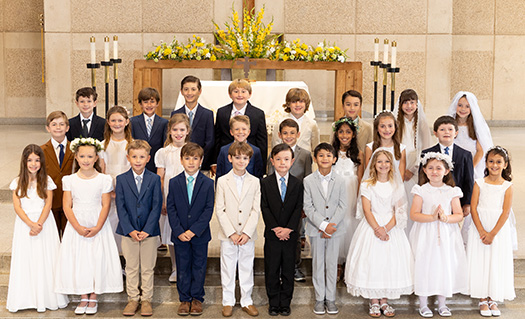
Mississippi Catholic will publish a Sacraments edition in July. This means we need First Communion and Confirmation photos. This is your only chance to submit posed group photos for publication. The final due date for submissions is be Friday, July 3. Details: email editor@jacksondiocese.org.