Editor’s note: Bishop Joseph Kopacz serves on the International Justice and Peace committee of the United States Conference of Catholic Bishops. He and others will be traveling to the Holy Land this month. Please pray for peace in our world and take a moment to read the full text of Pope Leo XIV’s message for World Day of Peace at https://bit.ly/49piqTt.
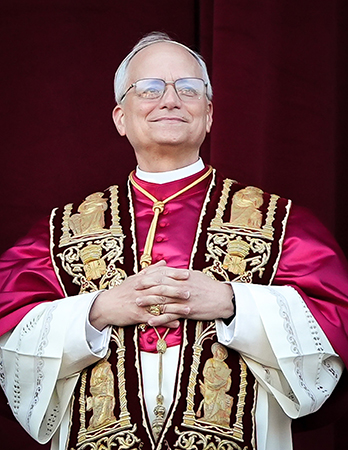
Pope Leo XIV, formerly Cardinal Robert F. Prevost, smiles as he appears at the central loggia of St. Peter’s Basilica at the Vatican following his election as pope May 8, 2025. The new pope was born in Chicago. (CNS photo/Lola Gomez)
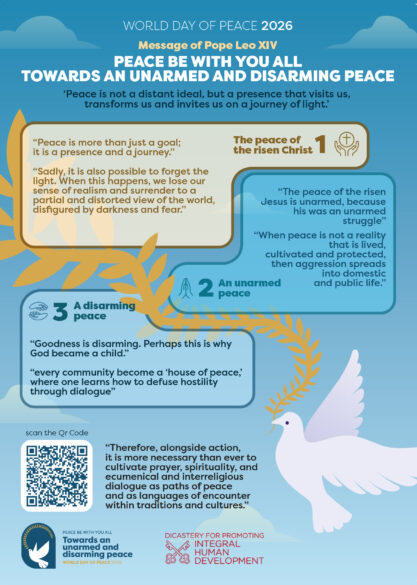
By Catholic News Service VATICAN CITY (CNS) – The “confrontational” tone dominating both global and national politics is “deepening instability and unpredictability day by day,” Pope Leo XIV wrote in his message for World Peace Day.
“It is no coincidence that repeated calls to increase military spending, and the choices that follow, are presented by many government leaders as a justified response to external threats,” he wrote in the message for the Jan. 1 observance.
But peace must be protected and cultivated, Pope Leo said. “Even when it is endangered within us and around us, like a small flame threatened by a storm, we must protect it.” Throughout the coming year, Pope Leo will give visiting heads of state signed copies of his message, which was released by the Vatican Dec. 18, and Vatican ambassadors will distribute it to government leaders in the countries where they serve.
(Read the entirety of Pope Leo XIV’s message for World Day of Peace at https://bit.ly/49piqTt)
By Carol Glatz VATICAN CITY (CNS) – The world is not saved by threatening violence or by judging, oppressing or getting rid of others, Pope Leo XIV said.
“Rather, it is saved by tirelessly striving to understand, forgive, liberate and welcome everyone, without calculation and without fear,” the pope said during Mass on Jan. 1 in St. Peter’s Basilica for the feast of Mary, Mother of God, and World Peace Day.
Therefore, at the beginning of a new year with “new and unique days that await us, let us ask the Lord to help us experience at every moment, around us and upon us, the warmth of his fatherly embrace and the light of his benevolent gaze,” he said in his homily.
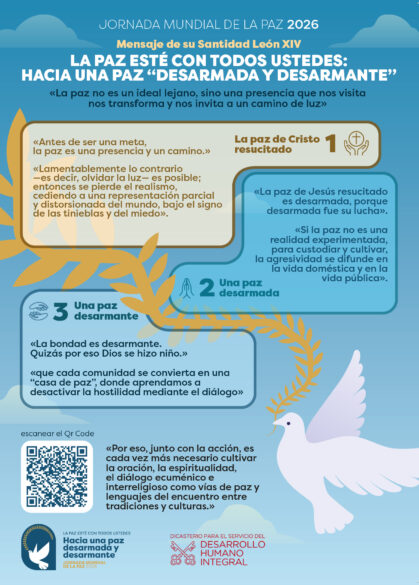
The Mass marked the 59th World Day of Peace celebrated by the church. The pope’s message for the world day, published in December, was dedicated to the humble, “unarmed and disarming” peace of the risen Christ who loves unconditionally.
Thousands of people were present in the basilica for the celebration on New Year’s Day, including young people dressed as the three kings who visited Jesus. A figurine of the infant Jesus was before the altar, in keeping with the Christmas season of celebration, and an image of Our Lady of Hope was to the side of the main altar as a sign of the Jubilee of hope, which will end Jan. 6.
In his homily, Pope Leo reflected on the mystery of Mary’s divine motherhood, which “helped give a human face to the source of all mercy and benevolence: the face of Jesus.”
By being born of Mary in a grotto, he said, “God presents himself to us ‘unarmed and disarming,’ as naked and defenseless as a newborn in a cradle.”
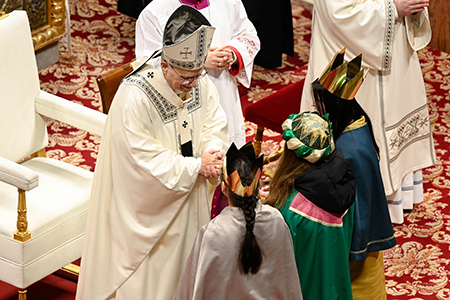
Pope Leo XIV receives the offertory gifts from children dressed as the Magi during Mass for the feast of Mary, Mother of God, and World Peace Day in St. Peter’s Basilica at the Vatican Jan. 1, 2026. (CNS photo/Vatican Media)
“He does this to teach us that the world is not saved by sharpening swords, nor by judging, oppressing or eliminating our brothers and sisters,” he said. Rather, the world is saved by seeking to understand, forgive, free and welcome everyone with love.
“Thus, at the dawn of the new year, the liturgy reminds us that for each of us, every day can be the beginning of a new life, thanks to God’s generous love, his mercy and the response of our freedom,” Pope Leo said. “It is beautiful to view the coming year in this way: as an open journey to be discovered.”
“Indeed, through grace, we can venture forth on this journey with confidence – free and bearers of freedom, forgiven and bringers of forgiveness, trusting in the closeness and goodness of the Lord who accompanies us always,” he said.
Overlooking St. Peter’s Square after Mass, Pope Leo urged Christians to help usher in “an era of peace and friendship among all peoples.”
“The Jubilee … has taught us how to cultivate hope for a new world. We do this by converting our hearts to God, so as to transform wrongs into forgiveness, pain into consolation, and resolutions of virtue into good works,” he said.
The Son of God also illuminates “the consciences of people of goodwill, so that we can build the future as a welcoming home for every man and woman who comes into the world,” he said.
“The heart of Jesus, therefore, beats for every man and woman; for those who are ready to welcome him, like the shepherds, and for those who do not want him, like Herod,” he said.
“His heart is not indifferent to those who have no heart for their neighbor: it beats for the righteous, so that they may persevere in their dedication, as well as for the unrighteous, so that they may change their lives and find peace,” Pope Leo said.
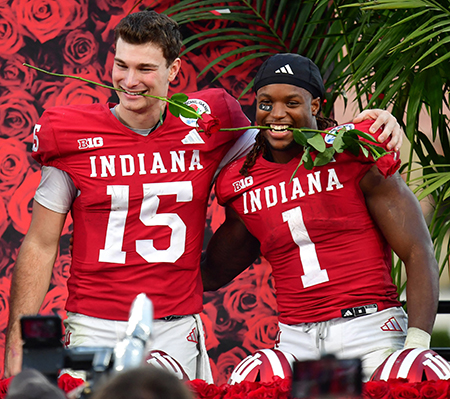
Indiana Hoosiers quarterback Fernando Mendoza (15) and running back Roman Hemby (1) celebrate on the podium after defeating the Alabama Crimson Tide in the 2026 Rose Bowl and quarterfinal game of the College Football Playoff on New Year’s Day at Rose Bowl Stadium in Pasadena, Calif. The Hosiers defeated Alabama 38-3. (OSV News photo/Mandatory Credit: (OSV News photo/Gary A. Vasquez-Imagn Images via Reuters)
NATION BLOOMINGTON, Ind. (OSV News) – As he waited for the announcement of who would win the Heisman Trophy – awarded to the best college football player of the year – Dominican Father Patrick Hyde turned to one of his fellow friars and said, “I have never been so invested in the outcome of an award.” After all, Father Hyde has become a big fan of Fernando Mendoza, the star quarterback of the football team at Indiana University in Bloomington, where the priest serves as pastor of St. Paul Catholic Center on the school’s campus and where Mendoza has attended Mass. Father Hyde not only celebrates the football player that Mendoza is, he also appreciates the person Mendoza is and the way the quarterback embraces his faith in God. So, when Mendoza was announced as the winner of the Heisman on Dec. 13 in a ceremony in New York City, Father Hyde rejoiced with the other friars watching the event on television. His speech was also an all-inclusive thank-you to all the people who have made a difference in his life, starting with the way he has begun nearly every post-game interview this season. Mendoza thanked God, his family, team and community. “This moment is an honor. It’s bigger than me,” he said.
BEL AIR, Md. (OSV News) – Well before he was a University of Maryland transfer who used his final year of college football eligibility to become a major success story as a running back at Indiana University, Roman Hemby said he owed much credit to John Carroll School in Bel Air for instilling vital Catholic values that guide him today. Hemby, a Maryland graduate who grew up in Edgewood, is one of numerous transfers who have turned the 2025 Indiana Hoosiers into a No. 1-ranked, unbeaten (13-0) powerhouse. The Hoosiers entered the College Football Playoff as its No. 1 seed. “I had the utmost faith that things would work out. The atmosphere at John Carroll let me know that God had a plan for me,” said Hemby.
VATICAN ROME (CNS) – Pope Leo used his first New Year’s address to the diplomatic corps Jan. 9 to strongly defend marriage, family life and the unborn, urging nations to prioritize the protection of life over policies he called harmful to human dignity. Speaking in English to diplomats accredited to the Holy See, the pope said abortion “cuts short a growing life” and fails to welcome life as a gift. He reaffirmed Catholic teaching on marriage as the exclusive and indissoluble union of a man and a woman, saying this bond grounds the vocation to love and to life. Pope Leo warned that families face growing marginalization and increasing fragility, brought about by various circumstances, including domestic violence and social pressures. He criticized the use of public funds for abortion, including cross-border efforts to access what he called the “so-called right to safe abortion,” and strongly rejected surrogacy and euthanasia. Instead, he said, society and governments “have a responsibility to respond concretely to situations of vulnerability” and offer solutions and “policies of authentic solidarity.” The pope said a society truly progresses only when it safeguards every human life, from conception to natural death.
WORLD BETHANY BEYOND THE JORDAN, Jordan (OSV News) – Catholics from across Jordan and around the world gathered Jan. 9 at the site of Jesus’ baptism on the Jordan River to celebrate Epiphany, marking the place the Catholic Church recognizes as the beginning of Christ’s public ministry. Clergy from multiple Eastern and Western Catholic rites joined in the liturgy, renewing a global call for pilgrims to visit one of Christianity’s most sacred sites. The celebration included Mass at the newly consecrated Catholic Church of the Baptism of Jesus Christ, inaugurated by Cardinal Pietro Parolin, Vatican secretary of state, in January 2025. Despite cloudy skies, rain paused during the Mass – a moment the faith leaders called a sign of blessing in water-scarce Jordan. Church officials highlighted Jordan’s unique role in Christian history, noting it is the only country visited by four popes. Leaders also voiced hope for renewed peace in the region and invited pilgrims worldwide to encounter faith as a journey rooted in baptism, reconciliation and hope. Bishop Iyad Twal, patriarchal vicar of Jordan, told reporters that some calm and peace has returned to neighboring Palestine and Gaza. He said Cardinal Pierbattista Pizzaballa, Latin Patriarch of Jerusalem, was heartened during a recent visit to the coastal enclave to see “a genuine determination to begin new life with optimism.”
BOGOTÁ, Colombia (OSV News) – The Catholic bishops of Latin America and the Caribbean have expressed their pastoral closeness to the people of Venezuela, following a Jan. 3 U.S. military intervention that saw the capture of President Nicolás Maduro and his wife, Cilia Flores, and claims of a temporary takeover of the country before Maduro’s vice president, Delcy Rodríguez, was sworn in as Venezuela’s interim president. In a Jan. 5 letter, the bishops of the Latin American and Caribbean Episcopal Council, known as CELAM, shared what they called a “simple, fraternal and hopeful” message marking the Epiphany of the Lord – an event that reveals “a God who is close to his people, who walks with them, illuminates the darkness, and opens new paths even when everything seems uncertain.” In their letter, the bishops said they “share and embrace with a profound pastoral sense the words of Pope Leo XIV, who spoke about the situation in Venezuela and reminded us that the good of the people must always be above any other consideration.” The bishops stressed, “We want to reiterate that you are not alone. CELAM walks with you and with the Venezuelan people, encouraging every effort to build bridges, heal wounds, and advance reconciliation, without excluding anyone. The Church is called to be an open house, a space for encounter, and a serene voice that inspires hope, even in the midst of difficulties.”
The staff at Mississippi Catholic is looking forward to a busy and productive 2026 As always, we invite participation from faithful from across the diocese. Please submit your stories, photos and events so we can include them in the paper, as time and space allow. The publication schedule for 2026 follows:
Friday, Jan. 16 Friday, Jan. 30 Friday, Feb. 13 Friday, March 13 Friday, April 17 Friday, May 15 Friday, June 19 Friday, July 17 Friday, Aug. 21 Friday, Sept. 18 Friday, Oct. 16 Friday, Nov. 20 Friday, Dec. 18
Look for special sections this year marking Catholic Schools Week, Graduations and the Sacraments of First Communion and Confirmation.
Send submissions to editor@jacksondiocese.org. Submit information three to four weeks before or within one week after an event. Again, due to space constraints we will not be able to publish all information received. Visit the paper online at www.mississippicatholic.com.
The staff at Mississippi Catholic thank you – our readers – for your prayers and support. We wish you a blessed New Year.
By Gina Christian (OSV News) – Thousands of youth and young adults across the nation were assured of God’s love – and encouraged to respond to his call in their lives – during an annual gathering spanning three cities, with Pope Leo XIV delivering a special recorded message to participants.
“Be open to what the Lord has in store for you,” the pope said in a video address to those attending the SEEK 2026 conference.
This year’s conference took place Jan. 1-5 at three event locations – Columbus, Ohio; Denver; and Fort Worth, Texas – drawing an estimated 26,000 participants in total for talks and workshops on encountering Jesus Christ. The schedule included daily Mass, Eucharistic adoration, the sacrament of reconciliation and fellowship.
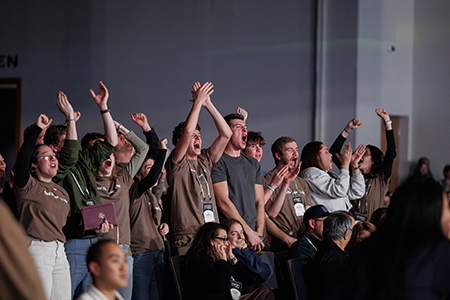
Attendees cheer Jan. 3, 2026, at the SEEK26 conference in the Gaylord Rockies Resort & Convention Center in Denver. Young Catholics and attendees of all ages were invited to embrace the conference’s theme inspired by St. Pier Giorgio Frassati: “To the Heights,” This year SEEK the Jan. 1-5 conference was being held in Columbus, Ohio, and Fort Worth, Texas, in addition to Denver. (OSV News photo/courtesy FOCUS)
Among the numerous conference speakers were Father Mike Schmitz, Matt Fradd, Chris Stefanick, Sister of Life Mary Grace and Sister Josephine Garrett, a sister of the Holy Family of Nazareth.
In his Jan. 4 keynote address, Curtis Martin – founder of conference sponsor FOCUS, an international Catholic missionary outreach which serves at more than 200 college campuses in the U.S., Mexico and Europe, as well as at some 20 parishes – told attendees that God “wants to dance with” them.
Martin stressed the transformative power of God’s love, which enables those infused with it to in turn become missionary disciples, able to “go love the world.”
SEEK 2026 centered on the theme “To the Heights,” a favorite exhortation of the recently canonized St. Pier Giorgio Frassati, an avid mountaineer and patron of young adults.
Bishop Earl K. Fernandes of Columbus reflected in his homily at the SEEK 2026 opening Mass in that city Jan. 1 that the conference’s timing and its 2026 theme harmonized well.
“The mighty God descended from the starry heaven and became a child so that we might go up to heaven, ‘toward the heights,’ as Pier Giorgio Frassati might say,” Bishop Fernandes said.
In his pre-recorded video message to the SEEK attendees, which was posted along with a transcript to the Vatican website, Pope Leo also appeared to echo St. Frassati’s sentiment, urging SEEK attendees to reflect on the call of the first two disciples of Jesus as detailed in John 1:35-51.
The pope said that St. Andrew and the other disciple – initially followers of St. John the Baptist – pursued Jesus, whose first recorded words in John’s Gospel were a question posed to the two: “What do you seek?”
Jesus “directs this same question to each one of you,” said the pope, adding, “The answer is found in a person. The Lord Jesus alone brings us true peace and joy, and fulfills every one of our deepest desires.” The pope’s message deeply resonated with Jetzemany Rincon, 22, who was among the 16,000 SEEK participants in Columbus.
“When I saw the pope come on, I started crying because I realized that he has such a big Church … and he was able to center down,” Rincon, a member of the Columbus Shrine of Our Lady of Guadalupe, Star of the New Evangelization parish, told The Catholic Times, the newspaper for the Columbus Diocese.
Discerning one’s God-given vocation was a core element of SEEK 2026, with Sister Catherine Rotterman of the Felician Sisters of North America, who was on hand at the Fort Worth gathering, saying the conference enables young adults to see themselves as part of a “much bigger Church.”
“SEEK helps them dream of where God might be leading them,” Sister Catherine told North Texas Catholic, the newspaper serving the Diocese of Fort Worth.
At the Denver gathering, archdiocesan vocations director Father Jason Wallace described SEEK as an opportunity for young people to “set themselves aside and put God first” to discover what he has created them for.
“God created some people to be married, he called some people to be priests; so it’s not so much what I want to do, it’s what God created me to do,” Father Wallace told Denver Catholic, the news outlet of the Archdiocese of Denver. “That was in his mind from all eternity, what he created me for.”
Archbishop Samuel J. Aquila of Denver, who celebrated the conference’s Jan. 1 opening Mass in that city, highlighted Mary as the model for developing a profound relationship with Christ, and discerning his will for one’s life.
“If we ponder that within our hearts and open our hearts to that truth of who we have become in Baptism, we will only grow in a deeper encounter and deeper intimacy with Jesus, the Father and the Holy Spirit, putting our confidence in them,” said Archbishop Aquila. “And pondering in our own hearts what it means to be a disciple, what it means to be a beloved son, a beloved daughter of the Father, to receive our true identity. Not an identity founded in the world, but an identity that is given, bestowed upon us by a God who loves us and wants us to be with him forever.”
Four-time SEEK attendee Angelina Roa, who teaches at St. Rita Catholic School in Fort Worth, described the conference as an ideal way to begin 2026, deepening both faith and fellowship.
“Going to SEEK starts off the year with Jesus,” she told North Texas Catholic. “It’s inspirational to be in the room with so many Catholics.”
(Gina Christian is a multimedia reporter for OSV News. Contributing to this report were Hannah Heil of The Catholic Times/Diocese of Columbus; André Escaleira, Jr., and Jacqueline Gilvard Landry of Denver Catholic/Archdiocese of Denver; and Susan Moses of North Texas Catholic/Diocese of Fort Worth.)
Dr. Martin Luther King, Jr. Celebration, Saturday, Jan. 17 at 1 p.m. at the Cathedral of St. Peter, Jackson. Theme is “Beholding the Dream” with speaker Dr. William Jemison. Details: email amelia.breton@jacksondiocese.org.
HERNANDO – Holy Spirit, Millions of Monicas – Praying with confidence for our children, each Monday from 5-6 p.m. in the church. Join with other mothers and grandmothers as we pray for our children’s faithful return to the church. Details: church office (662) 429-7851.
JACKSON METRO AREA – Theology on Tap, Feb. 3 with speaker, Ann Cook; March 3 with speaker, Mary Woodward. Meet at Blaylock Photography, 117 N. Wheatley, Ridgeland at 7 p.m. Details: amelia.rizor@jacksondiocese.org.
OXFORD – Diocesan Campus Ministry Winter Retreat “Radical Grace: Living the Gospel Upside Down,” Saturday, Jan. 31, 2026 from 10 a.m. to 5 p.m. at St. John the Evangelist Church. Cost: $20 – Registration deadine is Jan. 23. Come and be renewed! Details: amelia.rizor@jacksondiocese.org.
OXFORD – St. John the Evangelist, “Beloved Sons” Men’s Conference, Saturday, Feb. 28 from 8:30 a.m. to 2 p.m in the parish hall. Event features Joe Heschmeyer, speaker for Catholic Answers and host of the Shameless Popery podcast; and Dr. Mario Sacaca, marriage counselor and host of the Always Hope podcast. Tickets $50. Details: register at https://stjohnolemiss.flocknote.com/signup/238790.
St. John the Evangelist, “Beloved Daughters” Women’s Conference, opening potluck on Feb. 6 from 6-8 p.m. and conference on Saturday, Feb. 7 from 8:30 a.m. to 2 p.m. Event features Catholic speaker, Devanie Cooper. Cost: $35 and includes light breakfast after Mass and a catered lunch. Details: register at https://stjohnolemiss.flocknote.com/signup/238779.
PARISH & YOUTH EVENTS CLINTON – Holy Savior, Annual Garage Sale, Saturday, Jan. 31 from 7 a.m. to noon. Details: church office (601) 924-6344.
FLOWOOD – St. Paul, “Back to 80’s” $10,000 Drawdown, Saturday, Jan. 31 in the Family Life Center. Cost: $150/admits two. Details: https://bit.ly/StPaul80sDrawdown2026.
GREENWOOD – St. Francis, Mardi Gras Ball, Saturday, Feb. 14 from 7-11 p.m. at the Andrew McQueen Civic Center. Cost: $45/person. Details: (662) 453-0623.
JACKSON – Knights of Peter Claver Ladies Auxiliary Court #199, Annual Mardi Gras Ball, Feb. 7 at Fondren Hall from 7-11 p.m. Cost: $40/person. Attire: “after five.” Details: Christ the King church office (601) 948-8867.
JACKSON – St. Richard, Krewe de Cardinal Mardi Gras Ball, Saturday, Feb. 7 at the Westin Jackson. Details: visit https://bit.ly/4pGfEAc for more info.
MADISON – St. Joseph School, Annual Draw Down, Saturday, Jan. 24, 2026, at Reunion Country Club. Details: school office (601) 898-4800.
MADISON – St. Francis, Mexican Fiesta Parish Dinner, Wednesday, Jan. 21 starting at 5:15 p.m. in the Family Life Center. Youth will serve your choice of a nacho bar or hotdog and chips, plus dessert and drink. Cost: $7/person or $25 per family. Proceeds benefit the Saltillo Mission. Details: church office (601) 856-5556.
NATCHEZ – Basilica of St. Mary, Rectory Open House, Saturday, Jan. 31 at 6 p.m. Wear your best purple, gold and green to celebrate Mardi Gras! Details: church office (601) 445-5616.
Por Carol Glatz CIUDAD DEL VATICANO (CNS) – Los poderosos y violentos no pueden controlar, suprimir o mercantilizar la gracia, la amistad y la voluntad de Dios de dar paso a un nuevo amanecer, afirmó el papa León XIV.
“A nuestro alrededor, una economía distorsionada intenta sacar provecho de todo. Vemos cómo el mercado puede convertir los anhelos humanos de buscar, viajar y empezar de nuevo en un mero negocio”, dijo, celebrando la misa en la basílica de San Pedro el 6 de enero, fiesta de la Epifanía, y clausurando oficialmente la celebración del Año Santo dedicado a la esperanza.
“Preguntémonos: ¿nos ha enseñado el Jubileo a huir de este tipo de eficiencia que lo reduce todo a un producto y a los seres humanos a consumidores?”, preguntó. “Después de este año, ¿seremos más capaces de reconocer al peregrino en el visitante, al buscador en el extranjero, al vecino en el extranjero y a los compañeros de viaje en aquellos que son diferentes?”.
Antes de la misa, el papa, los cardenales y los obispos presentes en Roma se reunieron en el atrio de la basílica y dieron gracias a Dios por los dones recibidos durante el Año Santo. Decenas de cardenales de todo el mundo se encontraban en Roma para asistir al primer consistorio extraordinario del papa, celebrado los días 7 y 8 de enero, para rezar, apoyar y asesorar al papa sobre la vida y la misión de la Iglesia.
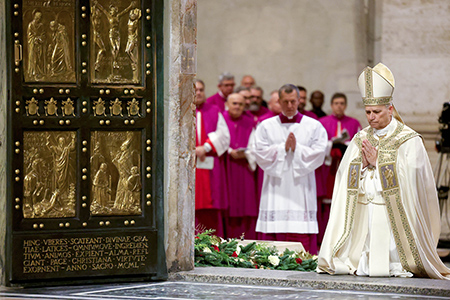
El Papa León XIV se arrodilla y ora en el umbral de la Puerta Santa de la Basílica de San Pedro antes de cerrarla solemnemente el 6 de enero de 2026, marcando el final del Jubileo de la Esperanza. (Foto CNS/Pool, Franco Origlia)
El papa León se acercó al umbral de la Puerta Santa y cerró ambos lados. La puerta permanecerá sellada hasta el próximo Año Santo, que probablemente será en 2033, cuando se cumpla el 2000 aniversario de la muerte y resurrección de Jesús.
Mientras se cerraba la última de las Puertas Santas de la ciudad, el papa León dijo antes de cerrar la puerta que “la puerta” de la misericordia de Dios nunca se cerrará. Dios “siempre sostendrá a los cansados, levantará a los caídos” y ofrecerá “cosas buenas” a quienes depositen su confianza en él. En su homilía, el papa León comparó a los millones de hombres y mujeres que acudieron a Roma en peregrinación con los Reyes Magos de hoy en día, “que dejaron atrás el palacio y el templo” en busca de un nuevo “rey”, al que encontraron en el niño Jesús en una humilde gruta de Belén.
“Sí, los Reyes Magos siguen existiendo hoy en día. Son las personas que sienten la necesidad de salir y buscar, aceptando los riesgos asociados a su viaje, especialmente en un mundo convulso como el nuestro, que puede ser desagradable y peligroso en muchos sentidos”, afirmó. Sin embargo, advirtió el papa León, los buscadores de hoy deben encontrar en las iglesias y lugares sagrados actuales la misma humilde fuente de vida, esperanza y alegría que encontraron los Reyes Magos en Belén.
“¡Qué importante es que quienes cruzan las puertas de la iglesia perciban en ella que acaba de nacer el Mesías, que se reúne una comunidad en la que brota la esperanza y que se desarrolla una historia de vida!”, dijo. “Jesús se encontró con todas las personas y permitió que se le acercaran”, dijo, porque “el Señor quiere que su presencia crezca entre nosotros como Dios con nosotros”.
“Nadie puede vendernos esto. El niño al que adoran los Reyes Magos es un bien inestimable e inconmensurable”, dijo el Papa, criticando “una economía distorsionada”, que incluso intenta explotar y mercantilizar el deseo humano de libertad y verdadera realización.
Dios revelándose a la humanidad como hombre es “un regalo”, dijo el papa León. “Él se revela y se deja encontrar”.
“Sus caminos no son nuestros caminos, y los violentos no logran controlarlos, ni los poderes del mundo pueden bloquearlos”, dijo, recordando la gran alegría que sintieron los Reyes Magos al encontrar al Mesías y a pesar de los esfuerzos de Herodes por destruir lo que había sido prometido. El miedo y la violencia desatados por el rey Herodes “nos hacen pensar en los muchos conflictos con los que las personas se resisten e incluso dañan las cosas nuevas que Dios tiene reservadas para todos”, dijo. “Amar y buscar la paz significa proteger lo que es santo y, en consecuencia, lo que acaba de nacer, como un bebé pequeño, vulnerable y frágil”.
“Dios desafía el orden existente”, dijo el papa. “Dios está decidido a rescatarnos de las formas antiguas y nuevas de esclavitud. Involucra a jóvenes y ancianos, pobres y ricos, hombres y mujeres, santos y pecadores en sus obras de misericordia y en las maravillas de su justicia”.
“Preguntémonos: ¿hay vida en nuestra Iglesia? ¿Hay espacio para que nazca algo nuevo? ¿Amamos y proclamamos a un Dios que nos pone en camino?”, preguntó el papa León.
“El miedo nos ciega. Por el contrario, la alegría del Evangelio nos libera. Nos hace prudentes, sí, pero también audaces, atentos y creativos; nos invita a recorrer caminos diferentes a los ya transitados”, afirmó.
“Es maravilloso convertirse en peregrinos de la esperanza”, que viajan juntos y se maravillan de la fidelidad de Dios, dijo.
“Si no reducimos nuestras iglesias a monumentos, si nuestras comunidades son hogares, si permanecemos unidos y resistimos la adulación y la seducción de los poderosos, entonces seremos la generación de un nuevo amanecer”, dijo. En Jesús, “contemplaremos y serviremos a una humanidad extraordinaria, transformada no por las ilusiones de los todopoderosos, sino por Dios, que se hizo carne por amor”.
Afuera, en una fría y lluviosa mañana de invierno, la plaza de San Pedro se llenó de miles de personas que veían la misa en pantallas gigantes y esperaban que el papa recitara el Ángelus al mediodía.
Antes de recitar el Ángelus desde el balcón de la logia de la basílica, el papa rezó para que las palabras de Dios “se cumplan en nosotros, para que los extraños y los enemigos se conviertan en hermanos y hermanas”.
“Que en lugar de la desigualdad haya justicia, y que la industria de la guerra sea sustituida por el arte de la paz”, dijo. “Como tejedores de esperanza, recorramos juntos el camino hacia el futuro por otra vía”.
Por Kate Scanlon (OSV News) – Cuando el derrocado presidente venezolano Nicolás Maduro compareció por primera vez el 5 de enero en un tribunal de Nueva York acusado de narcoterrorismo, después de que la administración Trump llevara a cabo lo que el presidente Trump denominó en las redes sociales “un ataque a gran escala contra Venezuela”, la incertidumbre sobre su estatus migratorio seguía presente para algunos migrantes venezolanos en Estados Unidos.
Astrid Liden, responsable de comunicación del Hope Border Institute, un grupo que trabaja para aplicar la perspectiva de la doctrina social católica en la política y la práctica a la región fronteriza entre Estados Unidos y México, y venezolano-estadounidense, declaró a OSV News: “En los últimos años, cientos de miles de venezolanos han buscado protección en Estados Unidos …. Millones de venezolanos viven en el extranjero debido a la situación en Venezuela, y compartimos su esperanza en el fin del reinado de Maduro, cuyo gobierno ha provocado el desplazamiento de tantas personas”.
Sin embargo, añadió: “El reciente fin del TPS para los venezolanos por parte de la administración Trump sienta un precedente muy peligroso y pone en riesgo a cientos de miles de venezolanos”.
Sin embargo, añadió: “El reciente fin del TPS para los venezolanos por parte de la administración Trump sienta un precedente muy peligroso y pone en riesgo a cientos de miles de venezolanos”.
Maduro fue procesado en un tribunal federal de Manhattan por el juez Alvin Hellerstein. Las cámaras están prohibidas en la mayoría de los procedimientos judiciales federales, pero según los periodistas, Hellerstein dijo: “Mi trabajo es garantizar que este sea un juicio justo”.
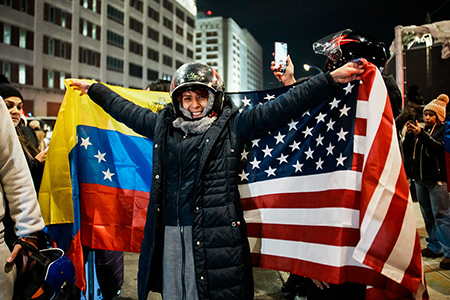
Una persona reacciona sosteniendo banderas venezolanas y estadounidenses mientras inmigrantes venezolanos celebran en el barrio neoyorquino de Brooklyn el 3 de enero de 2026, después de que Estados Unidos atacara Venezuela y capturara a su presidente Nicolás Maduro y a su esposa Cilia Flores, quienes fueron trasladados al Centro Metropolitano de Detención. (Foto de OSV News/Eduardo Muñoz, Reuters)
En la breve audiencia, Maduro dijo a través de un intérprete que era “inocente” y que “seguía siendo presidente de mi país”. El régimen de Maduro era considerado ilegítimo por muchos países de todo el mundo, incluida la Unión Europea. La oposición venezolana demostró, mediante el recuento digitalizado de los votos, que su candidato, Edmundo González Urrutia, ganó las elecciones presidenciales de 2024 con el 67 % de los votos, pero Maduro se negó a ceder el poder. La administración Biden, que reconoció a González como el presidente electo legítimo de Venezuela, afirmó en enero de 2025 que Maduro “perdió claramente las elecciones presidenciales de 2024 y no tiene derecho a reclamar la presidencia”.
Sin embargo, los líderes mundiales también expresaron su preocupación por el hecho de que la acción militar de Estados Unidos para derrocar a Maduro infringiera el derecho internacional.
En una reunión de emergencia del Consejo de Seguridad de las Naciones Unidas celebrada justo antes de la audiencia de Maduro, el secretario general de la ONU, Antonio Guterres, dijo que estaba “profundamente preocupado por el incumplimiento de las normas del derecho internacional”, mientras que el embajador estadounidense Mike Waltz calificó la acción como una “operación quirúrgica de aplicación de la ley”.
El día anterior, el papa León XIV expresó su “profunda preocupación” tras la captura de Maduro. “Esto debe garantizar la soberanía del país, asegurar el Estado de derecho consagrado en la Constitución, respetar los derechos humanos y civiles de todos y trabajar para construir juntos un futuro sereno de colaboración, estabilidad y armonía, con especial atención a los más pobres que sufren debido a la difícil situación económica”, dijo tras recitar la oración del Ángelus con los peregrinos reunidos en la Plaza de San Pedro el 4 de enero.
En una conferencia de prensa celebrada el 3 de enero, Trump afirmó que Estados Unidos “gobernará el país” de Venezuela “hasta que podamos llevar a cabo una transición segura, adecuada y prudente”, pero siguen existiendo dudas sobre ese proceso.
Sin embargo, esta medida también ha puesto de manifiesto la incertidumbre que sienten algunos venezolanos en Estados Unidos.
En 2025, la administración Trump puso fin al Estatus de Protección Temporal (TPS) de unos 600 000 venezolanos que vivían en Estados Unidos. El TPS se concede en ocasiones a países en los que los desastres naturales o los disturbios civiles han provocado desplazamientos.
Cuando se le preguntó durante su aparición en “Fox News Sunday” el 4 de enero si los venezolanos en Estados Unidos que anteriormente estaban bajo el TPS pueden solicitar asilo, la secretaria de Seguridad Nacional, Kristi Noem, sugirió que pueden hacerlo, pero no abordó si continuarían las deportaciones a ese país.
“Todas las personas que se encontraban bajo el TPS tienen la oportunidad de solicitar el estatus de refugiado”, dijo Noem, sin dar más detalles sobre cómo se llevarían a cabo esas evaluaciones.
En un comentario sobre el tema en su conferencia de prensa, Trump dijo: “Francamente, algunos quieren quedarse y otros probablemente quieran regresar”.
Los defensores católicos de la inmigración instaron anteriormente a la administración Trump a mantener el estatus TPS para países como Venezuela, en parte debido a su inestabilidad política.
“El desmantelamiento de un régimen autocrático corrupto no se produce simplemente con la destitución de su líder”, afirmó Linden. “Esta protección en Estados Unidos debe mantenerse hasta que el retorno voluntario y seguro sea una opción viable. Como dijo el papa León XIV, debemos garantizar que se siga consagrando “el bien del querido pueblo venezolano”, tanto el que se encuentra en el país como el que está en el extranjero. Debemos ver a los venezolanos, incluidos los líderes elegidos en 2024, involucrados en un proceso de transición democrática para que haya un país al que los venezolanos puedan regresar”.
J. Kevin Appleby, investigador principal de políticas del Centro de Estudios Migratorios de Nueva York y exdirector de políticas migratorias de la USCCB, declaró a OSV News: “El TPS debería renovarse al menos hasta que haya un gobierno elegido democráticamente en el poder, para que las personas sientan que no sufrirán persecución al regresar”.
Añadió: “Además, las remesas que llegarían al país procedentes de medio millón de venezolanos con TPS ayudarían a estabilizar la economía del país”.
En declaraciones a los periodistas sobre la audiencia de Maduro, el profesor de la Facultad de Derecho de Notre Dame y experto en crimen organizado Jimmy Gurulé, exfiscal federal y exfiscal general adjunto de los Estados Unidos, dijo que la audiencia es probablemente la primera parte de lo que será un largo proceso legal.
“Aunque finalmente se hará justicia en el caso Maduro, no será en un futuro próximo”, afirmó. Según Gurulé, es poco probable que el juicio con jurado del caso Maduro comience antes de 2027.
“Inicialmente, los abogados defensores impugnarán la legalidad de la jurisdicción del tribunal sobre Maduro”, dijo. “La defensa argumentará que la invasión militar estadounidense de Venezuela y la posterior detención de Maduro no solo violaron los principios del derecho internacional, sino que constituyeron un delito de agresión”.
“Los abogados defensores de Maduro solicitarán una amplia divulgación de pruebas penales, lo que podría incluir una solicitud de divulgación de pruebas clasificadas”, añadió. Afirmó que eso podría implicar un largo litigio en virtud de la Ley de Procedimientos de Información Clasificada, que “equilibra las necesidades del Gobierno de proteger los secretos con los derechos del acusado a un juicio justo”.
Nota del editor: El obispo Joseph Kopacz es miembro del Comité Internacional de Justicia y Paz de la Conferencia de Obispos Católicos de Estados Unidos. Él y otras personas viajarán a Tierra Santa este mes. Por favor, recen por la paz en nuestro mundo y dediquen un momento a leer el texto completo del mensaje del papa León XIV para la Jornada Mundial de la Paz en https://bit.ly/49piqTt.
Por Carol Glatz CIUDAD DEL VATICANO (CNS) – El mundo no se salva con amenazas de violencia, ni juzgando, oprimiendo o eliminando a los demás, afirmó el Papa León XIV.
“Sino más bien (se salva) esforzándose incansablemente por comprender, perdonar, liberar y acoger a todos, sin cálculos y sin miedo”, dijo el Papa durante la Misa en la basílica de San Pedro con motivo de la fiesta de María, Madre de Dios, y del Día Mundial de la Paz, el 1 de enero.
Por lo tanto, al comienzo de un nuevo año con “días nuevos y únicos que nos esperan, pidamos al Señor experimentar en todo momento, a nuestro alrededor y sobre nosotros, el calor de su abrazo paterno y la luz de su mirada que bendice”, dijo en su homilía.
La Misa marcó la 59.ª Jornada Mundial de la Paz celebrada por la Iglesia. El mensaje del Papa para la jornada mundial, publicado en diciembre, estaba dedicado a la paz humilde, “desarmada y desarmante” de Cristo resucitado, que ama incondicionalmente.
Miles de personas asistieron a la celebración en la basílica el día de Año Nuevo, entre ellas jóvenes disfrazados de los tres reyes que visitaron a Jesús.
Una figurita del niño Jesús se encontraba ante el altar, en consonancia con la temporada navideña de celebración, y una imagen de Nuestra Señora de la Esperanza estaba al lado del altar mayor como símbolo del Jubileo de la esperanza, que finalizará el 6 de enero.
En su homilía, el Papa León reflexionó sobre el misterio de la maternidad divina de la Virgen María, que “contribuyó a dar a la Fuente de toda misericordia y benevolencia un rostro humano: el rostro de Jesús, a través de cuyos ojos de niño, luego de joven y de hombre, el amor del Padre nos alcanza y nos transforma”.
Al nacer de María en un pesebre, dijo, Dios se nos presenta “desarmado y desarmante”, tan “desnudo, indefenso como un recién nacido en la cuna”.
“Y esto para enseñarnos que el mundo no se salva afilando las espadas, juzgando, oprimiendo o eliminando a los hermanos”, afirmó. Más bien, el mundo se salva buscando comprender, perdonar, liberar y acoger a todos con amor.
María Santísima, quien lleva al niño Jesús en su vientre, representa “dos inmensas realidades ‘desarmadas’” que se unen, dijo: “la de Dios que renuncia a todo privilegio de su divinidad para nacer según la carne, y y la de la persona que con confianza abraza totalmente Su voluntad”.
“Así, al inicio del nuevo año, la Liturgia nos recuerda que cada día puede ser, para cada uno de nosotros, el comienzo de una vida nueva, gracias al amor generoso de Dios, a su misericordia y a la respuesta de nuestra libertad”, dijo el Papa León. “hermoso pensar así el año que comienza: como un camino abierto, por descubrir”.
“Y es, en el que aventurarnos, por gracia, libres y portadores de libertad, perdonados y dispensadores de perdón, confiados en la cercanía y en la bondad del Señor que siempre nos acompaña”, dijo.
Contemplando la plaza de San Pedro después de la Misa, el Papa León instó a los cristianos a ayudar a inaugurar “una época de paz y amistad entre todos los pueblos”.
“El Jubileo, que está por concluir, nos ha enseñado cómo cultivar la esperanza de un mundo nuevo: convirtiendo el corazón a Dios, para poder transformar los agravios en perdón, el dolor en consolación y los propósitos de virtud en obras buenas”, dijo.
El Hijo de Dios también ilumina “las conciencias de buena voluntad, para que podamos construir el futuro como casa acogedora para todo hombre y toda mujer que nace”, dijo.
“El corazón de Jesús late por todo hombre y toda mujer. Por el que está dispuesto a acogerlo, como los pastores, y por el que no lo quiere, como Herodes”, dijo.
“Su corazón no es indiferente ante quien no tiene corazón para el prójimo: palpita por los justos, para que perseveren en su entrega; y por los injustos, para que cambien de vida y encuentren paz”, dijo el Papa León.
Cada niño no nacido revela “la imagen divina impresa en nuestro cuerpo”, dijo, y pidió oraciones por la paz: “sobre todo entre las naciones ensangrentadas por conflictos y miseria, pero también en nuestras casas, en las familias heridas por la violencia y el dolor”.
“Con la certeza de que Cristo, nuestra esperanza, es el sol de justicia que nunca declina, supliquemos confiados la intercesión de María, Madre de Dios y Madre de la Iglesia”, concluyó antes del rezo del Ángelus.
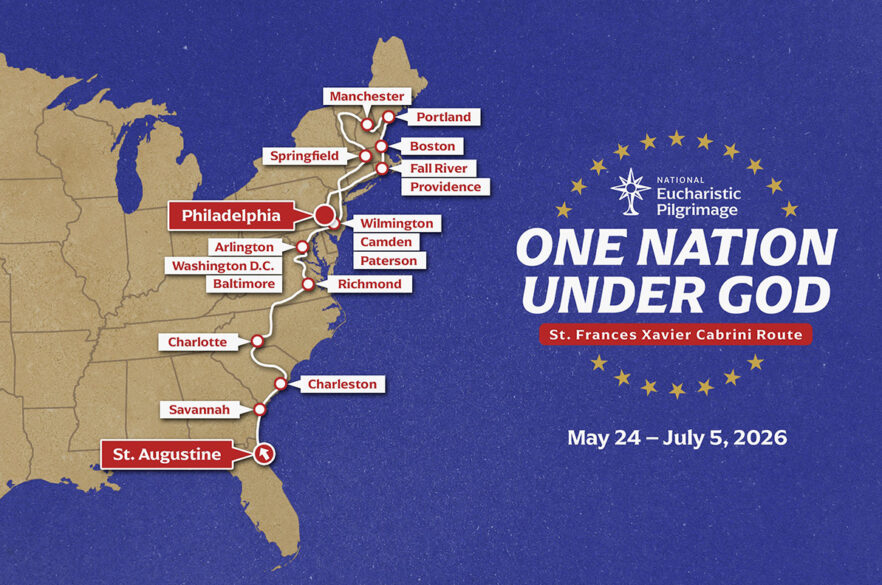
A graphic depicts the 2026 route of the National Eucharistic Pilgrimage, which begins in St. Augustine, Fla., and ends in Philadelphia. (OSV News graphic/National Eucharistic Congress)
NACIÓN AUSTIN, Texas (OSV News) – El hijo de cinco años del influyente católico Paul J. Kim sucumbió a la gripe y la sepsis después de que decenas de miles de personas se unieran en oración a finales de diciembre para pedir por la curación de Micah. Kim, un popular conferencista católico y artista musical, anunció la muerte de su hijo el 31 de diciembre en un emotivo mensaje de video de dos partes publicado en Instagram el 1 de enero, en el que citó varios pasajes de las Escrituras y destacó su fe inquebrantable en medio de su pérdida. El 21 de diciembre, Kim había pedido oraciones por Micah, diciendo en un mensaje escrito en Instagram que el niño “tenía una emergencia médica en ese momento” y que “lo llevaban al hospital en ambulancia”. Durante los días siguientes, Kim publicó actualizaciones, incluidas imágenes de Micah en su cama de hospital, y solicitudes adicionales de oraciones para “inundar el cielo”, buscando la intercesión de Nuestra Señora de Guadalupe, San José, San Miguel y los ángeles y santos. La campaña de oración y las actualizaciones diarias de Kim en las redes sociales atrajeron a decenas de miles de participantes de todo el mundo, tanto católicos como no católicos, que intercedieron por la recuperación de Micah, dijo Kim.
FORT WAYNE, Indiana (OSV News) – La Peregrinación Eucarística Nacional de 2026 recorrerá la costa este desde San Agustín, Florida, hasta Portland, Maine, y terminará en Filadelfia, según anunciaron los organizadores el 8 de enero. La peregrinación, la tercera de este tipo, comenzará en mayo, durante el fin de semana del Día de los Caídos, y terminará el 5 de julio. La peregrinación de este año celebra el 250 aniversario de Estados Unidos con el lema “Una nación bajo Dios” y su ruta, que incluye lugares clave en la historia del país y de sus católicos. Los organizadores describieron la peregrinación como “un llamado nacional a la renovación, la unidad y la misión arraigadas en la Eucaristía”. La peregrinación pasará por las diócesis de Savannah (Georgia); Charleston (Carolina del Sur); Charlotte (Carolina del Norte); Richmond (Virginia); Arlington (Virginia); Washington; Baltimore; Wilmington (Delaware); Camden (Nueva Jersey); Paterson (Nueva Jersey); Springfield (Massachusetts); Manchester (New Hampshire); Portland (Maine); Boston; Fall River (Massachusetts); Providence (Rhode Island) y Filadelfia. La peregrinación terminará en Filadelfia con eventos programados para el 4 y 5 de julio, fin de semana del Día de la Independencia, para conmemorar la adopción de la Declaración de Independencia en la Casa del Estado de Pensilvania, ahora el Independence Hall de la ciudad, el 4 de julio de 1776.
VATICANO ROMA (OSV News) – El papa León aprovechó su primer discurso de Año Nuevo ante el cuerpo diplomático, el 9 de enero, para defender enérgicamente el matrimonio, la vida familiar y los no nacidos, instando a las naciones a dar prioridad a la protección de la vida por encima de políticas que calificó de perjudiciales para la dignidad humana. Dirigiéndose en inglés a los diplomáticos acreditados ante la Santa Sede, el papa dijo que el aborto “trunca una vida en crecimiento” y no acoge la vida como un regalo. Reafirmó la doctrina católica sobre el matrimonio como la unión exclusiva e indisoluble entre un hombre y una mujer, diciendo que este vínculo fundamenta la vocación al amor y a la vida. El papa Leo advirtió que las familias se enfrentan a una creciente marginación y fragilidad, provocadas por diversas circunstancias, entre ellas la violencia doméstica y las presiones sociales. Criticó el uso de fondos públicos para el aborto, incluidos los esfuerzos transfronterizos para acceder a lo que denominó el “supuesto derecho al aborto seguro”, y rechazó enérgicamente la subrogación y la eutanasia. En cambio, dijo, la sociedad y los gobiernos “tienen la responsabilidad de responder concretamente a las situaciones de vulnerabilidad” y ofrecer soluciones y “políticas de auténtica solidaridad”. El Papa afirmó que una sociedad solo progresa verdaderamente cuando protege toda vida humana, desde la concepción hasta la muerte natural.
MUNDO BETHANY BEYOND THE JORDAN, Jordania (OSV News) – Católicos de toda Jordania y de todo el mundo se reunieron el 9 de enero en el lugar del bautismo de Jesús en el río Jordán para celebrar la Epifanía, conmemorando el lugar que la Iglesia católica reconoce como el inicio del ministerio público de Cristo. Clérigos de múltiples ritos católicos orientales y occidentales se unieron a la liturgia, renovando un llamado global a los peregrinos para que visiten uno de los lugares más sagrados del cristianismo. La celebración incluyó una misa en la recién consagrada Iglesia Católica del Bautismo de Jesucristo, inaugurada por el cardenal Pietro Parolin, secretario de Estado del Vaticano, en enero de 2025. A pesar de los cielos nublados, la lluvia cesó durante la misa, un momento que los líderes religiosos calificaron de señal de bendición en Jordania, un país con escasez de agua. Los responsables eclesiásticos destacaron el papel único de Jordania en la historia cristiana, señalando que es el único país visitado por cuatro papas. Los líderes también expresaron su esperanza de que se renueve la paz en la región e invitaron a los peregrinos de todo el mundo a encontrar la fe como un camino arraigado en el bautismo, la reconciliación y la esperanza. El obispo Iyad Twal, vicario patriarcal de Jordania, dijo a los periodistas que ha vuelto cierta calma y paz a la vecina Palestina y Gaza. Afirmó que el cardenal Pierbattista Pizzaballa, patriarca latino de Jerusalén, se sintió animado durante una reciente visita al enclave costero al ver “una genuina determinación de comenzar una nueva vida con optimismo”.
BOGOTÁ, Colombia (OSV News) — Los obispos católicos de América Latina y el Caribe han expresado su cercanía pastoral al pueblo de Venezuela, tras la intervención militar estadounidense del 3 de enero que supuso la captura del presidente Nicolás Maduro y su esposa, Cilia Flores, y las pretensiones de tomar el control temporal del país antes de que la vicepresidenta de Maduro, Delcy Rodríguez, jurara el cargo como presidenta interina de Venezuela. En una carta del 5 de enero, los obispos del Consejo Episcopal Latinoamericano y del Caribe, conocido como CELAM, compartieron lo que denominaron un mensaje “sencillo, fraternal y esperanzador” con motivo de la Epifanía del Señor, un acontecimiento que revela “a un Dios cercano a su pueblo, que camina con él, ilumina las tinieblas y abre nuevos caminos incluso cuando todo parece incierto”. En su carta, los obispos dijeron que “comparten y abrazan con profundo sentido pastoral las palabras del papa León XIV, quien se refirió a la situación en Venezuela y nos recordó que el bien del pueblo debe estar siempre por encima de cualquier otra consideración”. Los obispos subrayaron: “Queremos reiterar que no están solos. El CELAM camina con ustedes y con el pueblo venezolano, alentando todos los esfuerzos para tender puentes, sanar heridas y avanzar en la reconciliación, sin excluir a nadie. La Iglesia está llamada a ser una casa abierta, un espacio de encuentro y una voz serena que inspire esperanza, incluso en medio de las dificultades”.