

Por Lucia A. Silecchia
En la víspera de Año Nuevo, me encontré en una de las tiendas de donas favoritas de un pequeño pueblo de Pensilvania. Si bien muchos pueden desear celebraciones de fin de año más lujosas, para mí una buena compañía, café caliente y una dona fresca llena de crema de coco es una manera dulce de despedir un año y saludar al siguiente.
El cajero de la tienda de donas estaba repartiendo calendarios ese día. El calendario que ella me dio llegará a mi oficina donde, durante doce meses, me mantendrá deseando constantemente comer donas.
En cafeterías, bancos, supermercados, iglesias, talleres de reparación y papelerías en todas partes, los calendarios se encuentran dispersos al comienzo de un nuevo año. Quizás, el calendario en papel está disminuyendo un poco, ya que muchos viven según los horarios en línea y los datos diarios siempre presentes de los teléfonos inteligentes.
Sin embargo, espero que el calendario de papel perdure. Es un signo tangible del don del tiempo. Los calendarios que tenemos en nuestras manos, tachonados en nuestras paredes, mantenemos en nuestros escritorios o tiramos con montones de papeles son simples recordatorios para confiar el año nuevo a Dios.
Es posible que las páginas de nuestros calendarios ya tengan notas sobre lo que se espera que suceda en 2022. Las páginas están preimpresas con días festivos, celebraciones y el comienzo y el final de las temporadas. Los calendarios de carácter religioso resaltan los días festivos y los tiempos litúrgicos que marcan nuestro camino en el paso por esta vida hacia lo eterno.
También marcamos en las páginas aquellos eventos que nosotros mismos planificamos para el 2022. Registramos obligaciones rutinarias, planes de vacaciones, cumpleaños, aniversarios, graduaciones y los eventos especiales y celebraciones que esperamos tengan por delante en los meses venideros.
Sin embargo, la mayoría de los días del calendario contienen lo desconocido, porque el futuro que se mantienen en esos días todavía está oculto. Están en las manos de Dios y permanecerán a salvo allí a medida que se desarrollen.
En este momento, cuando miro el calendario de la tienda de donas, no sé qué días traerán alegrías inesperadas. No puedo predecir qué días grabarán reuniones con estudiantes que tienen luchas dolorosas o cenas con amigos para compartir noticias emocionantes o temores recién descubiertos.
Ahora veo páginas en blanco donde tendrán lugar nuevas aventuras y días que pasaré con mis seres queridos. Sé que se agregarán muchas reuniones al programa y, con incertidumbre, me pregunto si tendré la sabiduría o la perspicacia para aprovecharlas al máximo.
No puedo decir ahora si habrá citas médicas en alguno de esos días en que yo o alguien a quien amo recibamos malas noticias. No puedo decir qué días irán bien y cuáles me dejarán anhelando la oportunidad de volver a hacer algo que hice o dije.
Todavía no sé si usaré los días de este nuevo año sabiamente y tendré suficiente tiempo para la oración y la contemplación. De alguna manera, para mí, lo más importante nunca se programa en absoluto.
No puedo decir si hay días por delante en los que mi agenda incluye compromisos que debería haber rechazado, o no incluye compromisos que debería haber hecho. No sé qué días tendré la oportunidad de decir o hacer algo que ayude a otro en el camino de la vida, o si aprovecharé o desperdiciaré esa oportunidad.
No sé en qué días se celebrarán las primeras reuniones con quienes se convertirán en amigos para toda la vida. No sé qué días podría sostener a un recién nacido que ve el mundo por primera vez o estrechar la mano de un anciano que ve el mundo por última vez.
Más profundamente, no sé si, en alguno de los días de mi calendario, marcaré alguna vez una pequeña cruz, algo que mi madre siempre hacía en su calendario cuando alguien a quien amaba fallecía en esta vida. No sé si habrá un día en el que mis propias entradas se detengan porque no puedo presumir que tendré un día más allá de hoy.
Quizás cuando miras tu calendario sientas el mismo “desconocimiento” que yo. Me llena de esperanza y de un profundo sentido de cuánto necesito confiar a Dios los 365 días de mi calendario de la tienda de donas.
Para todos nosotros, los días oscuros, ¡pero prolongados!, de enero pueden ser el momento adecuado para sostener brevemente nuestros calendarios en nuestras manos o mirarlos colgados en nuestras paredes y orar para que los días que marcan contengan solo lo bueno, santo y sano para el cuerpo y el espíritu.
Es una oportunidad para orar, juntos, para que podamos ser buenos y fieles administradores del tiempo que se nos da, que demos más de lo que recibimos y que, incluso los días más ordinarios, se recorran con reverencia por lo extraordinario que es el don de la vida.
Con estas esperanzas haz una oración para que Dios nos fortalezca, ayude, guíe y bendiga a todos nosotros al embarcarnos en nuestros nuevos días del tiempo ordinario.
¡Feliz año nuevo! Que Dios te bendiga a ti y a los tuyos.
(Lucia A. Silecchia es profesora de derecho en la Universidad Católica de América. “On Ordinary Times” es una columna quincenal que reflexiona sobre las formas de encontrar lo sagrado en lo simple. Envíele un correo electrónico a silecchia@cua.edu)
Recientemente, la NASA lanzó al espacio el telescopio espacial James Webb, el telescopio más grande y caro jamás construido. Le tomará seis meses viajar un millón de millas desde la Tierra, encontrar su lugar permanente en el espacio y luego comenzar a transmitir imágenes a la Tierra. Esas imágenes serán únicas, como nunca antes se ha había visto. La esperanza es que nos permitirá ver mucho más en el espacio de lo que hemos visto antes, idealmente hasta los extremos de nuestro universo todavía en expansión, hasta las primeras partículas que surgieron de la explosión original, el Big Bang , que comenzó el tiempo y nuestro universo.
Los científicos estiman que nuestro universo comenzó hace 13,7 mil millones de años. Hasta donde sabemos, antes de eso, no existía nada, como lo entendemos hoy, excepto Dios. Luego, de esta aparente nada, hubo una explosión, el Big Bang, a partir de la cual todo se formó en el universo, incluido nuestro planeta tierra.
Al igual que con cualquier explosión, las partes que estaban más íntimamente entrelazadas, con la fuerza expulsora, son las que más se alejan. Por lo tanto, cuando los investigadores intentan determinar la causa de una explosión, están particularmente interesados en encontrar y examinar aquellas piezas que estaban más estrechamente ligadas a la fuerza original de la explosión y, en general, esas piezas salieron volando más lejos.
La fuerza del Big Bang aún continúa y aquellas partes de nuestro universo que estaban más íntimamente entrelazadas con sus comienzos todavía se están impulsando cada vez más hacia el espacio. Los científicos, en su investigación, están probando esa explosión original. Lo que el telescopio espacial James Webb espera ver son algunas de las partes originales de esa explosión inimaginable que dio a luz a nuestro universo, porque estas partes estaban allí desde el principio, en el origen de todo lo que existe.
Al verlos y examinarlos, la ciencia espera comprender mejor los orígenes de nuestro universo. Observar la emoción que sienten los científicos en torno a este nuevo telescopio y sus esperanzas de que nos muestre imágenes de partículas del principio de los tiempos, puede ayudarnos a comprender por qué el evangelista Juan tiene problemas para contener su entusiasmo cuando habla de Jesús en su primera Epístola. Está entusiasmado con Jesús porque, entre otras cosas, Jesús estuvo allí al principio del universo y, de hecho, al principio de todo. Para Juan, Jesús es un telescopio místico a través del cual podemos ver esa explosión primordial que creó el universo, ya que él estaba allí cuando sucedió.
Permítanme arriesgarme a parafrasear el comienzo de la Primera Epístola de Juan (1, 1-4) como él podría haberlo escrito para nuestra generación frente a nuestra curiosidad sobre los orígenes de nuestro universo:
Debes entender de quién y de qué estoy hablando:
Jesús no fue solo una persona extraordinaria que realizó algunos milagros o incluso quien resucitó de entre los muertos.
Estamos hablando de alguien que estuvo allí en los orígenes mismos de la creación,
quien es el fundamento de esa creación,
quién estaba con Dios cuando ocurrió “el Big Bang”,
e incluso antes de eso.
Increíblemente, pudimos verlo en persona, con ojos humanos,
el Dios que creó “el Big Bang”,
caminando entre nosotros!
De hecho, lo tocamos corporalmente.
De hecho, hablamos con él y lo escuchamos hablar,
el que estuvo en los orígenes de nuestro universo,
allí cuando tuvo lugar “el Big Bang”!
De hecho, es Él quien apretó el interruptor para activarlo,
con un plan en mente sobre a dónde debe ir,
un plan que nos incluye.
¿Quieres profundizar más en lo que sucedió en nuestros orígenes?
Bueno, Jesús es un telescopio místico para mirar.
Después de todo, él estaba allí al principio.
¡e increíblemente pudimos verlo, oírlo y tocarlo corporalmente!
Disculpe mi exuberancia, pero
pudimos caminar y hablar con alguien que estaba allí al principio de los tiempos.
Hay diferentes tipos de conocimiento y diferentes tipos de sabiduría, junto con diferentes vías para acceder a cada uno de ellos. La ciencia es una de esas vías, una importante. Durante demasiado tiempo la teología y la religión no lo consideraron un amigo. Eso fue, y sigue siendo, un trágico error ya que la ciencia tiene el mismo fundador y la misma intención que la teología y la religión.
La teología y la religión se han equivocado cada vez que han tratado de socavar la importancia de la ciencia o sus pretensiones de verdad. Lamentablemente, la ciencia a menudo ha devuelto el favor y ha visto a la teología y la religión como un enemigo en lugar de un colega. Los dos se necesitan mutuamente, sobre todo para comprender los orígenes y la intención de nuestro universo.
¿Cómo entendemos los orígenes y la intención de nuestro universo? La ciencia y Jesús. La ciencia está investigando esos orígenes con el interés de contarnos cómo sucedió y cómo se está desarrollando, mientras que Jesús, que estaba allí cuando sucedió, está más interesado en decirnos por qué sucedió y qué significa.
(El padre oblato Ron Rolheiser es teólogo, maestro y autor galardonado. Puede ser contactado a través de su sitio web www.ronrolheiser.com. Ahora en Facebook www.facebook.com/ronrolheiser)
From the Archives
By Mary Woodward
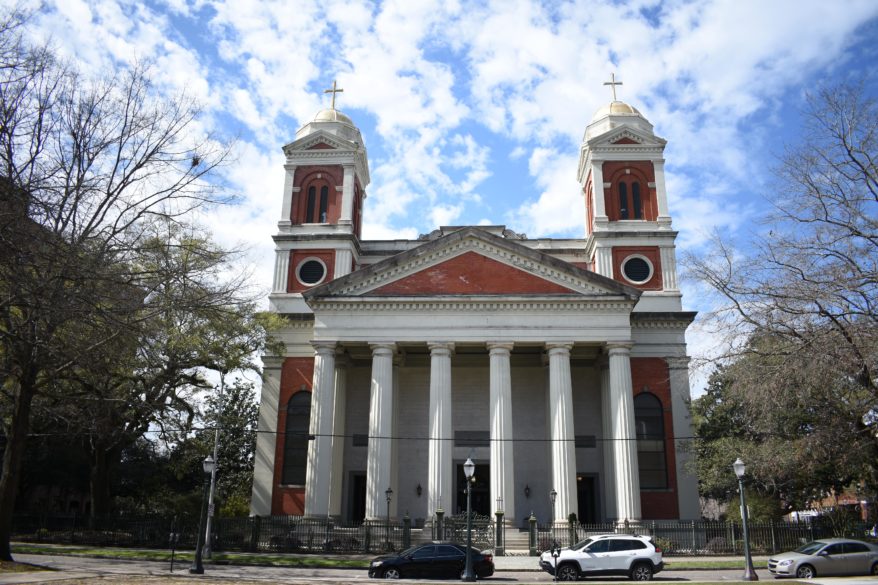
JACKSON – Recently, I spent a few days in the Mobile area getting some spiritual guidance and refueling after some interesting months. As I sat in the Cathedral Basilica of the Immaculate Conception on the Solemnity of the Immaculate Conception, I began to think about the historic connection our diocese has with Mobile.
To give a brief history of the region, I have taken the following from the Archdiocese of Mobile’s website history section.
The Archdiocese of Mobile was established as the Vicariate-Apostolic of Alabama and the Floridas in 1825 and became the Diocese of Mobile on May 15, 1829, with Bishop Michael Portier, D.D., as the First Bishop of Mobile. The newly created Diocese of Mobile encompassed the entire State of Alabama and the entire State of Florida.
In the 1850’s new dioceses were created in the State of Florida, nonetheless, the Diocese of Mobile still retained the panhandle of Florida until 1968 when the panhandle of Florida became part of the Diocese of St. Augustine and later the Diocese of Pensacola-Tallahassee. On Oct. 8, 1969, the Diocese of Mobile-Birmingham was divided into two separate dioceses with the newly created diocese in the state known as the Diocese of Birmingham in Alabama.
In 1980 the Diocese of Mobile was raised to the status of an archdiocese and Archbishop Oscar H. Lipscomb was appointed the First Archbishop of the newly created Archdiocese of Mobile. Today the archdiocese encompasses 22,969 square miles and includes the lower 28 counties of the State of Alabama.
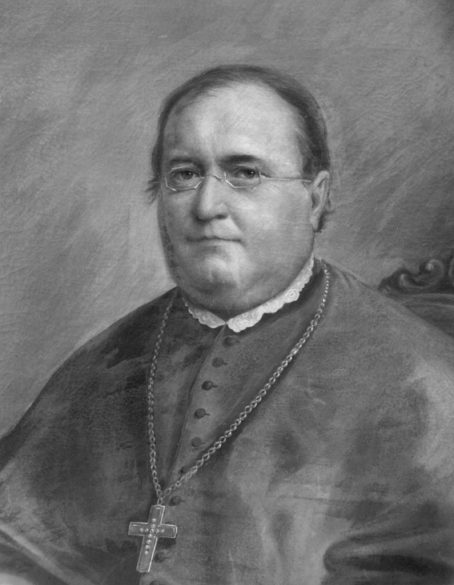
The arrival of Catholicism in the region traces its origins to the early Spanish and French explorations and permanent settlements at Pensacola, Florida in 1696, and in Mobile in 1702, where a parish was erected on July 20, 1703, with Henry Rolleaux de la Vente as first pastor. At the time of the creation of the new Diocese of Mobile in 1829, most Catholics were centered in the principal towns of Mobile, Pensacola and St. Augustine.
I have such fond memories of Archbishop Lipscomb who died July 15, 2020. He was a consummate man of the church who exuded priesthood and the office of bishop and had a deep, abiding love for the history and tradition of the Catholic faith in our region.
A man of gentle voice and spirit, he was the principal consecrator of Bishop Joseph N. Latino on March 7, 2003. After the ceremony, we were headed back to the bishops’ vesting area, where he asked me to summon the miter and crozier bearers who had served him that day. When brothers Garrett and Gordon McMullin arrived, the Archbishop presented each of them with two gold Sacagawea dollars stating it was an ancient tradition in the church for the bishop to present two gold coins to them because they were considered part of the bishop’s household.
That was such a special moment to witness, and it testified to the Archbishop’s love for history and the church’s rich traditions.
Oftentimes as Mississippi Catholics, we connect ourselves to New Orleans because we share the River with Louisiana. Our diocese originally was cut from the Archdiocese of Baltimore, which is the Mother See of the United States. In 1850, New Orleans was elevated to an archdiocese and became our longtime province and metropolitan see until 1980, when Mobile was elevated to an archdiocese. We then were reunited with our sister territory of Alabama into the Mobile province as mentioned in the last article.
So, in reflecting on our history as a combined U.S. territory with Alabama in the early days of America, we have a lot of extraordinary connections to Mobile not only ecclesially, but also through the air we breathe, the soil upon which we trod and the beaches we enjoy year-round. We are sisters and brothers in one of the most unique territories in the country – Spanish West Florida.
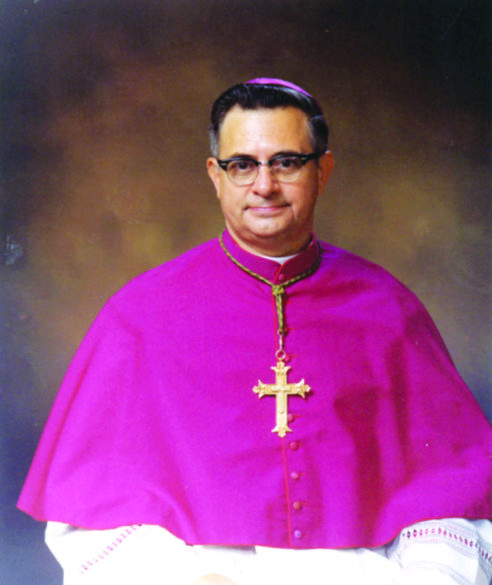
In another profound way we are linked to Mobile through the office of bishop. Both Bishop Richard O. Gerow (1924-1966) and Bishop William R. Houck (1984-2003) were Mobile natives and Bishop Joseph L. Howze (auxiliary of our diocese from 1972-1977) was from Daphne.
Bishop Houck had a unique connection to Archbishop Lipscomb in that the Archbishop’s uncle, Msgr. Hugh Lipscomb, was Bishop Houck’s first pastor to serve under as a newly ordained priest in 1951. Bishop Houck often remarked that the Monsignor was quite the mentor.
Therefore, as I sat in the Cathedral in Mobile, I pondered on the rich tradition of Catholicism in the region and offered a prayer for Archbishop Lipscomb, who is buried in the crypt below the altar there, and for Bishops Gerow and Houck – sons of Mobile. Then I prayed for the laity, religious and clergy of our diocese and the archdiocese along with our current bishops – Joseph Kopacz and Thomas Rodi, who carry on the ministry of those 19th-century bishops of the region – John Joseph Chanche and Michael Poitier.
May God continue to bless our region with strong faith and a deep connection to our mission to serve the Lord in this distinctive corner of God’s kingdom.
I pray you all have a blessed Christmas and a joyous New Year. See you from the archives in 2022.
(Mary Woodward is Chancellor and Archivist for the Diocese of Jackson)
By Catholic News Service
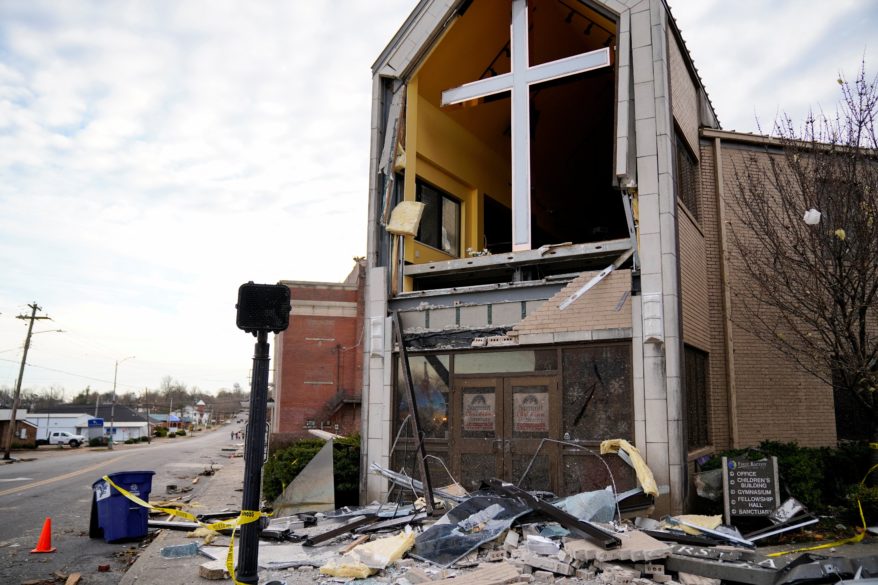
MAYFIELD, Ky. (CNS) – Mourning, prayer and a resolve to rebuild shattered lives, homes and businesses in Mayfield followed one of the most powerful twisters in U.S. history that leveled the city of 10,000 in western Kentucky overnight Dec. 10.
The Bluegrass State was the worst hit as numerous devastating tornadoes traveled across it and its neighboring states of Illinois, Tennessee, Arkansas and Missouri, leveling entire communities.
As of early Dec. 13, at least 34 people were confirmed dead, but rescue efforts were still underway in Mayfield and elsewhere.
Twenty of those who perished were in Kentucky, and six died when a roof collapsed at an Amazon warehouse in Illinois.
As members of two of Mayfield’s faith congregations came together to pray Dec. 12 amid rubble – piles of brick, metal and glass – prayers for their city and all of those affected by the ferocious mid-December twisters came from far and wide, including from Pope Francis and the U.S. Catholic bishops, and from close to home – Bishop William F. Medley of Owensboro, whose diocese covers western Kentucky.
A papal telegram conveyed by Cardinal Pietro Parolin, Vatican secretary of state, said Pope Francis “was saddened to learn of the devastating impact of the tornadoes” in the Midwest and the South.
“He offers heartfelt prayers that almighty God will grant eternal peace to those who have died, comfort to those who mourn their loss, and strength to all those affected by this immense tragedy,” it said.
“With gratitude for the tireless efforts of the rescue workers and all engaged in caring for the injured, the grieving families and those left homeless, Pope Francis invokes upon all engaged in the massive work of relief and rebuilding the Lord’s gifts of strength and generous perseverance in the service of their brothers and sisters,” said the telegram, which Cardinal Parolin sent to Archbishop Christophe Pierre, the apostolic nuncio in the U.S.
Archbishop José H. Gomez of Los Angeles, president of the U.S. Conference of Catholic Bishops, and Archbishop Paul S. Coakley of Oklahoma City, chairman of the USCCB’s Committee on Domestic Justice and Human Development, said the destruction and devastation was “heartbreaking” and called for prayer and assistance for all those who were in the path of the storms.
“During this Advent season where we await in joyful anticipation for the birth of our Lord, we pray for those who have been injured, for those who have lost their lives, and for their grieving families and communities,” said Archbishops Gomez and Coakley. “May those who have been impacted by these storms find peace, comfort and hope in our faith and in God’s endless love.
“We also pray for the emergency responders and those who have begun the work of providing for the needs of the impacted in these communities in the recovery efforts,” they said in a statement issued late Dec. 11. “We entrust all our brothers and sisters in harm’s way to our Blessed Mother, and we ask for her continued protection and for her intercession in comforting those who are suffering.”
The two prelates urged Catholics and all people of goodwill to donate to recovery efforts and financial help for tornado victims by supporting the work of Catholic Charities USA: https://www.catholiccharities.us/campaign/ccusa-disaster-relief/c353051.
Bishop Medley in a Dec. 11 statement called on the Catholic community of the diocese “to unite in prayer … for all of the suffering that was caused by this disaster.”
He asked all parishes to take up a special collection over the Dec. 11-12 weekend to aid tornado victims.
The bishop also took note of the leveling of Mayfield’s candle factory, where 110 employees were working around the clock, which is customary during the Christmas season, according to news reports.
Initially, city officials feared the death toll among factory workers would reach 70. Late Dec. 12, a company representative told reporters that eight workers were confirmed dead and eight remained missing, but the rest had been accounted for.
“Many of those injured in the Mayfield candle factory were parishioners, and others represented migrants and the marginalized in our communities,” Bishop Medley said in his statement.
He added that through its Catholic Charities office, the diocese planned “to offer immediate help and services” for those displaced by the tornado and/or need immediate emergency financial help.
“I am proud of the many ways that your generosity always allows the Catholic Church to respond to the suffering and to families in crisis,” Bishop Medley said. “So I thank you in advance for your generous response to this terrible devastation. God will bless our generosity.”
In a Dec. 12 tweet, Bishop Medley said he visited the Catholic community of St. Joseph Church in Mayfield: “Fr. Eric Riley, the pastor, preached on the Advent and Our Lady of Guadalupe themes of hope and joy. Neighboring parish St. Jerome of Fancy Farm welcomed them.”
At a news briefing Dec. 12 in Mayfield, Kentucky Gov. Andy Beshear noted one tornado traveled 227 miles. “It didn’t take a roof, which is what we’ve seen in the past. it exploded the whole house. People, animals … just gone.”
“The very first thing that we have to do is grieve together,” he said, “and we’re going to do that before we rebuild together.”
By Bishop Joseph R. Kopacz, D.D.
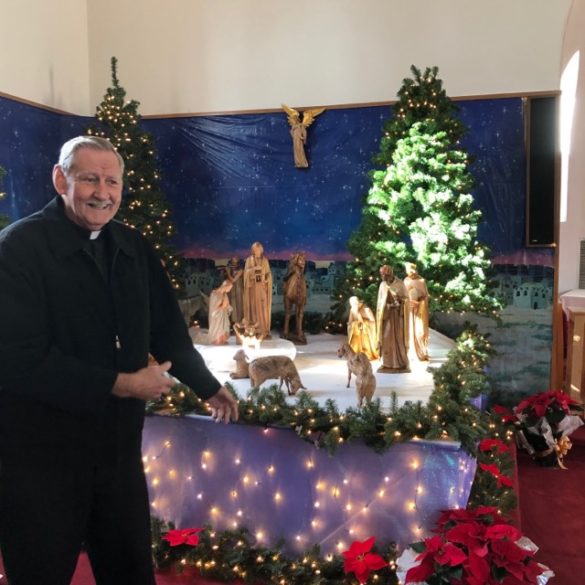
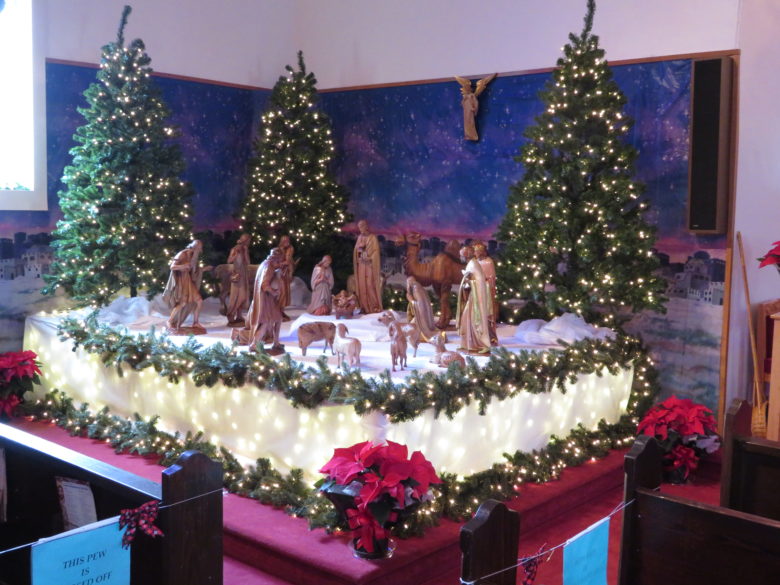
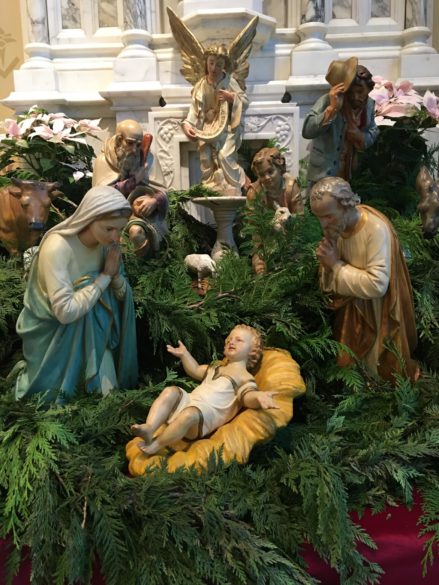
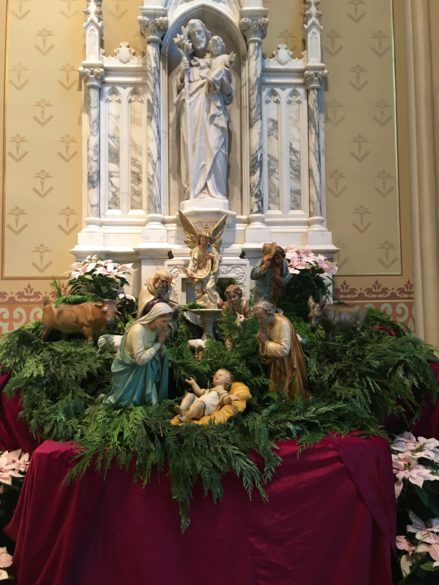
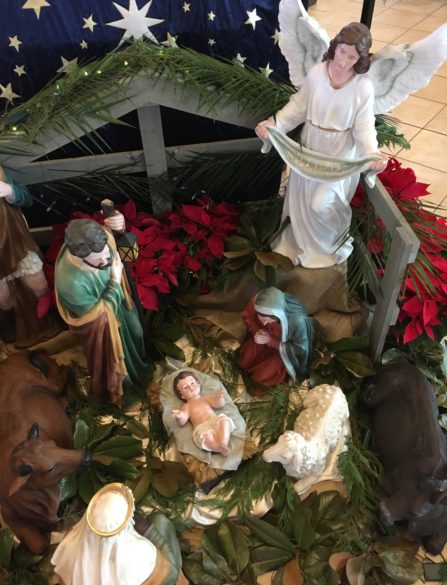
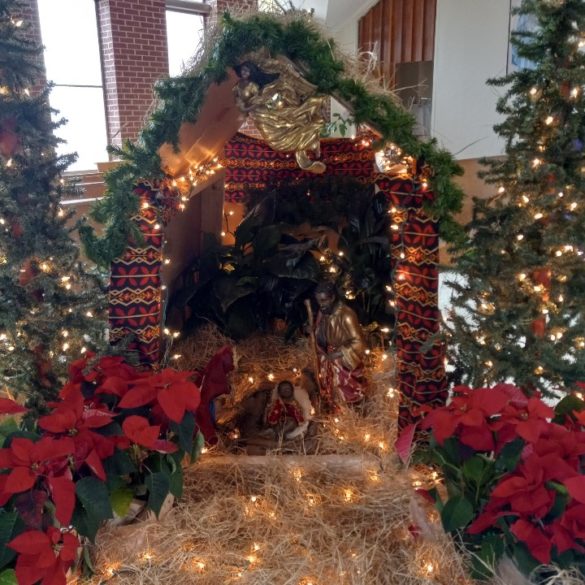
The celebration of the Incarnation, the beginning of the culmination of God’s plan of salvation for humanity, will be celebrated throughout the Christian world over next weekend on the Solemnity of Christmas. In many countries the Lord’s birth will be commemorated at home or in smaller family clusters, but for the majority of the faithful there will be the joyful gatherings in churches with a wide range of languages and customs. For the throngs who do “go to church,” it will be for the celebration of the sacrifice of the Mass, the divine Liturgy, the holy Eucharist, to give thanks to God who so loved the world that he sent his only Son. (John 3:16)
Next weekend there will be the pastoral challenge in the Catholic world of coordinating the schedule of Masses for Christmas eve, Christmas day, and the Masses for Sunday – the feast of the Holy Family. But whatever Masses we attend let us not lose sight of one of the most sublime mysteries of our faith in the Lord Jesus, the bond between his birth, the Incarnation, and the Mass, when and where we celebrate his death and resurrection.
The link between the words from the prologue of the Gospel of John and the words of consecration from the other three evangelists, Matthew, Mark and Luke, as well as St. Paul are enlightening.
From the prologue:
– “And the Word became flesh and dwelt among us, and we have seen his glory, the glory as of the only Son from the Father, full of grace and truth.” (John 1:14)
– The Lord himself handed on to the church, beginning at the Last Supper and continuing for all time, his words of institution and consecration. (Matthew, Mark, Luke and St. Paul) “While they were eating, Jesus took bread, and when he had given thanks, he broke it and gave it to his disciples, saying, Take and eat; this is my body. Then he took a cup, and when he had given thanks, he gave it to them, saying, Drink from it, all of you. This is my blood of the covenant, which is poured out for many for the forgiveness of sins.” (Matthew 26:26-28)
– Several chapters later in John’s Gospel, the Lord unwaveringly wedded his Incarnation with the Eucharist. “I am that living bread come down from heaven! Everyone who eats it will live forever. And the bread I will give is my flesh for the life of the world.” (John 6:51)
Throughout the Christmas season, the Octave of Christmas, and its sacred interval through Jan. 9, 2022 – the feast of the Baptism of the Lord – there is ample time to cherish the fullness of our faith in the Son of God.
Jesus Christ is the true light that has come into the world, so that whoever accepts him is granted the power to be children of God. Each time we gather at Mass as his Body – the church – the risen Christ reveals his glory to us, the glory as of the Father’s only Son, full of grace and truth.
Whenever someone doubts or rejects the real presence of the risen Christ in the bread and wine, which can occur for many reasons, a good place to revisit is the Incarnation of the Son of God.
In the power of the Holy Spirit pray for the grace and truth to see with the eyes of the heart the humanity and divinity of the child Jesus, and the crucified and risen Lord. He shines in glory in His resurrected body at the right hand of the Father and intercedes on behalf of his Body, the church, in this world.
Of course, he would want to feed us with exceptional food and drink – His own body and blood – food for the journey.
As, we grapple with this sublime mystery at various intervals over our life span, and we pray for one another to persevere, as individuals, families and friends with our feet firmly planted in God’s good creation as children of the Most High, who never lose sight of the beckoning horizon of eternal life.
Merry Christmas and peace on earth and goodwill toward all!