Está bien Por Elizabeth Scalia Con sus 42 000 palabras, la primera encíclica del papa León XIV, “Magnifica Humanitas”, es un texto gigantesco. Es enorme. Es lúcida y exhaustiva, y está tan repleta de cosas buenas que debe consumirse poco a poco, como un banquete romano: lo mejor es abordarla lentamente, saboreando pequeños bocados, tal vez incluso tomando un pequeño descanso entre bocado y bocado si esperas llegar al café y a los cannoli.
“Magnifica Humanitas” es larga, pero tiene que serlo, porque los temas que aborda el papa León son de importancia inmensa para un mundo que ha olvidado casi por completo algunas verdades básicas: Que la humanidad fue creada a imagen y semejanza de Dios, conteniendo una parte de la creatividad, la chispa y el genio de Dios; que la dignidad de la persona humana es una idea que de suma importancia; que tal dignidad exige libertad, salarios justos, oportunidades para trabajar y poseer propiedades, así como rendir cuentas ante la justicia y ser atendido por ella, y que “la familia es un bien social primordial”.
El capítulo inicial de la encíclica es prácticamente un manual sobre estas verdades y sobre lo que significan dentro de la doctrina social católica establecida y emergente.
La gente sigue tratando de entender a León XIII: ¿se parece más a Francisco, a Benedicto, a Pablo VI o a León XIII? Mientras se lo preguntan, muchos compiten por situar sus agendas a las puertas de sus enseñanzas, con el fin de servir a sus propios intereses.
En este momento, el mundo entero está observando a este papa nacido en Estados Unidos, y León XIII ha aprovechado acertadamente este momento para volver a presentar a algunos exactamente qué es la Iglesia, mientras aún estamos prestando atención: Así es como está presente; esto es lo que ha promulgado, en lo que se ha convertido y por lo que ha trabajado a lo largo de los siglos, a través de papas y santos y concilios y tiempos turbulentos y sus propios pecados y escándalos repugnantes; aquí es donde estamos hoy y esta es la razón por la que la Iglesia, y sus doctrinas, no solo son relevantes, sino absolutamente necesarias para los tiempos actuales frente a la inteligencia artificial, la robótica, los algoritmos, el transhumanismo e incluso la amenaza del poshumanismo.
Si queremos plantearnos ideas sobre qué es la humanidad, en qué podría convertirse o qué es exactamente lo que ayuda a la humanidad a ser más humana, entonces el repaso de León a la doctrina social católica es un recordatorio urgente de que los seres humanos tienen un valor y una dignidad inherentes más allá de su utilidad. El papa León insiste en este documento en que nuestras enseñanzas sociales son los medios establecidos y necesarios para enmarcar y comprender estas “nuevas realidades”.
“Estoy convencido de que la forma concreta de vivir las relaciones sociales a la luz del Evangelio […] sigue siendo una tarea encomendada, de generación en generación, a la comunidad cristiana”, escribió. Además, el pontífice afirma que la humanidad debe tener muy claro quiénes creemos que somos exactamente y de dónde proviene nuestra salvación.
“Desde la perspectiva de la Doctrina Social de la Iglesia, la cuestión clave no es el uso de la tecnología como tal, sino la visión que la sustenta. Si se trata al ser humano como algo que hay que perfeccionar o superar”, advierte Leo, “se hace más fácil aceptar que algunas vidas son menos útiles, menos deseables o menos dignas. En nombre del progreso, pueden empezar a justificarse los “sacrificios necesarios”, haciendo recaer la carga sobre los más vulnerables en pos de una supuesta optimización de la especie. … Una cosa es integrar la tecnología en una visión relacional y centrada en el ser humano; y otra muy distinta es dejarse guiar por una perspectiva que devalúa los límites humanos y promete una forma puramente técnica de “salvación””.
Si bien Leo aborda de manera importante las amenazas a la salud mental y a las relaciones humanas genuinas, aprecio su recordatorio de que la chispa creativa que todos llevamos dentro puede verse amenazada por una adopción imprudente de la IA: “La velocidad y la simplicidad… sin duda facilitan la vida”. Sin embargo, también pueden “debilitar la creatividad y el juicio personales”. Abundan los titulares científicos que informan sobre lo beneficioso que es para nuestro cerebro escribir a mano en lugar de teclear en un teclado. En el espíritu de “Magnifica Humanitas”, ¿por qué no tomar un bloc y un bolígrafo y disfrutar de una buena lectura, tomando notas sobre toda la verdad y la belleza que contiene?
(Elizabeth Scalia es editora especial de OSV. Síguela en X en @theanchoress.)
Por Courtney Mares BARCELONA, España (OSV News) – El Papa León XIV bendijo la recién terminada Torre de Jesucristo en la Basílica de la Sagrada Familia de Barcelona el 10 de junio, inaugurando la aguja coronada que convierte a esta emblemática basílica en la iglesia católica más alta del mundo e instando a las personas a levantar la mirada hacia Cristo, el único que “nos revela la verdad de Dios y la verdad de nosotros mismos”.
El Papa León celebró la Misa en el interior de la basílica e inauguró oficialmente la Torre de Jesucristo, que se eleva a más de 172 metros, ante una multitud de miles de personas reunidas dentro y alrededor de la Sagrada Familia – también conocida como Sagrada Família en catalán.
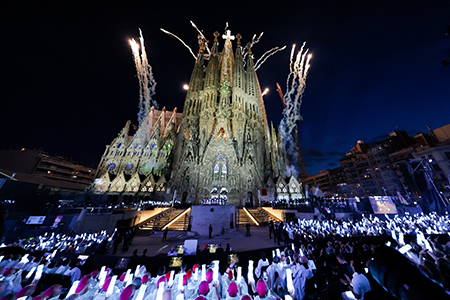
Fuegos artificiales estallan durante la inauguración de la Torre de Jesucristo en la Basílica de la Sagrada Familia, en el marco del viaje apostólico del Papa León XIV a Barcelona, España, el 10 de junio de 2026. (Foto OSV News/Nacho Doce, Reuters)
“Mirando a Cristo podemos ver el mundo con ojos renovados: la torre de la cruz se convierte entonces en estandarte de caridad, porque Dios nos ama así, transformando un instrumento de muerte en signo de esperanza”, dijo el Papa.
–Centenario de la muerte de Gaudí– El rey Felipe VI de España recibió al Papa a su llegada a la basílica. Antes de la Misa, el Papa León descendió a la cripta de la basílica para rezar ante la tumba de Antoni Gaudí, el visionario arquitecto catalán que dedicó 43 años de su vida al diseño y la construcción de la basílica antes de su muerte en 1926 a los 73 años.
La Misa Papal coincidió con el centenario de la muerte de Gaudí. Conocido como “el arquitecto de Dios”, la causa de canonización de Gaudí avanzó el año pasado cuando el Papa Francisco lo declaró venerable en abril de 2025.
El Papa León rindió homenaje al visionario arquitecto en su homilía, reflexionando sobre la intención de Gaudí de narrar los misterios de la vida de Cristo a través de la piedra y la luz.
–El poder de la belleza para evangelizar– La luz se filtraba a través de las coloridas vidrieras de la basílica mientras el Papa hablaba, proyectando colores danzantes sobre las altísimas columnas. Las trompetas resonaron mientras un coro de 500 personas entonaba himnos desde las galerías superiores a ambos lados de la basílica, y varios coros infantiles armonizaban alrededor del ábside.
El Papa León señaló a la Sagrada Familia como testimonio del poder del arte y la belleza para acercar a las personas a Dios.
“En su sabiduría, la Iglesia renueva así la ‘Biblia pauperum’ de las antiguas catedrales, que son en sí mismas mensajes de evangelización de gran riqueza”, dijo, invocando la tradición medieval de las representaciones visuales de las Escrituras diseñadas para comunicar la fe a quienes no sabían leer.
“En este tiempo de la imagen, resulta aún más evidente cómo el arte y la belleza son eminentes canales de evangelización”, afirmó.
Las tres fachadas de la Sagrada Familia –dedicadas a la Natividad, la Pasión y la Gloria de Cristo– plasman arquitectónicamente esta visión. Gaudí las diseñó de tal manera que la luz del sol ilumina cada portal en el momento que mejor se ajusta a su significado teológico: la luz del amanecer para la fachada de la Natividad, la puesta de sol para la de la Pasión y la luz plena del mediodía para la de la Gloria.
El diseño de Gaudí se inspiró tanto en las doctrinas cristianas como en la observación de la naturaleza. La basílica está llena de formas orgánicas inspiradas en elementos naturales. Las columnas de la nave central evocan un bosque de árboles.
–Torre de Jesucristo– La Torre de Jesucristo es ahora la estructura más alta de Barcelona, y convierte a la Sagrada Familia en la iglesia más alta del mundo.
Gaudí diseñó la torre (o aguja) para que se situara exactamente medio metro por debajo de la cima de la cercana colina de Montjuïc, convencido de que la obra de las manos humanas no debía superar la obra de Dios. En su coronación se alza una cruz de cuatro brazos de vidrio y cerámica esmaltada en blanco, de unos 17 metros de altura y 13 metros de ancho, que lleva la inscripción: “Tu solus Sanctus, Tu solus Dominus, Tu solus Altissimus” – “Tú el único Santo, Tú el único Señor, Tú el único Altísimo”.
“En la cruz de Jesús nuestra fe alcanza su culmen”, afirmó el Papa. “Esta cruz brilla de día, reflejando la luz del sol, y brilla de noche, iluminando la ciudad como un faro abierto al Mediterráneo. Sí, la luz de Cristo brilla en las tinieblas, aunque las tinieblas no la hayan acogido”.
–Palabras contundentes sobre la guerra, el aborto y la salvación– Se calcula que unas 9.000 personas asistieron a la Misa Papal en el interior de la basílica, mientras que unas 120.000 personas la siguieron desde el exterior. En su homilía en la Sagrada Familia, el Papa León lanzó un contundente llamado contra el aborto, la guerra y la exclusión de los migrantes.
“Queridos hermanos, no podemos creer en Jesús y promover la guerra. No podemos creer en Jesús y matar al inocente. No podemos creer en Jesús y abandonar a quien sufre, a quien llora, a quien huye de la miseria”, dijo el Papa.
El Papa reflexionó sobre la lectura del Evangelio del día, tomada de Juan, en la que Jesús dice a los fariseos: “Si no creéis que ‘Yo soy’, moriréis en vuestros pecados” (Jn 8:24).
Son “palabras fuertes”, dijo el Papa León, sino que “son una invitación a la salvación, es decir, un llamamiento a la libertad por parte de Cristo, que quiere para nosotros el bien definitivo, eterno”.
“Hecho hombre, Él se convierte para nosotros en el Emmanuel, fuente de gracia y perdón, de salvación y de vida nueva”, dijo. “Es por ello que, si no creemos en Jesucristo, permanecemos en el pecado y no sólo morimos nosotros, sino que provocamos la muerte del prójimo”.
–Una basílica que tardó un siglo en construirse– El Papa León rindió homenaje a Gaudí y a todos los que han trabajado en la basílica a lo largo de generaciones.
“Junto con Gaudí, de quien conmemoramos el centenario de su muerte, recordamos y damos las gracias esta tarde a todos los promotores y benefactores, a los artistas y a los trabajadores que cooperan en la construcción de una obra maestra arquitectónica, que es también una elocuente catequesis hecha de piedras, colores y luz”.
La primera piedra de la Sagrada Familia se colocó en 1882. El proyecto se encomendó inicialmente al arquitecto Francisco de Paula del Villar, antes de pasar a manos de Gaudí en 1883, quien lo transformó en uno de los proyectos de construcción más ambiciosos de la historia moderna, compuesto por tres fachadas, cinco naves y 18 torres. La parte construida por Gaudí fue declarada Patrimonio de la Humanidad por la UNESCO en 2005.
–Obra maestra ‘inacabada’– A pesar de la finalización de su torre coronada, la basílica sigue sin estar terminada; aún se está trabajando en el baptisterio, la sacristía, la Capilla de la Asunción, los claustros y la Fachada de la Gloria. Se prevé que la basílica no esté terminada hasta 2036.
El Papa León aceptó esa incompletitud como una metáfora espiritual. “Mucho más que un monumento, la Basílica de la Sagrada Familia sigue siendo hoy una obra en construcción, que nos recuerda cómo la vida cristiana es siempre un camino, porque se trata de un proyecto que Dios lleva a cabo”, afirmó.
“No habitamos, pues, una obra inacabada, sino un templo aún en construcción. Su imperfección no es un defecto, porque da testimonio de un deseo; no significa una carencia, sino que expresa una promesa que queremos honrar con coherencia”, añadió. “Nuestra gratitud se convierte entonces en compromiso, al tiempo que cooperamos en el proyecto de Dios, es decir, en la construcción a la que Él mismo nos llama”.
–Los fuegos artificiales celebran la iglesia más alta del mundo– Tras la Misa, el Papa presidió la bendición solemne de la Torre de Jesucristo. La ceremonia de inauguración concluyó con un deslumbrante espectáculo de luces interactivo y una actuación musical en directo a cargo de la Escolanía de Montserrat, el coro de niños más antiguo del mundo, seguido de fuegos artificiales lanzados desde las imponentes agujas de la basílica. Un espectáculo de drones en el cielo iluminó el rostro de Gaudí, así como las palabras del arquitecto: “Primero el amor, después la técnica”.
“Mientras alzamos la mirada hacia Él, el Crucificado Resucitado, comprometámonos a levantar el rostro de quienes yacen en el polvo”, dijo el Papa. “Y demostremos así que la Sagrada Familia es la iglesia más alta del mundo, no para destacar en clasificaciones mundanas, sino para guiar los pasos del pueblo de Dios que peregrina en esta tierra de Cataluña, con la cruz que ilumina el camino, como una lámpara encendida en la espera del regreso del Esposo”.
(Courtney Mares es la editora de OSV News en el Vaticano. Síguela en X @catholicourtney.)
(OSV News) – El Papa León XIV ha publicado su histórica encíclica sobre la inteligencia artificial “Magnifica Humanitas” este 25 de mayo, comparando el intento de construir un futuro de IA que excluye a Dios con la “Torre de Babel” y subrayando la necesidad de custodiar la dignidad humana que “corre el riesgo de verse eclipsada por nuevas formas de deshumanización”.
“Este es el riesgo de la deshumanización -construir el futuro excluyendo a Dios y reduciendo al otro a un medio-, una tentación antigua y siempre nueva, que hoy también toma un rostro técnico”, escribió el Papa León en su primera encíclica “Magnifica Humanitas: Sobre la custodia de la persona humana en el tiempo de la inteligencia artificial”.
“En la era de la inteligencia artificial, en la que la dignidad humana corre el riesgo de verse eclipsada por nuevas formas de deshumanización, tenemos el deber urgente de permanecer profundamente humanos, custodiando con amor esa magnífica humanidad que se nos ha dado y revelado en plenitud en Cristo, y que ninguna máquina podrá jamás sustituir en su esplendor” dijo.
-El uso indebido de la IA comparado con la ‘Torre de Babel’-
El Papa León da inicio a la primera encíclica de su pontificado diciendo que hoy la humanidad enfrenta una elección decisiva –“levantar una nueva torre de Babel o edificar la ciudad donde Dios y la humanidad habiten juntos”. Usando el relato bíblico del Génesis, el Papa advierte contra el “‘síndrome de Babel’: la idolatría del lucro que sacrifica a los débiles” y la pretensión de que todo, “incluso el misterio de la persona”, puede traducirse en “datos y rendimientos”.
“Pedir prudencia, controles rigurosos y, en ocasiones, también una ralentización en la adopción de la IA no significa estar en contra del progreso, sino ejercitar un cuidado responsable hacia la familia humana”, escribió el Santo Padre.
– Desde la criptomoneda al ‘Señor de los Anillos’-
El extenso documento papal está dividido en cinco capítulos y toca una gran variedad de temas relacionados con la IA, incluyendo el prospecto del desempleo masivo, el futuro de la educación, la protección de la libertad humana, el tiempo excesivo frente a las pantallas (en el caso de los jóvenes), las criptomonedas, las disparidades económicas, transhumanismo, ciberataques y la aplicación de los principios de la enseñanza social católica.
El Papa León dedica el último capítulo de su encíclica a el desarrollo y el uso de la IA en el ámbito bélico, los cuales “deben estar sujetos a las restricciones éticas más rigurosas”, y a la construcción proactiva de la paz “que frenen la carrera armamentística tecnológica”.
El pontífice estadounidense apuntó a Martin Luther King Jr., Santa Teresa de Calcuta, Dorothy Day, Santa Laura Montoya, San Maximiliano Kolbe, entre otros, como ejemplos que algunos “acontecimientos ayudan a ver que la historia puede cambiar cuando al menos un solo hombre o una sola mujer se toma realmente en serio la dignidad de todos”.
En “Magnifica Humanitas”, que significa “magnífica humanidad” en latín, el Papa hace un llamado a los cristianos a que no sean “espectadores resignados” o “simples comentaristas de las ruinas” sino que tomen un rol proactivo en construir el futuro al cultivar comunidad y relaciones en persona, educando a los más jóvenes a amar la sabiduría, pasar tiempo con las personas empobrecidas y los que se sienten solos, ser la voz de la justicia, defender la verdad objetiva y tratar al mundo digital como “un nuevo continente por evangelizar”.
“No nos atañe a nosotros dominar todas las mareas del mundo, sino hacer lo que está en nuestras manos por el bien de los días que nos ha tocado vivir, extirpando el mal en los campos que conocemos, y dejando a los que vendrán después una tierra limpia para la labranza”, escribió el Papa, citando al libro de J.R.R. Tolkien “El Señor de los Anillos: el retorno del rey”. Y agregó que “la civilización del amor no nace de un gesto único y espectacular, sino de una suma de fidelidades pequeñas y tenaces, que hacen frente a la deshumanización”.
-Bajar el ritmo cuando todo se está acelerando-
En su encíclica, el Papa León dice que la idea de “una IA más moral” no es suficiente, si esta moral es decidida por unos pocos.
“Se necesita una política más presente, capaz de ralentizar donde todo acelera y de proteger los espacios en los que las comunidades pueden seguir participando e interrogándose”, dijo.
El Santo Padre argumentó que “no podemos considerar a la IA como moralmente neutra” y subrayó que el discernimiento ético no puede ser limitado a “preguntarse si usamos un determinado sistema para un fin bueno o malo” sino “que debe interrogarse también sobre el modo en el que está diseñado y qué idea de persona y de sociedad queda inscrita en los datos y en los modelos que lo guían”.
El Papa León añadió que la propiedad de los datos no debe ser confiada solamente al control privado y que los datos “no pueden ser vendidos o confiados a unos pocos”, llamando por una reglamentación apropiada y pensamiento creativo “capaz de gestionarlos como uno de los bienes comunes o colectivos”.
– El desempleo como ‘mal grave’ y ‘calamidad social’-
El Papa León abordó el espectro del desempleo masivo debido a la adopción de la inteligencia artificial (IA), y dijo que esto sería “una verdadera calamidad social, lo que pone especialmente de relieve la responsabilidad del Estado”. Citó a la encíclica sobre el trabajo humano de San Juan Pablo II, publicada en 1981, “Laborem Exercens”, subrayando que su predecesor reconoció que el desempleo era “un mal grave”. Y el Papa León añadió que exponer “a muchos a una situación de inactividad forzada, de ausencia de responsabilidades, de falta de compromiso y de estímulos cotidianos” podría llevar al “empobrecimiento humano y cultural”.
“El objetivo de obtener mayores beneficios no puede justificar decisiones que sacrifiquen sistemáticamente el empleo, porque la persona humana es un fin y no un medio, y el orden económico debe permanecer subordinado a su dignidad y al bien común”, dijo el Papa León.
“Sin decisiones valientes, surgen más pobreza y más desigualdades, con una multitud de excluidos rodeados de máquinas y sistemas automatizados que han ocupado su lugar”, añadió.
-Dios creó a los seres humanos para la comunión, no la eficiencia-
El Papa León escribe que la IA promete eficiencia, pero los “nuevos modos” de trabajar no son necesariamente mejores, y describe cómo “contrariamente a los beneficios anunciados sobre la IA, los enfoques actuales de la tecnología pueden paradójicamente desespecializar a los trabajadores, someterlos a una vigilancia automatizada y relegarlos a tareas rígidas y repetitivas”.
“Cuando la eficiencia se vuelve medida de valor, el ser humano es tentado a considerarse como un proyecto que debe optimizarse más que como una criatura llamada a la relación y a la comunión”, dijo el Papa.
-La defensa de la verdad objetiva-
La verdad es uno de los temas principales de la encíclica del pontífice agustino. Dijo que frente a los flujos incesantes de información, opiniones, imágenes y algoritmos sofisticados que pueden influenciar decisiones, es imperativo cultivar “un corazón que ama la verdad, que desea lo justo más que los contenidos de mayor atractivo, que busca la sabiduría más que el impacto inmediato”.
“La verdad que no debemos perder es la de Dios y la del ser humano, tal como Cristo nos la ha revelado. Es necesario abandonar una visión del hombre individualista y técnica”, dijo.
Citando al Papa Benedicto XVI, añadió, “el hombre moderno tiene la errónea convicción de ser el único autor de sí mismo, de su vida y de la sociedad. Es una presunción fruto de la cerrazón egoísta en sí mismo”.
El Papa subrayó que “la búsqueda de la verdad es un elemento esencial para la democracia” y que “el desinterés por la verdad conduce lenta pero inexorablemente hacia el totalitarismo”.
Dijo que debemos “promover una ecología de la comunicación” en el establecimiento de normas públicas “que hagan más transparentes los criterios con los que se seleccionan y amplifican los contenidos y que protejan los datos personales”. En el ámbito social y cultural, hizo un llamado al “fortalecimiento de los organismos intermedios, un periodismo serio y espacios de debate”, y a la adquisición de más formación en el uso de herramientas digitales por parte de las familias y las escuelas y a la búsqueda por parte de las universidades a “la integración de los conocimientos”.
“La primera tarea que nos corresponde es no demonizar ni idolatrar los medios, sino gestionarlos a partir de un punto fijo: la verdad es un bien común y no una propiedad de quienes tienen poder o visibilidad”, puntualizó.
-Control social y la ‘economía digital de la atención’-
El Papa León hizo un llamado a la “educación en la sobriedad digital” debido a las sutiles formas de adicción en la “economía digital de la atención” de hoy en día en que las plataformas y servicios digitales “están diseñados para captar el tiempo y la mirada de los usuarios” lo que debilita “la libertad interior”.
Advirtió sobre el riesgo “del control social que la recopilación masiva de datos y el uso de sistemas algorítmicos hacen posible”.
“Cuando cada gesto deja huellas -desplazamientos, compras, relaciones, preferencias- se crea un poder nuevo: el de perfilar, prever y orientar los comportamientos, a menudo sin que las personas tengan plena conciencia de ello”, escribió. “Si estos datos se utilizan para tomar decisiones que inciden en oportunidades concretas (acceso al crédito, selección de personal, servicios), existe el riesgo de socavar la libertad y discriminar a los más vulnerables”.
-El Papa León XIII y la doctrina social católica-
El Papa XIV sitúa su reflexión sobre la era de la inteligencia artificial en el contexto de la tradición magisterial de la doctrina social de la Iglesia, a veces conocida como enseñanza social católica. El primer capítulo de la encíclica ofrece una visión general de la contribución de cada papa al magisterio social de la Iglesia, desde el Papa León XIII hasta la actualidad, destacando las ideas clave que resultan especialmente relevantes hoy en día. El segundo capítulo provee definiciones de principios clave de la doctrina social de la Iglesia desde “el bien común” a la “subsidiariedad”. El Papa Francisco y San Juan Pablo II son citados con frecuencia a lo largo de la encíclica.
El Papa León XIV firmó “Magnifica Humanitas” el 15 de mayo, coincidiendo con el 135.º aniversario de “Rerum Novarum”, la encíclica social fundacional de 1891 del Papa León XIII sobre el trabajo y el capital, redactada durante la Revolución Industrial.
“Mientras las nuevas redes económicas y tecnológicas pueden generar exclusión, aislamiento y dependencias, la Iglesia, alimentada por la Eucaristía, está llamada a hacer visible otro tipo de medida, custodiando los vínculos, devolviendo la voz a los invisibles y orientando los procesos hacia la dignidad de las personas”, dijo el Papa León XIV.
(Courtney Mares es editora del Vaticano para OSV News. Síguela en X @catholicourtney.)
(OSV News) – ¿Qué significa custodiar nuestra humanidad? Esa pregunta está en el centro de la tan esperada primera encíclica del Papa León XIV, “Magnifica Humanitas: Sobre la custodia de la persona humana en el tiempo de la inteligencia artificial”, publicada el 25 de mayo. A continuación, se presentan algunos aspectos clave sobre esta importante misiva papal.
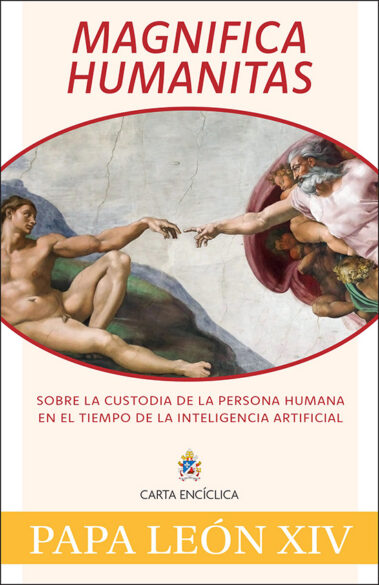
Esta es la portada de “Magnifica Humanitas: Sobre la custodia de la persona humana en el tiempo de la inteligencia artificial”, la primera encíclica del Papa León XIV, publicada el 25 de mayo de 2026. (Ilustración de OSV News/Our Sunday Visitor)
Significa “Magnífica humanidad” en latín; el título proviene de las primeras palabras del texto tal y como están traducidas al latín, como habitualmente ocurre con las encíclicas papales. Esas palabras dicen, según su traducción al español: “La magnífica humanidad que Dios ha creado se encuentra hoy ante una elección decisiva: levantar una nueva torre de Babel o edificar la ciudad donde Dios y la humanidad habiten juntos”. A lo largo de la encíclica, el Papa León destaca “la grandeza de la persona humana”, con hombres y mujeres creados por Dios para la relación con él y para con los demás, cooperando con la labor creativa de Dios y guiados por el Espíritu Santo.
El documento -en su versión en español- cuenta con más de 44.000 palabras. Contiene cinco capítulos enmarcados entre una introducción y una conclusión sólidas. El primer capítulo traza la evolución de la doctrina social de la Iglesia, o enseñanza social, especialmente desde la “Rerum Novarum”, la influyente encíclica de 1891 del Papa León XIII sobre la dignidad del trabajo. El segundo capítulo ahonda en la substancia de la doctrina social católica. El tercer capítulo explora los desafíos que la inteligencia artificial presenta a la humanidad, el cuarto capítulo se centra en la defensa de la verdad, el trabajo, y la libertad; y el quinto capítulo se enfoca en lo que implica usar IA en situaciones bélicas.
Desde la educación y los trabajos a las compañías tecnológicas privadas y las familias, los temas cubiertos por “Magnifica Humanitas” son muy amplios. La encíclica aborda temas como el prospecto del desempleo, el futuro de la educación, la protección de las libertades humanas, el tiempo excesivo frente a las pantallas, la adición a la tecnología, la propiedad de los datos, criptomonedas, disparidades económicas, el impacto medioambiental, transhumanismo y posthumanismo, además de ciberataques y otros tipos de conflictos bélicos. El Papa León habló de la idea de una “IA más moral” y argumenta que las bases de “la denominada ‘alineación’ de la IA con los valores humanos” requiere “la posibilidad de discutir el código ético que debe ser usado, sometiéndolo a criterios de justicia social compartida” en conversaciones que incluyan a todas las comunidades.
Este documento incluye referencias a una variedad de pensadores influyentes. Más allá de los predecesores del Papa León, la encíclica apunta, o cita a Dorothy Day, Maria Montessori, Martin Luther King Jr., J.R.R. Tolkien, Platón, la conferencia episcopal estadounidense, y la pensadora Hannah Arendt, entre otros. Y, por supuesto, el Papa León entreteje referencias a San Agustín, el santo patrón de la orden religiosa del pontífice agustino y un guía siempre presente, especialmente por medio del libro del obispo africano del siglo V, “La ciudad de Dios”.
Recurre a imágenes bíblicas para instar a la gente a reflexionar sobre lo que la humanidad está construyendo en “la obra de nuestro tiempo”. La Torre de Babel y la Ciudad de Dios son contrastadas a lo largo de la encíclica para ilustrar las dos direcciones posibles que podría tomar la era de la IA: un camino de arrogancia, hacia un sentido artificial de autosuficiencia y caos, o un camino hacia la comunión, la relación y Dios. El Papa León subraya la necesidad crítica para desarrollar un proceso de discernimiento para guiar el desarrollo de la IA. “Hoy nuestra edificación debe tener como fundamento la relación con Dios”, escribió el Papa León.
A pesar de sus desafíos, la IA no debe ser temida. La tecnología “no debe considerarse, en sí misma, como una fuerza antagónica respecto a la persona”, escribió. “A lo largo de los siglos, el desarrollo tecnológico ha contribuido a una mejora significativa de las condiciones de vida de la humanidad; al mismo tiempo, cada etapa del progreso también ha puesto de manifiesto el lado ambiguo de instrumentos capaces de causar daño cuando no se orientan hacia el bien”. Se dirige directamente a quienes desarrollan sistemas de IA, diciéndoles que “la innovación tecnológica puede ser, en cierto modo, una forma humana de participación en el acto divino de la creación” y, por tanto, los desarrolladores llevan “un importante peso ético y espiritual, ya que cada elección de proyecto expresa una visión de la humanidad”.
Dedicar tiempo al discernimiento es fundamental en nuestro camino hacia el futuro. La encíclica invita a la gente de buena voluntad a iniciar “un discernimiento compartido capaz de profundizar en las raíces espirituales y culturales de las transformaciones que se están produciendo” con lo que respecta a la IA. “Estamos viviendo una rápida fase de transición, un ‘cambio de época’ en el que … la mayoría de las personas permanece a la espera, observa desde lejos y simplemente aguarda a que todo salga bien”, escribió el Papa León. “Precisamente por eso se imponen en nuestra conciencia preguntas decisivas, que ya no pueden eludirse: ¿Hacia dónde vamos? ¿Hacia qué meta deseamos orientarnos? ¿Qué dirección elegir como comunidad humana y como pueblos?”
Explica los principios de la doctrina social de la Iglesia y por qué son importantes para construir un futuro en el que la humanidad prospere. El Papa León explica los principios fundamentales de la doctrina social católica -la dignidad de la persona, el bien común, el destino universal de los bienes, la subsidiariedad, la solidaridad y la justicia- al tiempo que defiende su aplicación como principios rectores de la IA. “La Doctrina social de la Iglesia es un patrimonio de sabiduría, en el que encontramos principios para pensar, criterios para discernir y juzgar, y orientaciones concretas para actuar”, escribió. “Se fundamenta en la Sagrada Escritura y en la Tradición y, en diálogo con las ciencias, nos ayuda a leer con lucidez los desafíos del presente, identificando caminos adecuados para vivir un testimonio cristiano límpido, con alegría y al servicio del mundo. No es un conjunto estático de conceptos, sino un corpus vivo de verdades, que custodia e interpreta la vocación de la humanidad a una vida plena y justa”. Mientras la inteligencia artificial ha avanzado exponencialmente y se ha convertido en parte de la vida cotidiana, las personas de bien deben “asumir con lucidez y responsabilidad los retos de nuestro tiempo”, dijo.
Las personas no pueden ser reducidas a máquinas, medirse por su eficiencia ni valorarse por su “optimización”. La inteligencia artificial amenaza con hacer “parecer justa y normal una visión antihumana”, escribió el Papa León, “según la cual la plenitud de la vida consistiría en tener más, reducir la fragilidad, eliminar lo imprevisto y controlarlo todo. Cuando la eficiencia se vuelve medida de valor, el ser humano es tentado a considerarse como un proyecto que debe optimizarse más que como una criatura llamada a la relación y a la comunión”. Por el contrario, escribió “la calidad de una civilización se mide no por el poder de sus medios, sino por el cuidado que sabe ofrecer, por la capacidad de reconocer un rostro en el otro y no una función”.
Se debe considerar seriamente el impacto de la IA en situaciones de guerra. El Papa León se preocupa de manera particular que la inteligencia artificial “separada de la ética y de la responsabilidad, haga más rápida e impersonal la decisión sobre la vida y la muerte, y presente el uso de la fuerza como una opción inmediata y viable”. Al llamar a la humanidad a una “civilización del amor”, ésta “no es una utopía ingenua, sino un proyecto exigente. Consiste en traducir la caridad en estructuras de justicia, en dar cuerpo institucional a la fraternidad y en considerar al otro –ya sea persona o pueblo– como un aliado necesario para la construcción del bien común”. También da pautas para el uso de AI en conflictos bélicos.
“Magnifica Humanitas” trata fundamentalmente sobre las relaciones. A lo largo de su encíclica, el Papa León destaca la relación de la humanidad con Dios, la relación de las personas entre sí. En este aspecto, él enfatiza la acción sobre la pasividad e insta a las personas a trabajar para lograr “una solidaridad deseada y elegida”. Escribió que “es el criterio para orientar los procesos tecnológicos: no basta con que la IA nos haga más eficientes o conectados, debe servir para edificar esa familia humana universal, con derechos y deberes compartidos, donde la proximidad digital se convierta en una ocasión real de encuentro y de cuidado recíproco”.
Independientemente de lo que depare el futuro, el sentido de la humanidad está arraigado en Jesucristo. Las conclusiones del documento incluyen una reflexión cautivadora sobre la Encarnación por medio del “rostro del Hijo una magnífica humanidad que también ilumina la época de la IA”. “Ningún sistema de cálculo, por sofisticado que sea, genera un corazón que se entrega, ni una conciencia capaz de discernir el bien. Incluso cuando las máquinas sobresalen en eficiencia, el centro de la historia sigue siendo un rostro humano que exige ser contemplado”, escribió. “Este rostro humano es la plenitud hacia la que camina la historia”.
La encíclica nos llama a una conversión personal. El Papa propone para los cristianos un itinerario “sobrio y exigente con el cual vivir este cambio de época a la luz del Evangelio” centrados en “la contemplación del designio de Dios”, nutriéndose de la Palabra y de la Eucaristía, construyendo “el bien en el mundo” y orando junto con la Virgen María. Él motivó a la gente a cultivar comunidad y relaciones en persona, educar a los jóvenes para que amen la verdad, pasar tiempo con los pobres y solitarios, ser una voz a favor de la justicia, defender la verdad objetiva y tratar el mundo digital “como un nuevo continente por evangelizar”. En su reflexión final, se centró en el “Magníficat”, el cántico en el que la Virgen María glorifica a Dios, y que es mencionado en el primer capítulo del Evangelio de Lucas. El Papa León escribió: “En la fidelidad humilde de cada día, también el tiempo de la IA puede ser un paso en el que el Espíritu haga madurar la civilización del amor en nuestras vidas”.
(Maria Wiering es editora de OSV News. Contribuyeron a este reportaje la editora del Vaticano de OSV News, Courtney Mares, y la editora digital, Megan Marley.)
(OSV News) – Ante el rápido avance de la inteligencia artificial y de los medios digitales, el Papa León XIV llamó a las familias, las escuelas y los responsables políticos a construir una “alianza educativa para la era digital” con el fin de proteger la dignidad y el desarrollo intelectual de los jóvenes.
“En una época en la que la verdad suele verse supeditada a intereses y estrategias comunicativas, el mundo de la educación adquiere una importancia decisiva”, escribió el Papa León.
En la encíclica recientemente publicada “Magnifica Humanitas”, el pontífice anima a docentes, cuidadores y profesores universitarios a no darse por vencidos con una generación que podría quedar atrapada por la tecnología. Y comienza con una afirmación bastante contundente, que claramente nace de su experiencia pastoral y misionera: “Las rápidas transformaciones tecnológicas ponen de manifiesto lo poco preparados que estamos en el ámbito educativo”.
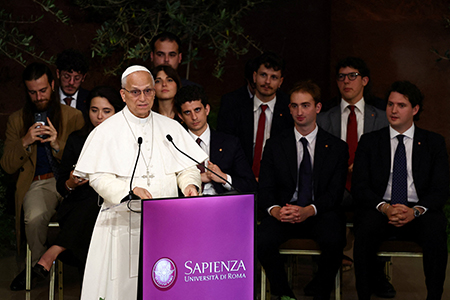
El papa León XIV pronuncia unas palabras durante una visita a la Universidad La Sapienza de Roma el 14 de mayo de 2026. (Foto de OSV News/Guglielmo Mangiapane, Reuters)
El Papa advirtió que “la omnipresencia de los medios digitales” alimenta “una cultura de la inmediatez y la sobreestimulación”, lo que provoca “el cansancio, el aburrimiento y la apatía ante el esfuerzo que supone buscar la verdad”. Sin embargo, subrayó que la educación va en sentido contrario a esa lógica: es un camino largo que requiere paciencia y necesita “tiempo para madurar, una confrontación con la realidad más allá de las apariencias”.
Luke Rowe, profesor e investigador de la Australian Catholic University, dijo que al leer esos pasajes no solo se sintió feliz, sino profundamente “conmovido”.
“Creo que no me había dado cuenta de cuánto necesitaba escuchar estos lineamientos”, comentó a OSV News al referirse a la encíclica. “Y creo que el mundo hoy también los necesita más que nunca”.
“Realmente necesitábamos esta guía”, señaló. Según explicó, lo que más le impactó del texto fue que el Santo Padre subrayara que “la fragilidad humana y nuestras imperfecciones son precisamente lo que nos permite reconocer cuánto necesitamos el amor de Dios”.
En su encíclica, el Papa escribió que, al ofrecer reflexiones sobre el continente digital, espera “ayudar a los fieles laicos y a todas las personas de buena voluntad a redescubrir su responsabilidad de poner en práctica” los principios de la doctrina social de la Iglesia “en la vida cotidiana, en las relaciones familiares, en el trabajo y en su participación en la sociedad”. De ese modo, añadió, podrán dejarse inspirar “por el deseo de encarnar el amor de Dios en las situaciones concretas de la vida”.
El Papa advirtió sobre el peligro de depender demasiado de los sistemas automatizados para el aprendizaje, y señaló que “la rapidez y facilidad con la que hoy se obtienen respuestas o resúmenes pueden terminar apagando el deseo de hacerse preguntas”. Por eso, instó a la sociedad a “proteger a los jóvenes de la promesa de la máquina perfecta, de esa sutil tentación que hace parecer innecesario el pensamiento humano precisamente cuando más se necesita”.
“En un mundo cada vez más dominado por una inteligencia artificial que simplifica y sintetiza todo, se espera que tengamos respuestas inmediatas”, explicó Rowe, cuyas áreas de trabajo e investigación en el campus de Melbourne de ACU incluyen la ciencia del aprendizaje, la enseñanza basada en evidencia y la educación para la salud.
“Hoy todos los textos parecen prolijos y sin errores. Escribimos correos gramaticalmente perfectos gracias a la IA”, comentó. “Tenemos documentos perfectamente estructurados e imágenes perfectas”. Según Rowe, en este “mundo sintético” las imperfecciones humanas están empezando a desaparecer, al menos en la superficie. “Y para mí, una educación de calidad necesita que podamos reconocer nuestras imperfecciones. Leer eso en la encíclica realmente me tocó el corazón”, afirmó.
“Sentí que esas palabras estaban dirigidas directamente a mí”, subrayó Rowe. “Y quise compartir eso con mis estudiantes. Quiero transmitirlo a los educadores que estamos formando… quiero que sepan que está bien ser vulnerables e imperfectos, y que aun así el futuro es esperanzador”.
“Para un algoritmo, el error es algo que hay que corregir; para una persona, puede ser el inicio de un cambio profundo”, escribió el Papa en la encíclica, en una de sus reflexiones sobre la gran diferencia entre la tecnología y la experiencia humana. Al referirse a los desafíos que plantea el avance de la inteligencia artificial, el documento advierte que toda tecnología termina moldeando a quienes la usan. Por eso, subraya que educar sobre el uso de la IA “implica, por tanto, educar para decidir cuándo y para qué no utilizarla”.
“La educación debería ayudar a potenciar y celebrar aquello que hace única a cada persona, y darles a todos una voz propia”, afirmó Rowe a OSV News. Sin embargo, advirtió que “eso se vuelve cada vez más difícil en un mundo donde la IA tiende a homogeneizar a las personas, a darles un guión y a quitarles su propia voz, haciendo que todos terminen sonando parecidos”.
Según explicó, uno de los llamados más fuertes de la encíclica en el ámbito educativo es “ser mucho más cuidadosos con la manera en que usamos esta herramienta, para que ayude a fortalecer la individualidad de cada uno. Aquello que nos hace únicos y especiales debería celebrarse, no quedar reducido a algo uniforme”, agregó.
El profesor australiano también subrayó que, en el ámbito académico, existe el riesgo de caer en una búsqueda desesperada de respuestas en la tecnología, mientras que el Papa ofrece una respuesta profundamente humana a las grandes inquietudes de nuestro tiempo.
“He visto cómo esta tecnología cambia constantemente y cada tres o seis meses aparece algo nuevo que reemplaza a lo anterior. Y eso, para mí, demuestra que necesitamos principios sólidos que nos sirvan de guía y nos den un punto de referencia”, señaló. Según explicó, eso era justamente lo que hacía falta, y por eso considera que la encíclica es “un llamado a la acción muy fuerte”.
El documento también advierte sobre los graves daños psicológicos y sociales que puede provocar una exposición temprana y sin supervisión al mundo digital, afectando el sueño, la capacidad de atención y el control emocional de los jóvenes. Además, alerta sobre los riesgos de explotación en línea, el ciberacoso y la manipulación mediante herramientas de inteligencia artificial.
Al reconocer la enorme presión que enfrentan hoy las familias, el Papa admitió que “a los padres de familia les resulta difícil resistir por sí solos al condicionamiento de modelos de negocio que monetizan la atención y el tiempo”.
Por eso, el Papa llamó a construir una “una alianza entre la política, las instituciones educativas y las familias” que sea capaz de acompañar a los adultos en esta tarea. Según señaló, hacen falta “decisiones públicas de largo alcance” que puedan hacer frente “a los intereses inmediatos de las plataformas -concentradas en pocas manos- cuando estos entran en conflicto con el bien de los menores”.
Kathy Ann Mills, profesora de la Australian Catholic University e investigadora -entre otras áreas- de las prácticas digitales y mediáticas, afirmó que el mundo educativo puede desempeñar “un papel clave en enseñar a niños y jóvenes a usar la tecnología de manera responsable y, como nos recuerda el Papa León XIV, a utilizar la IA como una herramienta valiosa, pero con la debida vigilancia”.
“De manera importante, señala algunos riesgos de la IA que pueden resultar engañosos, como la creación de una falsa sensación de amistad con un sistema, algo que las investigaciones consideran un riesgo cuando las personas desarrollan vínculos emocionales con las máquinas”, explicó en un mensaje escrito a OSV News.
“Los niños también están en pleno desarrollo de su comprensión de la IA y piensan de manera distinta, muchas veces más inmadura, sobre las máquinas con rasgos humanos en comparación con adolescentes mayores y adultos”, escribió. “Por ejemplo, la tendencia a atribuir características humanas a los agentes artificiales, especialmente cuando la IA tiene una personalidad, un rostro, una historia o incluso una forma física como los robots, va cambiando con el tiempo. Este es un ejemplo de cómo docentes y padres cumplen un rol fundamental en acompañar ese proceso de comprensión en los niños”, enfatizó.
El Papa León también aborda en su encíclica la necesidad de que los legisladores intervengan para establecer límites de edad adecuados, exigir responsabilidad a los proveedores de servicios en lugar de trasladar todo “el peso de la limitación” a las familias, y garantizar protecciones específicas “contra toda forma de explotación y violencia sexual en internet”.
Describe a los niños y adolescentes como “bienes preciosos confiados a nuestro cuidado” que necesitan protección, pero también insiste en la importancia de enseñarles “a reconocer las manipulaciones, a defender su propia dignidad y a respetar la de los demás, también en los entornos digitales”.
“Las investigaciones muestran que los sistemas de IA contienen sesgos que deben ser cuestionados”, señaló Mills, citando las palabras del Papa León: “El discernimiento ético no se puede limitar a preguntarse si usamos un determinado sistema para un fin bueno o malo, sino que debe interrogarse también sobre el modo en el que está diseñado y qué idea de persona y de sociedad queda inscrita en los datos y en los modelos que lo guían”.
La escuela, dijo el Papa León, “es el lugar donde las nuevas generaciones pueden aprender a buscar y amar la verdad, a cuestionarse el sentido de la vida y la dignidad de cada persona”, aunque frente a la era digital ese rol parece hoy más debilitado.
“Los niños pequeños ya pueden empezar a desarrollar un sentido de justicia social, aprendiendo a identificar cuándo el contenido digital va en contra del bien común”, señaló Mills. “Pueden darse cuenta de qué voces faltan, qué perspectivas y valores predominan y cuáles quedan silenciados. También pueden empezar a preguntarse quién se beneficia de estas tecnologías”, agregó.
Para las familias y las escuelas, el Papa señaló que hay una “creciente necesidad de una nueva conciencia educativa y la formación en el uso correcto y crítico de las herramientas digitales, la IA y las plataformas de compra e inversión”. En el ámbito universitario, en cambio, “el gran reto de la integración de los conocimientos, formando tanto en la capacidad de conectar y fusionar saberes para interpretar la complejidad, como en las técnicas de verificación de los hechos”.
El pontífice afirmó que la tecnología “puede curar, conectar, educar, cuidar la Casa común; pero también puede dividir, descartar, generar nuevas injusticias”.
En ese marco, el documento plantea que “la organización de la escuela, los espacios, los métodos de evaluación y la propia figura del docente deben replantearse” para promover una educación verdaderamente integral que abarque todas las dimensiones de la persona.
En una carrera bastante desigual entre la educación y la tecnología, el Papa también subraya la necesidad de apoyar a los docentes, y señala que es “necesario favorecer la formación continua de los docentes a lo largo de toda su vida profesional, para que sepan dialogar de manera positiva con las nuevas tecnologías, ayudando a los alumnos a hacer un uso responsable, crítico y creativo de ellas, y a no sufrir pasivamente su influencia”.
Según el Papa León, muchos educadores “perciben ya los signos de una posible deshumanización”, donde las personas “saben muchas cosas” pero, aun así, tener dificultades para encontrar un rumbo en su vida. Esto se debe, en parte, a la incapacidad de conectar la información con un conocimiento más profundo o de mantener un sentido de propósito.
Como respuesta a ello, afirma que “es necesario promover una verdadera higiene de la atención: ritmos que incluyan silencio, estudio reflexivo, lectura, análisis ponderado; sin estos elementos, la libertad interior puede verse comprometida”.
Para Rowe, el énfasis del Papa en el pensamiento crítico es clave.
“Los estudiantes necesitan poder pensar por sí mismos antes de dejar que la tecnología piense por ellos”, dijo a OSV News.
En la era de la inteligencia artificial, “puedes quedarte dormido frente al teclado y despertarte con un soneto de Shakespeare, y creer que eres un gran escritor, aunque en realidad no hayas hecho mucho más que darle una instrucción básica a la IA”, señaló Rowe.
El gran desafío, explicó, es justamente responder a esa dimensión de la dignidad humana “de modo que sigamos valorando el conocimiento y a las personas que lo transmiten”.
“Hay algo casi sagrado en eso, en cómo docentes y estudiantes construyen conocimiento juntos, y creo que ahí está uno de los grandes desafíos de la educación de cara al futuro”, añadió.
El Papa León afirmó que la doctrina social de la Iglesia “invita a las familias, las escuelas, las comunidades cristianas y las instituciones públicas a una alianza educativa renovada”, que él mismo propone en la encíclica.
En el marco de esa alianza, plantea los principios educativos de “educar en la sobriedad y en el sentido de los límites; educar en el reconocimiento del derecho del otro y de quienes vendrán después de nosotros a disfrutar de los bienes que nos han sido dados, o que el ingenio humano pone a nuestra disposición; educar en la libertad y en la responsabilidad; educar en el sentido de la trascendencia y del bien común”.
La escuela, escribió el Papa, “no está llamada a perseguir la velocidad del mundo digital”, sino a “ofrecer aquello que lo digital por sí solo no puede dar: tiempo compartido para aprender y relaciones fiables”.
(Paulina Guzik es editora internacional de OSV News. Sígala en X en @Guzik_Paulina.)
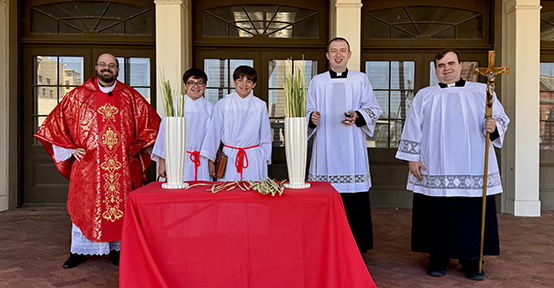
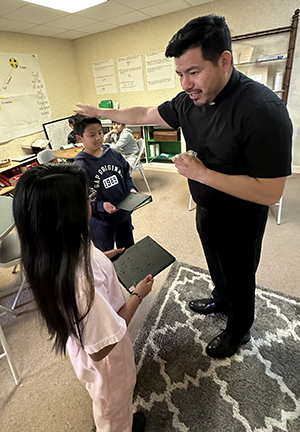
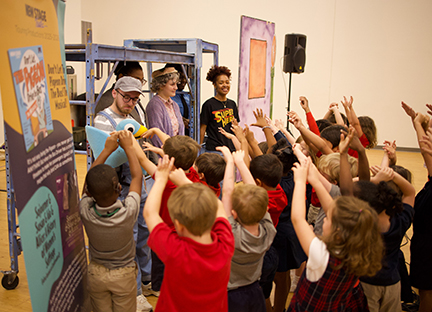
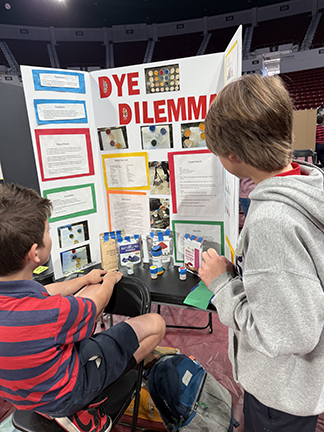
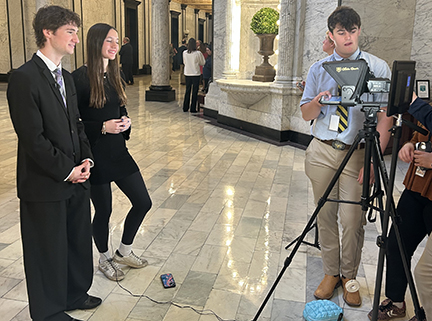
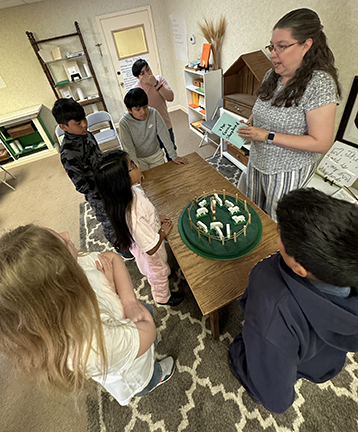
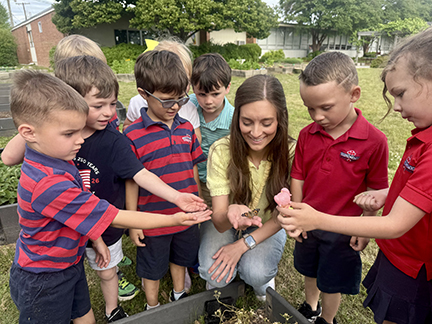
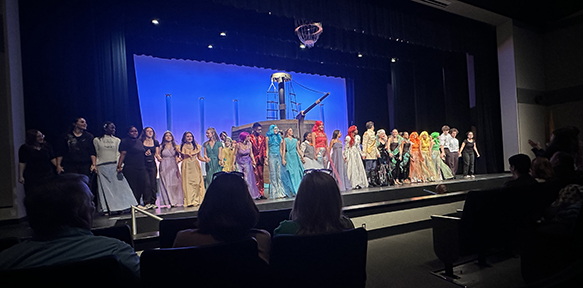
VICKSBURG – Father Rusty Vincent, Ryan Ellis, Reid Ellis, seminarian Josh Statham and Jacob Lott gather outside St. Paul Catholic Church on Palm Sunday. Lott is preparing for ordination as a transitional deacon for the Diocese of Biloxi on June 6. (Photo by Connie Hosemann)PEARL – Father Cesar Sanchez blesses handmade Mass books created by St. Jude Catholic Church Sunday school students Gavin Khong and Bryanna Duarte. (Photo by Tereza Ma)JACKSON – Students at St. Richard Catholic School reach toward the cast of New Stage Theater during a performance of “Don’t Let the Pigeon Drive the Bus! The Musical!” presented for the school community. Kindergarten students closed the event by offering a prayer for the cast.Kindergarten students at St. Richard Catholic School create bird feeders during Earth Day activities on campus. Students used ice cream cups, peanut butter and bird seed at one of several interactive stations offered throughout the day. (Photos by Celeste Saucier)STARKVILLE – Annunciation Catholic School students Elon Balaa and Chris Hince prepare to present their project to judges during a science fair competition. (Photo by April Moore)MADISON – St. Joseph Catholic School students Thierry Freeman, left, and Audrey Young anchor the Feb. 6, 2026, episode of “Bruin News Now” from the Mississippi Capitol as Reid Hager, right, operates the teleprompter. “Bruin News Now,” a weekly student-produced newscast now in its 11th season, recently earned first place in the News Show category of the 2026 Writing, Visual, Multimedia Contest sponsored by the Quill & Scroll International Honor Society for High School Journalists. The Mississippi Scholastic Press Association also named the episode Mississippi’s High School Newscast of the Year, marking the second consecutive year the program received both honors. (Photo by Terry R. Cassreino)PEARL – Christina Overton leads a lesson on “The Lord Is My Shepherd” for Atrium III students on April 26 at St. Jude Catholic Church. (Photo by Tereza Ma)COLUMBUS – PreK students at Annunciation Catholic School release butterflies after watching caterpillars transform through their life cycle. Pictured are Crew Boulet, Jack Everett Milstead, Nathan Monroe-Conway, Rittman Mitchell, teacher Taylor Cabiness, Crew Morgan and Noelle Underwood. (Photo by Jacque Hince)MADISON – Students from St. Joseph Catholic School performed Disney’s “The Little Mermaid” on May 2. The production featured a live orchestra composed of student musicians. (Photo by Tereza Ma)
From the Archives By Mary Woodward These past few weeks, I have been working on our upcoming ordination liturgies. Deacon Will Foggo will be ordained Saturday, May 16 in the Cathedral of St. Peter in Jackson. On July 18, Bishop Kopacz will ordain seven permanent deacons in the Cathedral, as well. Ordinations are beautiful liturgies and I invite you all to come and witness them in person or if you cannot make it in person, pray for these new ordinands.
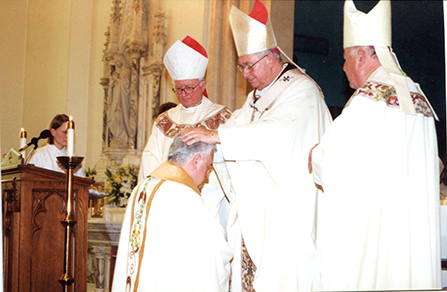
JACKSON – Archbishop Oscar Lipscomb of Mobile lays hands on the head of Bishop Joseph Latino at his ordination on March 7, 2003. (Photo from archives)
Reflecting on May as the traditional month for priestly ordinations, I am rerunning a previous article on our diocesan bishops and the interconnectedness of dioceses in our region. I have updated it with more current information. Our diocese was the 13th diocese established in the United States on July 28, 1837. Nashville and Dubuque were established the same day, but we claim pride of place due to strategic location and age.
We have a unique communion with three venerable and historic archdiocesan sees – Baltimore, the primal see of the U.S.; New Orleans, our first metropolitan provincial see; and Mobile, our metropolitan see, where Mass was first celebrated in 1703.
Bishop John Joseph Chanche (1) and Bishop William Henry Elder (3) are natives and products of Baltimore both being ordained bishops in Assumption Cathedral there in 1841 and 1857. Bishop James Oliver Van de Velde (2) was ordained a priest in Baltimore in 1827.
In 1852, Bishop Chanche ordained Francis Xavier Leray a priest in Natchez. Leray went on to become Archbishop of New Orleans in 1883. Bishop Elder, in 1859, was co-consecrator of John Quinlan, second bishop of Mobile, and Dominic Manucy in 1874, who went on to become third bishop of Mobile.
Bishop Francis Janssens (4) was elevated to Archbishop of New Orleans in 1888 and was principal consecrator of Bishop Thomas Heslin (5) in St. Louis Cathedral in New Orleans in 1889. Prior to being elevated to bishop, Bishop Heslin was ordained a priest in the Cathedral Basilica of the Immaculate Conception in Mobile by Bishop John Quinlan in 1869.
Bishop Quinlan added the portico to the Mobile cathedral and is buried under it instead of in the crypt chapel. He will be able to see his portico again on the day of the resurrection of the dead when his tomb is opened.
In 1890, Bishop John Edward Gunn (6) was ordained a priest in Rome by the Latin Patriarch of Constantinople, which has nothing to do with the current thread, but I thought it was an interesting fact. In 1911, Bishop Gunn was ordained a bishop in Atlanta in Sacred Heart Church, which he built. Two of his three consecrating bishops were Archbishop James Hubert Blenk, Archbishop of New Orleans and fellow Marist, and Bishop Edward Allen of Mobile.
Bishop Richard Oliver Gerow (7) was born and raised in Mobile being baptized, confirmed, and in 1924 ordained a bishop in the Cathedral there by Bishop Allen. In 1927, Bishop Gerow was a co-consecrator of Archbishop Thomas Joseph Toolen of Mobile. Thirty years later, Bishop Gerow was principal consecrator of Vicksburg native, Joseph Bernard Brunini (8) in our Cathedral of Saint Peter the Apostle in Jackson. It was a co-cathedral then.
Bishop Brunini was a co-consecrator Bishop Joseph Lawson Howze as auxiliary of Jackson in 1973. Bishop Howze was a native of the Mobile area in Daphne and went on to become the first bishop of Biloxi when it was established in 1977.
Bishop William Russell Houck (9), a native of Mobile, was ordained a priest in the Mobile Cathedral in 1951. Another interesting aside, Bishop Houck was ordained a Bishop on May 27, 1979, in Rome by St. Pope John Paul II in a group of 27 bishops ordained that day.
New Orleans native, Bishop Joseph Nunzio Latino (10) was ordained a priest in St. Louis Cathedral in New Orleans by Archbishop John Cody in 1963. Forty years later, he was ordained a bishop in our cathedral by Archbishop Oscar H. Lipscomb of Mobile. Bishop Houck served as a co-consecrator.
Bishop Joseph Richard Kopacz (11) was ordained a bishop in our cathedral in 2014 by Archbishop Thomas J. Rodi, archbishop emeritus of Mobile and native of New Orleans. Bishop Latino served as co-consecrator.
ROME – Bishop Joseph Latino, Archbishop Thomas Rodi, and Bishop William Houck pose for a photo at the North American College’s reception for new archbishops following the Pallium Mass on June 29, 2008, in Rome. Bishops Latino and Houck travelled to Rome in support of Archbishop Rodi receiving his pallium from Pope Benedict XVI. (Photo by Mary Woodward)
Archbishop Mark S. Rivituso, our new metropolitan of Mobile, barring any unforeseen circumstances, will be ordaining and installing our next bishop (12) – whenever that time comes. Archbishop Rivituso, a native of St. Louis, was ordained a priest by Archbishop John May, who for a time served as bishop of Mobile (1969-80).
Well, that was a whirlwind of trails and tributaries surrounding the episcopal lineage of our region that gives a glimpse of the extraordinary interconnectedness of our bishops and dioceses. Even more, it is a microcosm of apostolic succession.
All this revelation of Catholic chronicles springs forth from memories of ordinations past inspired by the month of May. Pray for our clergy and think about coming to one of the upcoming celebrations.
(Mary Woodward is Chancellor and Archivist for the Diocese of Jackson.)
By Joe Lee JACKSON – Originally from Joliet, Illinois, and the parish priest at St. Isaac Jogues Church in nearby Hinsdale, Father Burke Masters almost seems like a native Mississippian despite living most of his life near Chicago.
Even casual sports fans remember his starring role on the 1990 Mississippi State baseball team that made the College World Series, and many people across the state have met him through his keynote appearances at Journey of Hope luncheons in 2019 and 2025.
“Since college, Mississippi has always been like a second home,” said Masters, who was ordained as a priest in 2002 and authored A Grand Slam for God, published in 2023 by Word on Fire Press. “I grew up in Illinois but spent five years in Starkville. Coming back to see friends I’ve known since I arrived there in 1985 is like a home week for me.”
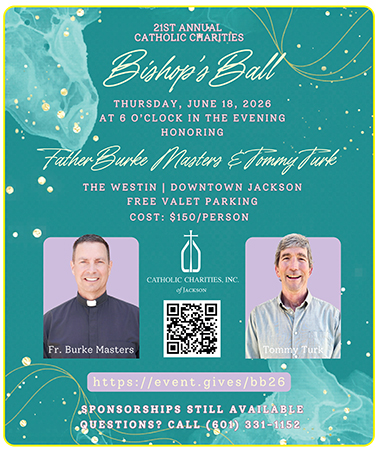
Masters will be honored at the 21st annual Bishop’s Ball on Thursday, June 18 at the Westin in Downtown Jackson. Also honored will be Jacksonian Tommy Turk, whose “Friends for a Cause” nonprofit supports Squat & Gobble each Thanksgiving, a beloved event that helps fund the Catholic Charities domestic violence program. “The Bishop’s Ball gives us a chance to honor the support of the bishop each year, as well as others who have contributed significantly to Catholic Charities,” said executive director Christina Bach. “As one of our major fundraisers, it provides the necessary funds to support Born Free/New Beginnings, a substance use recovery program for pregnant or parenting women in order to keep families together and help babies enter the world free of drugs.”
Other programs support victims of sexual assault, and counseling services are available for families with children experiencing behavioral issues. Catholic Charities of Jackson’s efforts reach 65 of Mississippi’s 82 counties.
“Our honorees have been very committed to Catholic Charities for a long time,” Bishop Joseph Kopacz said. “Tommy Turk has directed a generous amount of the proceeds from community fundraisers to Catholic Charities, raising money and awareness in the process.
“Father Burke has traveled to our diocese on separate occasions to evangelize and to raise money out of love for the work of Catholic Charities and the people of Mississippi. It is a blessing to honor these men of God.”
Masters will also receive a Knights of Columbus award from Cameron Ellis and Luke McClure from the regional KC insurance office that serves Alabama and Mississippi.
“Catholic Charities does so much for the poor,” Masters said. “In Matthew 25, Jesus teaches that ‘whatever you did for the least of my brothers and sisters, you did for me.’ That’s the call for all of us to share the good news God has given to us, and Catholic Charities is on the front lines all over the world and certainly in Jackson.”
“It is often said that Catholic social teaching is the best kept secret in our Church,” Kopacz said. “This is certainly true for many in our diocese regarding Catholic Charities, whose programs serve those in need throughout our state. Come out and enjoy the evening and support the mission to be a visible sign of Christ’s love.”
(Visit https://event.gives/bb26 to purchase tickets to the Bishop’s Ball or to sponsor the event.)
By Joanna King JACKSON – A new diocesan initiative focused on strengthening lay leadership and faith formation across the Diocese of Jackson is taking shape through the newly established Bishop William R. Houck Center for Lay Formation, an effort church leaders say grew directly out of listening sessions held during the diocesan Pastoral Reimagining process.
Led by the diocesan Office of Faith Formation under the direction of Fran Lavelle, the center is designed to provide accessible formation and ministry training opportunities for parish and school leaders, catechists, youth ministers and other lay leaders throughout the diocese.
The Bishop William R. Houck Center for Lay Formation webpage serves as a new diocesan resource for faith formation, leadership training and ministry support for lay leaders across the Diocese of Jackson. The online hub includes formation opportunities, ministry resources and training programs offered in both English and Spanish. (Photo illustration by Joanna King)
“The absolute best part of my ministry is working with people,” Lavelle said. “The second-best part of my job is looking at ways to better serve our parishes and schools, especially concerning faith formation.” Lavelle said the idea for the center emerged after parish and deanery listening sessions identified the need for stronger lay leadership formation.
“Better formation for lay leaders was one of the clarion calls from both individual parishes and the deaneries,” she said. “When you ask people how the Church can better serve them, it is important to act on what you hear.”
An advisory committee formed in late 2024 began reimagining how the diocese could support lay ministry and leadership development. That process ultimately led to the creation of the Bishop William R. Houck Center for Lay Formation.
The center is named in honor of former Bishop William R. Houck, who served the Diocese of Jackson from 1984 to 2003 and was widely recognized for his commitment to Catholic education, evangelization and lay ministry. During his tenure, Houck served as chairman of the U.S. Bishops’ Committee on Evangelization, which published the landmark 1992 document, Go and Make Disciples: A National Plan and Strategy for Catholic Evangelization in the United States. The document, still used today, continues to encourage Catholics to embrace the mission of discipleship.
“Bishop Houck was an esteemed educator and a devoted advocate for lay ministry,” Lavelle said. “His vision and voice laid the foundation for lay leadership training in the Diocese. It is our hope to expand his vision to provide high-quality formation and training at every parish, mission and school.”
According to the center’s website, its mission is “to provide lay leaders in the Diocese of Jackson training and formation with emphasis in catechetical, pastoral and ecclesial applications.”
The initiative is built around three foundational pillars: education, evangelization and the development of well-formed lay leaders. The website notes that ongoing formation in Scripture and Catholic teaching helps disciples live out their call, while strong parish communities depend on prepared leaders who can serve with “knowledge, confidence and compassion.”
Unlike a traditional diocesan institute, the Houck Center is not housed in a physical building. Instead, it operates as an online resource hub hosted through the diocesan website. Participants can access diocesan workshops, online courses, ministry resources and leadership development opportunities in a variety of ministry areas.
“We really wanted something accessible to people no matter where they live in the diocese,” Lavelle said. “This is about meeting parish leaders where they are and helping them continue to grow in confidence and faith.”
Current areas of formation include campus ministry, catechist training, family ministry, intercultural ministry, liturgy, OCIA, prison ministry, youth ministry and young adult ministry, along with leadership training opportunities for pastoral councils and parish ministry teams.
One of the center’s first major initiatives is a redesigned Pastoral Ministries Workshop, a longtime diocesan leadership program that has now been restructured to better accommodate busy parish volunteers and ministry leaders. Previously offered as a four-year program requiring participants to attend a weeklong summer session each year, the workshop has been reformatted into a more flexible intensive weekend model.
“The length of time to complete the old program, along with the difficulty many volunteers had getting away for an entire week, made us realize we needed a more accessible format,” Lavelle said. “We wanted to preserve the richness of the formation while making it realistic for people serving in parish ministry.” The new two-year program consists of six four-hour sessions focused on prayer, theology, pastoral leadership and practical ministry skills. Courses will be offered concurrently in English and Spanish, reflecting the diversity of the diocese and the center’s emphasis on broad accessibility.
This year’s workshop topics include the foundations of Catholic pastoral ministry, pastoral identity and spirituality, and communication and relationship-building in ministry. Participants will explore themes such as servant leadership, intercultural communication, conflict transformation and spiritual practices that sustain ministry.
Lavelle said the workshop is intended not only for new ministers and catechists, but also for experienced parish leaders seeking renewed formation and support.
“Our primary goal is to provide a foundation in Catholic pastoral ministry through prayer, theology, practical skills and reflection,” she said.
This year’s workshop will be held July 31-Aug. 2 at Eagle Ridge Conference Center in Raymond. Registration is open through July 10. More information about the Bishop William R. Houck Center for Lay Formation can be found at jacksondiocese.org/bishop-houck-center-for-lay-formation.
By Bishop Joseph R. Kopacz, D.D. During the heart of the Easter season, I celebrated my 49th anniversary of priesthood. From the sanctuary of St. Peter’s Cathedral in Scranton on May 7, 1977, to the sanctuary of St. Peter the Apostle in Jackson on Feb. 6, 2014, until this present moment, I have been caught up, in the words of Pope St. John Paul II, in this “gift and mystery” of the priesthood of Jesus Christ.
Actually, my first celebration of ordination occurred on April 23, 1976, with the call to the diaconate. Therefore, for more than 50 years, by God’s grace, I have fought the good fight and kept the faith, but have not yet finished the race. May there be many more years ahead in the plan of God’s providence.
Indeed, let us give thanks for all of our priests, past and present, mindful of those who are celebrating their anniversaries at this time of year. Ad multos annos!
The Diocese of Jackson rejoices this weekend with the ordination to the priesthood of Will Foggo who will celebrate his first Mass at St. Paul in Flowood.
During the Easter season, the Church also rejoices in the outpouring of the Holy Spirit in the Sacrament of Confirmation. Our catechumens and candidates entering the Church at the Easter Vigil were the first to receive the gift of God’s loving spirit, followed by candidates in many parishes throughout the diocese. In fact, a bishop’s travels throughout his diocese in the Easter season mirror the missionary journeys portrayed in the Acts of the Apostles, when the apostles and the first evangelists traversed far and wide to carry the Gospel across the Mediterranean world and strengthen fledging Christian communities. The proclamation of the Gospel to the nations and the sanctification of existing communities and individual believers is the work of the Holy Spirit, begun at Pentecost and continuing until Christ comes again.
With Pentecost on the horizon, let there be a rising tide within us to entreat an outpouring of the Holy Spirit upon the Church. May we also know and understand the power of the Holy Spirit’s presence and the poverty of his absence. We are invited, therefore, to deepen our relationship with the Holy Spirit, both in prayer and in everyday life, listening to his voice within us.
“The Holy Spirit, breath of Jesus and atmosphere of heaven, is also the breath of his body, the Church. And we are aware of his presence if the Church is itself in the full sense; that is, if it is kingdom of God, heaven come down on earth, because of unity. We are reminded that without the Holy Spirit, God is distant, Christ remains in the past, the Gospel is a dead letter, the Church is a mere organization, and ‘mission’ is mere propaganda. But being in the Holy Spirit, the cosmos is lifted up and groans in the gestation of the kingdom of God, the risen Christ is present, the Gospel is the power of life, the Church signifies trinitarian communion and ‘mission’ is a Pentecost.” (Chiara Lubich, Essential Writings)
“Come, Holy Spirit, fill the hearts of your faithful and kindle in them the fire of your love.”