JACKSON – The month of September in Mississippi normally brings to mind football and a little bit of a cooler breeze coming through. September also is an active part of the hurricane season. We have started this September off with Ida and Nicholas. So far, we have been more fortunate than our Louisiana neighbors.
Archives and hurricanes are not generally talked about in the same sentences unless you are involved in archival work and are located in hurricane prone areas. Archivists throughout the Gulf Coast region have disaster preparedness and disaster recovery plans in place to help alleviate the damage wind and water can cause to artifacts and manuscripts.
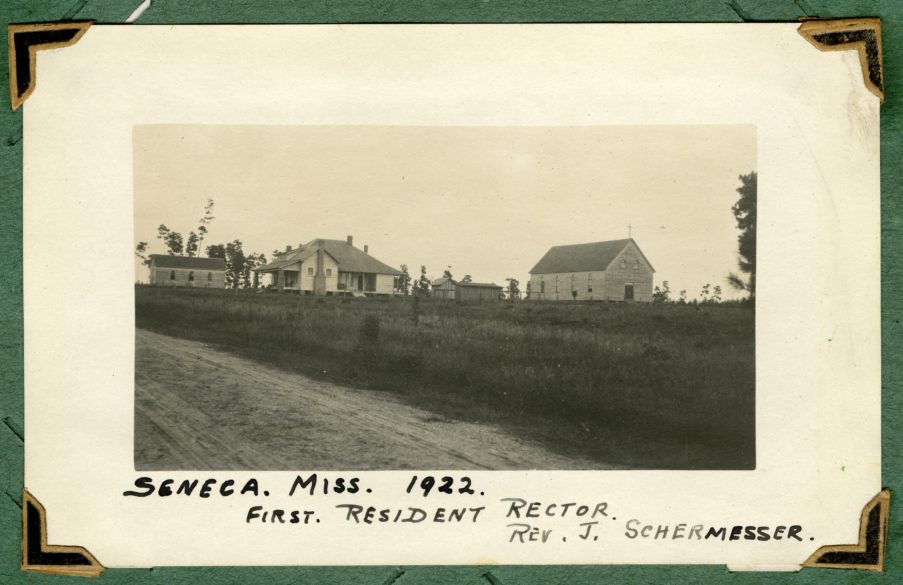
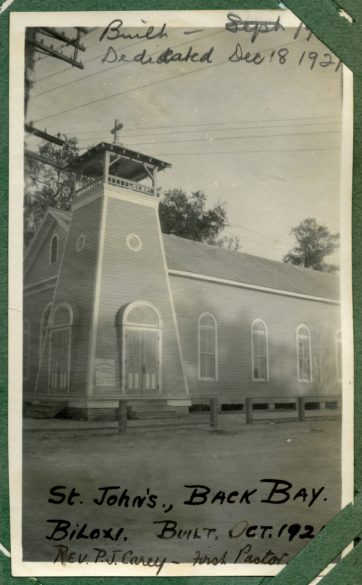
In our diocesan archives, we often get requests from parishes in the Biloxi diocese for photos of their original churches. Many of those churches built in the early 1900s did not survive the years. Some were lost to fire and age, others to population shifts and neglect, but many were lost to hurricanes. These storms bring with them swells of water, triple digit winds and torrential rains.
Hurricane Camille came barreling ashore in 1969 and left a path of destruction not seen in modern times. Camille became the benchmark for destruction along the Gulf Coast until 16 years ago when Katrina removed most everything south of I-10 in the Biloxi diocese.
While the world focused on the terrible flooding in New Orleans caused by the backside of Katrina, the people of the Gulf Coast were trying to dig themselves out from under miles of debris. For the Diocese of Biloxi, which encompasses the 17 counties closest to the Gulf, nearly every church property sustained severe damage. Some were completely destroyed.
Imagine St. Clare Church in Waveland. When Katrina came ashore with a 30-foot swell of water, St. Clare’s front door stood at normal sea level, 100 feet from the water. Needless to say, there was nothing left but the front steps of the church and the slab of the school. St. Michael’s seashell roof in Biloxi looked fine from the air, but the main altar which weighed several tons was tossed off to the side and the pews were sucked out to sea.
After concerns about the safety of people, a Catholic diocesan archivist starts to think about sacramental registers, photographs and sacred vessels. Many of these items were lost.
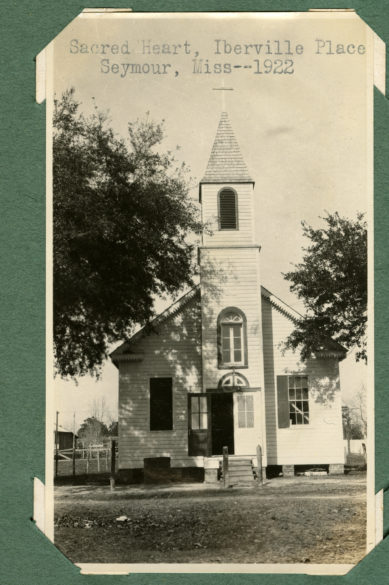
Just recently Sacred Heart in d’Iberville called because they will be celebrating their 100th anniversary next year and were hoping we had some photos of the original church. Fortunately, we were able to provide them with a couple of photos. They had never seen what the original church looked like.
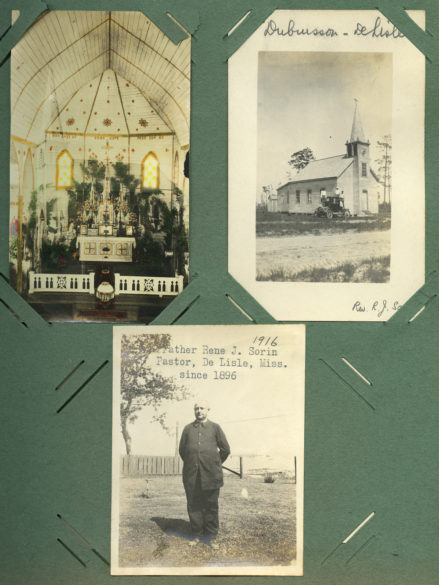
This week in a tribute to our neighbors on the Gulf Coast, we are sharing some images from Bishop John Gunn’s photo scrapbook. The photos or postcards range from 1915-1923 and give us a glimpse of churches during that time. Sacred Heart in d’Iberville (then Seymour) is among them.
As you look at them, offer a prayer to St. Medardus, patron of weather, to protect us all from storms. Amen.
(Mary Woodward is Chancellor and Archivist for the Diocese of Jackson)
Photos from Bishop John Edward Gunn’s photo scrapbook share a glimpse of churches between 1915-1923 along the Gulf Coast, in the present day Diocese of Biloxi. Many churches along the Gulf Coast have been lost to the destruction of hurricanes over the years, as swells of water, triple digit winds and torrential rains pummel and destroy these historic places. (Photos courtesy of archives)
JACKSON – On or about July 16, 2021, Assistant United States Attorney Scott Leary presented to Judge Sharion Aycock a motion for dismissal with prejudice of the Deferred Prosecution Agreement between the Diocese of Jackson and the United States Attorney General ‘s Office. The charges dismissed stemmed from the actions of a former priest of the diocese, Rev. Lenin Vargas. Judge Aycock signed the order granting the motion on Aug. 13, 2021, bringing to close almost three years of investigation and cooperation between the diocese and the government. As a result of the investigation, neither the diocese nor any diocesan chancery personnel were convicted or pleaded guilty to any charges of wrongdoing and no fines were levied against the diocese.
Over these past 30 months, the diocese has created a compliance program that reflects a commitment by the diocese to uphold the highest standards, best practices, and sound management techniques in the areas of diocesan and parish finances, ethical behavior of clergy and church personnel, and improved, transparent communications between the diocese, parish leadership and parishioners. A diocesan compliance committee was established and gave much insight and input into the development of the program.
The diocese regrets the following measures and programs were not in place three years ago. We are confident if they had been in place, we would have been more effective in dealing with the complaints made about Rev. Vargas.
This process of improving diocesan structures began in October 2018 with the appointment of Rev. Lincoln Dall as interim finance officer for the diocese by Bishop Joseph R. Kopacz. Rev. Dall was tasked with working with Carolyn Callahan, diocesan controller, to bring diocesan financial policies, protocols, and practices more clearly in line with Generally Accepted Accounting Principles (GAAP) and the USCCB’s Diocesan Financial Management, Guide to Best Practices.
With the commencement of the Federal Investigation in November 2018, of Vargas, at that time pastor of St. Joseph Parish in Starkville, and reports of his misappropriation of parishioners’ donations, the diocesan finance office cooperated with the investigation in order to facilitate reconciliation of parishioners with their funds and restoration of trust between the diocese, the parish and parishioners.
Throughout the past three years, leadership at the diocese has stabilized with Dall being appointed Vicar General and Callahan being named director of temporal affairs. Working with the diocesan Chancellor, Mary Woodward and Bishop Kopacz, the team has strengthened previous procedures that left the diocese vulnerable to potential mismanagement. Sound accounting practices and procedures have been implemented and an official human resources office has been developed.
The Office of Temporal Affairs, along with full review and approval by the Bishop and Vicar General, has created a Parish Finance Best Practices Guide, a detailed internal control questionnaire required annually, and a routine internal audit program that involves pastors, parish councils, finance councils and bookkeepers to help maintain solid fiscal management. Regional training and information sessions on these tools will be provided at least annually by the temporal affairs office.
To facilitate reports of fraud or unethical behavior being handled independently and objectively, the diocese engaged Lighthouse, a third-party reporting service and database. The diocese welcomes all to report, either anonymously or named, this type of behavior by visiting www.lighthouse-services.com/jacksondiocese or by calling 888-830-004 (English) or 800-216-1288 (Spanish).
To further address possible exploitation of vulnerable adults by clergy and church personnel, Bishop Kopacz established an Ethical Conduct Board in August 2019, to review cases involving possible manipulation or abuse of adults. The board defined a vulnerable adult in this manner: A vulnerable adult is any person 18 years of age or older who is unable to protect his or her own rights, interests, and/or vital concerns and who cannot seek help without assistance because of a physical, mental, or emotional impairment; and any person capable of being physically or emotionally damaged by another person in a position of power. Exploitation or abuse of any adult by clergy or church personnel by means of spiritual, emotional, sexual, mental, physical abuse or manipulation is extremely egregious.
One realization made as part of the transition and the federal investigation was communication between the chancery office and parishes could be improved significantly. To facilitate this, Bishop Kopacz mandated the use of Flocknote as a standard tool to be used for official communication between the diocesan offices and parishes and parishioners. Protocols for better monitoring of diocesan communications through the diocesan newspaper, social media and websites have been developed.
The diocese thanks members of the compliance committee for assisting in helping to strengthen diocesan structures and protocols. Also, the diocese appreciates the work of the U.S. Attorney, Scott Leary, and our diocesan counsel, Steve Carmody, in guiding it through the legal structures involved.
“The past few years have been a period of growth and enlightenment for the diocese,” said Bishop Kopacz. “Because of the hard work of all involved, we know we are in a better place than we were three years ago. We continue to keep in prayer those who were adversely affected by the actions of Rev. Vargas. We look forward to a time when forgiveness and reconciliation will be ardently achieved, though we know some wounds still run deep and need time to heal.” Bishop Kopacz reiterated, “The Diocese of Jackson is committed to maintaining a culture of transparency, professionalism, and savviness that is inherently tempered with justice, mercy, and compassion that comes from the Father through his Son, Jesus.”
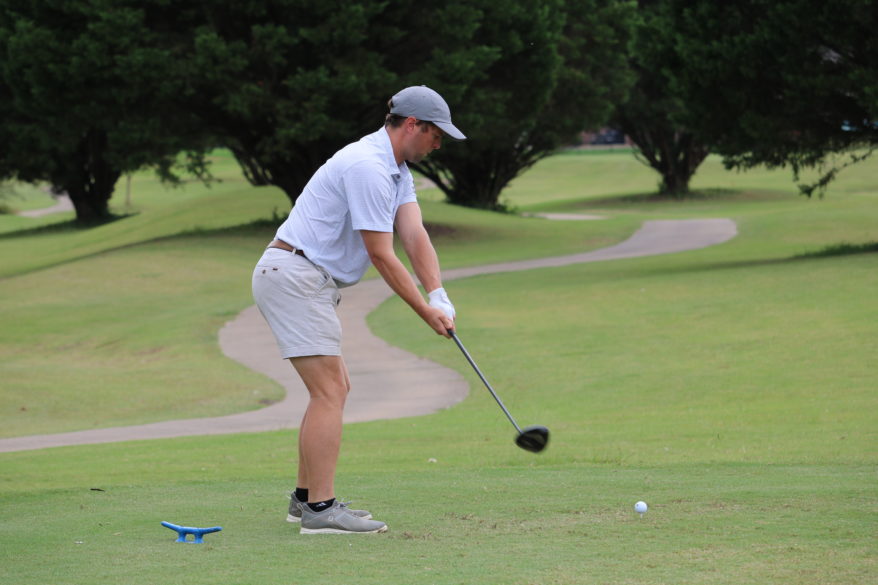
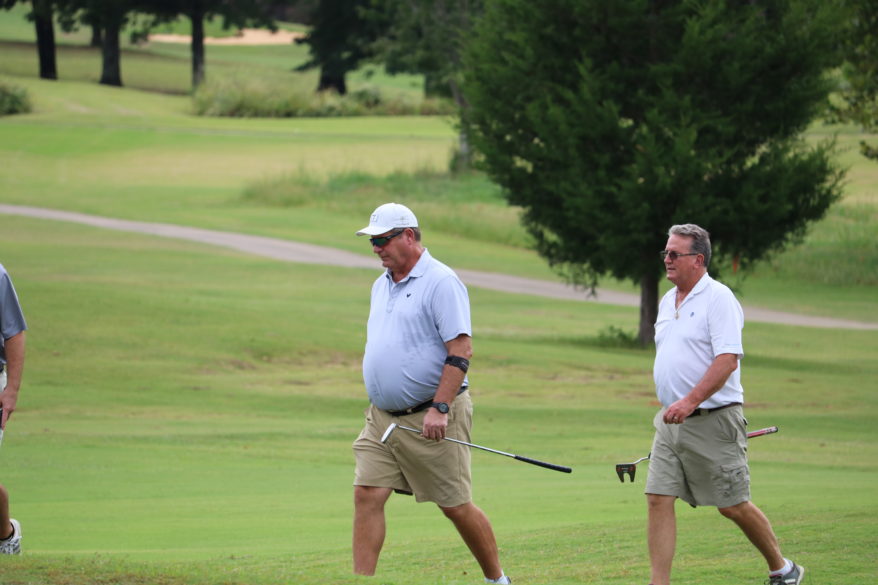
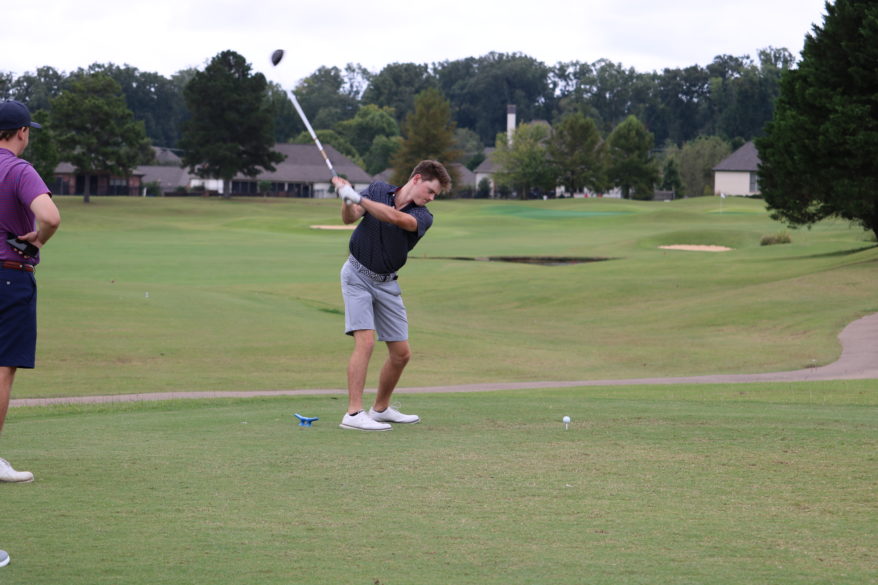
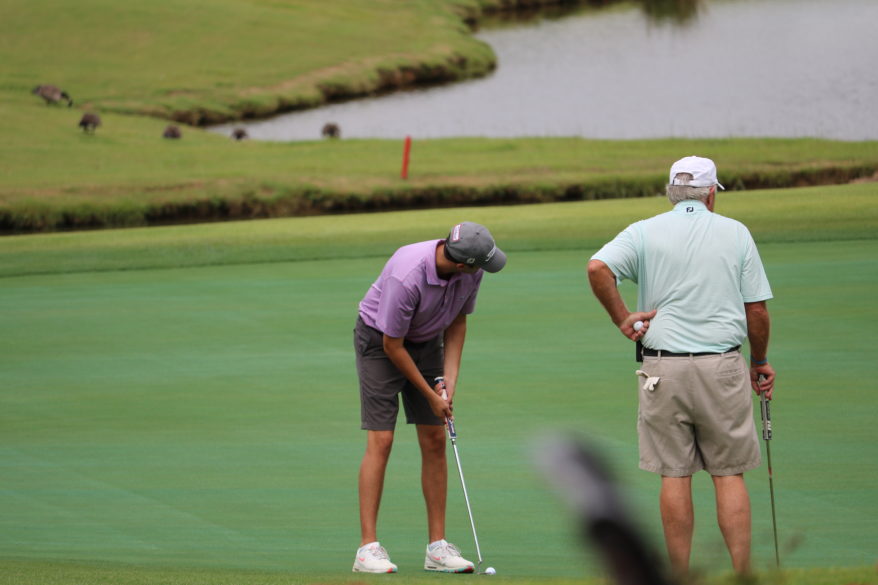
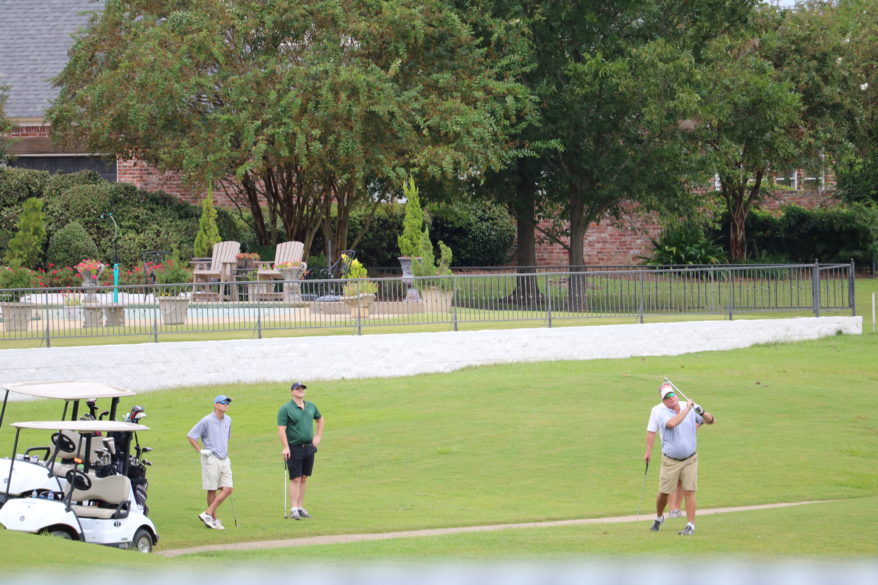
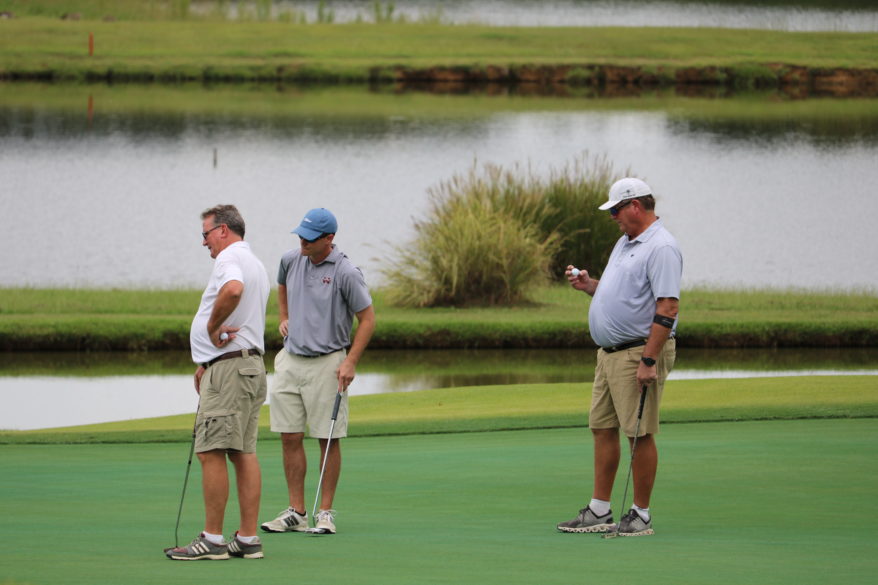
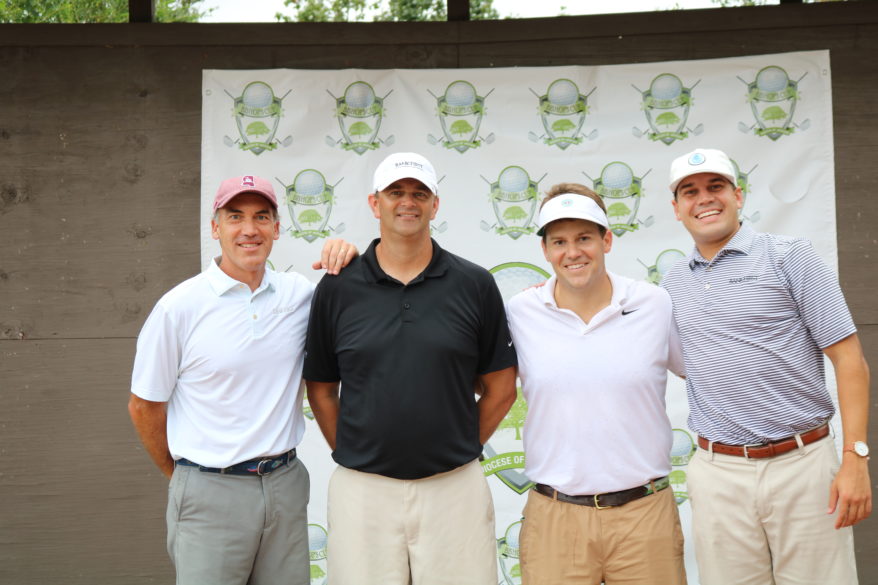
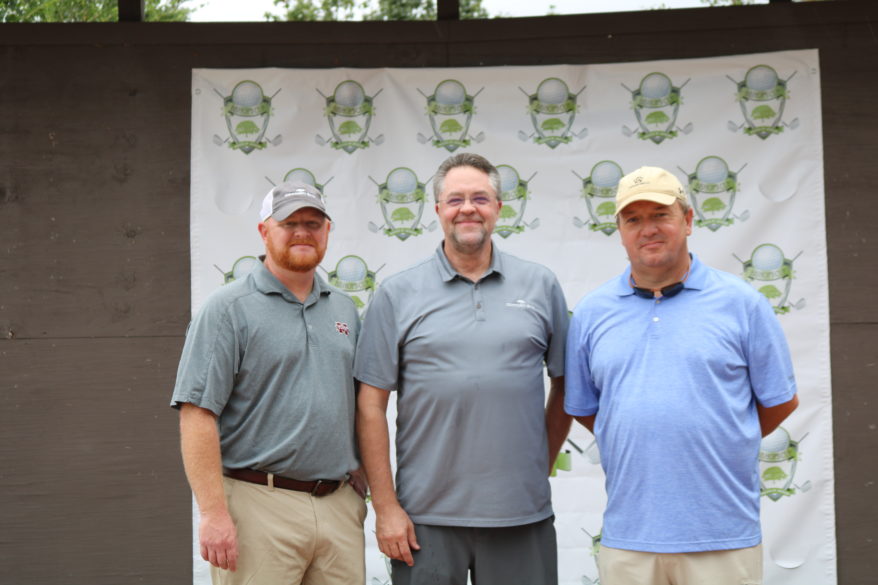
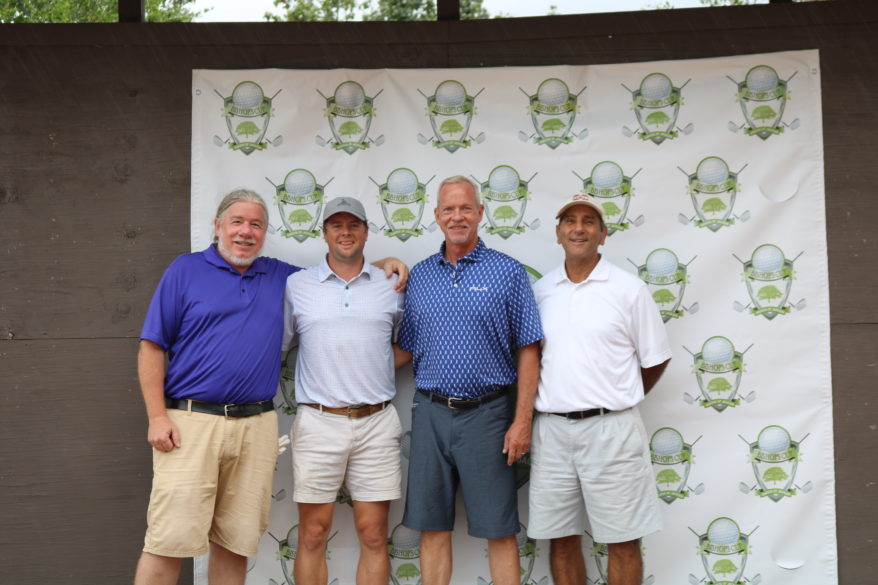
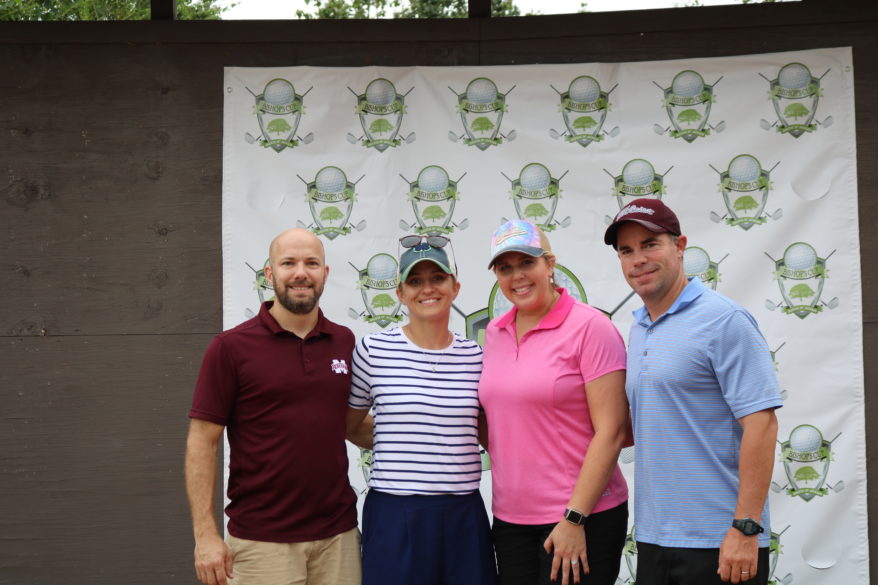
By Joanna Puddister King JACKSON – Twenty-two teams from across the diocese vying for the coveted Bishop’s Cup trophy met at the Lake Caroline Golf Club in Madison on Thursday, Sept. 16 for the 39th annual Bishop’s Cup golf tournament.
After a day of golf, teams gathered for an awards dinner and silent auction at the Mermaid Café. “Though we believe all of our golfers are of first place quality. I was happy to announce that the winning team was sponsored by BankFirst and represented by Annunciation Catholic Church in Columbus,” said Rebecca Harris, executive director of The Catholic Foundation. “We truly appreciate all the silent auction sponsors that also helped raise funds for a wonderful cause and brought some extra competition to the event at the close of the tournament.”
The wonderful cause Harris mentions refers to the Bishop Joseph N. Latino Memorial Trust. This year proceeds from the tournament helped raise funds for the trust, which will help fund grant projects proposed by parishes, schools and organizations around the diocese. “Bishop Latino believed in helping others and he would be excited to know that many projects across the diocese will be supported each year with this grant,” said Harris.
The 39th annual Bishop’s Cup was sponsored by: St. Dominic Health Services, Inc.; Brunini, Grantham, Grower & Hewes, PLLC; Citizens National Bank; Rusty and Yvonne Haydel; BankFirst; Capital Glass; BankPlus; Homeland Title; Community Bank; Irene Jones; Ken and Maetta Lefoldt; Matthews Cutrer & Lindsay, CPAs; Mike and Diane Pumphrey; Raymond James; Regions Bank; Tico’s Steak House; Trustmark National Bank; Benchmark Construction; Friends of Father Patrick Noonan; Old River Companies; and Chris and Laura Walters.
“On behalf of The Catholic Foundation, I would like to thank all of our golf tournament sponsors for helping to make the day such a huge success. We invite all to join us in 2022 to celebrate the 40th annual Bishop’s Cup,” said Harris.
MADISON – Father Gerry Hurley and the team from St. Paul Flowood compete at the 39th Bishop’s Cup at Lake Caroline. (Photo by Brandi Fournet)
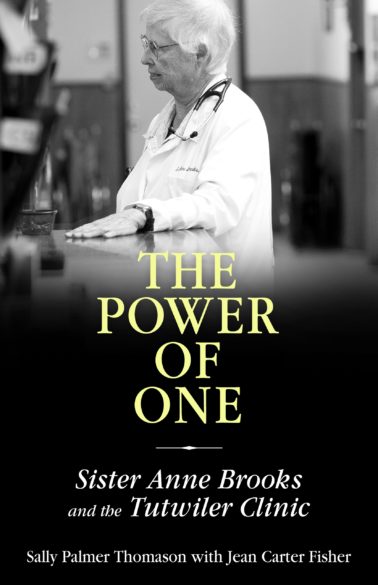
By Joe Lee MADISON – A book you may have missed during the pandemic is the excellent biography of Sister Anne Brooks, The Power of One (University Press of Mississippi, 2020). Penned by Sally Palmer Thomason and Jean Carter Fisher, this brief but powerful read dives deep into the culturally transforming work a devoted Catholic nun did for the people of poverty-stricken Tallahatchie County, Mississippi, for over three decades.
This is the book cover of The Power of One: Sister Anne Brooks and the Tutwiler Clinic by Sally Palmer Thomason with Jean Carter Fisher. The book is reviewed by Joe Lee. (Photo courtesy of publisher)
That’s merely part of the story, however. Raised in Maryland by a high-ranking naval officer and an emotionally distant, alcoholic mother, Sister Anne (Kitty, growing up) learned early on that her parents wanted nothing to do with organized religion and even preferred their daughter not associate with neighborhood kids, let alone cultivate friendships.
So how did this young woman, after growing up in such an environment, develop such a deep, abiding faith? What empowered her to thoroughly immerse herself in serving the least among us in places so far from home?
As Sister Anne is still quick to point out, the kindness of people in her formative years can’t be overstated. The family of practicing Catholics across the street in Maryland – with a daughter to whom Kitty discreetly became close – were instrumental in her decision to devote herself to a life of service.
As a young adult, while teaching at a Catholic school and volunteering at a free medical clinic in Clearwater, Florida, Sister Anne was plagued with pain from rheumatoid arthritis. Not surprisingly, she was skeptical upon meeting a doctor who took a holistic approach to medical treatment and insisted he could cure her. But as Sister Anne would come to realize – and apply to her ministry the rest of her life – the holistic approach was very much about building trust.
The death of Emmett Till and the subsequent trial of those accused of his murder, which took place while Kitty Brooks was in high school, was a great motivation for her to serve in Tutwiler, Mississippi (just minutes from where the horrific crime occurred) once the opportunity presented itself in 1983. After relocating and seeing for herself the once-prosperous railroad town dying a slow, torturous death while its mostly black, largely uneducated population lived in squalor, she prayed long and hard for guidance.
The answer she received: it was time to go to medical school. At age forty.
Sister Anne Brooks eventually became Dr. Anne Brooks, DO (Doctor of Osteopathy), and spent more than three decades healing and building trust in black citizens who, when she arrived, still wouldn’t look white people in the eye. As she says, treating the whole person – the heart of the holistic medical approach – absolutely requires listening and earning one’s trust.
Now retired and living with her fellow sisters at St. Joseph’s Provincial House in Latham, New York, Sister Anne Brooks has a story that needs to be heard not just by Catholics, but most everyone in these trying times. Highly recommended.
(Joe Lee is the Editor-in-Chief of Dogwood Press, a small but traditional publishing house headquartered in central Mississippi. He is a regular contributor to Mississippi Catholic.)
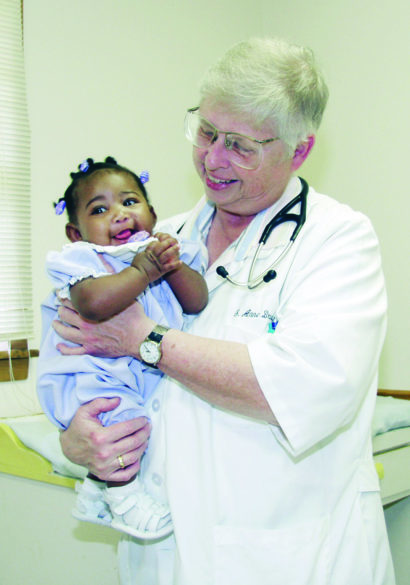
Sister Anne Brooks, an osteopathic physician, holds a child at the Tutwiler Clinic in Tutwiler, Miss. With help from Catholic Extension she was able to open the facility 20 years ago to provide care to a community that had been lacking a doctor for many years. She is a member of the Sisters of the Holy Names of Jesus and Mary. (CNS photo by Troy Catchings for Catholic Extension) (June 6, 2003)
From the Archives By Mary Woodward JACKSON – Rev. John Edward Gunn, a Marist priest and native of County Tyrone, Ireland, was appointed the sixth Bishop of Natchez by Pope Pius X in 1911. He was ordained a bishop at Sacred Heart Church in Atlanta where he was serving at the time on August 29 of that year.
Bishop Gunn was known as a brilliant orator and for having tremendous energy. He cultivated the diocese’s relationship with Catholic Extension to help in the building of chapels throughout the state. By the time of his death in 1924, almost every Catholic in Mississippi was able to reach one of these chapels for Mass at least once a month. Catholic churches grew from 75 to 149 during his administration, and Catholics grew in number from 17,000 to more than 31,000.
He also helped found St. Augustine Seminary with the Society of the Divine Word in Greenville for the formation of African American clergy in 1923. The seminary later moved to Bay St. Louis.
It is rumored that Bishop Gunn preferred Pass Christian to Natchez and had hoped to move the diocesan offices there.
Bishop Gunn’s 13 years of service to the Diocese were marked by the difficult four years of the first World War and the ravages of Spanish influenza.
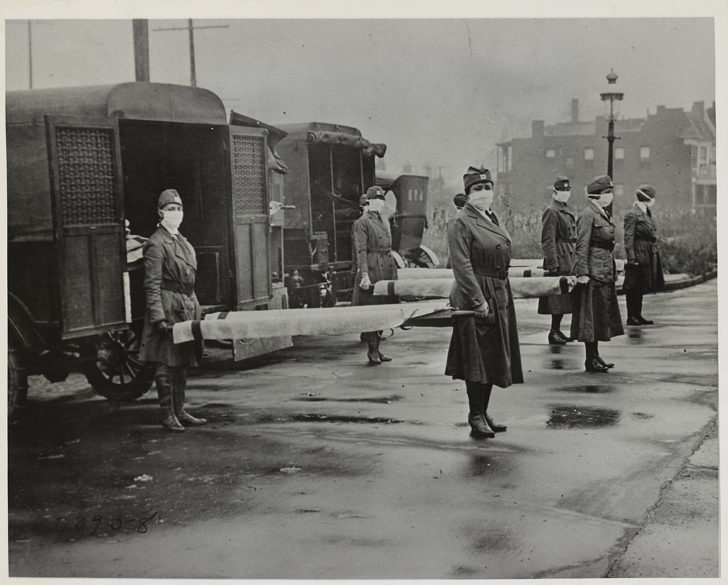
ST. LOUIS – The St. Louis Red Cross Motor Corps are on duty in October 1918 during the influenza epidemic. Mary Woodward reveals an excerpt from Bishop John Edward Gunn’s diary chronicling his travels to St. Louis in November of 1918 during the Spanish flu pandemic. (Photo/Library of Congress, LC-DIG-ds-01290)
Not only was he a gifted orator, but he was a fine chronicler of daily life as is proven in his diary. From his diary we find an interesting entry from Nov. 8-10, 1918, that is very relevant to today’s pandemic atmosphere. It also contains a noteworthy bit of information about the end of the war.
“I left [Nov. 8] for St. Louis to assist at the consecration of the new Bishop of Galveston, Bishop Byrne. When I reached St. Louis, I got into the midst of the flu. Not only were the churches, schools, and public buildings closed but all the stores, soda water fountains and everything.”
“On Saturday night I walked the streets of St. Louis for more than an hour and could not buy a cigar and the question was – how could the consecration take place in St. Louis Cathedral on November 10th when it was forbidden to open a church door?”
“I went ‘round on Saturday night to see Archbishop Glennon and found Bishop Allen with him. The Archbishop seemed to take everything very quietly and said that it was forbidden to open the main door of the Cathedral but there were several other doors that were not officially closed, with the result that the consecration took place on Nov. 10. The crowd was small, the ceremonies were beautiful, the dinner was as heavy as the oratory and there was an atmosphere of unrest everywhere.”
“The papers were filled with the flu conditions of the country; the war conditions were reaching a climax, and everybody was on edge.”
“I left St. Louis on Sunday night [Nov. 10] and on my way home, at Fulton [Missouri], I thought that the world had come to an end. I was in the Pullman compartment when noise broke loose in the form of whistles, bells, bands and every kind of thing that could make a rattle and a screech at the time when ghosts are supposed to appear and graves yawn, etc.”
“It was occasioned by the fake news that had gone over the world that the Germans had signed the armistice. When the real news of the Armistice came nobody believed it.”
“I managed to get to New Orleans on the 11th and the city looked like the morning after Mardi Gras. The people had shouted themselves hoarse over the fake armistice and had no voice for the real one.”
Although WWI was a very complex time for those of Irish heritage due to British rule and treatment of them, the Bishop believed strongly in service to one’s country. “In life and death, I am proud of three things: my Irish birth, my Catholic faith, and my American citizenship,” he said. “I tried to translate my love for all three into service and sacrifice,” he wrote in his will.
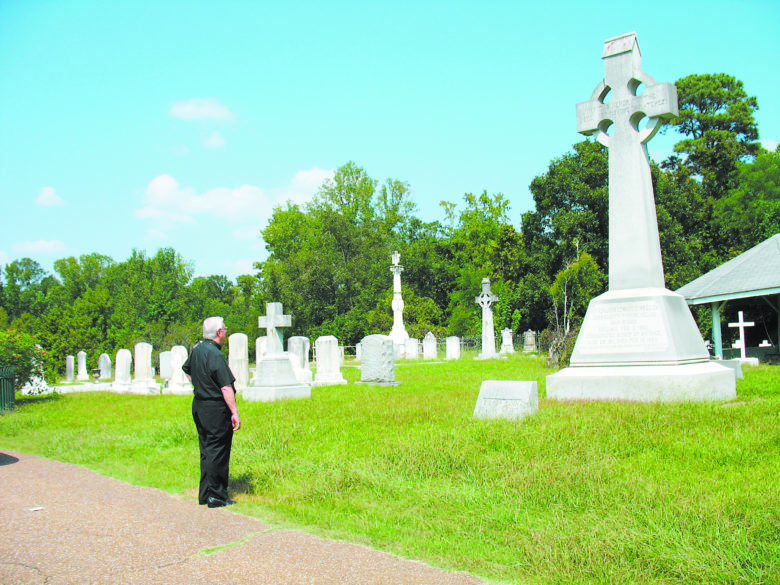
NATCHEZ – In this photo from the archives, Bishop Joseph Latino visits the resting place of Bishop John Edward Gunn, on Catholic Hill in the Natchez City Cemetery. Bishop Gunn died in New Orleans on Feb. 19, 1924 and is buried beside his fellow Irishman Bishop Thomas Heslin. (Photo from archives)
Bishop Gunn died at Hospital Hotel Dieu in New Orleans on Feb. 19, 1924, and is buried beside his fellow Irishman Bishop Thomas Heslin on Catholic Hill in the Natchez City Cemetery. His portrait hangs in the dining room of the Cathedral rectory in Jackson. As in any good portrait, Bishop Gunn’s eyes follow you as you move through the room.
In his will the Bishop also wrote, “I believe in God. I believe all He has said because He said it and because His infallible Church heard Him and told me what He said. I love Him with my whole heart and soul and strength and for His sake I love others.”
Bishop Gunn’s diary is so rich that we will share some more gems from it in the future.
(Mary Woodward is Chancellor and Archivist for the Diocese of Jackson)
Parishes are faced with different realities as to the size and makeup of parishioners, and the size and layout of their building facilities. The diocese has decided it is still prudent to allow the local parishes to address their reality in making decisions how to address the pandemic through these protocols. These suggestions should be implemented based on the parish’s reality and the local community reality and community regulations that are in place.
– Social distancing of 3 feet is recommended. – Masks are encouraged for everyone.
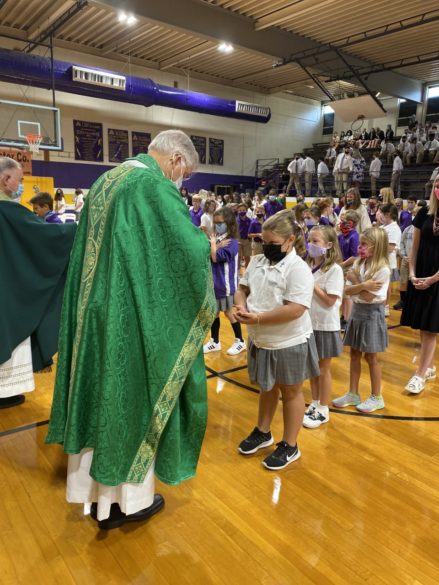
VICKSBURG – Lizzie McSherry receives communion from Bishop Joseph Kopacz at a special “Back to School” Mass at Vicksburg Catholic School. (Photo by Lindsey Bradley)
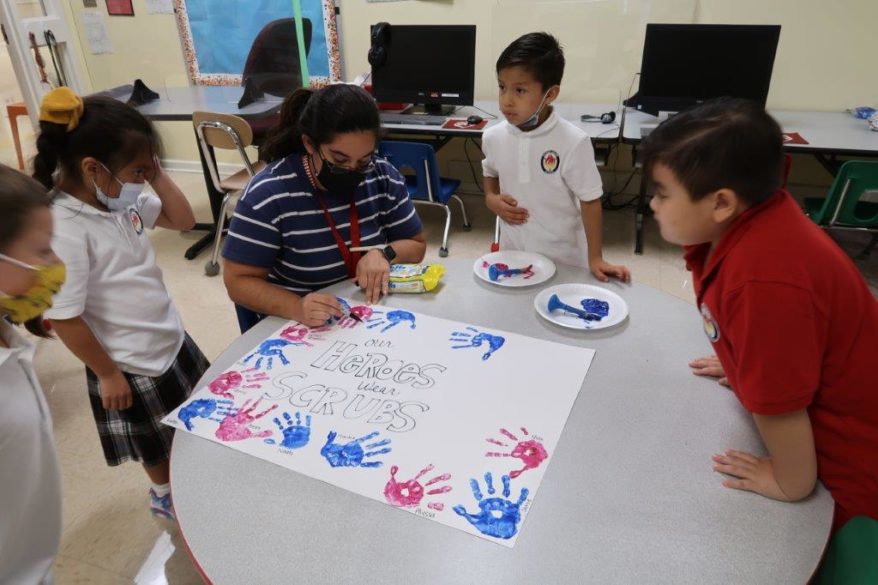
SOUTHAVEN – Kindergarten students with their teacher, Amber Hayes, work on “cheer them up” posters to send to the hospital. (Photo by Sister Margaret Sue Broker)
JACKSON – Sister Thea Bowman first grade student, Ja’Kayla Davis, along with her other classmates, work on one of their first class assignments during the first week of school. In the background, teacher, Ashanti Moses works with class member, Caliyah Hopson. (Photo by Shae Robinson)
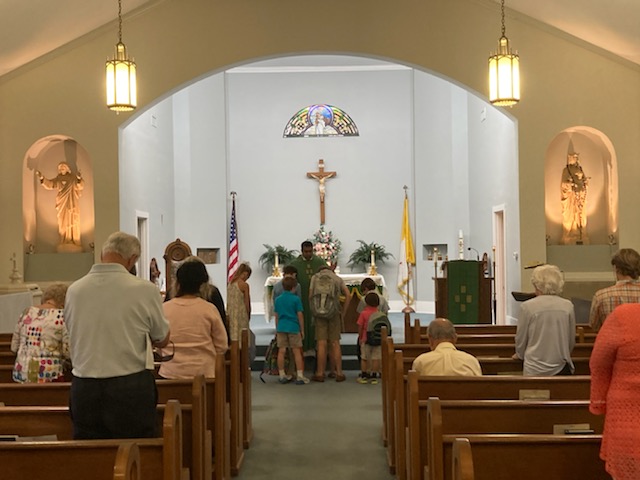
LELAND – Father Sleeva Mekala blessed backpacks at St. James parish on Sunday, Aug. 22. (Photo by Deborah Ruggeri)
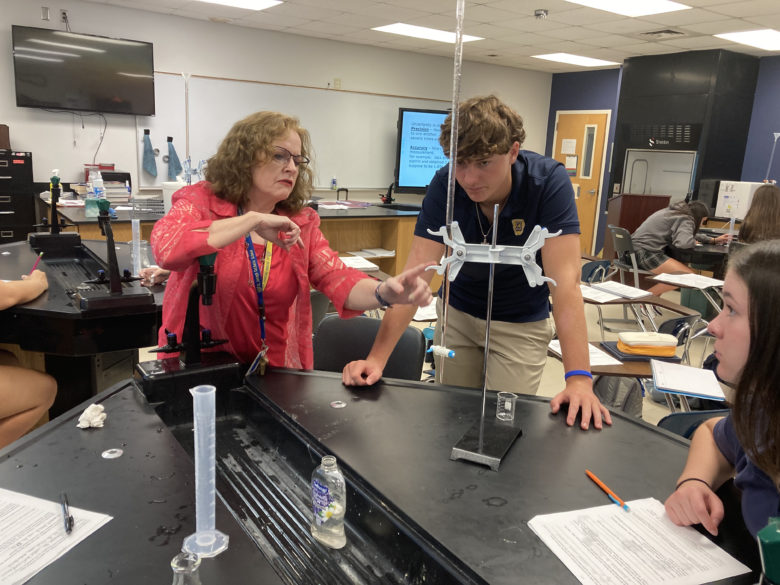
MADISON – At St. Joseph School, Diane Waldon explains a chemistry experiment to sophomore, John Eatherly, on Tuesday, Aug. 10, the first day back to school. (Photo by courtesy of St. Jospeh Catholic School)
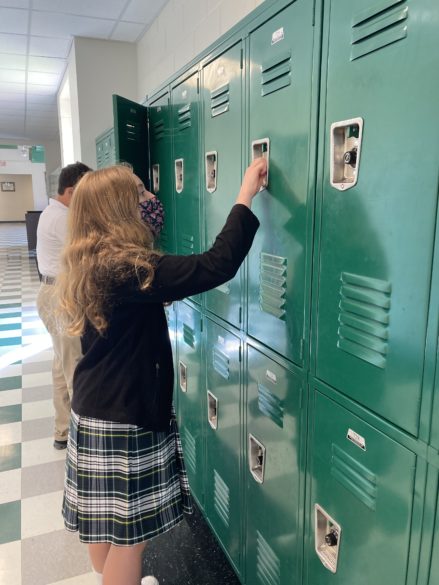
NATCHEZ – Seventh grader, Julia Claire Jex strikes the right combination at Cathedral School. (Photo by Cara Moody Serio)
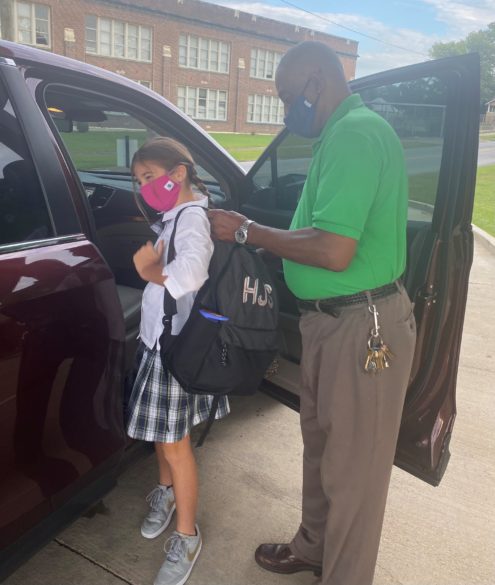
MERIDIAN – St. Patrick School volunteer, Frank Washington, helps fourth grader Halle Smith with her backpack on her first day of school, on Friday, Aug. 6, 2021. (Photo courtesy of St. Patrick Catholic School)
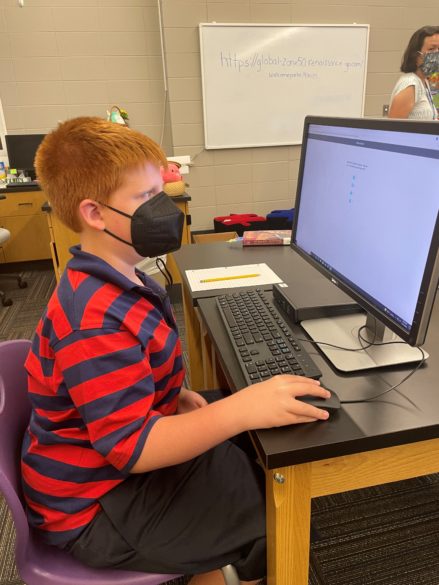
COLUMBUS – Third grade student, William Marrett takes his star pre-assessments for math and reading in the computer lab at Annunciation School. (Photo by Katie Fenstermacher)
By Catholic Extension PHILADELPHIA – In 1830 the Choctaw Native Americans signed the Treaty of Dancing Rabbit Creek, which commenced their removal from Mississippi and the treacherous journey to Oklahoma on the infamous Trail of Tears.
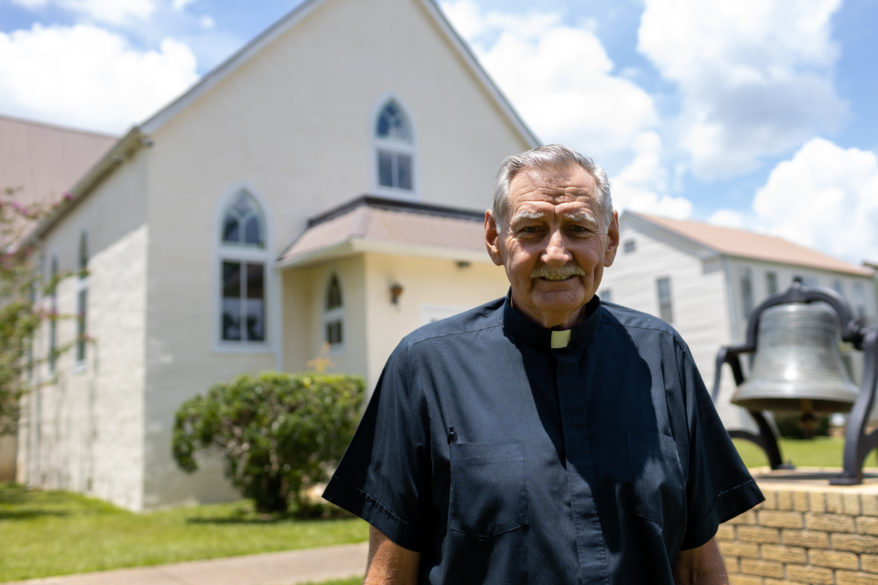
PHILADELPHIA – Father Bob Goodyear stands in front of Holy Rosary Indian Mission. He is a finalist for the Catholic Extension 2021 Lumen Christi Award. For a combined 31 years, Father Goodyear has been helping the Choctaw community grow closer to God. (Photos courtesy of Catholic Extension)
Many Choctaw, however, refused to leave their ancestral land. Those who chose to stay had to become invisible to survive, hiding in swamps and working as sharecroppers. In 1884 a Catholic priest was sent to see what could be done to minister to the Choctaw, and Holy Rosary Indian Mission was established.
Catholic Extension has supported Holy Rosary Indian Mission since 1926. This includes helping build and repair two of its three mission churches: Holy Rosary in Tucker in 1969 and St. Therese in Philadelphia in 1972. Between Holy Rosary, St. Therese and St. Catherine in Conehatta, this faith community in the Diocese of Jackson spans 87 miles.
For a combined 31 years, a missionary priest has been helping the Choctaw grow closer to God in a place where He is ever so present. Father Bob Goodyear, S.T., who was attracted as a high school freshman to the Missionary Servants of the Most Holy Trinity, has truly answered the religious congregation’s charism to work for the “preservation of the faith among the poor and abandoned” in his ministry.
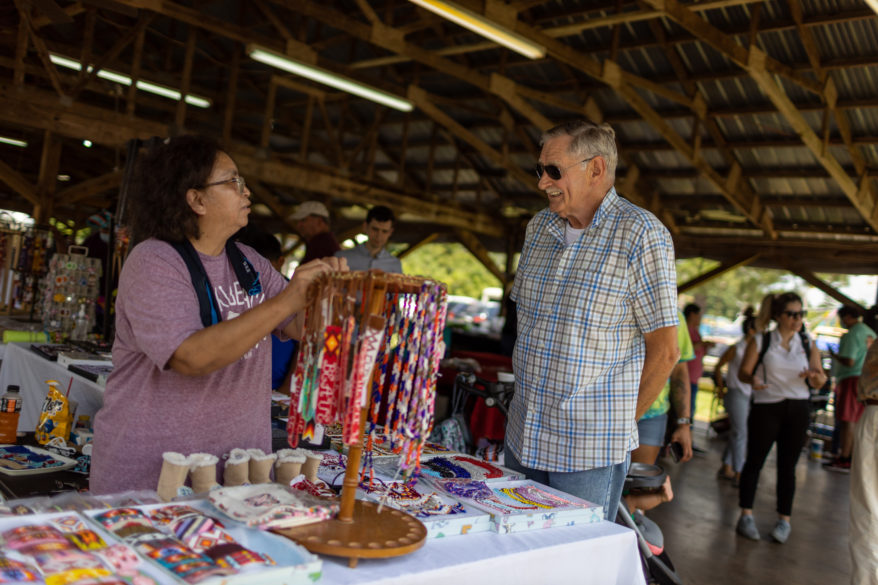
PHILADELPHIA – Father Bob Goodyear visited many vendors at the annual Choctaw Indian Fair in July. He has been recognized as a finalists for Catholic Extension’s Lumen Christi Award for his work with the Choctaw community. (Photo courtesy of Catholic Extension)
“Father Bob Goodyear is so successful in his ministry because he walks with the people every step of the way,” said Diocese of Jackson Bishop Joseph R. Kopacz. “Father Bob has remained stalwart in his love for the people and in his commitment to foster their Catholic faith in our loving God.”
Language is the doorway to the soul In his seminary formation, Father Goodyear never imagined serving a Native American community. After arriving at Holy Rosary Indian Mission in 1975, he spent his first years learning everything he could about Choctaw culture.
This included the Choctaw language — despite being told not to bother because non-natives had never been successful doing so.
“That’s the wrong thing to say to me,” said Father Goodyear. “Because now I’m going to try.”
With the help of three Choctaw, he was able to learn the language. After eight years of study, his education reached its culmination: translating the Catholic Mass into the Choctaw language. On May 1, 1983, Father Goodyear celebrated his first Mass in Choctaw at St. Catherine, with a Vatican-approved text.
During the homily, he delivered this inspiring message: “Language is more than words and how you put them together. Language tells you your history. It tells you your dreams.”
Along with learning the Choctaw language, Father Goodyear has had his hands in several of what he calls “non-traditional” ministries. He established the Choctaw Suicide Council and its corresponding “Suicide Counseling Manual.” Additionally, he opened a youth recreation center.
Father Goodyear served Holy Rosary Indian Mission from 1975 to 1990. After two assignments away from the reservation, he returned in 2006. Upon returning to the Mississippi Choctaw, the tribal chief told him, “I am very worried about the spiritual life of my people.”
Forming Choctaw Catholic leaders for the future In Father Goodyear’s time away, the Catholic Church lost some of its footing among the Choctaw. His focus in his last 15 years of ministry and counting has been on developing lay leadership at the three mission churches. These lay leaders will help teach and pass on the faith to future generations.
“My most exciting moment is confirmation,” Father Goodyear said. “I’m the catechist for confirmation because I want them to get everything they need. Kids that have been confirmed have gone on to be eucharistic ministers.”
Father Goodyear, 72, has eucharistic ministers playing a vital role at Holy Rosary Indian Mission. He developed a training manual that teaches eucharistic ministers not only how to serve during Mass, but also how to lead Communion services in the absence of a priest and how to deliver the Eucharist to the sick and shut-ins. The manual is used throughout the Diocese of Jackson and at parishes in other states.
Father Goodyear had been pleased with the progress made in developing lay leaders. That progress, however, was halted by the COVID-19 pandemic.
Having performed three to four funerals a week at the height of the pandemic — the average number for a single month in previous years — he has shifted his ministry in these unprecedented times toward helping the Choctaw grieve.
“Their beliefs about death are very special,” Father Goodyear said. “They have a close relationship with the spirits who have died.”
Now, as the Choctaw hopefully emerge from the pandemic, Father Goodyear aims to renew the church on the reservation by continuing to develop lay leaders and by helping the Choctaw believe in themselves.
“I preach that you can’t really believe in God if you don’t believe in yourself, because you’re made in His image,” Father Goodyear said. “God not only created you, He believes in you.”
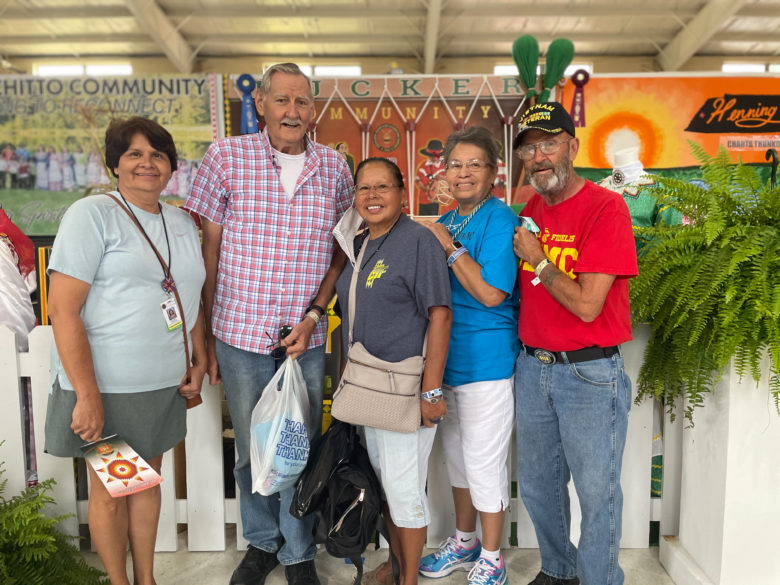
Father Bob Goodyear stopped for a photo op with members of the Choctaw community at the 71st annual Choctaw Indian Fair in July. He is one of seven finalists for a Lumen Christi Award. The award is Catholic Extension’s highest honor given to people who radiate and reveal the light of Christ present in the communities where they serve.
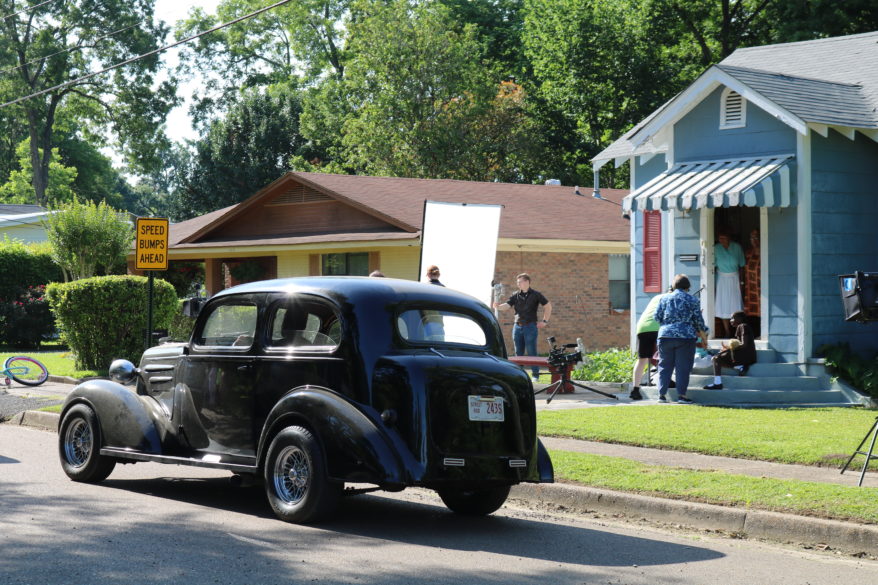
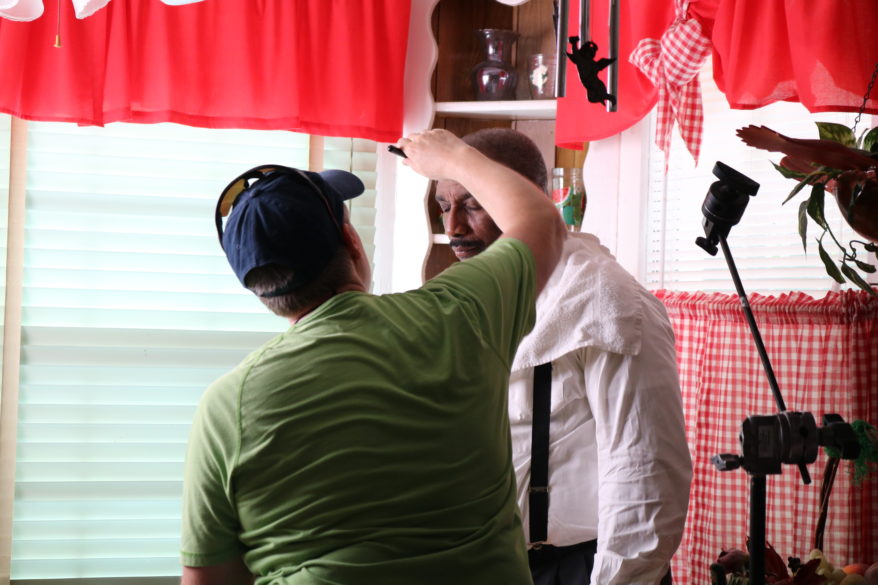
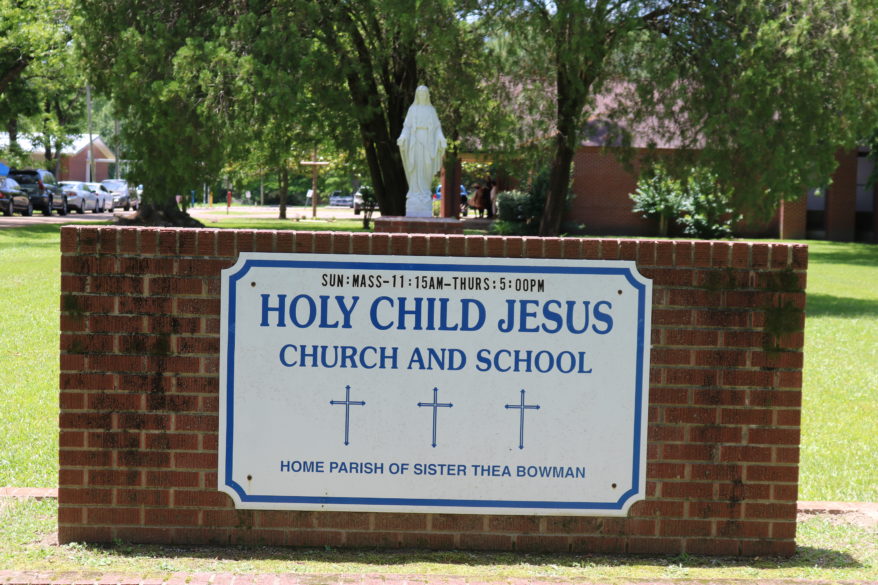
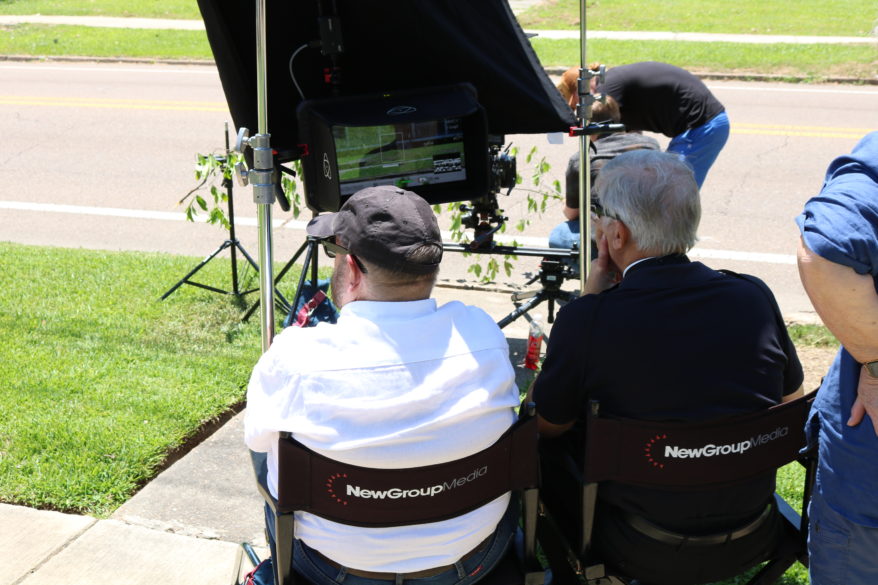
By Joanna Puddister King CANTON – New Group Media out of South Bend, Indiana is working to tell the story of Sister Thea Bowman. Filming is taking place in many locations where Sister Thea Bowman lived and worked, requiring in-depth work for both crew and community members.
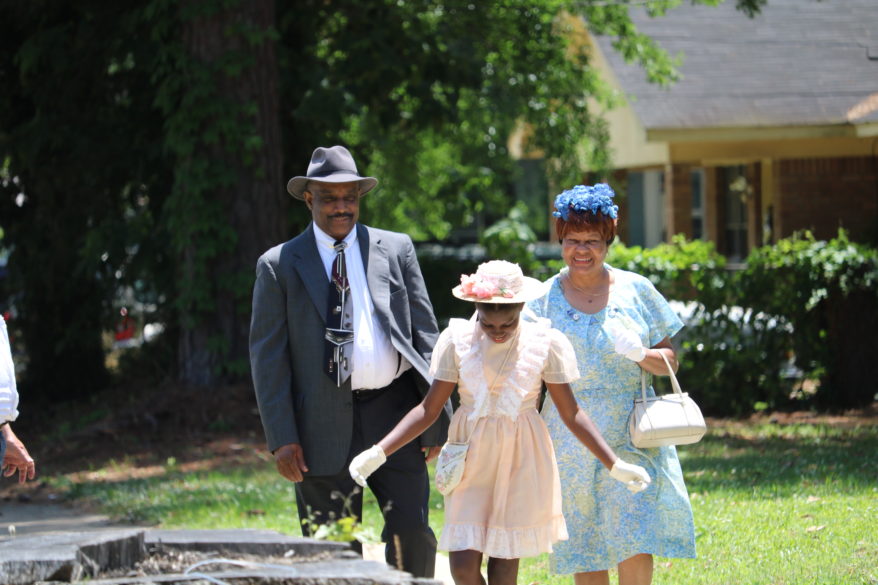
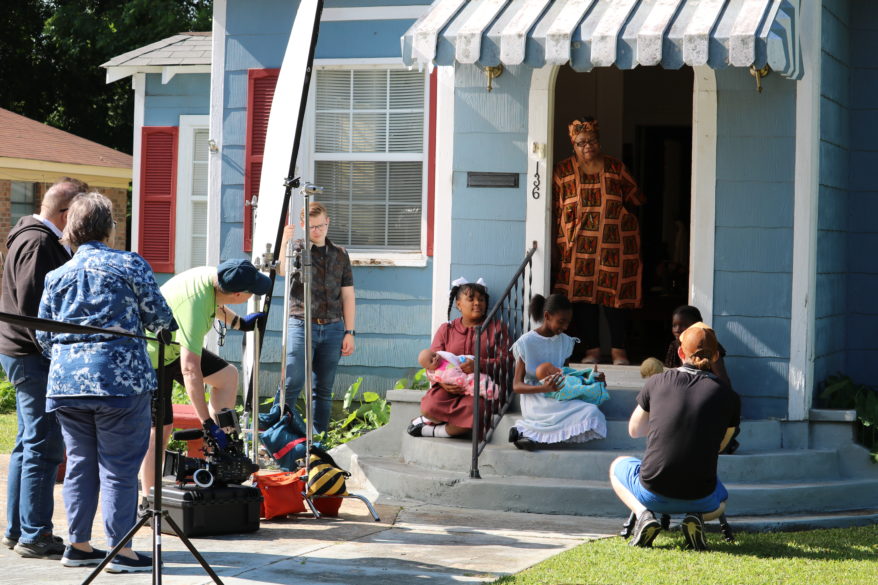
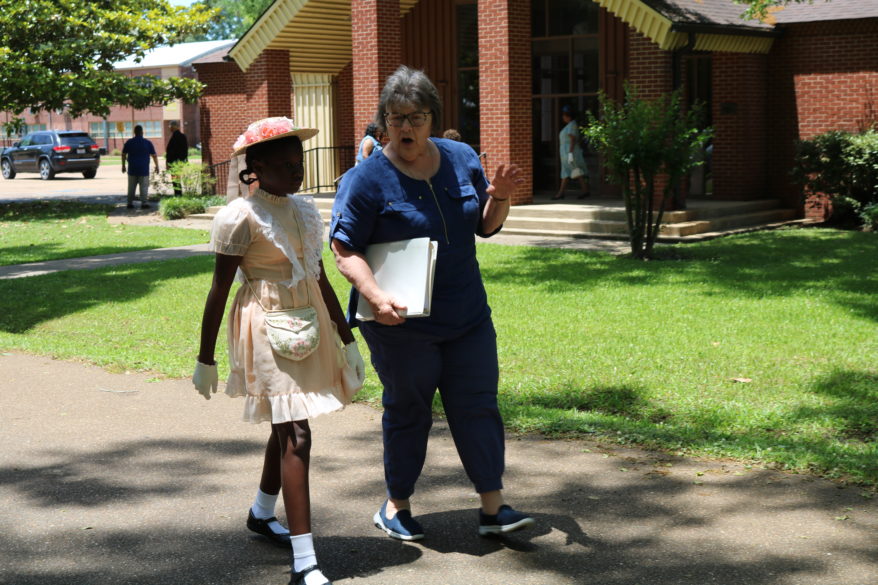
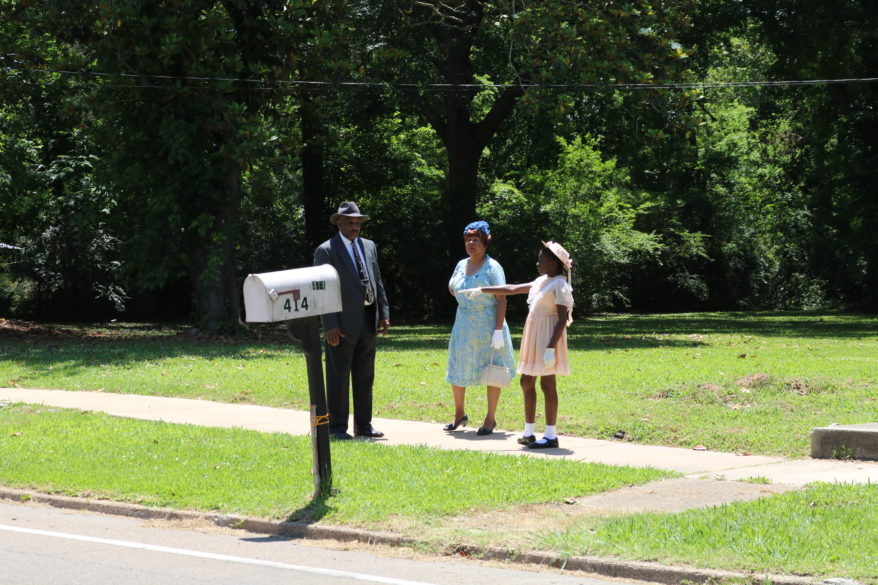
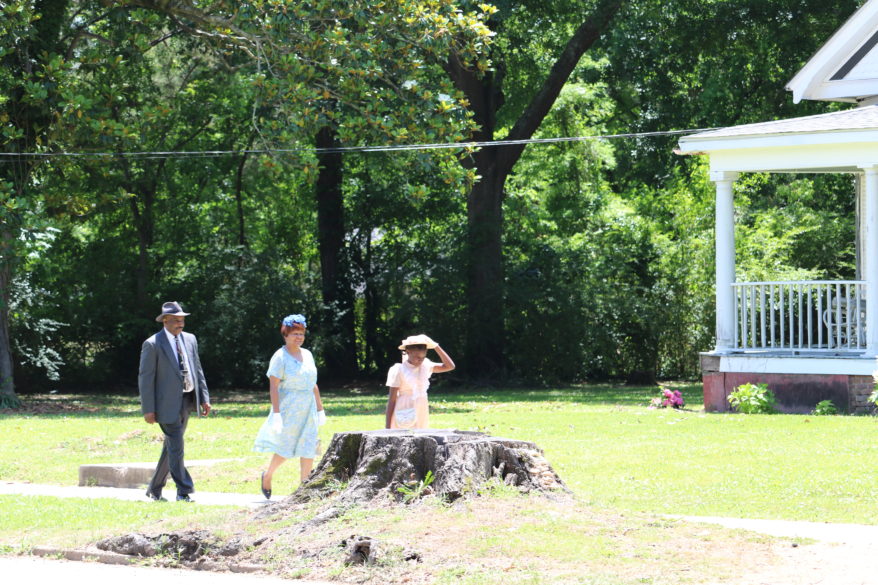
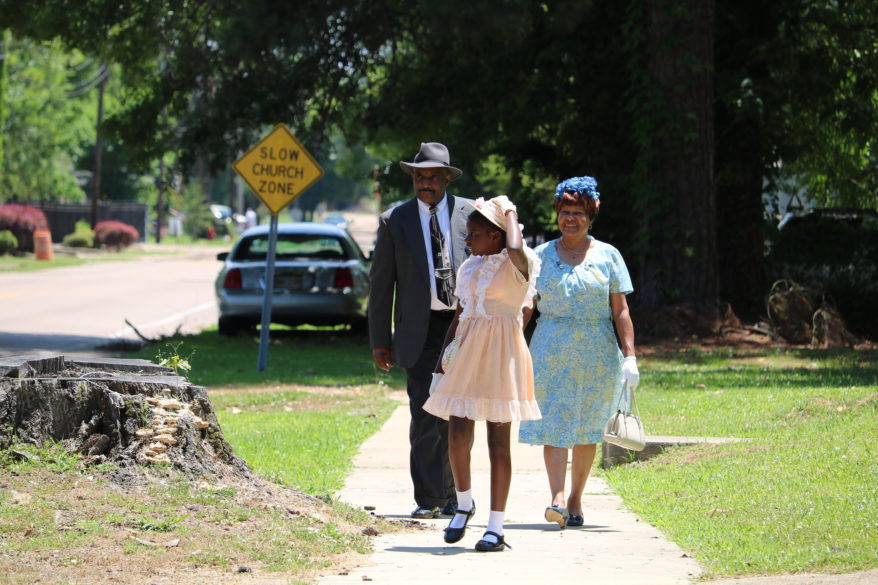
CANTON – Actors portray the Bowman family taking a stroll to Sunday Mass near Holy Child Jesus parish. (Photos by Joanna Puddister King)
Writer and producer, Sister Judy Zielinski, OSF said that she wanted to touch base and operate out of the spaces that Sister Thea lived in and used. “She was a brilliant, charismatic, prophetic, outspoken woman,” said Sister Judy during an interview. “And she is a force of nature.” Spaces chosen for filming include sites in Canton, Jackson, Memphis, New Orleans and in LaCrosse, Wisconsin.
The film will explore Sister Thea’s life and path to sainthood through interviews and commentary from her family, sisters in community, colleagues, friends and former students. While filming in Mississippi, the crew filmed interviews with Bishop Joseph Kopacz, and those that knew Sister Thea personally, including Sister Dorothy Kundinger, FSPA; former students, Myrtle Otto and Cornelia Johnson; and childhood friends, Mamie Chinn and Flonzie Brown-Wright.
The crew began scouting sites in April 2021 and at the end of May, they filmed in Canton, Jackson and at Sister Thea’s grave site in Memphis at Elmwood Cemetery. In addition to interviews, scenes were filmed depicting young Bertha Bowman’s life before entering the Franciscan Sisters of Perpetual Adoration (FSPA) in LaCrosse, Wisconsin.
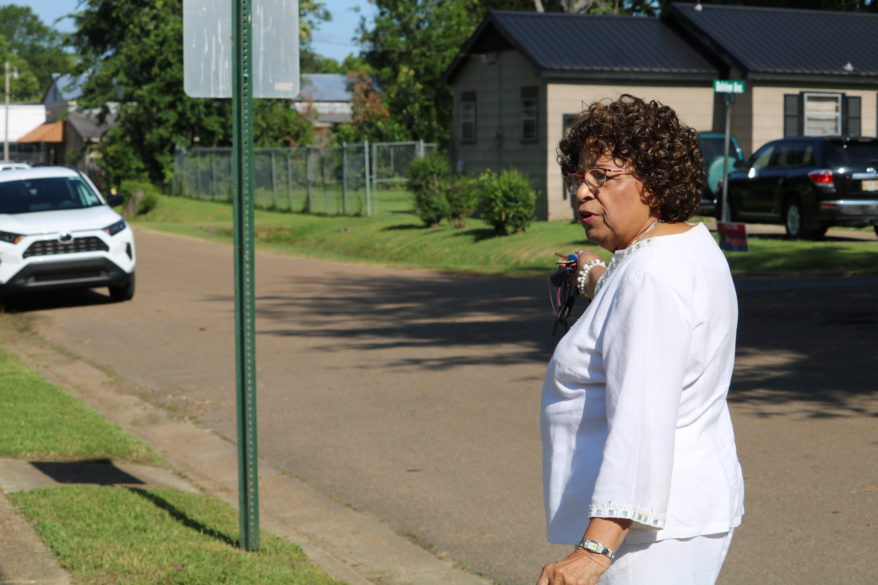
On hand for most of the production in Canton, Flonzie Brown-Wright, a self-described “non-crier,” was moved to tears during depictions of herself, young Bertha Bowman and friend Mamie Chinn.
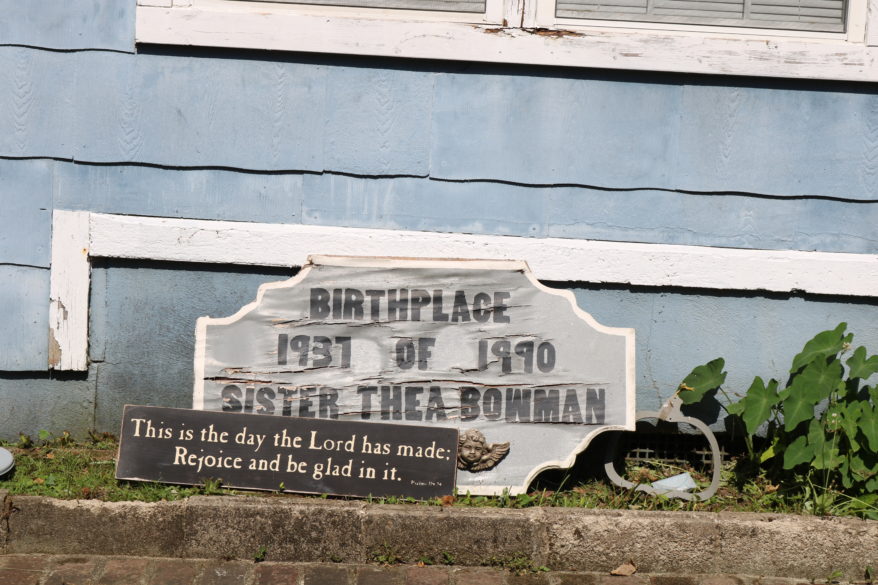
(Left) A sign sits outside of the old Bowman family home on Hill Street in Canton.
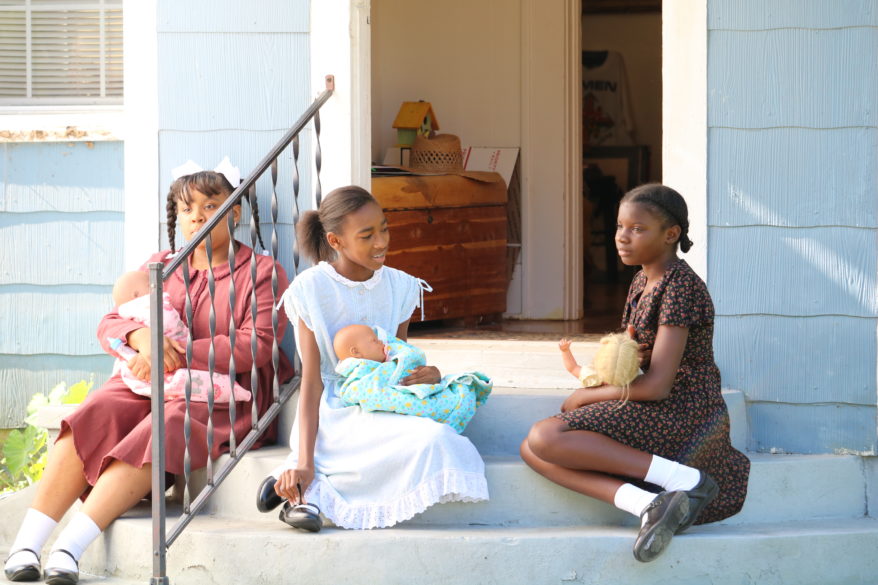
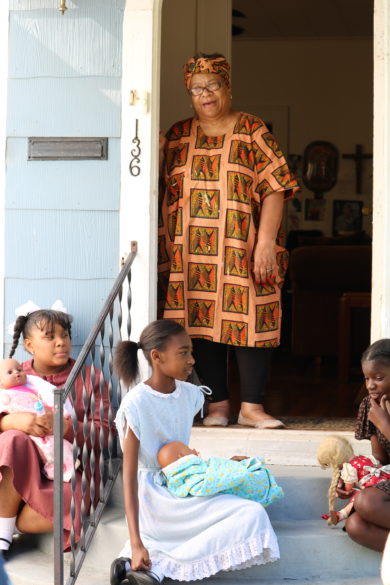
“She was so special to me. This morning, … when I saw the little girls sitting on the porch, I just lost it. I just lost it because it was just so reminiscent of what actually happened during those days,” said Brown-Wright.
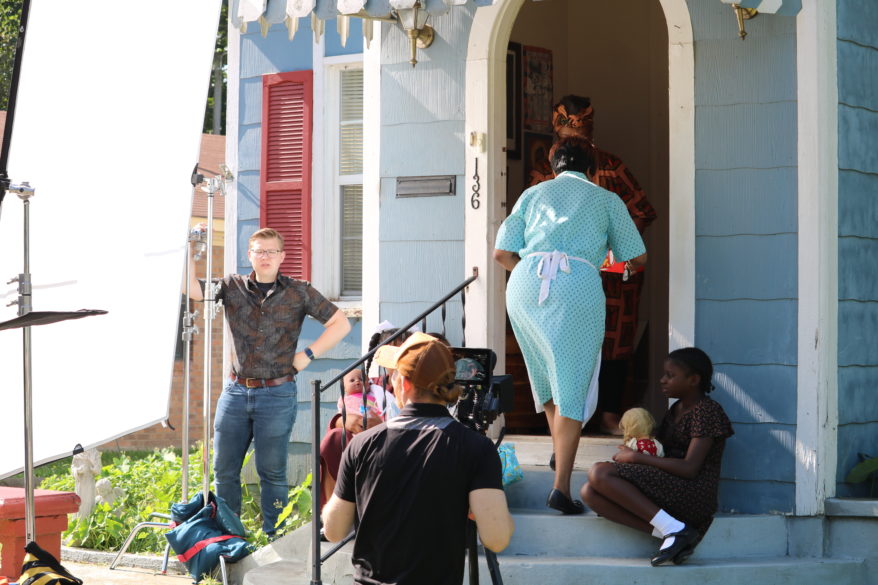
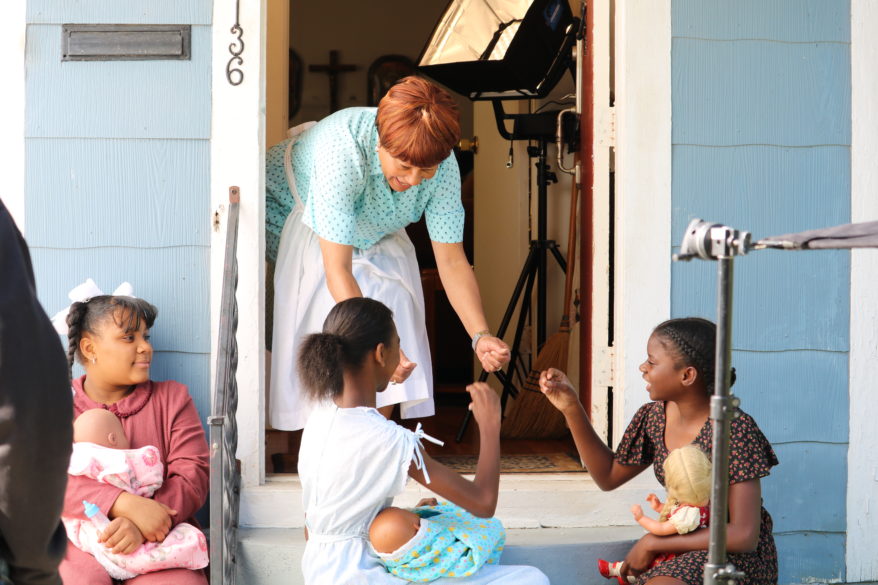
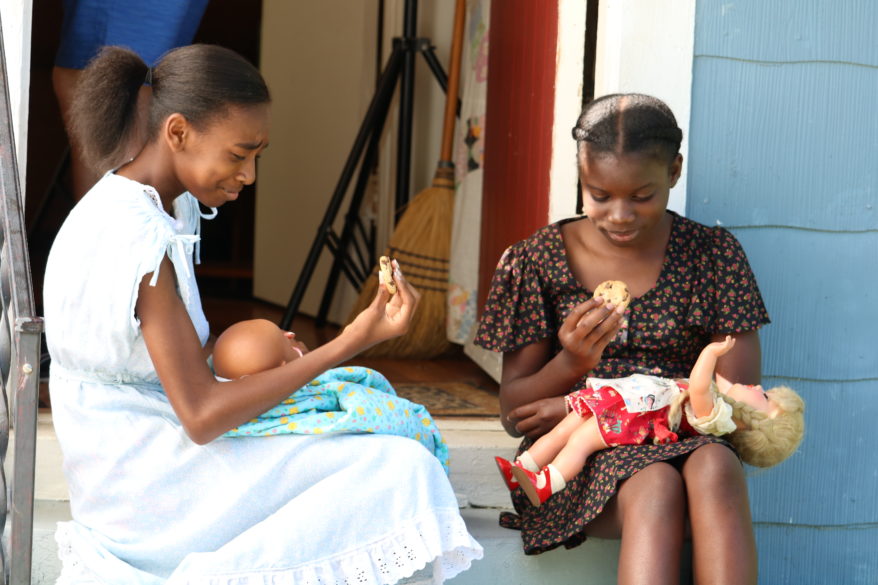
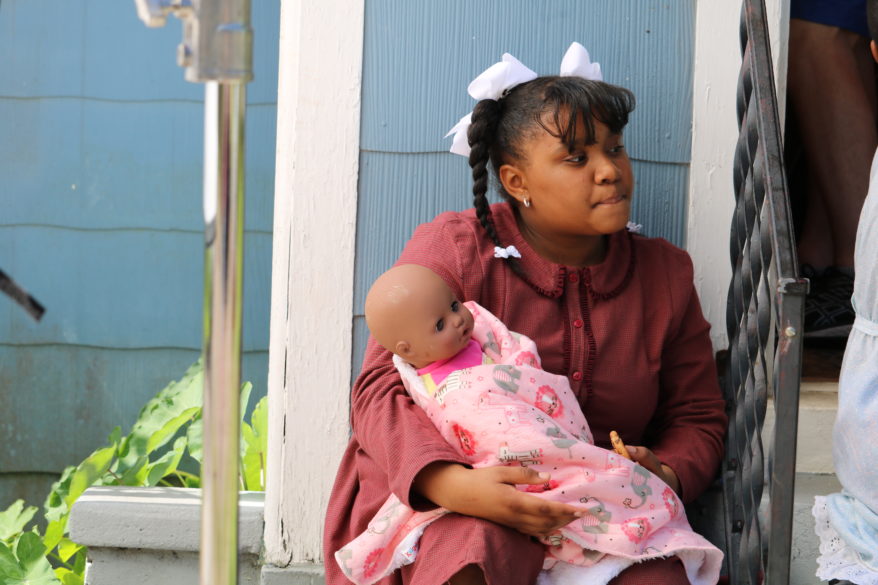
The crew filmed re-enactments at the Bowman family home on Hill Street in Canton, complete with a 1936 Grand Master roadster car parked out front. Scenes with Thea, Brown-Wright and Chinn eating cookies on the front steps, playing with dolls and socializing were filmed with local talent.
Eleven-year-old, Madison Ware of Canton was chosen to play young Bertha. “I was really excited to do the part of Thea,” said Ware.
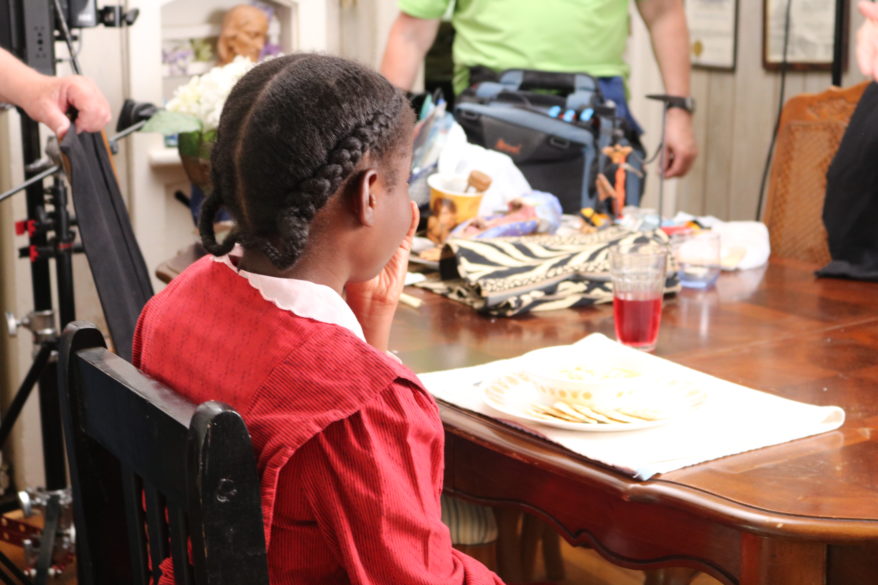
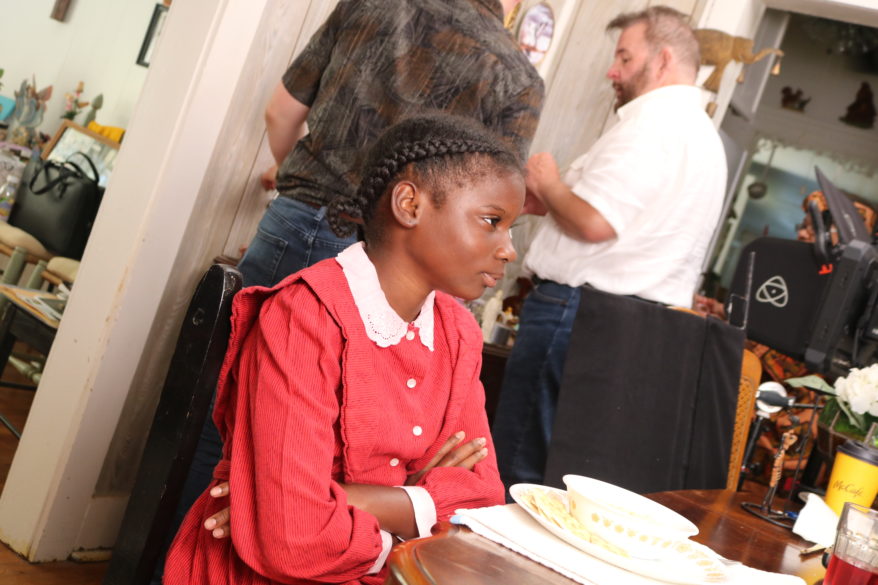
In addition to scenes at Holy Child Jesus Canton and playing outside the Bowman family home, Ware also re-enacted young Bertha’s hunger strike after her parents forbade her to go off to Wisconsin to become a nun. Ware sat at the dining room table in the Bowman home with determination stating as young Bertha would – “I’m not hungry.”
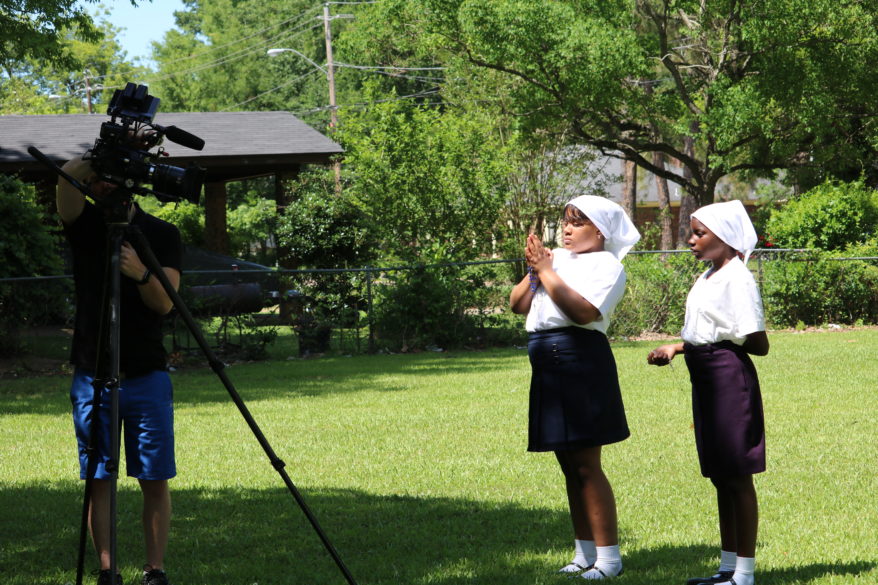
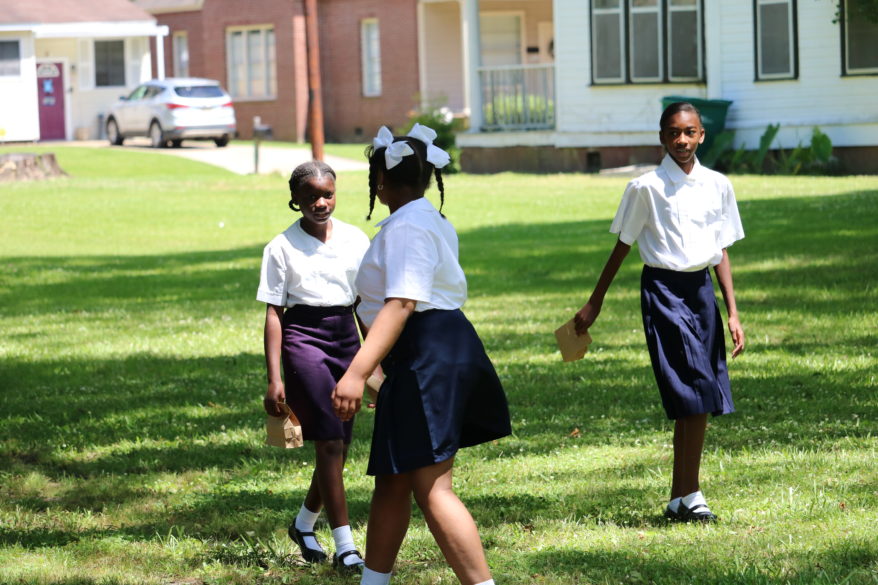
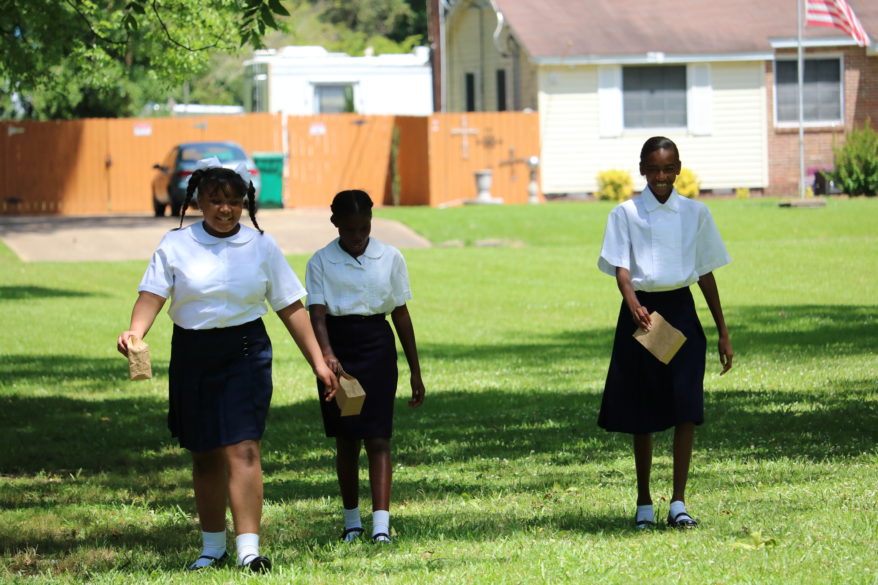
Other scenes depicted in Canton include portrayals of young Thea, Brown-Wright and Chinn walking to school and playing dress up as nuns.
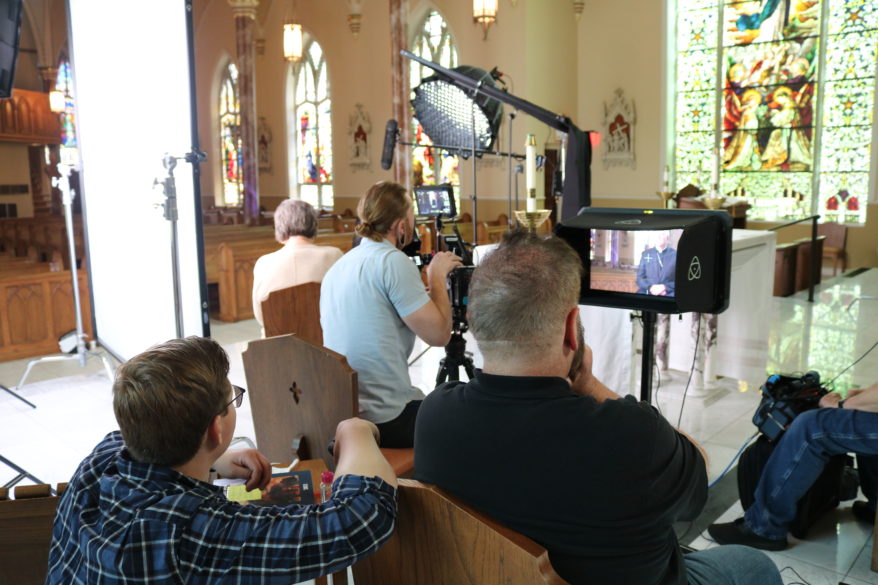
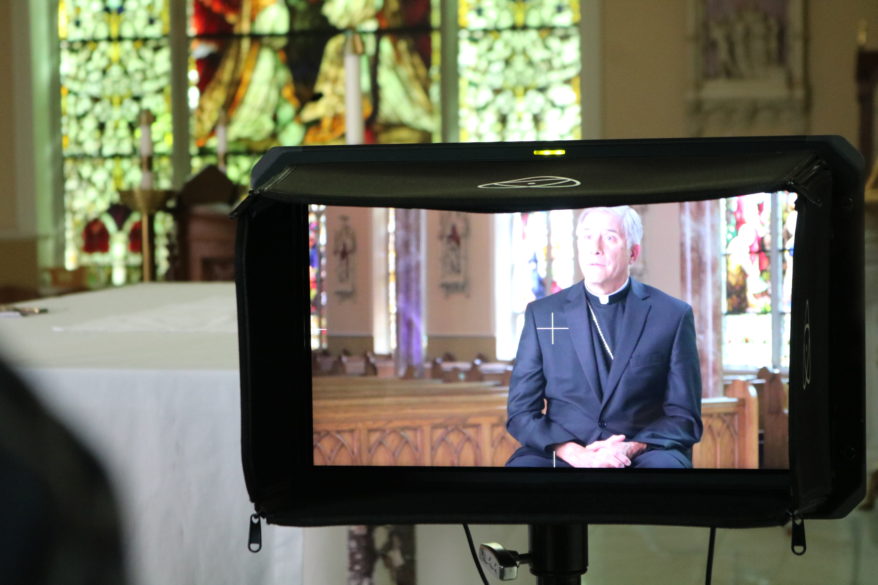
In Jackson, the crew sat down with Bishop Kopacz at the Cathedral of St. Peter the Apostle to talk about the cause for Sister Thea and spoke about what he called “her first miracle,” when she addressed the U.S. Bishops Conference in June 1989 and led them to join arms and sing “We Shall Overcome.”
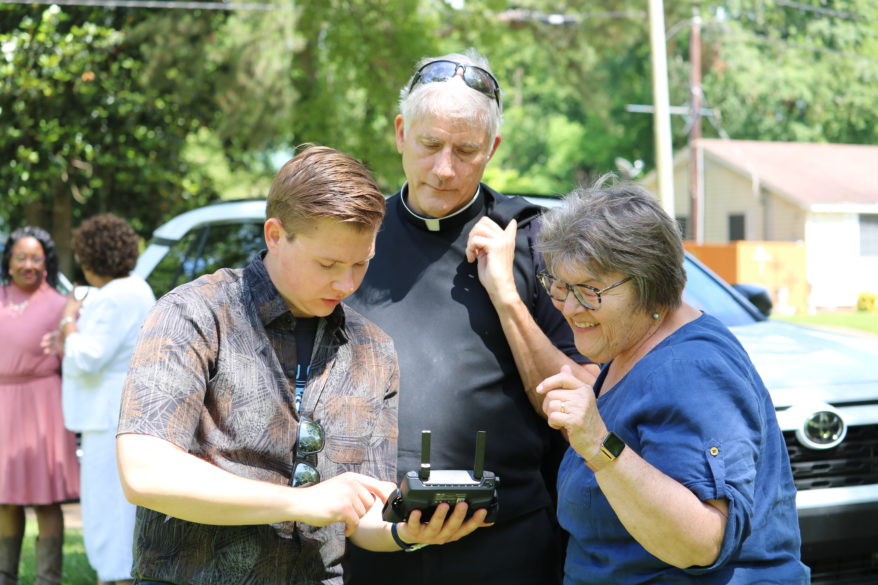
Drone operator and grip, Matthew Nemeth, Bishop Joseph Kopacz and producer/writer, Sister Judy Zielinski, OSF review drone footage taken during filming of the Sister Thea Bowman Documentary on Saturday, May 29.
At Sister Thea’s grave site at Elmwood Cemetery in Memphis, the crew arranged for a beautiful white spray filled with gardenias, roses and magnolias to sit at her plot. Re-enactment at the grave site included prayer and a hymn led by Myrtle Otto – “I’ll Be Singing Up There.”
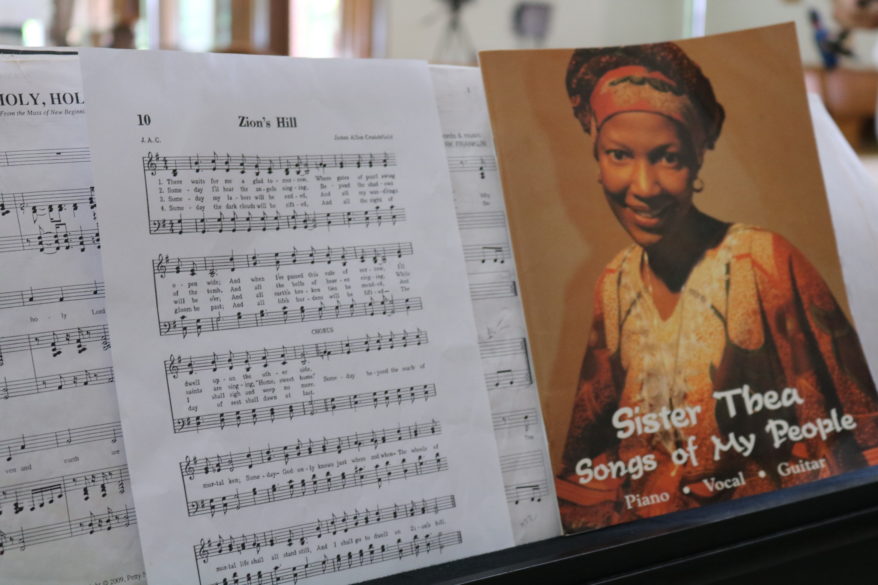
The final day of filming in Canton concluded at Holy Child Jesus with Mass, a performance by the church choir and solo of “On Zion’s Hill” by Wright-Brown.
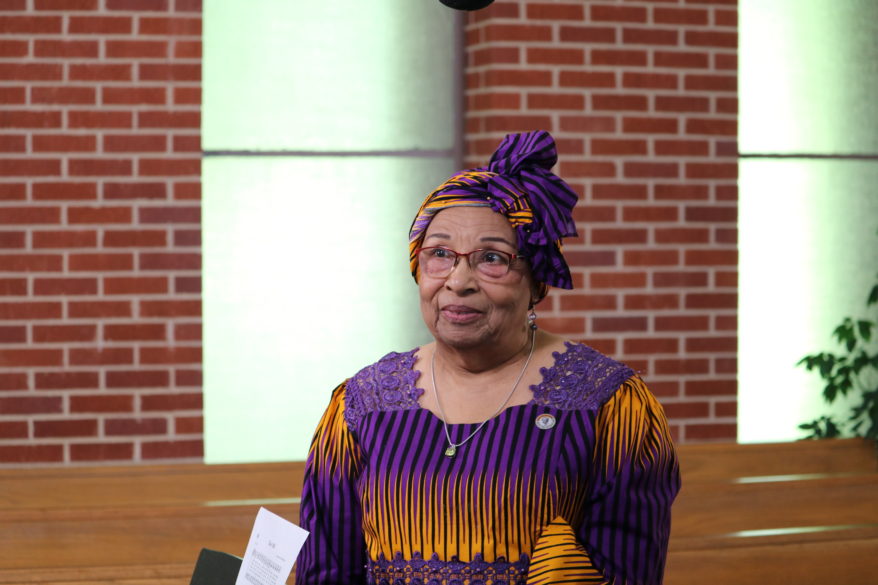
CANTON – Flonzie Brown-Wright dressed in a dashiki and sang “On Zion’s Hill,” honoring her childhood friend, Thea Bowman. (Photos by Joanna Puddister King)
Life-long friends, Brown-Wright kept in contact with Sister Thea up until her passing from cancer in 1990 traveling from her home, at the time, in Ohio just two weeks before her death. She said Sister Thea told her “what I want you to do when I’m gone … [is] to come back to play and sing the song “On Zion’s Hill.” The same song Sister Thea sang at both her father and mother’s funerals.
With Wright-Brown in an African dashiki and headdress singing there was hardly a dry-eye between the crew present, as Sister Thea’s presence was felt in the moment.
(Above) Madison Ware re-enacts young Bertha Bowman’s hunger strike to get her parents to allow her to travel to LaCrosse, Wisconsin to become a nun.
Between June 20-23, the crew filmed in LaCrosse, Wisconsin at St. Rose Convent and Viterbo University, shooting re-enactments of Sister Thea at the FSPA motherhouse. Director Chris Salvador described plans to capture Sister Thea arriving at the convent in a white pinafore dress and then using a machine to morph her. “So, it goes in 360° and she changes from her first outfit, and she eventually comes out in her African dashiki,” said Salvador.
Brown-Wright reminisced during filming in Canton about one trip to LaCrosse to visit her friend. When she got there, Brown-Wright expected to see her friend dressed in a habit, but instead found her in “a dashiki, sandals and a natural.”
“I asked her what happened, and she said, ‘Girl, those petticoats were just too hot,” laughed Brown-Wright. “What she was doing was preparing a culture for a yearning to understand our culture. That was her transformation from coming out of the habits … to her natural dress because that’s who she was,” said Brown Wright.
The crew sets up a scene at the old Bowman family home, from the upcoming documentary on Sister Thea Bowman to air in the fall of 2022.
“She taught the world how to be a Black Catholic sister.”
In New Orleans the film crew will conduct more interviews and film at the Institute for Black Catholic Studies at Xavier University, where Sister Thea offered courses in African American literature and preaching.
The working title of the film is “Going Home Like a Shooting Star – Sister Thea Bowman’s Journey to Sainthood.” It is drawn from a quote attributed to Sojourner Truth. When Sister Thea was asked what she wanted said at her funeral, she answered,” Just say what Sojourner Truth said: ‘I’m not going to die, honey, I’m going home like a shooting star.’”
Production of the documentary was delayed about a year due to COVID. The film makers, with Bishop Kopacz as executive producer, hope to air the documentary nationwide in the fall of 2022 on ABC.
MaHalia Calvert, playing young Flonzie Brown-Wright, and Madison Ware prepare for a scene outside Holy Child Jesus parish where the girls play dress up at sisters. The scene brought back many memories for Wright-Brown, who was on-site for filming and reminisced about her experiences with her friend Sister Thea Bowman.
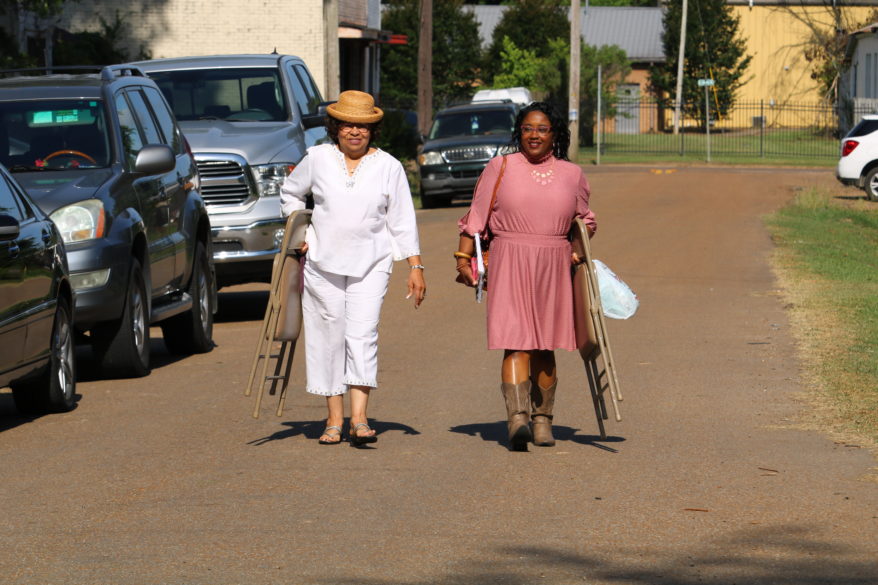
Sister Thea Bowman Documentary interview with Bishop Joseph Kopacz at the Cathedral of St. Peter the Apostle in Jackson, Miss. on Wednesday, May 26, 2021.Sister Thea Bowman Documentary interview with Bishop Joseph Kopacz at the Cathedral of St. Peter the Apostle in Jackson, Miss. on Wednesday, May 26, 2021.Sister Thea Bowman Documentary – Bowman home exterior shots for film with 1936 Grand Master Deluxe in Canton, Miss. on Saturday, May 29, 2021.Sister Thea Bowman Documentary – Bowman home exterior front steps scene. The crew works to ready the set. Canton, Miss. on Saturday, May 29, 2021.Sister Thea Bowman Documentary – Flonzie Brown Wright outside of the Bowman Family Home in Canton, Miss. on Saturday, May 29, 2021.Sister Thea Bowman Documentary – Flonzie Brown Wright and Dr. LaShunda Calvert walk down the street to the Bowman Family Home to view filming. Canton, Miss. Saturday, May 29, 2021.Sister Thea Bowman Documentary – Myrtle Otto on the steps of the Bowman Family Home. Canton, Miss. Saturday, May 29, 2021.Sister Thea Bowman Documentary – Bowman home exterior front steps scene. Crew works to set scene. Canton, Miss. on Saturday, May 29, 2021.Sister Thea Bowman Documentary – Bowman home exterior front steps scene. Left to right: Mattalia Calvert (playing Flonzie Brown Wright), Morgan Gates (playing Mamie Chinn) and Madison Ware (playing young Bertha Bowman) practice their cookie eating scene on the front steps of the Bowman family home in Canton, Miss. Saturday, May 29, 2021.Sister Thea Bowman Documentary – Bowman home exterior front steps scene. Cast performingscene of Mrs. Bowman bringing cookies. Canton, Miss. on Saturday, May 29, 2021.Sister Thea Bowman Documentary – Bowman home exterior front steps scene. Cast performingscene of Mrs. Bowman bringing cookies. Canton, Miss. on Saturday, May 29, 2021.
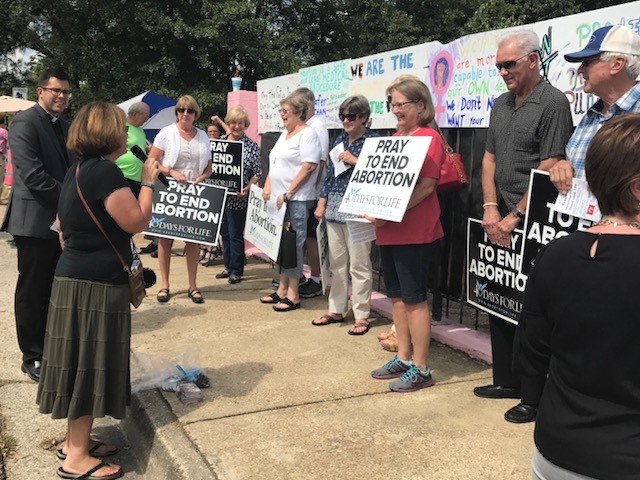
JACKSON – “40 Days for Life, the nation’s most innovative, peaceful prayer outreach, is coming to Jackson,” said Laura Duran, who is coordinating the local campaign. “We are eager to join together with people of faith and conscience from over 600 cities from coast to coast, and beyond, to pray for an end to abortion.” 40 Days for Life begins Sept. 22 to Oct. 31. “Abortion takes a tremendous toll in our city,” said Laura Duran, “but many people aren’t even aware of it. We will share the facts with as many people as possible during the 40-day campaign,” she said.
The campaign will feature a peaceful 40-day prayer vigil in the public right-of-way outside Jackson Women’s Health Organization at 2903 North State Street, in Jackson. All prayer vigil participants are asked to sign a statement of peace, pledging to conduct themselves in a Christ-like manner at all times. 40 Days for Life is a peaceful, highly-focused, non-denominational initiative that focuses on 40 days of prayer and fasting, peaceful vigil at abortion facilities, and grassroots educational outreach. The 40-day time frame is drawn from examples throughout Biblical history.
“40 Days for Life has consistently generated proven life-saving results,” said Shawn Carney, 40 Days for Life’s president. “During 26 internationally coordinated campaigns, over 8,000 communities have taken part. The efforts of over 1,000,000 people of faith helped have made a tremendous difference.”
Carney said numerous cities reported a significant drop in abortions. “Over 110 abortion facilities have closed following 40 Days for Life efforts,” he said. “Churches across denominational lines have worked together to work for an end to abortion in their cities. Many post-abortive women begin programs to heal from the pain caused by previous abortion experiences. And more than 18,000 babies – and their mothers – have been spared from the tragedy of abortion.”
“We’ve seen what 40 Days for Life has accomplished elsewhere,” said Laura Duran. “We can’t wait to begin. It is our prayer that this campaign will help mark the end of abortion in Jackson.”
For information about 40 Days for Life in Jackson, visit: www.40daysforlife.com/Jackson. For assistance or for more information, please contact Laura Duran at plm@prolifemississippi.org or 601-956-8636 ext. 1.
JACKSON – Participants gather and pray at “40 Days for Life” outside the Jackson Women’s Health Organization in 2017. This year, the event will take place from Sept. 22 to Oct. 31. (Photo from archives)