Este premio es el mayor honor que Catholic Extension otorga a las personas que irradian y revelan la luz de Cristo que está presente en las comunidades donde sirven.
Las siguientes personas son constructores de fe, comunidad y, lo más importante, esperanza:
• Las Hermanas María Imelda Quechol y Eloísa Torralba Aquino, M.A.G., sirven a familias inmigrantes en vecindarios pobres en todo el este de Tennessee proporcionando ministerios que forman comunidades de fe, desarrollan líderes y brindan asesoramiento espiritual.
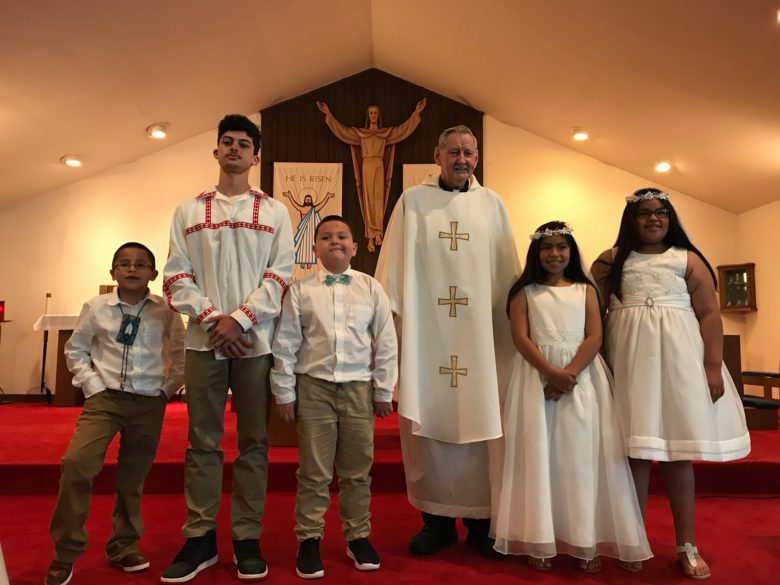
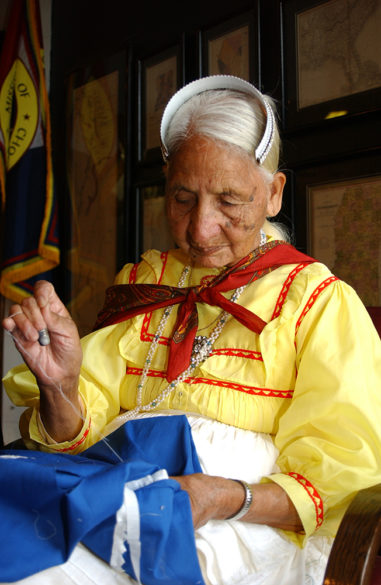
• El Padre Bob Goodyear, S.T., trabaja para preservar la fe entre los nativos americanos Choctaw en Jackson, Mississippi, ofreciendo recursos para formar líderes laicos en las comunidades donde ministra.
• La hermana Julia Huiskamp, D.C., ayuda a los niños a desarrollar habilidades sociales y académicas en Griffin Center en East St. Louis, un centro comunitario que fundó hace más de 30 años para brindarles a los niños un entorno seguro y acogedor.
• El padre Stan Jaszek fortalece las comunidades de fe católica en la Diócesis de Fairbanks mientras ministra en aldeas remotas a lo largo del Mar de Bering y se une al pueblo Yup’ik para vivir un estilo de vida de subsistencia cazando, pescando y recolectando su comida.
• El padre Brian Oestreich lidera cuatro comunidades parroquiales en el oeste de Minnesota para crear ministerios que satisfagan las necesidades de los pobres, que abarca tres estados y cinco diócesis.
• Racheal Jacoby encabezó la restauración de su parroquia en San Angelo, Texas, que fue construida originalmente con la ayuda de Catholic Extension hace más de 100 años, asegurando que la amada iglesia pueda servir a las generaciones futuras.
• Jenny y Ben Black Bear sirven como pareja casada en la Reserva Rosebud en Dakota del Sur, ayudando a los jóvenes a experimentar la alegría y la esperanza de su fe católica y los valores de Lakota.Las historias destacadas arriba simplemente raspan la superficie de las personas dedicadas que han sido nominadas para el Premio Lumen Christi de este año. Amigo, gracias a usted y su generosidad podemos seguir presentando este premio cada año, y esperamos que lo siga mientras seguimos compartiendo historias y actualizaciones.
El reciente documental del New York Times sobre el valiente periodismo de investigación de Jason Berry ha vuelto a fijar nuestra mirada en la tragedia duradera de la crisis de abuso sexual en la Iglesia Católica Romana.
Además de narrar la cruzada de una década de Berry para exponer el papel de la jerarquía estadounidense en la protección de sacerdotes sexualmente depredadores, la película incluye el testimonio abrasador de Berry sobre los grandes costos emocionales, espirituales y financieros de decir la verdad en la iglesia.
Escuchar a Berry relatar su decisión de alejarse de la peligrosa lucha por la justicia para centrarse en su familia y su bienestar mental es desgarrador. Uno no puede evitar llorar por él y por todos los que se han atrevido a documentar y protestar por las devastadoras historias de pecado de abuso y violencia de la iglesia frente al silencio, la indiferencia y la enemistad.
Esto es especialmente cierto en el caso de las personas negras, víctimas de abuso sexual de la iglesia.
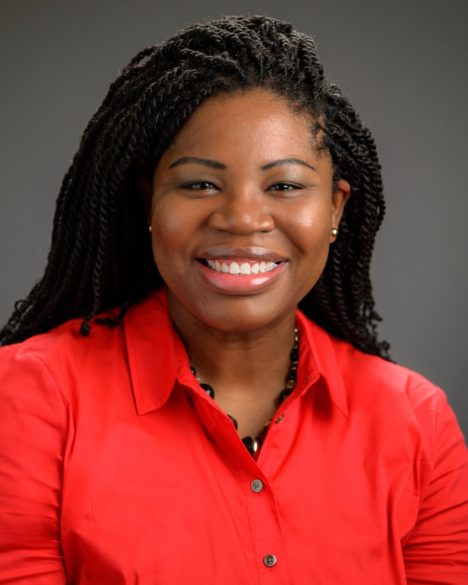
Shannen Dee Williams, assistant professor of history at Villanova University, is seen in this 2018 photo. (CNS photo/John Shetron, Villanova University)
A principios de este año, un panel de eruditos y sacerdotes católicos negros, convocados por la Universidad de Fordham, para confrontar las causas y el legado del abuso sexual por parte del clero argumentó que el racismo sistémico ha agravado la crisis en las comunidades negras, dejando a la mayoría de los sobrevivientes negros invisibles e incapaces de acceder al sistema y mecanismos formales de la iglesia para testificar sobre los abusos sufridos para hacer justicia.
El hecho de que la mayoría de los académicos y periodistas estadounidenses no consideren las raíces de la crisis de abuso sexual en la participación fundamental y principal de la iglesia en la institución de la esclavitud en las Américas también ha ayudado en gran medida a borrar a los sobrevivientes católicos negros.
Si bien se ha prestado una mínima atención académica y popular a la explotación sexual de personas negras esclavizadas y negros libres, por parte de sacerdotes y hermanas, antes de la abolición de la esclavitud en los Estados Unidos; la iglesia, en los primeros archivos y registros judiciales de las Américas, tiene abundantes ejemplos.
De hecho, uno de los primeros casos que documentan el abuso sexual del clero y su resistencia en las Américas surge de Lima, Perú, que dio a la iglesia la primera santa afrodescendiente del “Nuevo Mundo”, así como una gran cantidad de hombres santos y mujeres negros que trabajaron contra su voluntad en los primeros conventos y monasterios estadounidenses.
El 9 de agosto de 1659, una mujer negra esclavizada llamada Ana María de Velasco presentó una denuncia en el tribunal eclesiástico de Lima contra su sacerdote y propietario, Pedro de Velasco. La denuncia de Ana reveló que el primer clérigo la había “acechado y golpeado y la había obligado a vivir aislada con sus dos hijos pequeños para encubrir su pecaminosa convivencia.”
Antes de esto, Ana estuvo cautiva en un convento local de monjas. Esta mujer católica negra esclavizada no solo luchó contra su abuso, sino que también buscó un remedio legal, específicamente para cambiar de dueño, reducir su precio de compra y en última instancia, asegurar su libertad.
La historia de Ana María de Velasco sacada a la luz en la monografía de 2016, meticulosamente investigada de Michelle A. McKinley, “Libertades fraccionarias: esclavitud, intimidad y movilización legal en Lima colonial, 1600-1700”, demuestra que las mujeres negras esclavizadas estuvieron entre las pioneras de los fieles en utilizar los tribunales para documentar y protestar contra el abuso sexual del clero en la Iglesia Católica en las Américas.
También sirve como un anteproyecto importante para académicos, investigadores y periodistas comprometidos con la recuperación de la historia, aún mayormente oculta, de la esclavitud católica en América del Norte.
Ya tenemos documentación de sacerdotes franceses que mantenían a mujeres negras como concubinas y engendraban a sus hijos en la Luisiana colonial. También sabemos que los jesuitas en Missouri solían desnudar a las mujeres esclavizadas antes de azotarlas. Sin embargo, se necesita una investigación más sustancial y basada en principios sobre la violencia inherente de la esclavitud católica en los Estados Unidos y Canadá.
A medida que los líderes de la iglesia y fieles continúan teniendo en cuenta la crisis de abuso sexual, especialmente a raíz de la inminente investigación federal de las escuelas residenciales indias dirigidas por sacerdotes y hermanas europeos y estadounidenses blancos, es imperativo que busquemos completamente debajo de la alfombra para exponer y recuperar las historias de todas las víctimas de esta violencia inexcusable, incluso en el contexto de la esclavitud.
También debemos recordar decir los nombres de mujeres católicas negras valientes en la historia de la iglesia como Ana María de Velasco, quien frente a probabilidades aparentemente insuperables documentó y protestó por esta violencia que, a su vez, aseguró libertades y protecciones críticas para ellas y sus hijos durante una de los capítulos más oscuros de la historia católica.
(Shannen Dee Williams es profesora asociada de historia en la Universidad de Dayton, Ohio. Ella escribe la columna de Catholic News Service, “La Cruz de Griot”. Foto del CNS / John C. Shetron, cortesía de la Universidad de Villanova)
Nada se aproxima tanto al lenguaje de Dios como el silencio. Meister Eckhart dijo eso.
Entre otras cosas, está afirmando que hay un profundo trabajo interior que solo se puede hacer en silencio, solo, en privado.
Tiene razón, por supuesto, pero hay otro lado de esto. Si bien hay un trabajo interno profundo que solo se puede hacer en silencio, también hay un trabajo profundo y crítico del alma que solo se puede hacer con otros, en las relaciones, en la familia, en la iglesia y en la sociedad. El silencio puede ser una avenida privilegiada hacia la profundidad del alma. También puede ser peligroso. El terrorista Ted Kaczynski, conocido como el “Unabomber”, vivía en silencio, solo, al igual que muchas otras personas profundamente perturbadas.
Los profesionales de la salud mental nos dicen que necesitamos la interacción con otras personas para mantenernos cuerdos. La interacción social nos sostiene, nos equilibra y ancla nuestra cordura. Miro a algunos de nuestros jóvenes de hoy, que están interactuando con otros, en persona y/o a través de las redes sociales, cada hora de su vida de vigilia y me preocupo por su profundidad, aunque no por su cordura.
Padre Ron Rolheiser, OMI
Nos necesitamos el uno al otro. Jean-Paul Sartre dijo una vez que “el infierno es la otra persona.” No podría estar más equivocado. Al final, el otro en el cielo, la salvación a la que finalmente estamos destinados. La soledad absoluta es el infierno. Además, esta soledad malévola puede acercarte sigilosamente con los mejores disfraces altruistas y religiosos.
Aquí hay un ejemplo: Crecí en una familia muy unida en una pequeña comunidad rural donde la familia, el vecino, la parroquia y estar con los demás significaban todo, donde todo se compartía y rara vez estabas solo. Temía estar solo, lo evitaba y solo me sentía cómodo cuando estaba con otras personas.
Inmediatamente después de la secundaria, me uní a una orden religiosa, los Oblatos de María Inmaculada, y durante los siguientes ocho años viví en una gran comunidad donde, nuevamente, casi todo se compartía y uno rara vez estaba solo. A medida que me acercaba a los votos perpetuos y al compromiso permanente con la vida religiosa y el sacerdocio, lo que más temía era el voto de celibato, la soledad que traería. Sin esposa, sin hijos, sin familia, el aislamiento de una vida célibe.
Las cosas resultaron de manera muy diferente. El celibato ha tenido su costo, es cierto; y hay que reconocer que no es la vida normal que Dios quería para todos. Sin embargo, la soledad que temía (pero por breves momentos) rara vez se produjo, al contrario. Encontré mi vida demasiado llena de relaciones, interacción con los demás, ajetreo total, presiones diarias y compromisos que ocupaban prácticamente cada hora de vigilia. En lugar de sentirme solo, me encontré casi habitualmente anhelando la soledad, el silencio, estar solo, y me sentí bastante cómodo estando solo. Demasiado cómodo de hecho.
Durante la mayor parte de los años de mi sacerdocio, he vivido en grandes comunidades religiosas y ellas, como cualquier familia, tienen sus demandas. Sin embargo, cuando me convertí en presidente de una Facultad de Teología, me asignaron vivir en una casa designada para el presidente y durante un tiempo viví solo. Al principio, lo encontré un poco desorientador, nunca antes había vivido solo; pero después de un tiempo creció en mí. Realmente me gustó. No tengo responsabilidades en casa con nadie más que conmigo mismo.
Sin embargo, pronto percibí sus peligros. Después de un año terminé el arreglo. Uno de los peligros de vivir solo y uno de los peligros del celibato, incluso si vive fielmente, es que no tiene a otros que lo llamen a diario y le hagan todo tipo de exigencias. Tienes la oportunidad de tomar tus propias decisiones y puedes evitar mucho lo que Dorothy Day llamó “el ascetismo de vivir dentro de una familia.”
Cuando se vive solo, se puede planificar y vivir la vida en sus propios términos con demasiada facilidad, eligiendo las partes de la familia y la comunidad que lo benefician y evitando las partes difíciles.
Hay ciertas cosas que comienzan como virtudes y luego se convierten fácilmente en un vicio. El ajetreo es un ejemplo. Sacrificas estar con tu familia para poder apoyarlos con tu trabajo y eso te aleja de muchas de sus actividades. Inicialmente, esto es un sacrificio; eventualmente, es un escape, una dispensa incorporada de tener que lidiar con ciertos problemas dentro de la vida familiar.
El celibato jurado y el sacerdocio cortejan ese mismo peligro. Todos conocemos la expresión, soy espiritual pero no religioso, que aplicamos a las personas que están abiertas a tratar con Dios pero que no están abiertas a tratar con la iglesia. Sin embargo, luchamos con esto. Al menos yo lo hago. Como sacerdote célibe declarado, puedo ser espiritual pero no religioso en el sentido de que, por la más alta de las razones, puedo evitar gran parte del ascetismo diario que se exige a alguien que vive en una familia. Sin embargo, esto es un peligro para todos, célibes o casados. Cuando, por toda clase de buenas razones, podemos seleccionar con precisión las partes de la familia y la comunidad que nos gustan y evitar las que nos resultan difíciles, somos espirituales, pero no religiosos.
(El padre oblato Ron Rolheiser es un teólogo, maestro y autor galardonado.
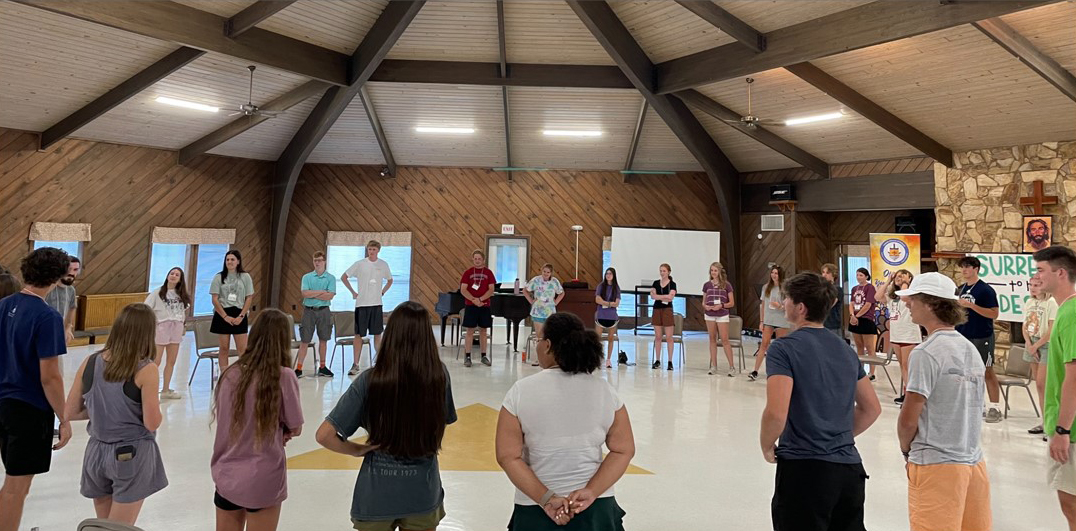
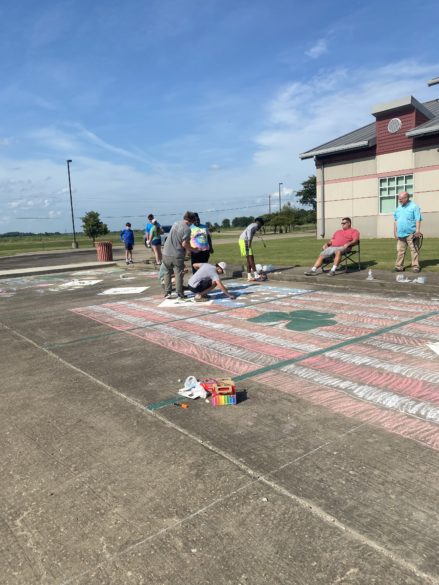
GALLMAN – Youth gathered for a SEARCH retreat July 23-25 at Camp Wesley Pines. SEARCH is a unique experience designed for juniors and seniors who have a strong desire to deepen their faith and relationship with Christ. Each year the Office of Youth Minsitry offers SEARCH retreats. This retreat was themed ‘Explore the Call’ with a focus on Jeremiah 29:11-13. “For I know well the plan I have in mind for you.” (Photo by Abbey Schuhmann)
Summer camp fun
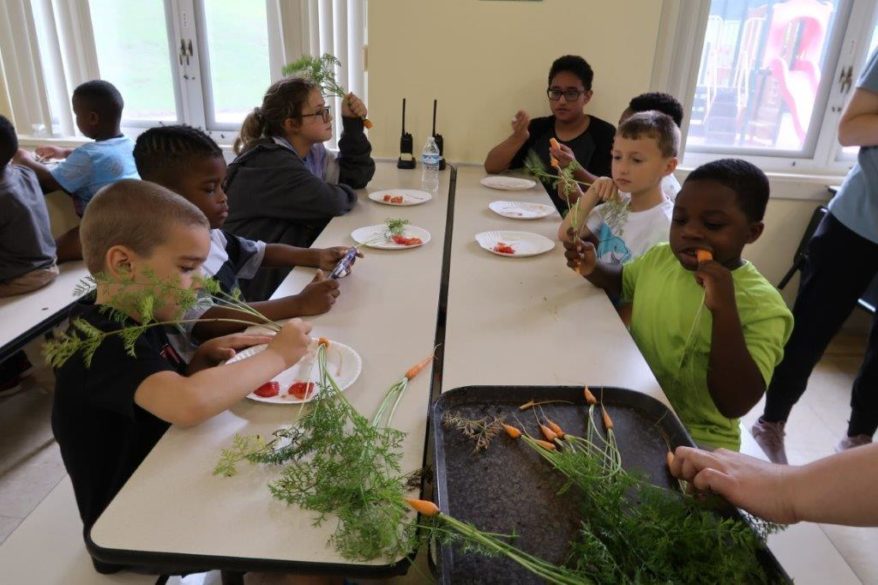
SOUTHAVEN – Summer Camp students at Sacred Heart taste carrots and tomatoes from the children’s garden. The food could be tasted alone or with sugar, salt or Ranch dressing. What do you think they preferred? (Photo by Sister Margaret Sue Broker)
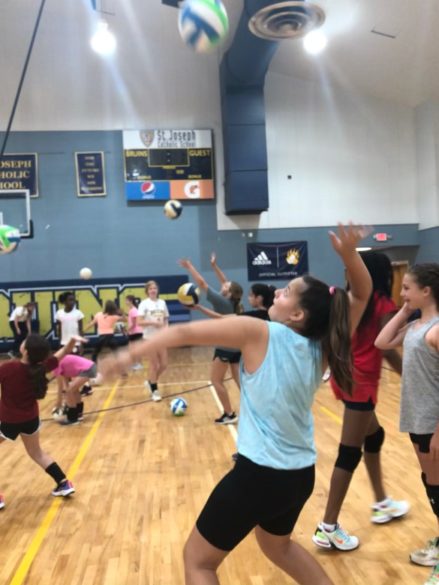
MADISON – Before school begain in August, students kept busy during the summer at St. Joe’s Volleyball camp. (Photo by Tricia Harris)
Vacation Bible School
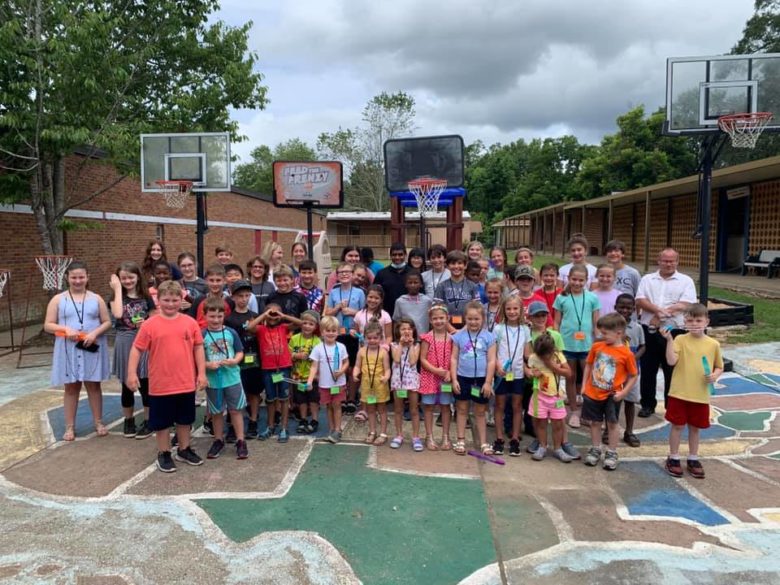
McCOMB – Father Suresh Thirumalareddy surrounded by all the children who attended Vacation Bible School at St. Alphonsus parish. This year’s theme was “God’s Wonder Lab.” (Photo Connie Harrington)
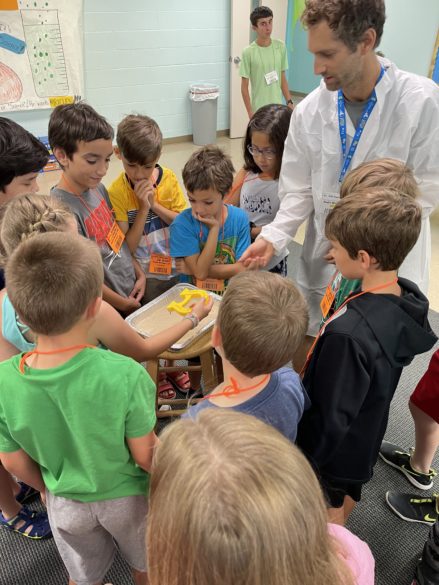
MADISON – VBS instructor, Seth Dean shows a group of young “scientists” how magnets work at St. Francis of Assisi parish. (Photo by Mary Catherine George)
CLARKSDALE – (Left to right) Liza Stonestreet, Madison Williams, Virginia Johnson, Anne Taylor Tackett and Elsie Grace Young dance at St. Elizabeth’s VBS. (Photo by Mary Evelyn Stonestreet)
Graduating seniors recognized
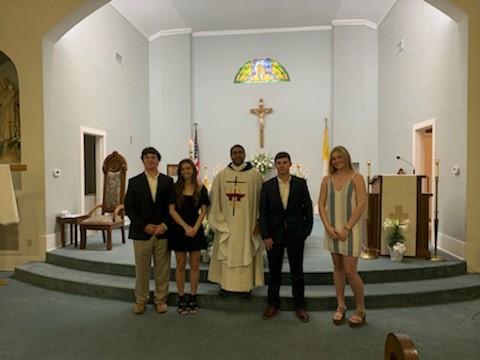
LELAND – St. James parish celebrated their 2021 graduating seniors. Pictured left to right, Reeves Polasini, Madisyn Henry, Father Sleeva Mekala, Walker Zepponi and Lane Walker. (Photo by Deborah Ruggeri)
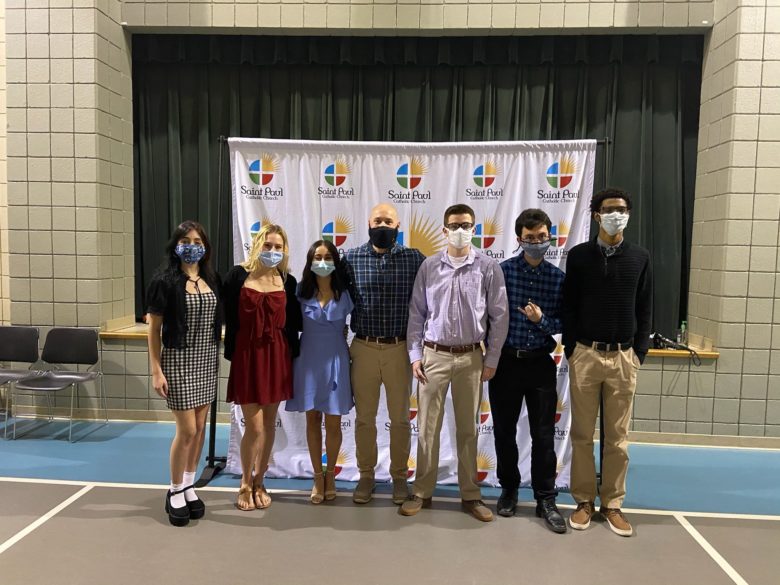
FLOWOOD – St. Paul parish celebrated seniors who graduated in 2021. Pictured left to right, Alexis Boman, Nikki Lawrence, Victoria Esparza, Cory Head (Youth Leader), Brendan McIntyre, Joshua Burton and Ares Colas. (Photo by Renee Borne)
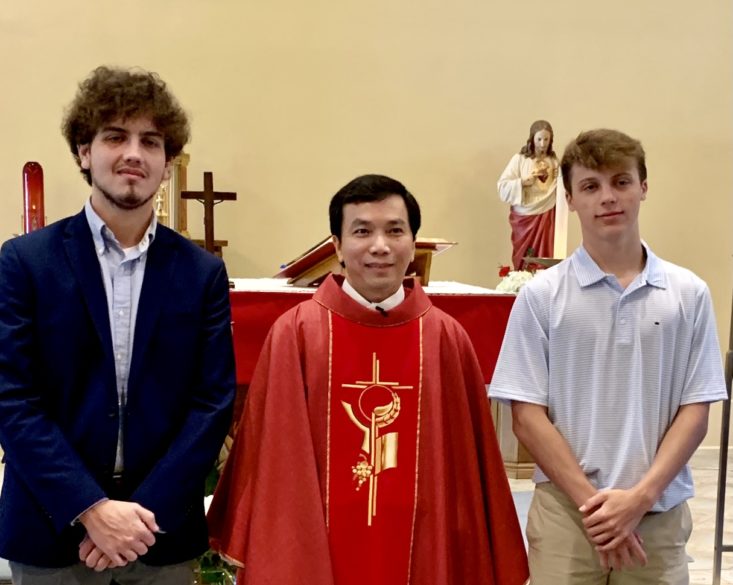
WEST POINT – Father Bihn Nguyen celebrated graduating seniors Dominic Borgioli (left) and Aidan Henson (right) at Immaculate Conception parish. (Photo by Cathy Johnson)
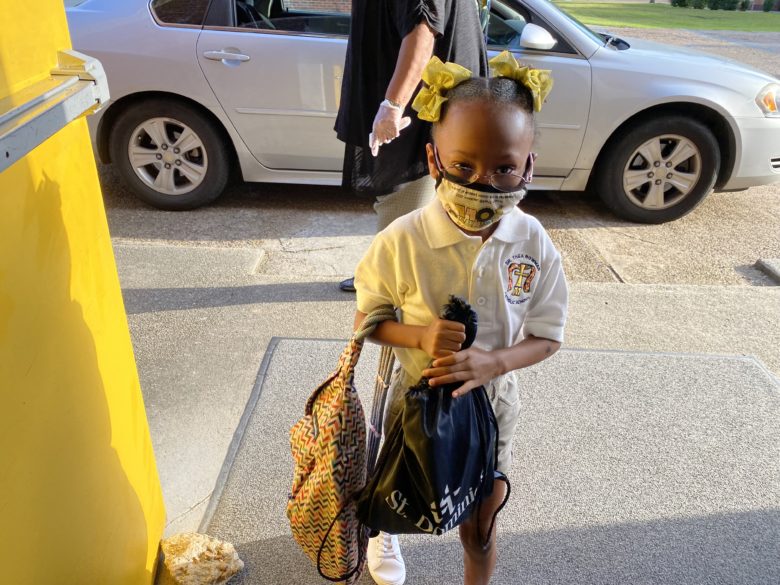
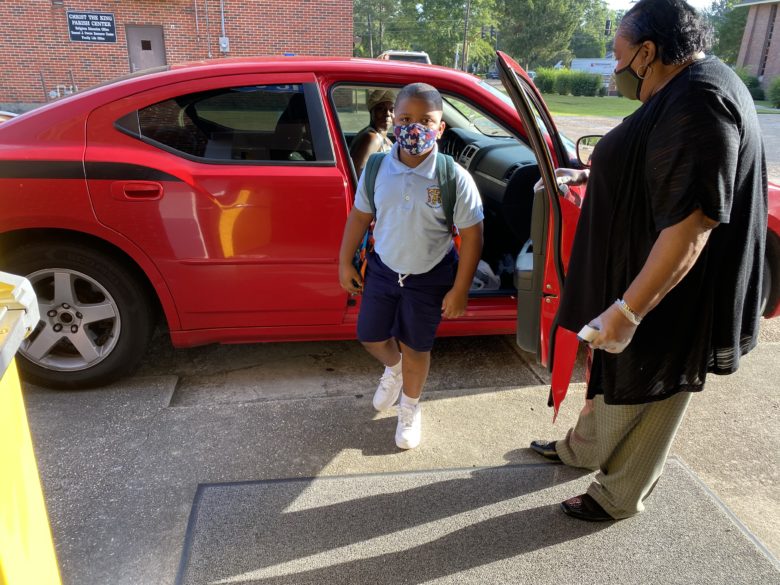
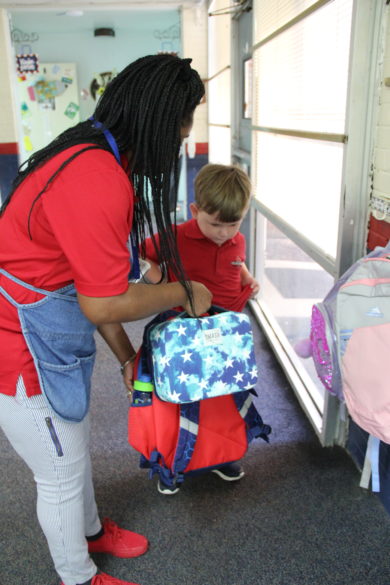
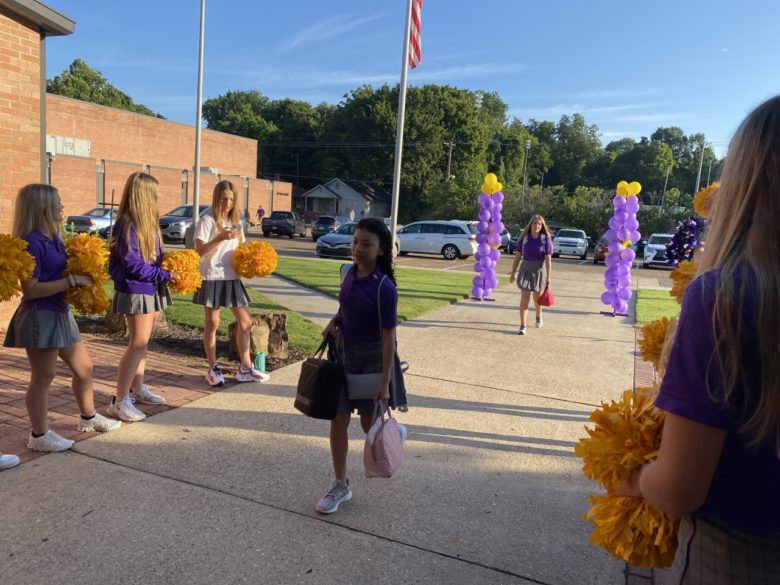
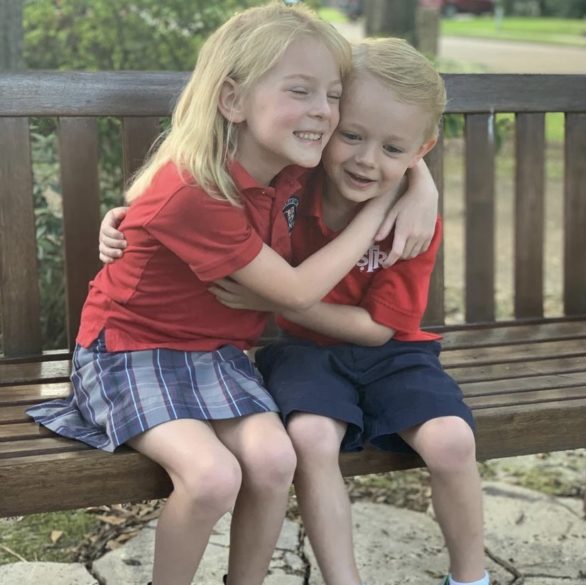
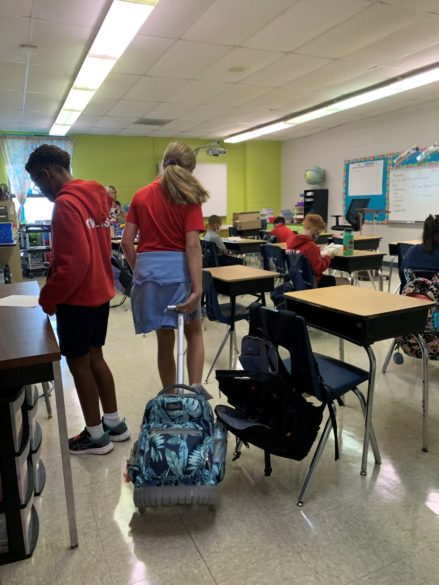
JACKSON – First grade student Ja’Kayla Davis clutches her supply bag tightly on the first day of school at Sister Thea Bowman Elementary as she enters the doors for the 2021-2022 school year. (Photo by Deacon Denzil Lobo)
NATCHEZ – Cathedral School
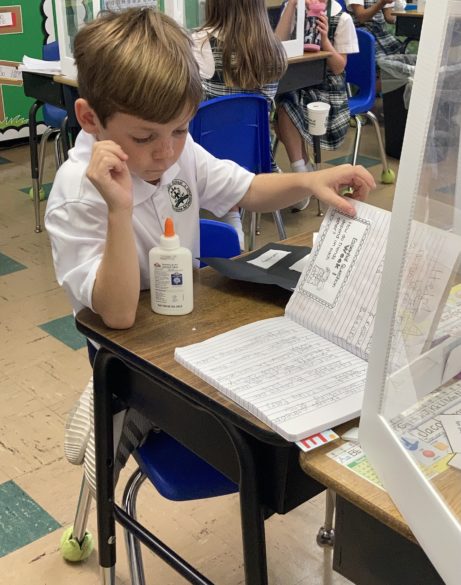
NATCHEZ – Cathedral School second grader, Jett Biglane dives deep into his studies during his first week of school. (Photo by Cara Moody)
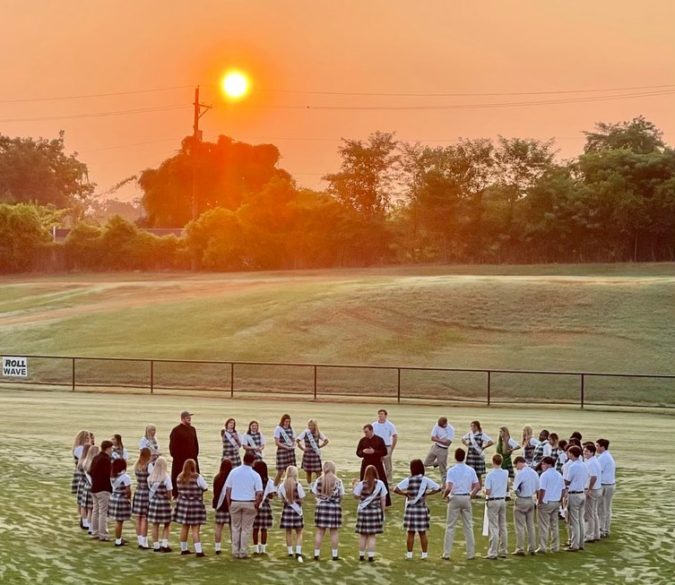
NATCHEZ – The senior class, along with Father Mark Shoffner met on the Cathedral School football field to begin their day with prayer as they watched the sunrise on their last first day of school together. The Senior Sunrise has become a Cathedral School senior class tradition. (Photo courtesy of Cathedral School)
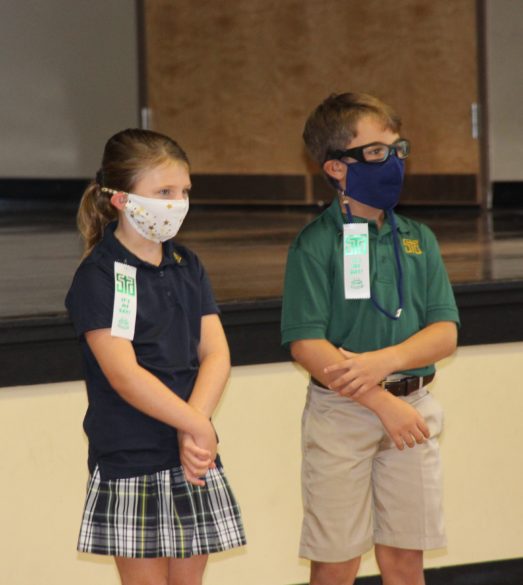
COLUMBUS – Annunciation
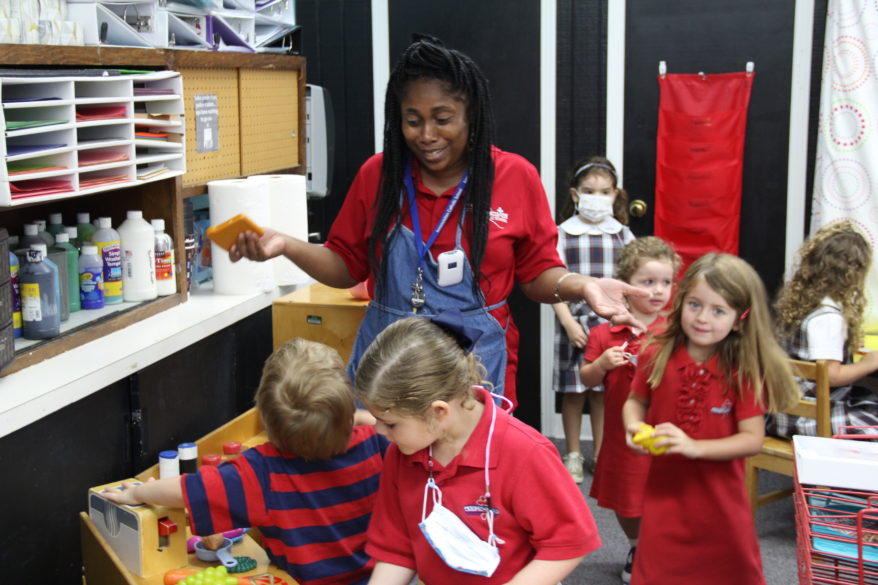
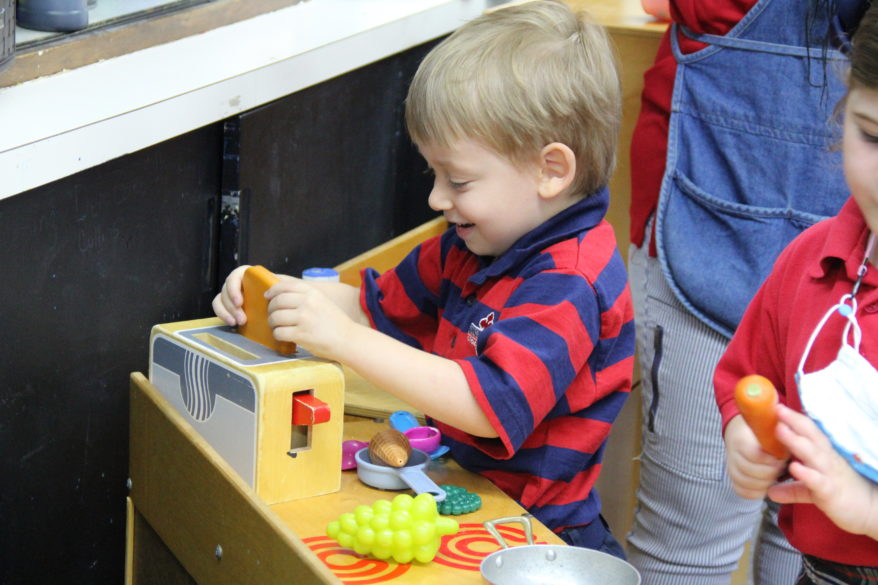
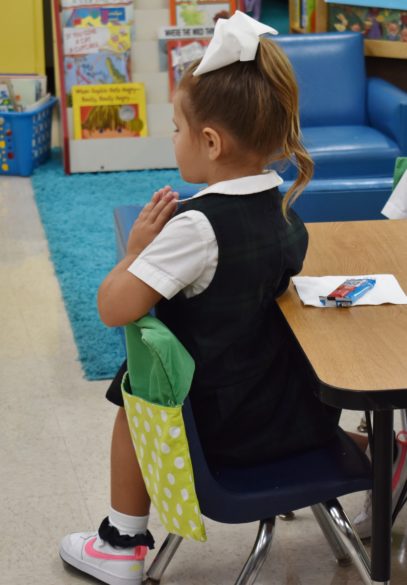
COLUMBUS – Annunciation prekindergarten teacher, Lashander Williams teaches in the home living center on the first day back to school. (Photo by Katie Fenstermacher)
MERIDIAN – St. Patrick
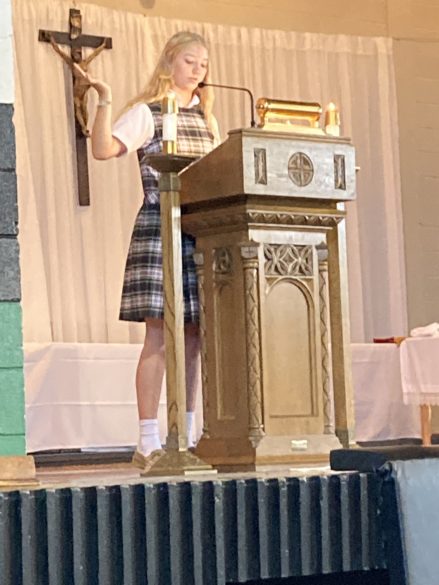
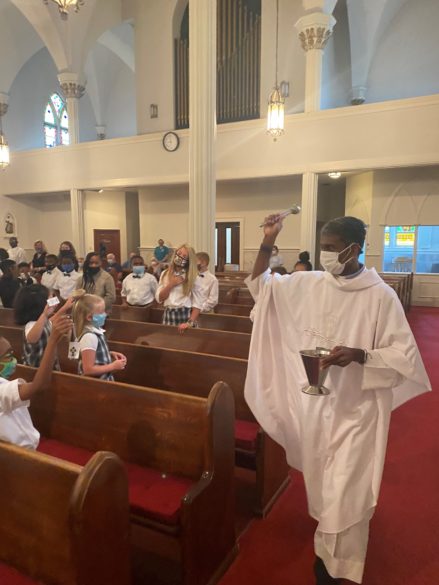
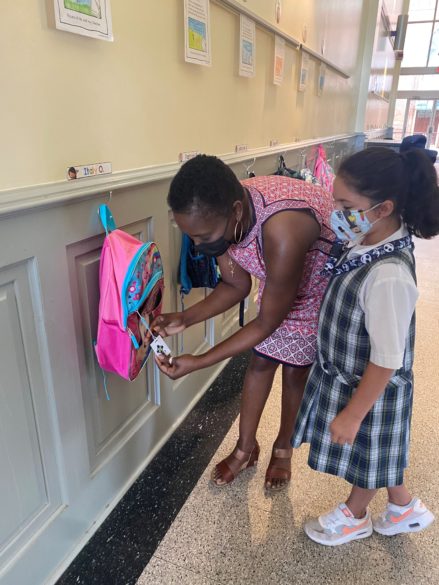
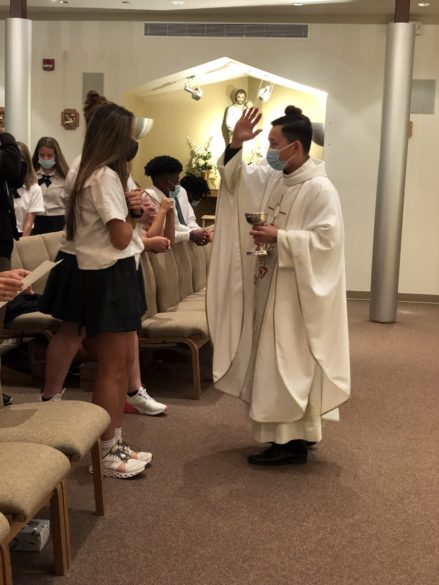
MERIDIAN – Father Augustine blesses St. Patrick Catholic School backpack tags during students first school Mass of the year on Thursday, Aug. 12, 2021. (Photo by courtesy of St. Patrick School)
VICKSBURG
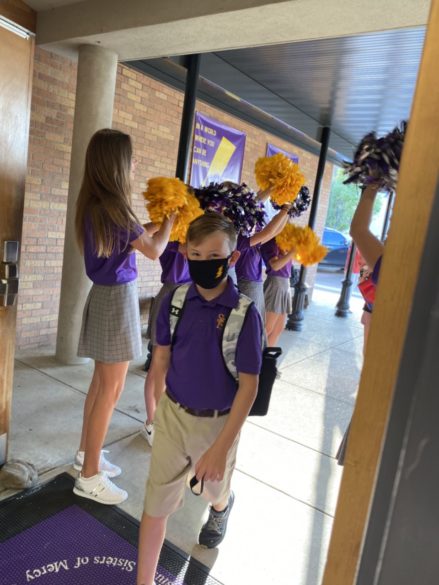
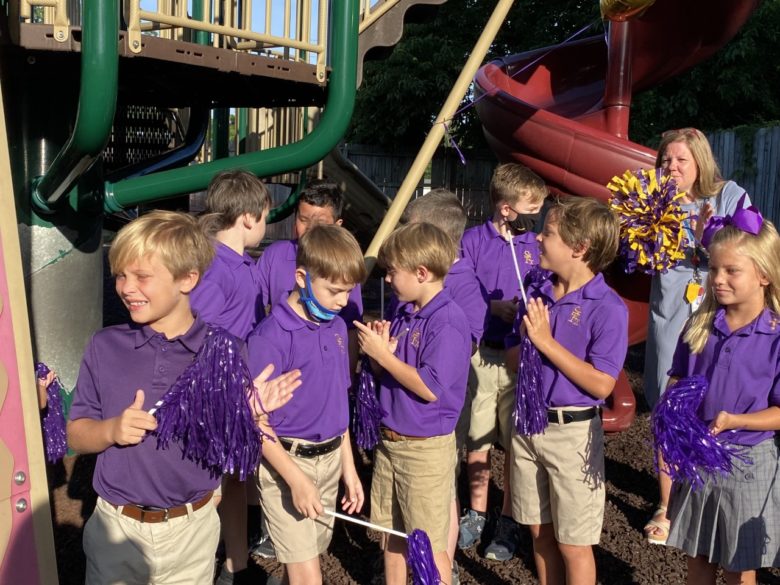
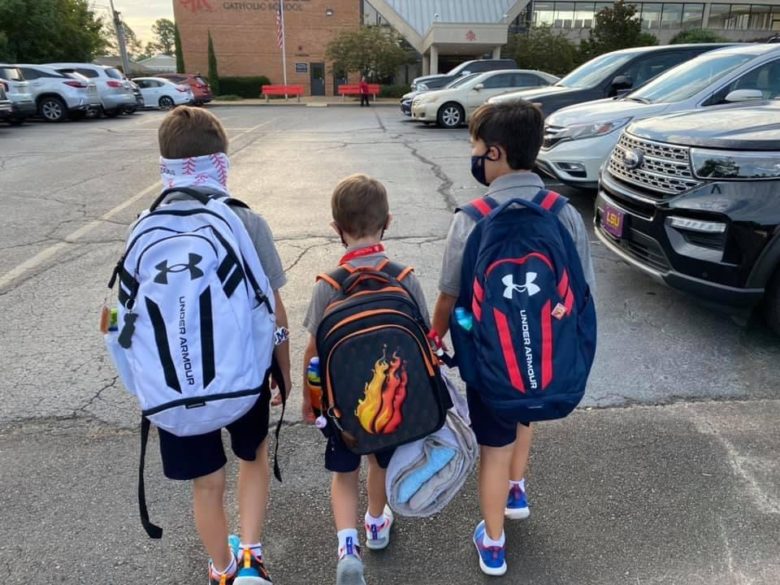
VICKSBURG – Third grader, Jack Stanley, had some pep in his step on his first day of school! (Photo by Lindsey Bradley)
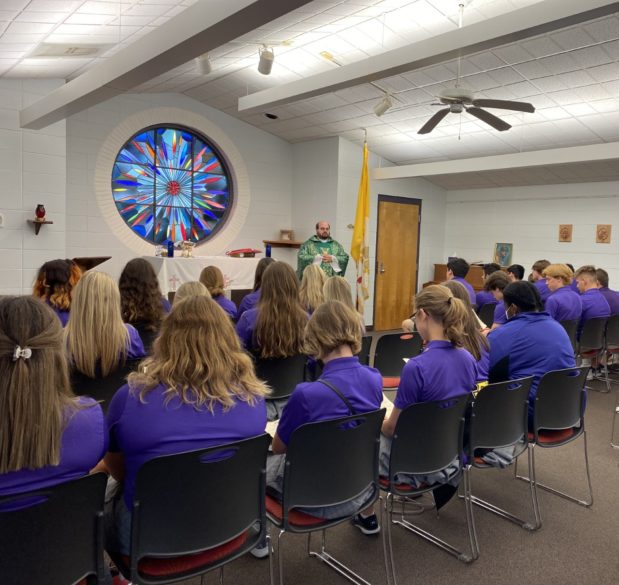
VICKSBURG – The Class of 2022 began the first day of their senior year celebrating Mass with Father Rusty Vincent. As leaders of Vicksburg Catholic School, they will work hard to spark joy for all of the Flashes Family. (Photo courtesy of Vicksburg Catholic Schools)
HOLY SPRING – Holy Family
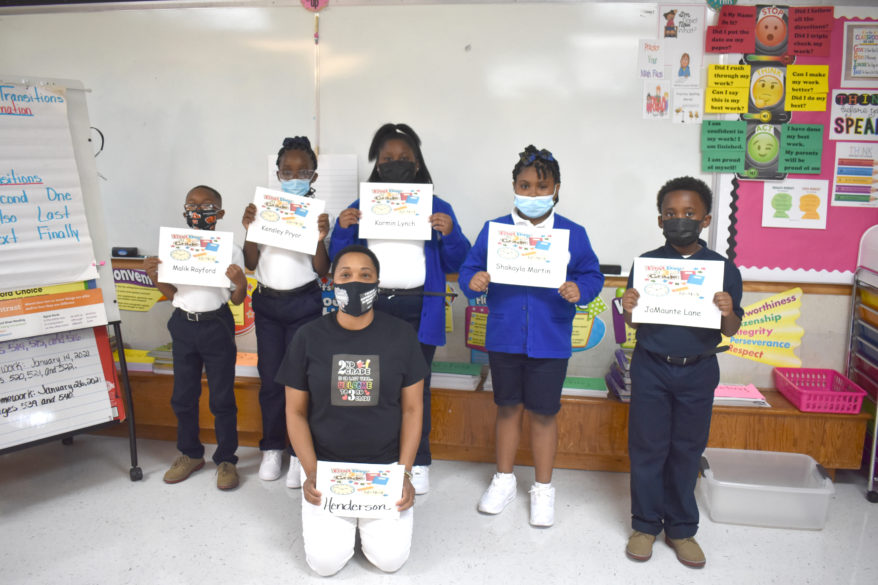
HOLLY SPRINGS – Teacher, Mimi Henderson poses with her second grade class for a first day photo at Holy Family School. (Photo by Laura Grisham)
MADISON – St. Joseph
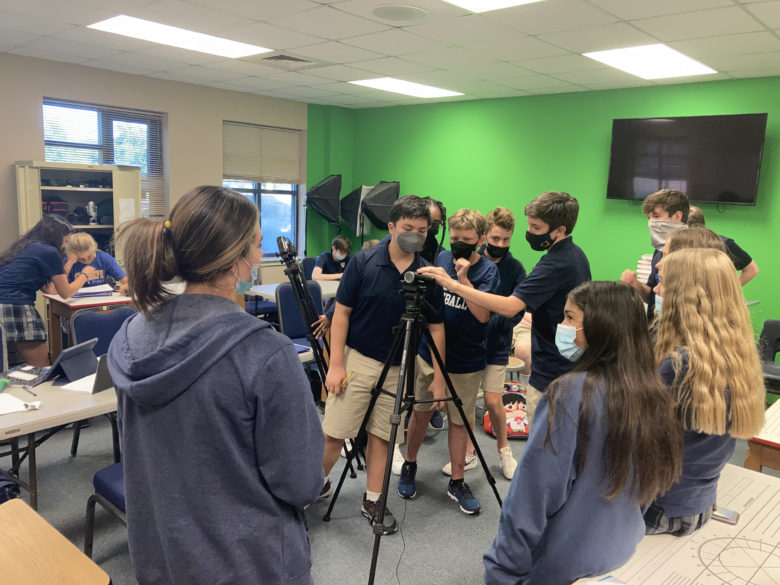
MADISON – Nathan Vuelban, second from left, Jack Rosamon and Trey Compretta listen on Friday as J.J. Tice explains how to shoot video for the award-winning, student-produced weekly newscast Bruin News Now. (Photo by Terry Cassreino)
JACKSON – St. Richard
JACKSON – Father John Bohn visited classrooms and blessed bookbags at St. Richard School. (Photo courtesy of St. Richard School)
GREENVILLE – St. Joseph
GREENVILLE – Kindergarten students, Jayce Roscoe and Owen Swafford, practice writing their names on their first week of school. (Photo by Nikki Thompson)
GREENWOOD – St. Francis
GREENWOOD – St. Francis of Assisi principal Jackie Lewis and sixth grade students pray on Aug. 9 during the dedication of the San Damiano Cross at the school; a gift from the Franciscans of ABVM Province. This was in view of the 70th anniversary of the founding of the school. (Photo courtesy of St. Francis School)
SOUTHAVEN – Sacred Heart
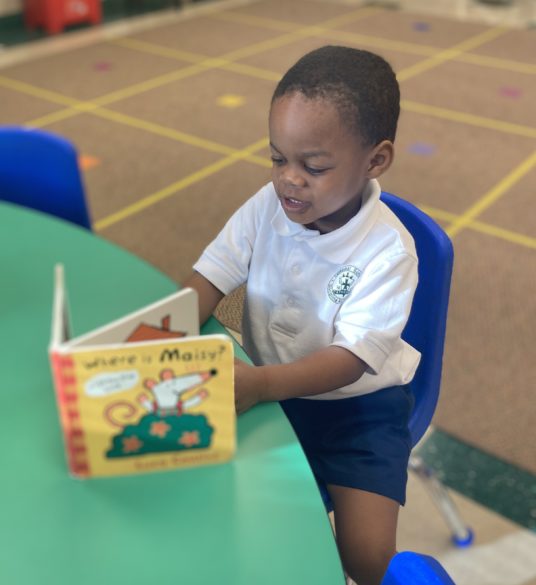
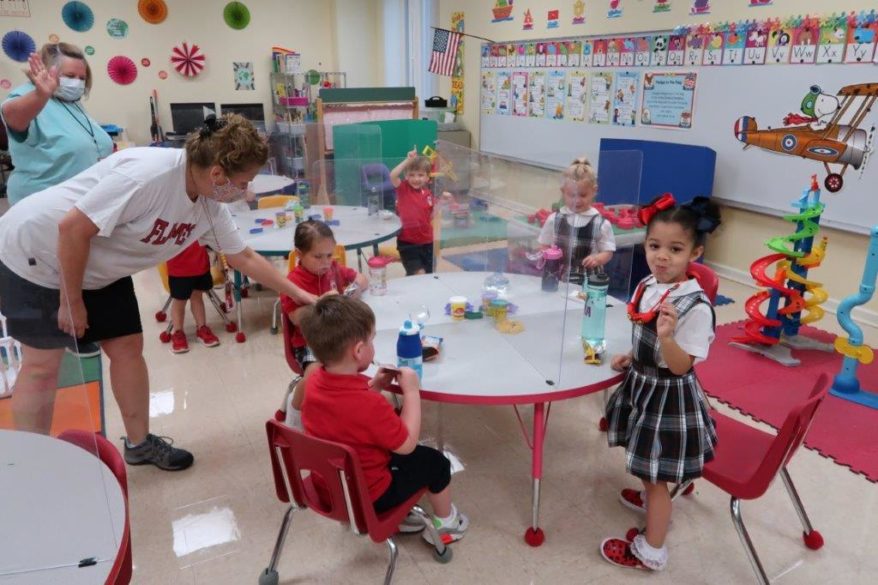
SOUTHAVEN – Teachers Ms. Suzi and Ms. Sue assist the 3-year-old children with their first school snack at Sacred Heart School in Southaven. (Photo courtesy of Sacred Heart School)
MADISON St. Anthony
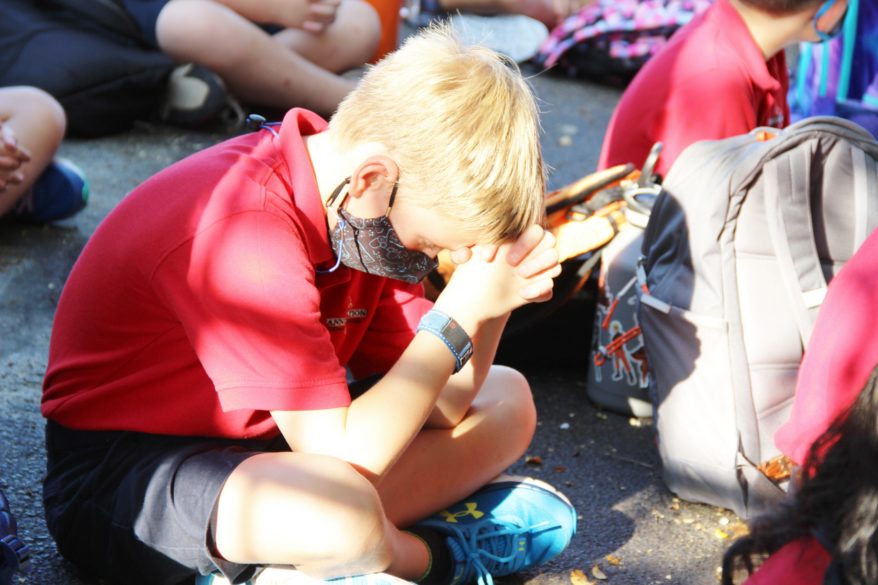
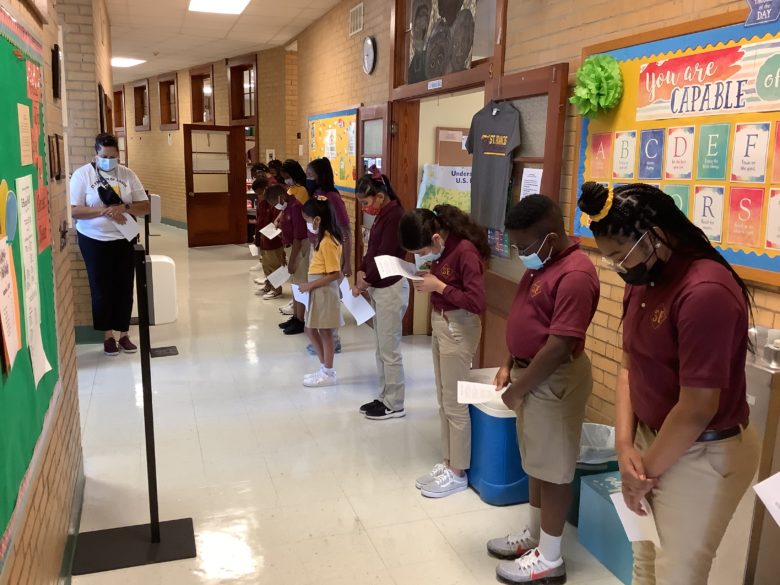
MADISON – St. Anthony fourth grade students Gunner Denman and Maddie Vanderloo spend time in prayer on the first day of school. (Photo by Kati Loyacono)
By Joanna Puddister King JACKSON – There are hungry and homeless in Mississippi. There are college students that need to be ministered to. There are seminarians that need our help to become our future priests. And there are retired priests that need our assistance after a lifetime of service. These are just a few of the ministries that the annual Catholic Service Appeal (CSA) supports.
“Due to COVID protocols, we did not have a second collection in February of 2021 and opted to postpone to a later date. We hoped that we would meet our goal without a second collection for the CSA,” said Rebecca Harris, director of stewardship and development for the diocese. “Unfortunately, that has not happened. We are $344,000 from our goal.”
Parishes will have a second collection on Aug. 28-29 and pledge envelopes will be available to help reach the CSA 2021 goal.
The Catholic Service Appeal is important to many vital ministries of the diocese. These ministries help carry out the mission of the church and reaching this goal will ensure these ministries do not have budget cuts.
There are eleven collective ministries that no one parish could support on its own; however, joined as one, the diocese can make a difference. The appeal supports educating seminarians, Catholic Charities, campus ministry, mission parishes and schools, youth ministry, formational ministries, priest retirement and clergy assistance, evangelizing and communications. More information on each ministry is available on the diocese website.
“We understand that many individuals and families have faced challenges during the pandemic and will not be able to support the CSA due to changing circumstances. Please know that our prayers continue to be with you and your family, and I ask for your prayers for the ministries served by our appeal,” said Harris. “For those who have already given we greatly appreciate your support.”
The theme of this year’s appeal is Embrace – Serve – Inspire, with beloved Servant of God Sister Thea Bowman as the inspiration. She once asked of God, “Touch me with your love so that I can help somebody, so that I can serve somebody, so that I can bless somebody.”
It is not too late to make a difference – to help, to serve, to bless somebody. For online donations and to learn more about each ministry the Catholic Service Appeal supports go to csa.jacksondiocese.org.
By Joe Lee JACKSON – Abducted at age 14 from her Utah family home in 2002 in a kidnapping that drew national media coverage, Elizabeth Smart spent nine months in captivity and had no idea if she would ever see her parents, siblings and friends again.
Very close to parents who brought her up in The Church of Jesus Christ of Latter-day Saints, Smart leaned hard on her faith during her ordeal.
“I was raised believing the family unit was forever,” she said. “Even if I had died while in captivity, there would still be a brother or grandparent – my family would still be a family. Conversely, if I got home and learned one of my parents had died, I knew I would see them again one day, and we would still be a family. That was a very large source of comfort to me.”
Now 34 and married with three small children, the national bestselling author will sign copies of My Story and Where There’s Hope at Bravo Restaurant of Jackson at a meet-and-greet from 6-8 p.m. on Monday, Sept. 13. She’s the keynote speaker the following day at the annual Journey of Hope luncheon, presented by Catholic Charities, Inc. at the Jackson Convention Complex.
In addition to being a devoted wife and mother, Smart is president of the Elizabeth Smart Foundation, which focuses on fighting sexual exploitation, advocacy, and prevention education. Not surprisingly, she is quite passionate about using her platform to help young girls and women who may not realize they are at risk.
Smart, however, was hardly ready to discuss what had happened to her in the immediate aftermath. And while it took the case against captor Brian David Mitchell and his wife, Wanda Barzee, a whopping eight years to go to trial, a silver lining of having to testify in open court about what she endured was Smart deciding she was ready to go public with her story and begin her advocacy.
“I initially swore I would never do a book, a movie,” Smart said. “When I first got home (in 2003), I didn’t really understand what therapy was. In the first 48-72 hours I was taken to a children’s advocacy center where I was extensively interviewed by two middle-aged male psychiatrists.”
“They were very religious and good at their jobs, but I’d been abused – a lot – for nine months in just about every way you can imagine by middle-aged men who used religion to manipulate. Speaking to men so graphically about being raped was horrific, devastating. When I got out of that room, I thought, ‘If this is what therapy is, I don’t ever want to do it again.’
“Looking back, those men were investigators gathering evidence, and they were doing their jobs. They weren’t therapists, and I believe in therapy 100 percent,” Smart said. “After the trial, I realized my story deserved more than a list of ‘bullet points.’ I knew there was value in it because what I went through could help people understand and change, provide some amount of hope in their lives. That’s what pushed me to tell my story, to become involved in pieces of legislation.”
Smart will bring a message of situational awareness to her audiences in Jackson, as well as one of deep, abiding faith for young girls and women who’ve suffered.
“My favorite campaign that we do for the Elizabeth Smart Foundation is ‘We Believe You,” which is in support of victims knowing we believe them,” she said. “If you doubt their story, that can set the trajectory for whether they pursue healing in a positive or negative way: ‘If Mom didn’t believe me, no one will.’ It’s a poison that can kill you from the inside out.
“I want females to know they’re daughters of God, and that He loves them more than they can ever imagine. I want them to recognize that everything taken away from them and everything that caused them distress can be healed,” said Smart.
Journey of Hope luncheon: Tuesday, Sept. 14 from 12-1 p.m. at the Jackson Convention Complex. Elizabeth will speak for 30 minutes and will be followed by Johanna Beeland of the Mississippi Attorney General’s Office, who will speak on human trafficking in our state.
Human trafficking prevention and victim services to be featured at Journey of Hope
By Joe Lee JACKSON – Human trafficking, including the kind of torture and suffering Elizabeth Smart went through for almost a year, is real, and happens right here in Mississippi. It takes great courage and trust to speak up after being traumatized, but valuable and completely confidential resources are always available.
“In order to prevent human trafficking, communities must rally together and be made aware that it exists,” said Wanda Thomas, executive director of Catholic Charities, Inc. (CCI).
“We want to make certain that children, youth, parents and at-risk adults in our cities are educated. It is important to bring awareness through factual details of what trafficking looks like. Furthermore, we want to provide education as it relates to recovery after rescue.”
CCI’s victim services program furnishes trafficking victims with shelter, food, medical attention, clothing, counseling, legal information and assistance with crime victim compensation. The Healing Hearts program, also a service of CCI, offers specific trauma counseling for both young girls and adult women.
“For our youth, we have Trauma Focused-Cognitive Behavior Therapy (TF-CBT),” said Lakeisha Davis, CCI community service program director. “TF-CBT is especially sensitive to the unique problems of youth with post-traumatic stress and mood disorders resulting from sexual abuse, violence or grief. We move at the pace of our client, and no process is rushed or has a time limit. We are here as long as it takes.
“Our women also receive intense trauma therapy. Again, we know and understand that trauma is real and healing hurts. Our last phase is reprogramming, where we rewrite the story with our client, teaching our client to reconnect with others, to develop social skills, and we allow her to mourn the losses from those years spent in survival mode. We believe in validation, acceptance and, most of all, healing.”
Johanna Beeland, deputy director of engagement and human trafficking manager for the Mississippi Attorney General’s Office, will speak at the Journey of Hope luncheon about helping trafficking victims recover with hope and dignity.
“We have an interactive services map and potential access to the crime victims’ compensation fund,” Beeland said. “We encourage all victims, or anyone who may know of someone being trafficked, to report that information to the National Human Trafficking Hotline.
“Tips can be reported anonymously, 24/7, and are directed to local authorities on the ground, like our office, in real time, to ensure quick and timely responses to possible victims. I’ll also be sharing information on the signs that you or someone you know is being trafficked, and how to report trafficking.”
Call the National Human Trafficking Hotline at 1-888-373-7888, or text the word INFO to 233733. For more information on victim assistance at the Mississippi Attorney General’s Office, visit www.AttorneyGeneralLynnFitch.com. Visit Catholic Charities Inc. at catholiccharitiesusa.org.
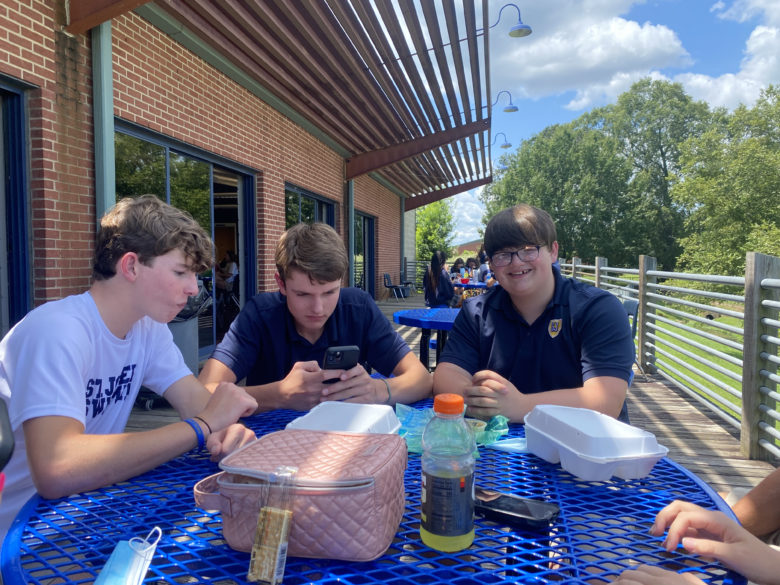
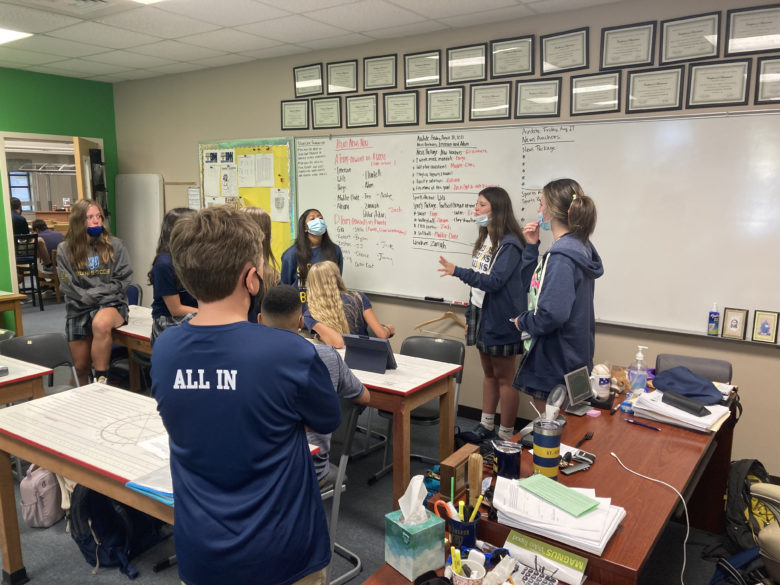
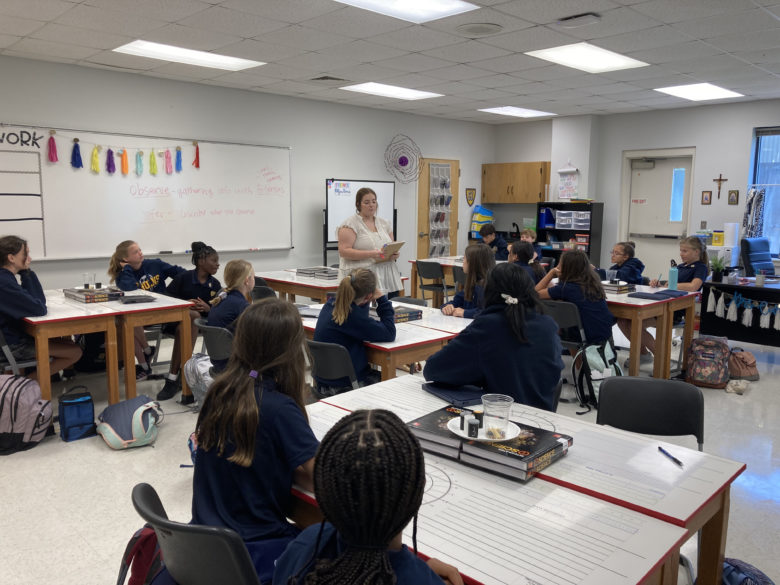
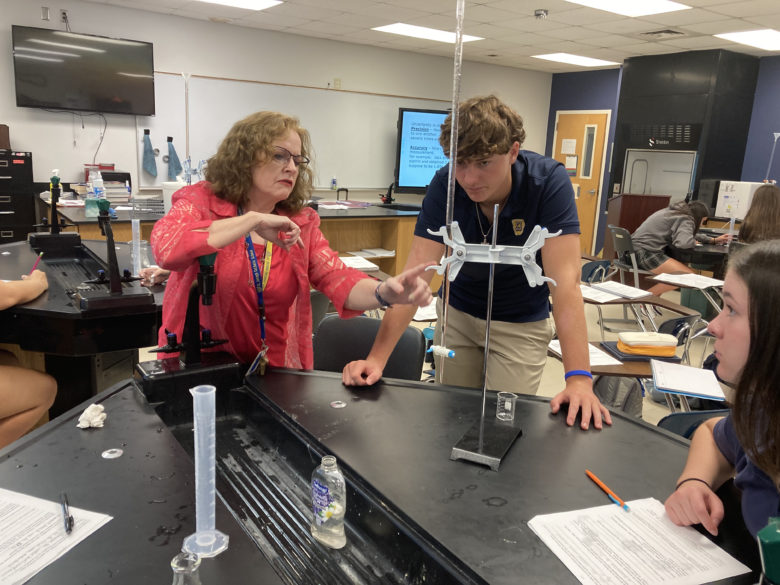
By Joanna Puddister King and Stephanie Brown JACKSON – The 2020-2021 school year was one like no other before it. First, the pandemic challenged the Office of Catholic Education to assess how it has functioned and how they can best support schools in the diocese. As schools navigated the year, new tasks and responsibilities were created to deal with the demands of virtual learning, contact tracing and overall management of our response. Then, in March of 2021, it was announced that Superintendent, Cathy Cook, was planning to retire.
When Cook’s retirement was announced, it opened the door for the office to critically examine how to address areas of improvement that they observed during their system-wide accreditation that came to fruition in October 2019; as well as, make any changes to the structure of the office.
“To help us better understand our schools’ current trajectory, we decided to dive into as much data as possible. We looked at survey results, enrollment, and finance figures, as well as current policies. After looking at everything, it was determined it is time to do something different. One theme that we focused on was the difference between a public-school superintendent and a Catholic school superintendent. While their titles are the same, the scope and authority of the roles are very different,” explained Karla Luke of the Office of Catholic Education.
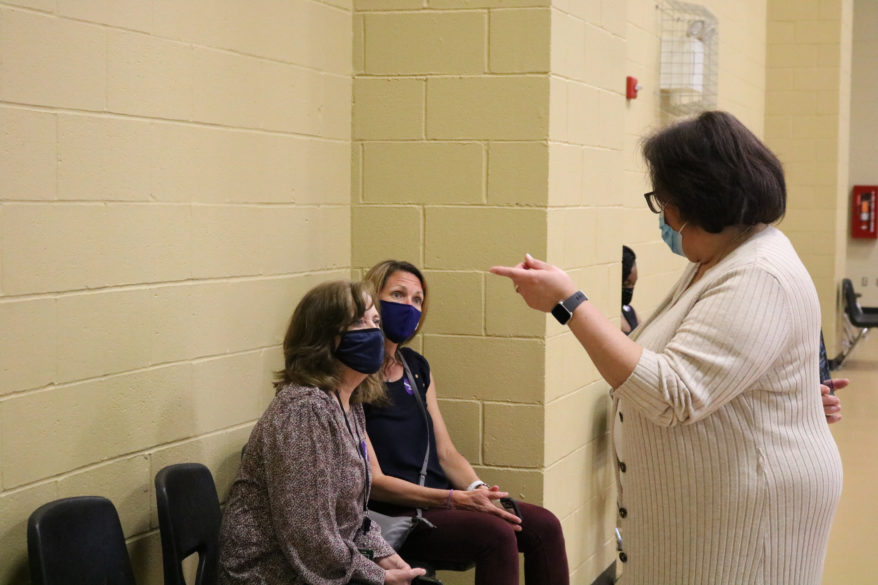
MADISON – Karla Luke speaks to St. Anthony principal, Anne Cowger and fifth grade teacher, Katie Williams, at a vaccination event at the school in March. The Office of Catholic Education was restructured and Luke is now the executive director of school operations. (Photo by Joanna Puddister King)
The office even reached out to Kathy Mears, a senior consultant for the National Catholic Educational Association, to discuss national trends that should be considered. “She explained that many dioceses across the country are reevaluating the structure of their education offices to try to meet the needs of their schools better,” said Luke.
After much discussion and research, the office decided to make a move. Rather than seek to fill the superintendent position, it was decided that the Office of Catholic Education would have three new positions: executive director of school operations, director of curriculum and development, and coordinator of school support. Luke, believes that a change in title and reassignment of responsibilities will better articulate what the office does to best serve schools in the diocese.
Luke has assumed the position of executive director of school operations for the diocese. In this role, she will continue many of her responsibilities as associate superintendent and interim superintendent. In addition, this position will oversee the diocesan advisory council for education, local school advisory councils, personnel and legal issues, parent and student concerns, and government programs.
Stephanie Brown, the former assistant superintendent, assumes the position of director of curriculum and development. Previously, Brown oversaw the accreditation process, curriculum, assessment and professional development. In this new role, she will also work closely with the Department of Temporal Affairs on ensuring financial viability and increasing enrollment in all diocesan schools.
The third position in the restructured office will be the coordinator of school support. This role will be similar to an administrative assistant but will play an active role in daily operations at diocesan schools. “We hope that this position’s addition will help us streamline many of our administrative tasks, such as record-keeping and verification, school reporting and textbook procurement,” said Brown. They are actively looking for the right person to join the office in this new role.
The Office of Education, working in its newly established structure, recognizes that they have a great deal to be proud of and a great deal of work to do moving forward; and have set five areas of focus for the coming year and beyond. Their number one priority will be focusing on marketing, development and advancement. While increasing enrollment is always a goal, the office recognizes that they must also seek alternative sources of income outside of just tuition. “As the cost of living rises, we must find the funds necessary to provide all staff members with equitable wages that they deserve while also pursuing the resources and infrastructure needed to provide the highest quality of education to all of our students” said Luke. “It is important to look for other ways to keep our schools financially viable outside of raising tuition.”
Second, the office hopes to improve their service and outreach to minority communities across the diocese. “When we look at enrollment trends at our schools that serve our minority communities, we see a larger decline in enrollment,” said Brown. “We have challenged ourselves to find ways to better meet the needs of these communities by looking at barriers to accessibility.”
Their next goal is to continue to focus on college and career readiness, with a large emphasis on career planning. “We hope to help our students identify their God-given strengths and talents and set them on a path toward success in a career they will enjoy by providing the tools they need to adequately prepare for college or whatever their next step may be,” expressed Brown.
Additionally, the office also hopes to standardize clerical tasks completed at schools across the diocese. Brown said that they found that many staff members and administrators at schools spend time doing tasks that could easily be consolidated and performed at the diocesan level. “With the addition of the Coordinator of School Support, we hope to find ways to free up the time of our administrators by taking these tasks off of their plate.”
Finally, just as the office evaluated roles and job descriptions, they hope to spend time clarifying job descriptions for all positions within our schools. “Accountability is the key to forward movement. We hope that by clearly delineating responsibilities, everyone can better understand their role in moving our school communities forward,” said Luke.
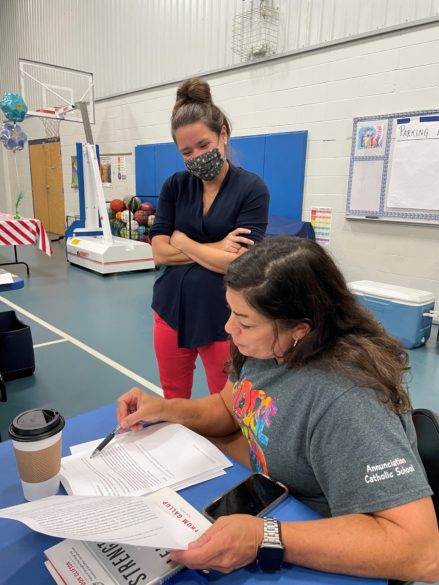
COLUMBUS – Stephanie Brown, director of curriculum and development, leads a teacher’s retreat at Annunciation Catholic School in August. (Photo courtesy of Annunciation School)
From the Archives By Mary Woodward JACKSON – A bishop’s life is full of travel around the diocese to visit parishes, schools and missions. This time of year, it involves school masses for the opening of the new academic year. Because of COVID, these celebrations did not occur last August.
Confirmation celebrations have Bishop Joseph Kopacz all over the diocese from one end to the other. These celebrations normally take place between Easter and Pentecost, but due to schedules and once again the pandemic, Confirmation celebrations have been spread out into the summer months.
This weekend Bishop Kopacz will be in Ripley at St. Matthew Mission to confer Confirmation on more than a dozen young people. Ripley is in Tippah County, and I have a special connection to the area because my maternal grandmother’s family is from Tippah County. My great-grandparents are buried in the Pine Hill Cemetery just outside of Ripley on the way to Walnut.
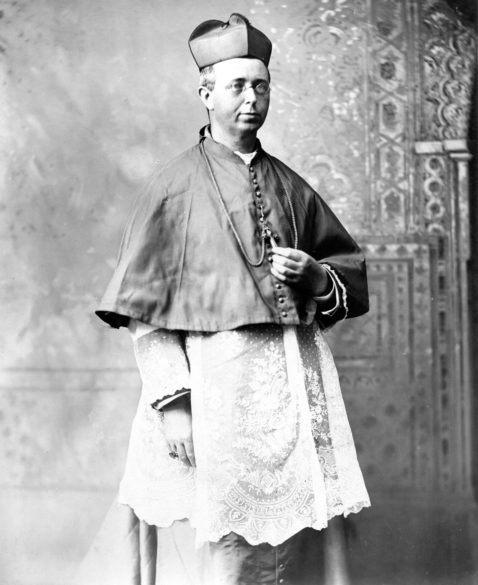
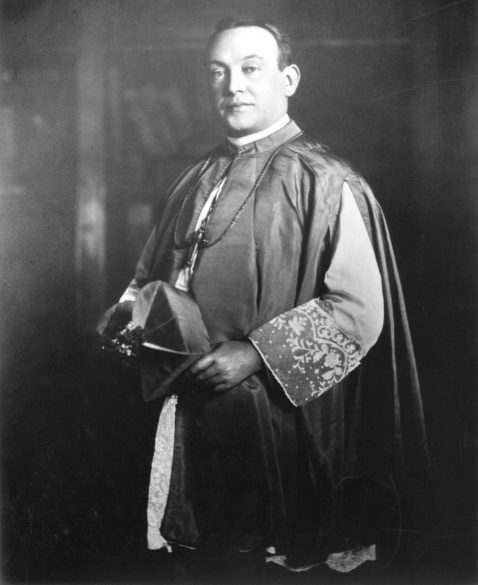
Bishop Thomas Heslin, the fifth bishop of the diocese, died on Feb. 22, 1911. He guided the diocesan church through the turn of the century. A few weeks prior to his death while visiting churches in East Central Mississippi, he met with an unfortunate accident. Bishop Heslin most likely suffered a broken rib from this accident and may have ultimately succumbed to pneumonia. (Photos from archives)
Suffice it to say that our diocese being the largest diocese geographically east of the Mississippi River creates long drives. Tippah County borders Tennessee and is part of the rolling hills section of the state where beautiful views can be found around various bends in the road. Ripley is close to a four-hour drive from Jackson.
Imagine travelling to Ripley on horseback or in a cart from Natchez as was done in the early days of our diocese. This was the life of our bishops back in the day even up into the early 1900s when Bishop Thomas Heslin was making his way around the diocese for Confirmation celebrations.
Let me share a particular instance from Bishop John Gunn’s diary dated June 8, 1912, in which he accounts for an unfortunate incident that led to Bishop Heslin’s ultimate demise. It may give a better appreciation for a bishop’s life on the road.
“Visit to Montpelier. This is a little mission chapel about 13 miles from West Point, without a railroad and with the poorest roads imaginable. On the way out from West Point to Montpelier I heard a story about Bishop Heslin which is worth recording.
“The good Bishop was, like myself, going out to the little chapel to give Confirmation. The best pair of mules in the neighborhood were commandeered to bring the Bishop out. The Bishop’s carriage was a spring wagon and a plank put over the sideboards formed the cushions for the driver and the Bishop.
“The roads were of that peculiar type known in Mississippi as ‘corduroy’ roads. Branches of trees, stumps, logs, etc. are imbedded in the mud roads during the Winter, In the Spring these are covered with dirt and there is a good road until the first rain comes. Then the dirt is washed up and the stumps are very much in evidence, especially when the mules get into a trot.
“It seems that on the past visit of Bishop Heslin, the driver talked all he knew about cotton, lumber, and the country and talked so much that the mules fell asleep. It is thought that Bishop Heslin – if he was not asleep, was at least nodding – and at the moment the driver woke up and commenced to whip the mules into some kind of activity. “The sudden start caught the Bishop unprepared and he made a double somersault over the spring wagon and fell on the road. The driver was so busy with the mules that he forgot the Bishop and did not know of the mishap for nearly half a mile.
“Then there was the difficulty of turning the pair of mules on the road and a convenient turning spot had to be reached. This delayed the recovery of the Bishop for a considerable time and when the mule driver and his mules found the Bishop – Bishop Heslin was in a dead faint.
“The good Bishop was a big man and a heavy man, and the mule driver was lean and lanky and there was no help in sight or available. There was nothing to do only to take the sideboards from the wagon and form an inclined plane and roll the Bishop up the plane and make him comfortable in the wagon. “He recovered consciousness before he reached West Point.
“It is said that the Bishop never really recovered from the shock and the injury sustained by this fall.
“The driver who brought me out to Montpelier was the same one who had brought Bishop Heslin and he gave me the story as written.”
Bishop John Edward Gunn, a Marist priest, was the sixth Bishop of Natchez. He was known as brilliant orator and for having tremendous energy. Through his writings, we learn that Bishop Heslin suffered a fall while travelling around the diocese for Confirmation celebrations in 1910.
This incident would have occurred most likely in 1910 because Bishop Heslin died in February 1911.
Bishop Gunn concludes his description of his own arrival and visit in Montpelier thusly: “I arrived at Montpelier for supper. The day was hot, and all the neighbors of the little village were invited to sup with me.
“There was a table spread for all comers on a kind of porch. The neighbors supplied the feed and there was plenty of it. I think that all the flies of the country got notice because they were present like the locusts of Egypt. They were in everything, tasting everything, and lighting everywhere, especially on the bishop’s nose.
“A few girls got branches of trees and used them to keep the flies away. It was all right as long as the girls minded their business but when they forgot the flies and hit the guests there was some embarrassment.
“We had Mass and confirmation in the little chapel, which strange to say was dedicated to St. Patrick and for that reason several parts of it were painted green. We returned to celebrate Sunday.”
More from Bishop Gunn next time…
(Mary Woodward is Chancellor and Archivist for the Diocese of Jackson)
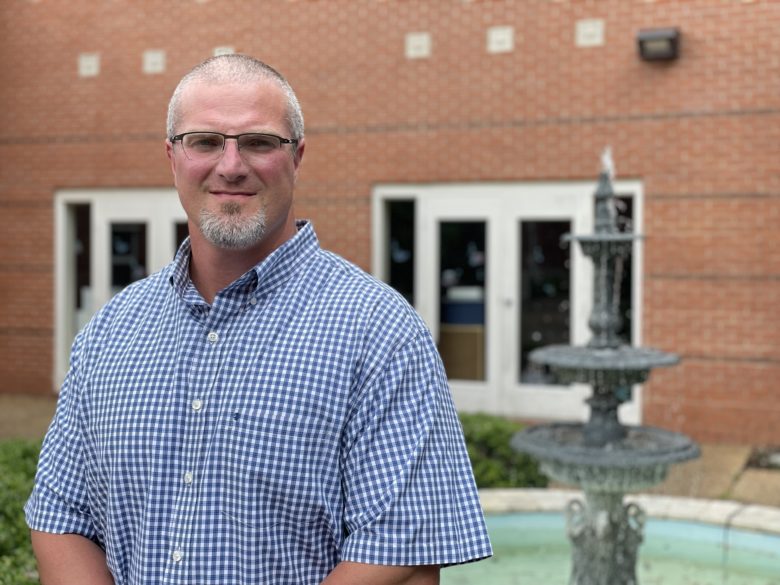
Will Vollor – St. Patrick School, Meridian This year, like every year of his career, Will Vollor says he looks forward to serving others. This year he will get to serve and support the teachers, staff, parents and students at St Patrick School in Meridian. Vollor was named principal of St. Patrick last spring and has hit the ground running as he prepared for this school year. Vollor received his bachelor’s degree from the University of Mississippi, and master’s degree from Mississippi College. Before becoming principal of St Patrick, he taught and coached at St Aloysius High School in Vicksburg, and Lamar School, Enterprise-Clarke High School, and Northeast Lauderdale High School in the Meridian area.
Will Vollor, St. Patrick School, Meridian
When asked what made him decide to go into education he said, “Several members of my family were educators, so I had a great deal of admiration for the profession. Most influential to me as an educator was Valera Meachum Vollor. Besides being my grandmother and hero, she was a teacher herself at St. Francis Xavier Elementary School in Vicksburg for twenty-two years.”
Vollor is married to Leslie Horn Vollor, and they have two daughters, Anne Larkin and Lauren. They are active members of St. Patrick Catholic Church, where they have taught both parish school of religion and children’s church in the 10 years that they have resided in Meridian.
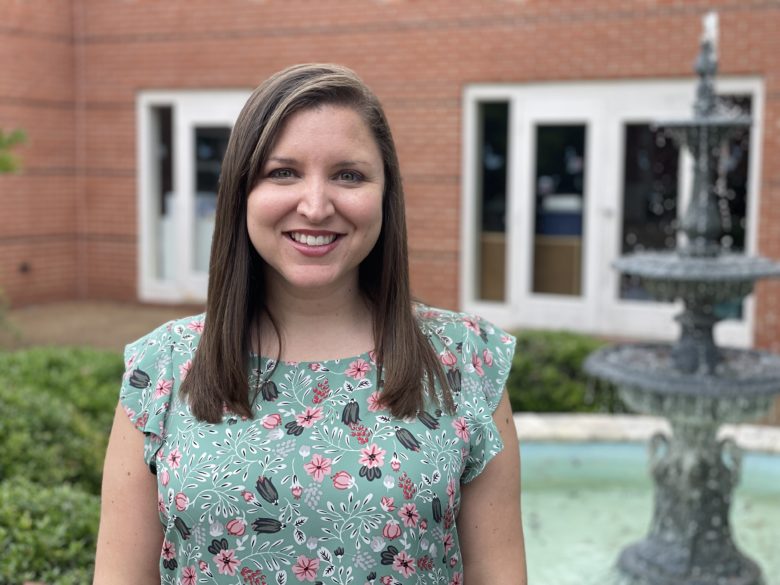
Jessica Carter – Cathedral School, Natchez In April, Jessica Carter was named the next lead administrator of Cathedral School in Natchez. This year marks somewhat of a homecoming for Carter as she has previously served as a teacher and the middle school coordinator at Cathedral. She comes to her new position with fourteen years of experience in education, including four years as the assistant principal at Vidalia High School in Vidalia, Louisiana. Carter received her bachelor’s degree from Louisiana State University and master’s degrees from Louisiana State University and the University of Louisiana at Monroe. Carter is married to her husband Mark, who is an alumnus of Cathedral School. They have two children, Macy, who is in fourth grade, and Maddie Paige, who is one year old. They are active members of St. Mary Basilica parish.
Jessica Carter, Cathedral School, Natchez
When she accepted this new position, Carter said, “I am excited to serve as the next lead administrator of Cathedral Catholic School. I am deeply honored to be entrusted with the leadership of our great school and want to thank Father Scott Thomas and the principal search committee for bestowing upon me this great responsibility. As a member of St. Mary Basilica and past employee of Cathedral, I want the tradition of a rich Catholic education to continue in our community. I want to lead the school to continued success and build on the positive impact it has had for students, parents, alumni, stakeholders and the community since 1847.”