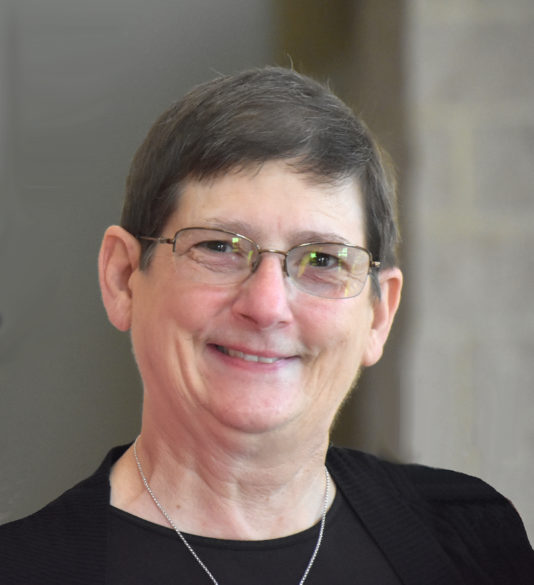
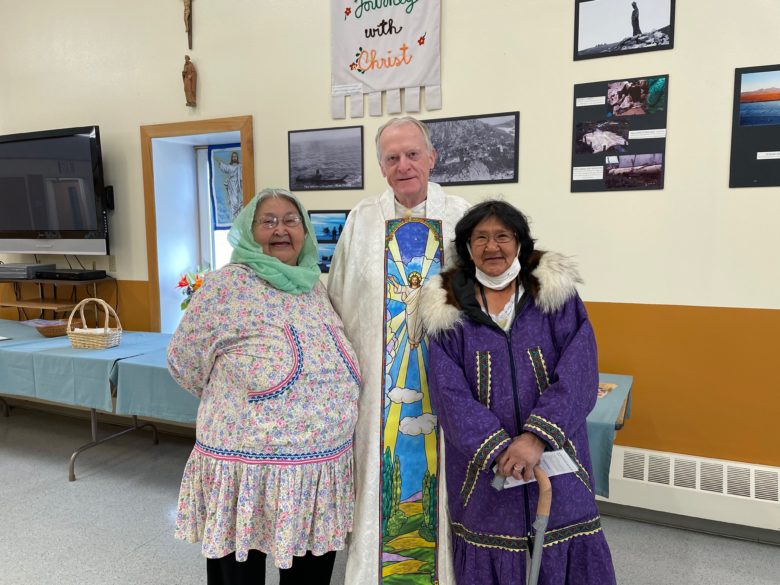
MILWAUKEE, Wis. – More than three dozen School Sisters of St. Francis of the United States Province will celebrate milestone anniversaries of service as women religious in 2021. One sister celebrating a milestone is Sister Rose Hacker, currently serving at Sacred Heart Southern Missions in Walls.
Sister Rose Hacker was born in Pratt, Kansas. She received a bachelor of arts degree in biology from Fort Hays State University in Hays, Kansas; a master of arts degree in biology from Wichita State University in Kansas; and a master of arts in pastoral ministry from Creighton University in Omaha, Nebraska. In the Diocese of Jackson, Sister Rose served as a researcher/teacher at the University of Mississippi in Oxford (1983-1987) and since 2017 has served as pastoral assistant at Sacred Heart Southern Missions in Walls/Olive Branch.
In the Archdiocese of Omaha, sister taught at Ryan High School in Omaha (1981-1982) and served as a researcher/teacher at the University of Nebraska Medical Center in Omaha (1987-1988).
In the Diocese of Sioux City, Iowa, Sister served as a pastoral minister at Sacred Heart Parish in Spencer (1990-1996) and Sacred Heart Parish in Boone (2005-2017).
In the Diocese of Dodge City, Kansas, Sister served as pastoral minister at Sacred Heart Cathedral in Dodge City (1996-1998).
In the Diocese of Kansas City-St. Joseph, Sister served as pastoral minister at St. Gregory Parish in Maryville, Missouri (1998-2005).
Cards and donations in honor of sister’s years of service may be mailed to sister’s attention, c/o Jubilee Committee, School Sisters of St. Francis, 1545 S. Layton Blvd., Milwaukee, WI 53215.
DIOCESE Bishop Kopacz has given his permission to begin the application process for a new cohort of permanent deacons for the Diocese of Jackson. Applicants will only be accepted into the program if there is evidence that the community needs the service of the applicant and is willing to support the applicant through his formation period. The local pastor’s or LEM’s recommendation is also necessary because he will be working closely with the applicant before and after ordination. The applicant’s wife must also give her consent to his participation in the program and later to his ordination. Applications must be completed and submitted to the Office of the Permanent Diaconate no later than July 31, 2021. Details: Deacon John McGregor at john.mcgregor@jacksondiocese.org. GRAND COTEAU, La. Our Lady of the Oaks, Ladies Annual Retreat, Dec. 2-5 for ladies of the Natchez area. Would you like to grow closer to God? Do you need some time away to listen to Him, to grow, to rest? Experience the natural beauty of oak trees and the beautiful setting of nature. You are invited to join us to rest in the care of the Lord in silence, solitude, deep prayer and reflection. $50 deposit due as soon as possible to hold room as they fill up quickly. Details: Please contact Kot Morris at (601) 334-8339. MOBILE, Ala. Spring Hill College, Summer Institute of Christian Spiritualty is offering courses that are appropriate with our current world situation. Those interested do not have to be enrolled in their Theology programs to take courses either for credit, audit, or easy listening. They offer both in person and virtual courses, as well as on-campus housing. One of the courses is “Black and Catholic, Faithful and Free” on Sister Thea Bowman and M. Shawn Copeland, on June 14-17, 6:30-9:30 p.m. (also available online). Emily Reimer-Barry, Ph.D. is the guest lecturer. It will explore the Black Catholic experience in America, with the goal of recognizing the impact of bias, and fostering genuine-if-imperfect-solidarity in the ongoing struggle for racial justice. Details: Visit the online catalogue at: https://springhill.catalog.instructure.com/browse/sics.
PARISH, FAMILY AND SCHOOL EVENTS
GREENVILLE St. Joseph, Society of St. Vincent de Paul volunteers are needed on Tuesdays or Wednesdays from 8:30-10:30 a.m. Please come to 711 Washington Avenue if you can help. Details: church office (662) 335-5251. TUPELO St. James, Annual Charity Concert, under Dr. Noel Garcia’s direction, Saturday, August 14, hosted by the Knights of Columbus. This year’s proceeds will go to the Roy Jaeger Into the Breach Scholarship. More information on tickets to come. Details: church office (662) 842-4881. YAZOO CITY St. Mary, Adult Religious Education classes will meet each Sunday at 9 a.m. in the small room at the Parish Hall. All guidelines will be followed as well as the wearing of masks. Details: church office (662) 746-1680.
YOUTH BRIEFS CLARKSDALE St. Elizabeth, Vacation Bible School, “Treasured: Discovering You’re Priceless to God” June 28 – July 2 from 8 a.m. to 12 p.m. for those entering Pre-K4 through 6th grade. All VBS t-shirt orders must be paid in advance. Details: To sign up, call the church office at (662) 624-4301 or register online. MADISON St. Francis of Assisi, if you have a child or know a child who would like to participate in St. Francis Boy Scouts Troop 716, please contact the Scout Master David Ellis at ellisd3.de@gmail.com. NATCHEZ St. Mary Basilica, CYO (9-12 grades) meets Wednesday, May 19 for “Be Still” from 6-7 p.m. in the youth wing of the Family Life Center. Tacos, burritos, and waters will be provided. Attending students receive service hours. Please bring your cell phone and wear face masks. Details: church office (601) 445-5616. STARKVILLE St. Joseph, Vacation Bible School, June 21-24, 8:30-11:30 a.m. Open to children ages five through fourth grade. Details: Deacon Jeff Artigues at deaconjeff@stjosephstarkville.org or (662) 323-2257. TUPELO St. James, Vacation Bible School, June 7–11, 8:30-11:30 a.m. in the Catholic Life Center. Help is needed in a variety of ways: group leaders, decorators the week before, monitors for certain activities, and extra help as needed. Teen volunteers need to fill out a registration form and adults should call Lora Beth Barrett. Healthy food snacks (individually wrapped items only). We also need donations of decorating and craft supplies (A detailed list of these items will be provided later. Bring items to the CLC kitchen or parish office. Registration and volunteer sign-up forms are available at the church office, in the CLC foyers, and online at https://www.saint-james.net. Children must be registered by May 16 in order to receive a free t-shirt. Details: Lora Beth Barrett at (662) 213-7959 or lorabethb@gmail.com. YAZOO CITY St. Mary, Vacation Bible School tentatively scheduled for June 4-6. Details: contact Babs McMaster if you would like to help at the church office (662) 746-1680
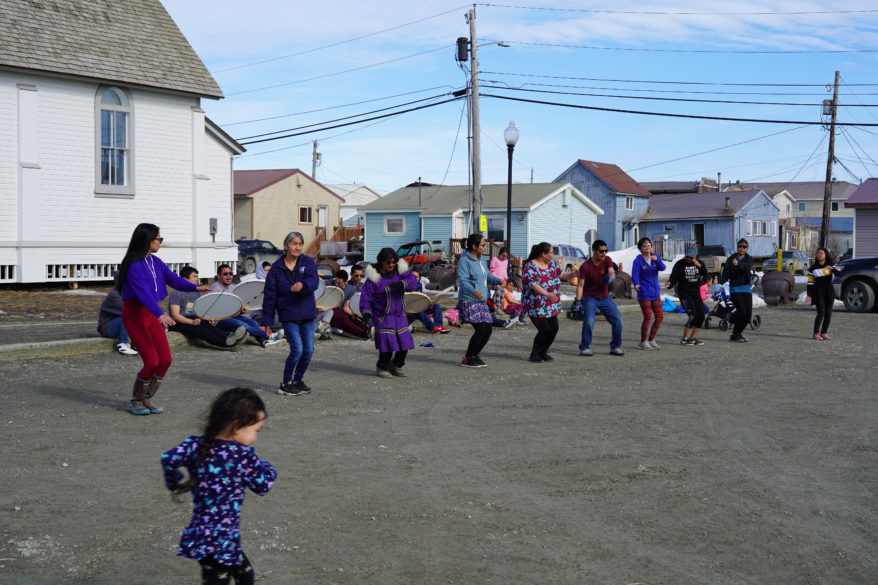
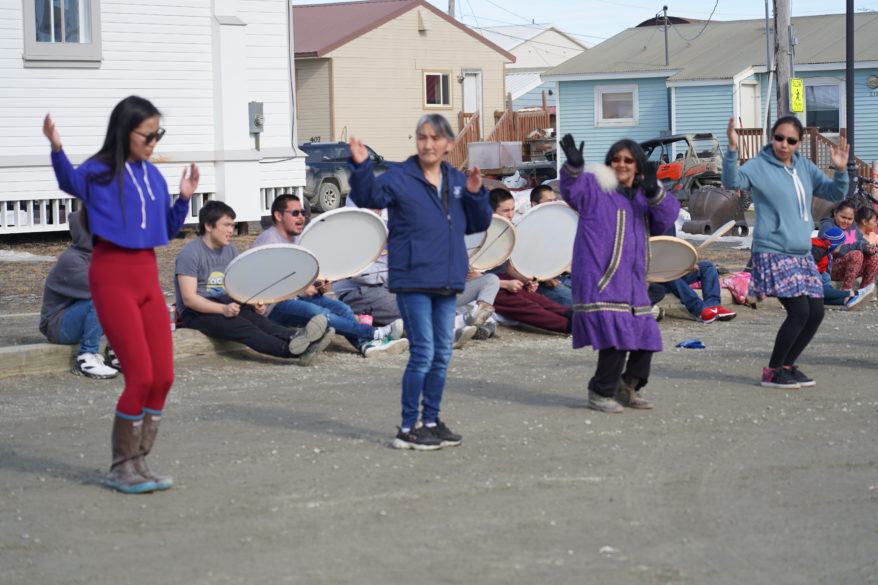
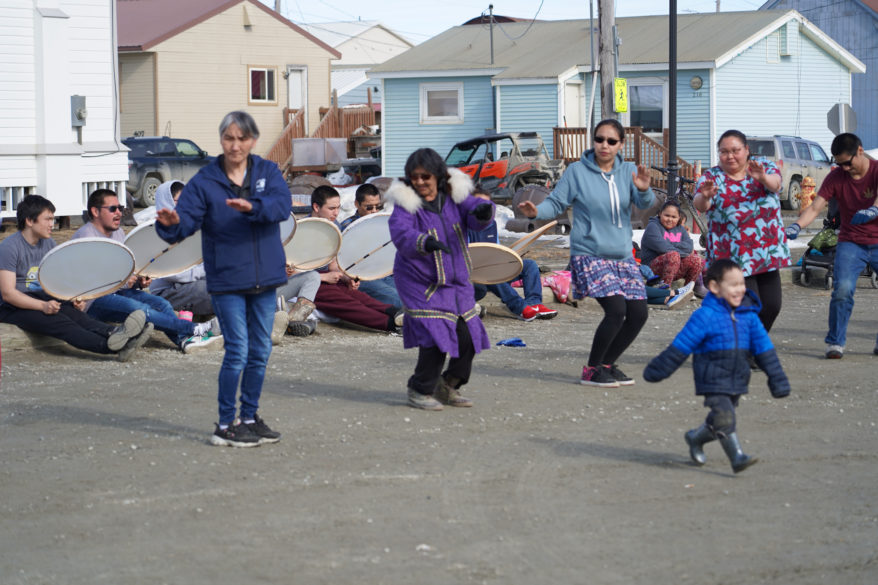
By Joe Lee MADISON – In preparation for his retirement in June 2019, Msgr. Elvin Sunds purchased a pickup truck and a travel trailer with an eye on visiting national parks around the country. Aware of this, Bishop Joseph Kopacz alerted Sunds of ongoing pastoring opportunities in the small Alaskan town of Nome, should he want to venture that far. This year everything came together to make that road trip (actually an air trip) a reality.
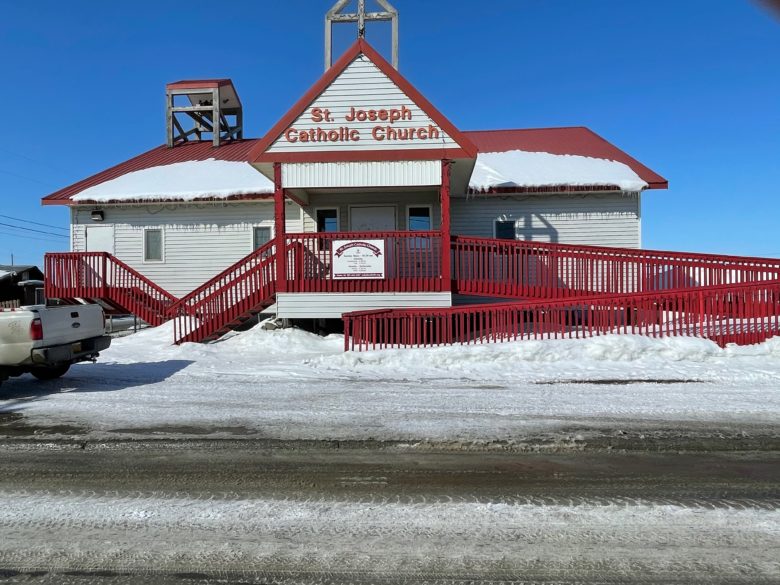
“The bishop in Alaska has a real priest shortage up there, and congregations can go without Masses for long periods of time,” Sunds said. “I agreed to fill in for the pastor of St. Joseph Church in Nome for three weeks so he could visit his family in India.”
Sunds, who fills in at St. Francis of Assisi in Madison, flew out of Jackson on April 13, leaving behind muggy conditions and temperatures in the low 80s. He knew to pack a lot of clothing he would never use this time of year in Mississippi.
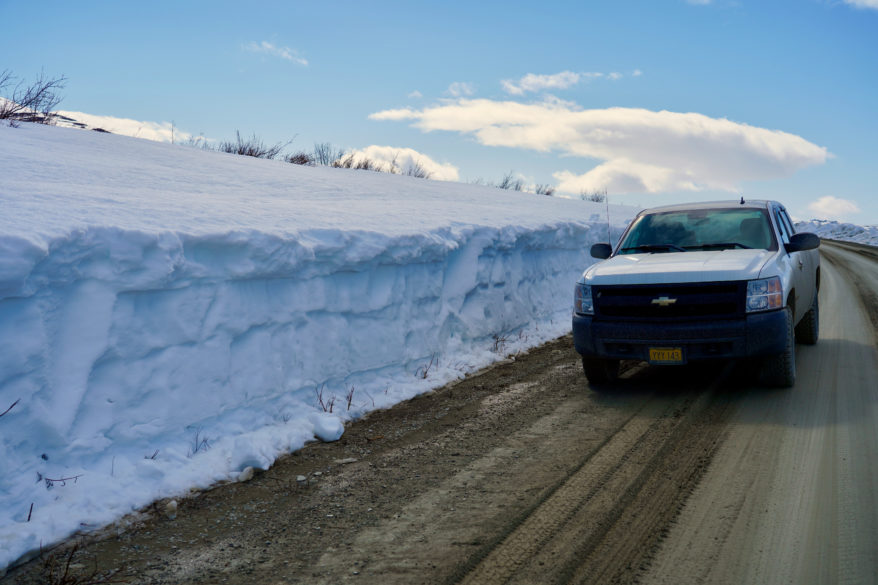
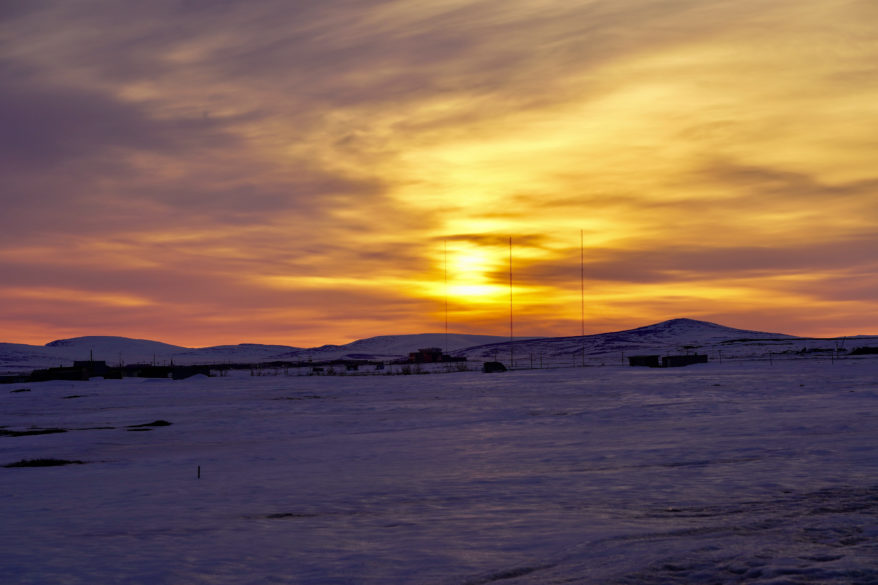
“Nome has a population of less than 4,000 and is a little over 100 miles below the Arctic Circle,” he said. “When I arrived, there was two feet of snow on the ground and temperatures were in the teens. “The area is incredibly beautiful. It has mountains, valleys, tundra, coastal waters, rivers, lakes, and an abundance of wildlife. The scenery is particularly stunning in snow. It was a major site of the Alaskan gold rush of the early 1900s. Today gold mining is still the major industry.”
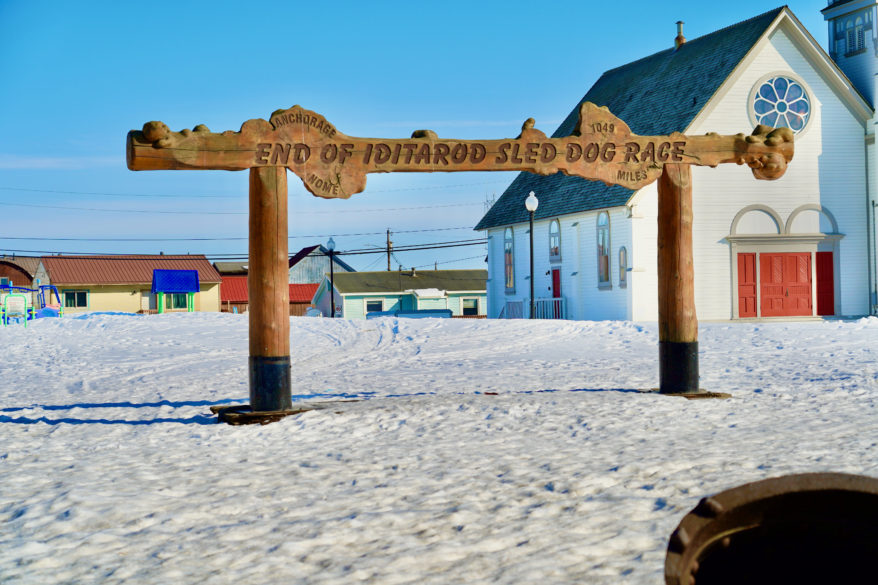
How utterly vast is Alaska? The annual Iditarod Trail Sled Dog Race begins in Anchorage and finishes a jaw-dropping 1,049 miles later in Nome. To reach his destination, Sunds flew to Dallas, across the country to Seattle, then to Anchorage before a 90-minute flight (covering 540 miles) to Nome. He found the people to be friendly and warm, despite the many layers of dress.
“About half the people of Nome and St. Joseph Church are Eskimo and half are of European descent,” he said. “Life is simple, and people live simply. A lot of them are grateful for Mass being available, even once a month.”
“Houses are small and well-insulated because of the cost of heating. Winter temps often reach more than 30 below zero. Food and supplies are expensive because everything must be flown in. Fuel oil and gasoline is brought in by barge twice a year. Snowmobiles and four-wheelers outnumber cars and trucks, and all must be brought in by barge.”
The average attendance for the three weekends Sunds celebrated Mass at St. Joseph was 25, down due to COVID. Remarkably, the tiny parish serves three mission churches. The community of Teller is 71 miles from Nome by dirt road and impassable from October through May because of snow; they have Mass weekly from June to October.
Then there’s Kotzebue, 180 miles away by plane and offering Mass once a month. Finally. St. Joseph serves Diomede, an island 130 miles out on the Bering Sea and one mile from Russian territorial waters. Diomede has Mass twice a year since the island is only accessible by helicopter.
“What attracted me to the Jackson Diocese many years ago was Jackson being a mission diocese—only two percent of the population across the area was Catholic. The Diocese of Fairbanks is almost eleven times the area of the Diocese of Jackson, but most it is wilderness. It has 12,300 Catholics and only two active diocesan priests.
“There are sixteen other priests serving the diocese who are either members of a religious order or on temporary loan from other dioceses. This was a whole new experience of mission diocese.” Sunds said his volunteer pastoring in Alaksa has given him a better understanding of the mission work of the church outside Mississippi and a deeper appreciation of the work of our own diocese. And he didn’t lose his sense of humor while pastoring in The Last Frontier.
“The only way to Nome is by plane or dogsled,” he said. “While all roads may lead to Rome, no roads lead to Nome.”
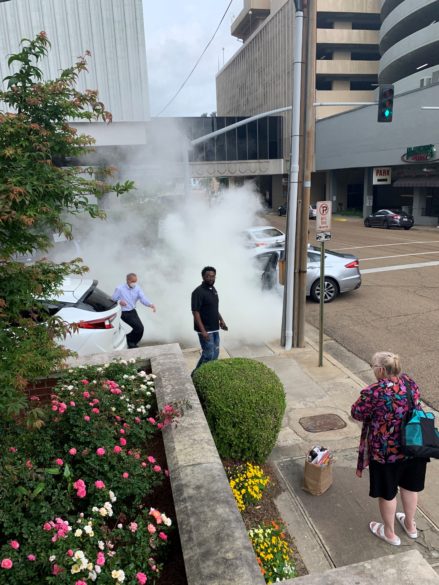
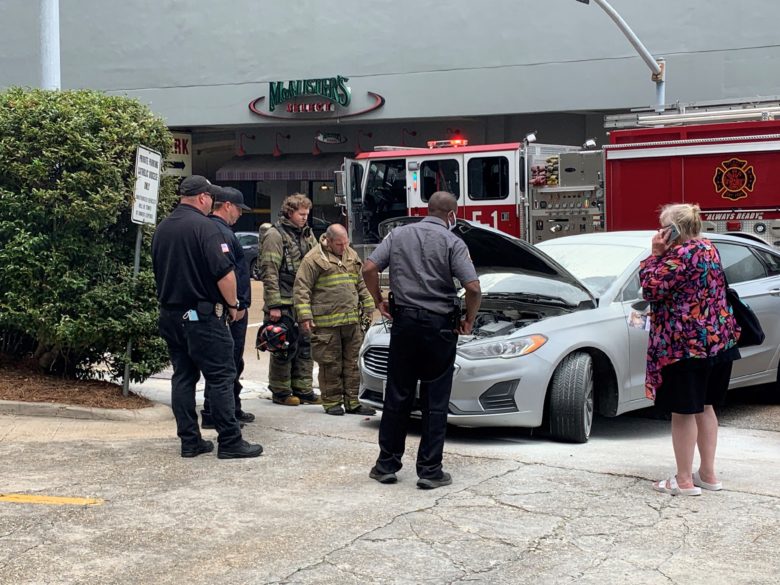
JACKSON – There was a bit of excitement outside of the Chancery building on Thursday, April 29 when a woman pulled into the lot with her car on fire. All was well after the fire department arrived and made sure the scene was safe. Prayers were said and the woman had a safe place to rest while the scene was cleared. Deacon John McGregor was first on the scene with a fire extinguisher. Pictured are passersby of the scene. (Photo by Tereza Ma)
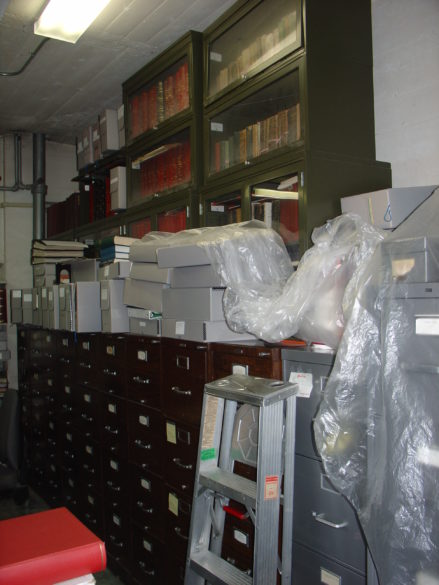
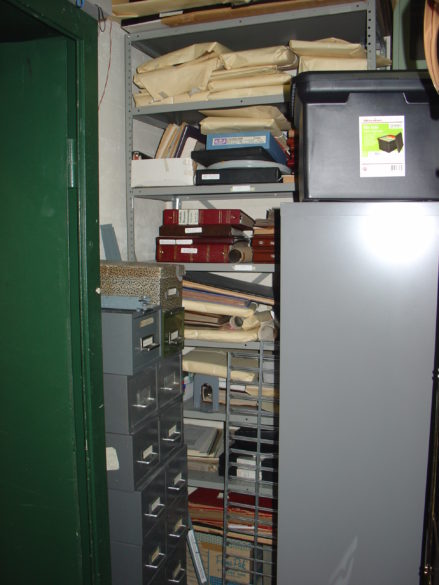
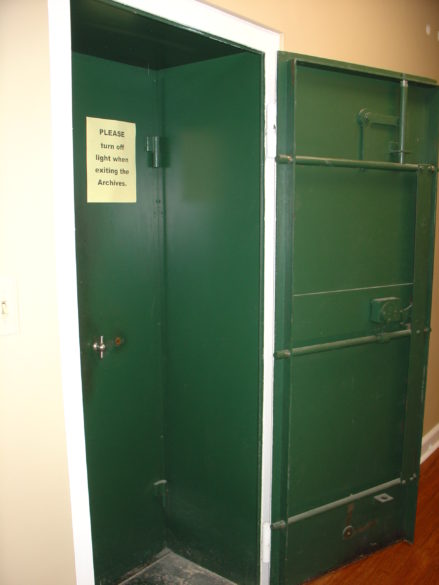
From the Archives By Mary Woodward JACKSON – This week I thought I would share some photos of the diocesan archives vault. This space was built into the ground floor of the diocesan chancery building during its construction in 1947.
Bishop R.O. Gerow moved the bishop’s office to Jackson from Natchez and brought most of the files with him. Our archives have documents dating back to the 1780s and has some books that date back farther than that.
To be honest we have one of the most complete archives of Mississippi history in the state albeit a history through the unique lens of the development of the Catholic Church in the region. The collection is a national treasure.
As a meticulous historian who knew the importance of maintaining proper records and information, Bishop Gerow, assisted by various chancellors along the way, built this comprehensive collection we have in the vault over a period of 42 years.
He kept a detailed diary as did his predecessors of the daily events in the life of the church as he lived them. His diary is several thousand pages typed up neatly and bound in volumes. His last entry details his retirement in 1966. He also oversaw the indexing of his predecessors’ papers and correspondence along with all the official acts of the office of bishop and the diocesan church.
These photos show the enormous amount of work he did and the work that continues today. The vault is stacked to the ceiling and records since 1966 are slowly being indexed for future research. There is a great need for space and the vision is to one day have a building for the diocesan archives that can serve as a research center and small museum for educational purposes. Right now, we manage the best we can with the allotted space for our treasure. And we hope one day to be able to better share that treasure in a more appropriate environment.
Until then, I hope you will continue to appreciate the history we share in the space provided in this column.
(Mary Woodward is Chancellor and Archivist for the Diocese of Jackson.)
By Joanna Puddister King JACKSON – The Diocese of Jackson recognizes April as Child Abuse Awareness Month to spread awareness of the importance of protecting children. Child abuse is an unthinkable crime, yet it happens to hundreds of thousands of our children every year. The United States Conference of Catholic Bishops (USCCB) states on their website “The Catholic Church is absolutely committed to the safety of children. Together we can make a Promise to Protect, and a Pledge to Heal.” The same is true for the Diocese of Jackson. Since, 1986 the diocese has had a policy to respond to credible allegations of sexual abuse, long before the USCCB released the Charter for the Protection of Children and Young People in 2002. The early document was less detailed than today’s version but delineated the commitment of the diocese on responding to abuse, removing offenders, assisting victims and promoting a safe environment. The policy was revised in 1994 when an Independent Review Board of lay Catholics was established. The review board is a consultative body that assesses the credibility of all allegations of sexual abuse against minors and advises the bishop accordingly. This board remains an essential resource for Bishop Joseph Kopacz, as it was for Bishop William Houck and Bishop Joseph Latino. The current board includes one pastor, two physicians, two lawyers and one professional businessperson, one of which also serves on the National Review Board of the USCCB on the protection of children and young people. The diocese, as well as Catholic Charities, requires that all employees and volunteers working with children and young people undergo a criminal background screening and participate in a safe environment training session with a training facilitator, including clergy. Nationally, over 2.65 million background checks were conducted on those working within the Catholic church in 2019. Many of the trainings mentioned above are now virtual explained, safe environment coordinator, Vickie Carollo. “With COVID restrictions, virtual trainings have worked well,” said Carollo. “To accomodate adults who work during the day, virtual trainings can be scheduled in the evenings. Training sessions are facilitated through the local parish or school.” The diocese also provides ongoing training in a monthly safe environment bulletin format through VIRTUS, a program and service of The National Catholic Risk Retention Group. All clergy, religious, employees and volunteers having contact with children and young people are required to participate in ongoing training. The safe environment monthly bulletins provide adults the education and prevention information they need to keep our children safe. Bishop Kopacz says that the monthly bulletins are helpful in learning about the changing landscape of threats to children, especially due to our “mushrooming digital world.”
Promise to Protect, Pledge to Heal signals the bishops’ pledge to resolve the crisis of sexual abuse of children. More information on the USCCB committe for the Protection of Children and Young People can be found at www.usccb.org/committees/protection-children-young-people. (Photo from archives)
Bishop Kopacz brought the idea of using VIRTUS to the diocese in 2014 soon after being ordained and installed as the 11th bishop of Jackson. “The Diocese of Scranton, where I was a priest for 36 and a half years, incorporated the VIRTUS Safe Environment program soon after the Dallas Charter and norms were promulgated for the Catholic Church in the United States. At that time, I served as Vicar for Priests and pastor, and it was opportune for me to become a trainer in order to promote this excellent program throughout the diocese. It was evident to the leadership in the Diocese of Scranton, ordained and lay, that the VIRTUS package was excellent for fostering and maintaining safe environments in service to our children and young people, and their families,” said Bishop Kopacz. The diocese also uses VIRTUS for safety training geared to children, that includes material that is developmentally appropriate for each age group and includes content and activities that reinforce the message. Some of the topics include what to do and how to react when someone’s touch is confusing, scary, or makes the child feel uncomfortable; learning about personal boundaries and giving the self-assurance needed to speak up; learning about who to tell when something or someone makes them feel uncomfortable or confused; and how to recognize grooming by an abuser. On June 16, the diocese will be holding a “train the trainer” workshop with VIRTUS executive director, Pat Neal. “With the upcoming workshop, we look forward to reviewing with facilitators the most notable updates within the latest 4.0 version of the Protecting God’s Children program for an ease of transition in facilitating the material during awareness sessions,” says Neal. “The most fundamental update throughout the 4.0 program is an overall focus to relay the essential concept of hope that all of us work for in our various positions – that hope is an element of child protection, that healing for survivors is possible, and that all of us are part of the solution to prevent child abuse. An always-present goal of the Protecting God’s Children program is to provide every organization with the tools needed to prevent abuse, respond appropriately if it does occur, and, in this latest version, review boundaries and how to address inappropriate behavior before it can escalate.” This latest version maintains the core message of teaching caring adults about the context and prevalence of child sexual abuse, as well as equipping caring adults to follow five research-based steps to protect the vulnerable in any environment. The steps have been revitalized with clearer messaging and easy to follow protocol for any caring adults. The steps are: know the warning signs of adults; screen and select employees and volunteers; monitor all environments, including activities involving technology; be aware of children and youth; and communicate your concerns. Now, seven years after bringing VIRTUS to the diocese, Bishop Kopacz said “We can say unreservedly that our decision to transition to the VIRTUS program has been of great benefit to our diocese. It is the cornerstone for our commitment to maintain safe environments for our children and young people.” Additionally, the Protection of Children program at the diocese goes through an onsite audit process every three years, of which the diocese has been in compliance with every year. Along with the program and audits, Carollo also travels to parishes and schools monitoring their programs and loves to share how powerful the program is at protecting God’s children. “Child abuse is certainly a challenging topic to address but we keep in mind that providing education and safe environment education to our adults and children – if we can save one child from a horrific incident, we are certainly doing our job. It is a collaborative effort in our churches and in our schools in providing a safe environment for all of our children,” says Carollo. Before long, Carollo will cease her traveling and monitoring of the program as she will retire in June after working with the diocese as the safe environment coordinator since 2003. When asked why, Carollo said, “It is just time. I am convinced that the Protection of Children program is in good hands. Everyone has strengthened my faith through their work to provide a safe environment for our children. We all play a part in the eradication of child sexual abuse.”
(If you suspect abuse or are a victim of abuse, please call victim assistance coordinator, Erika Rojas, who is here to assist in making a report. Contact her at (601) 326-3760. Additional information regarding how the Diocese of Jackson addresses child abuse may be found at https://jacksondiocese.org/offices/child-protection.)
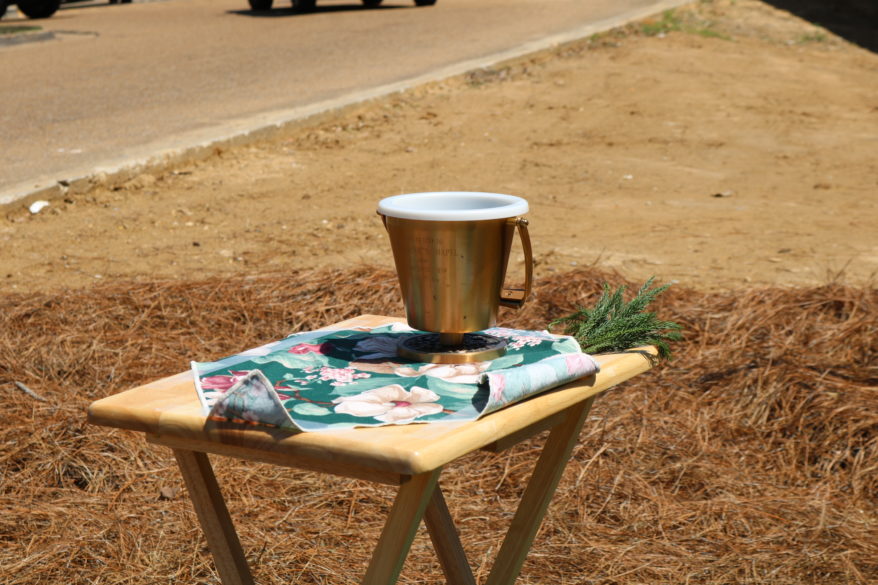
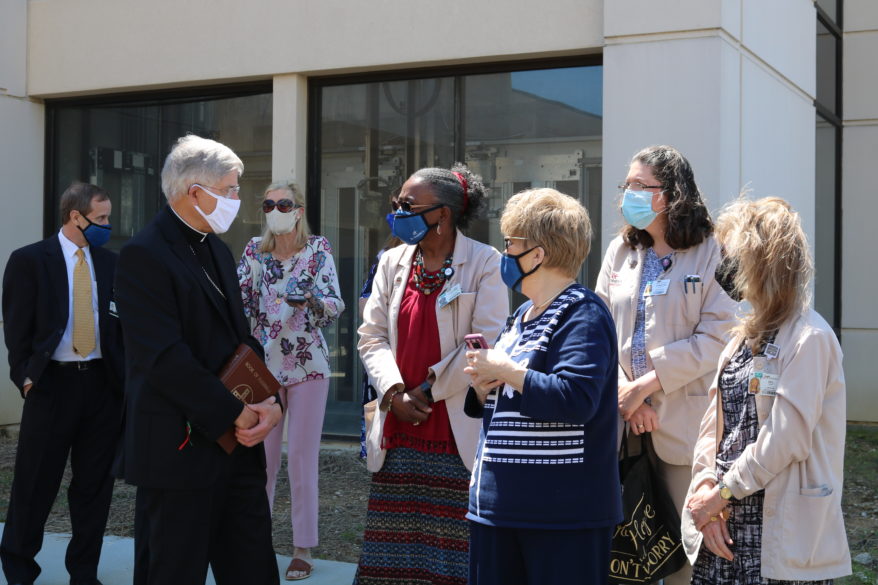
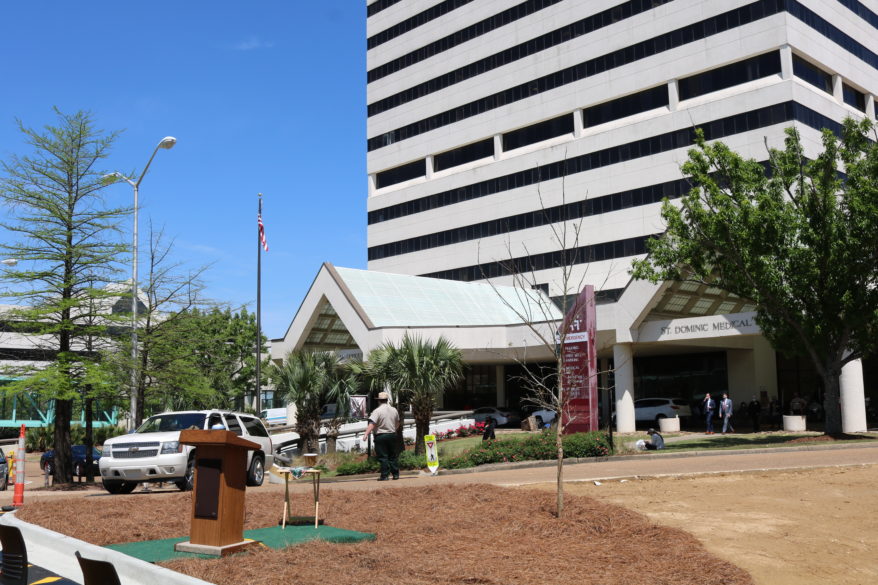
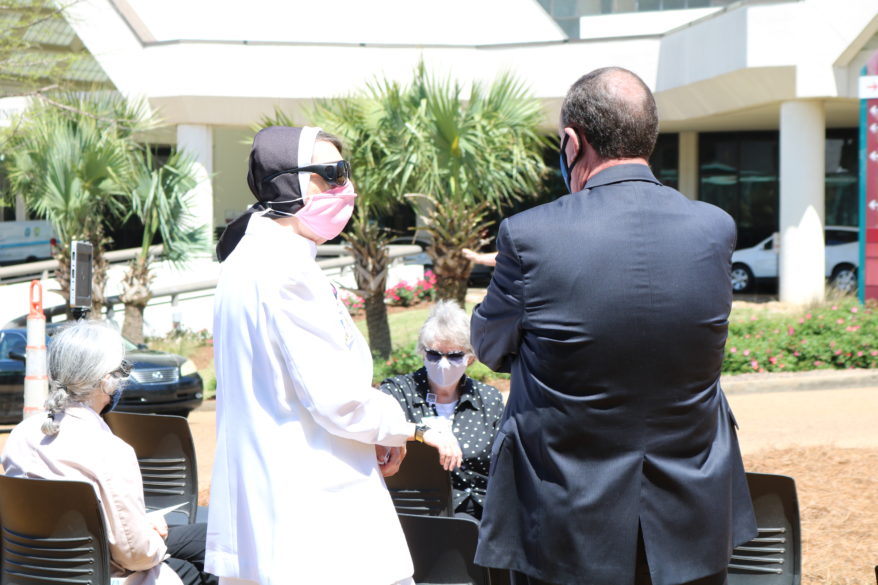
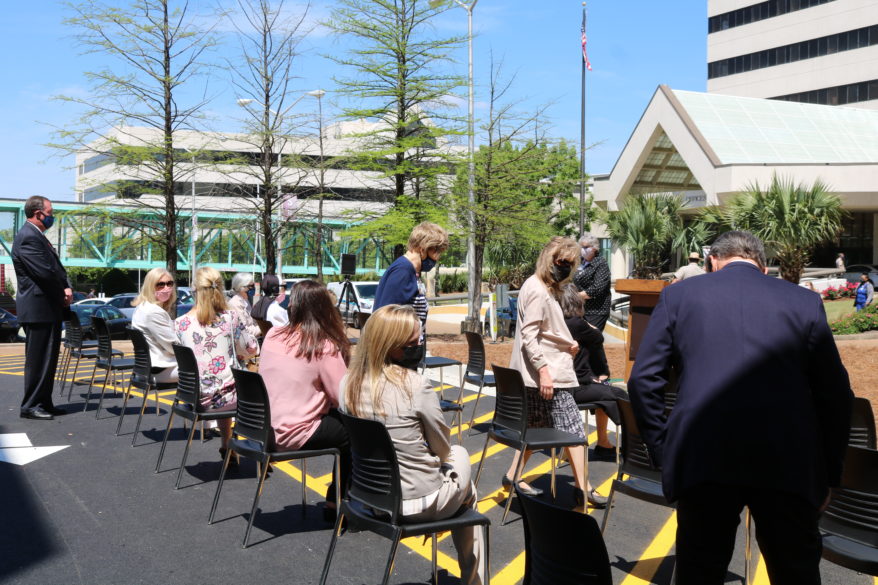
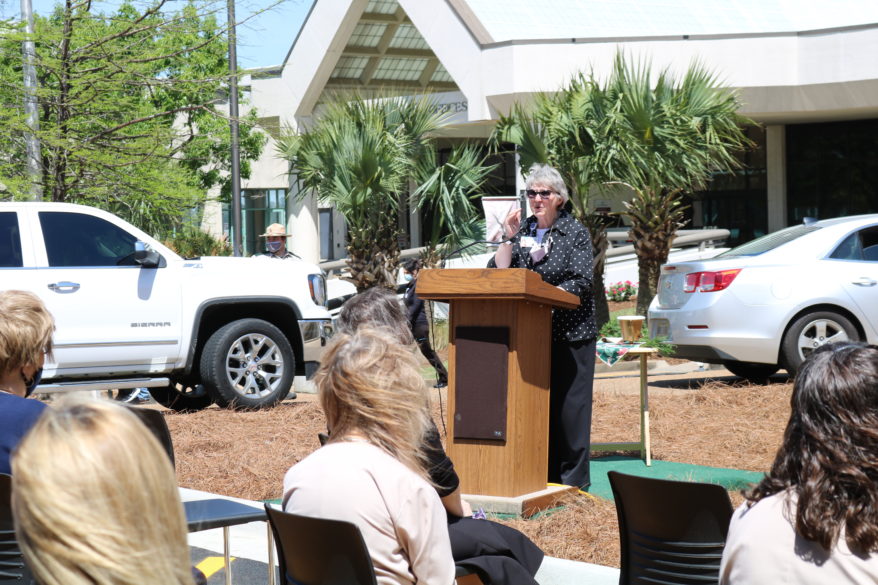
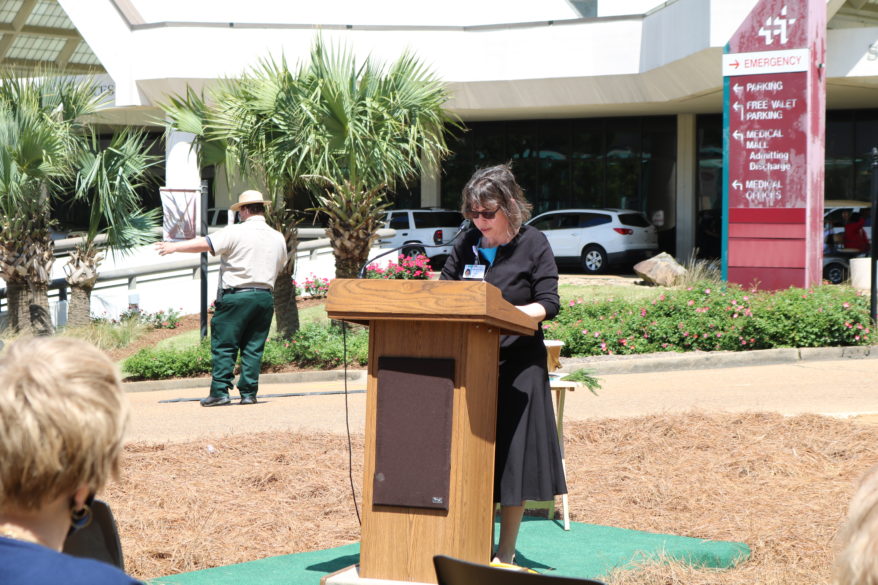
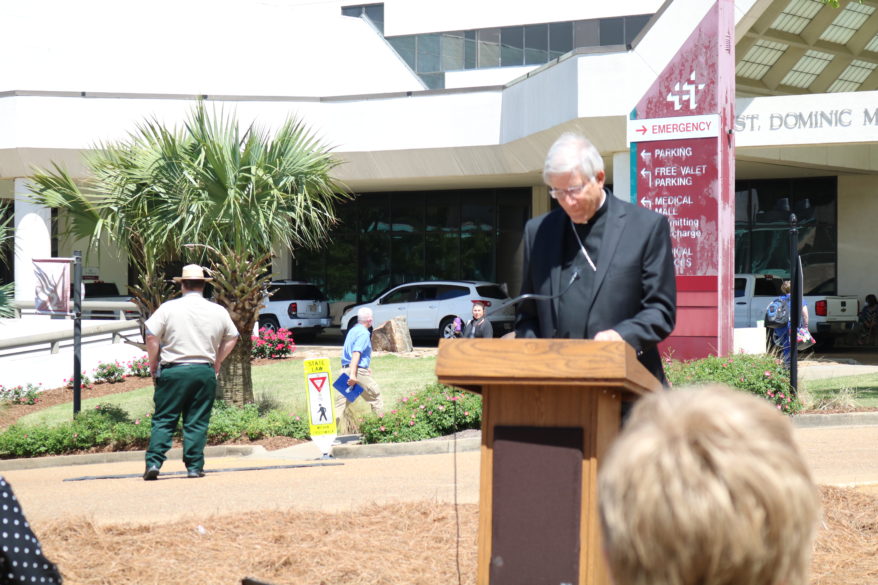
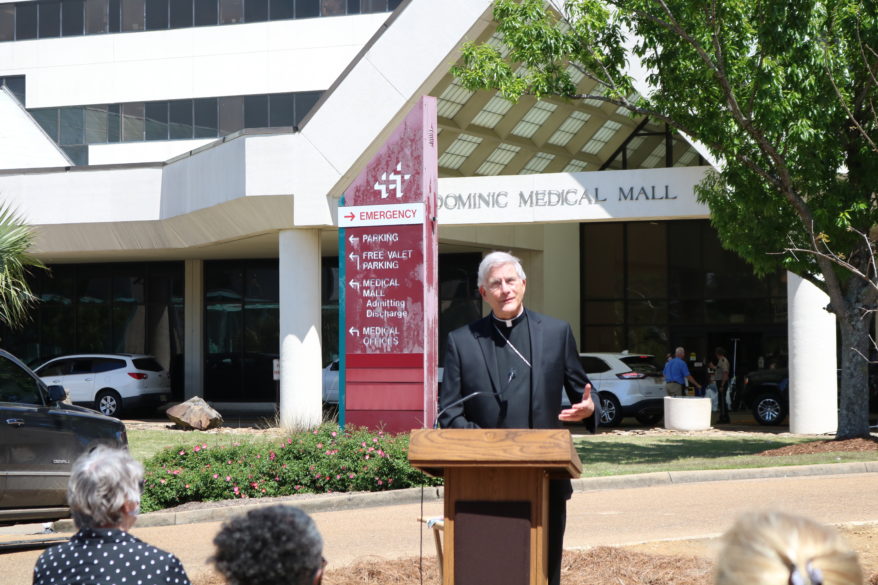
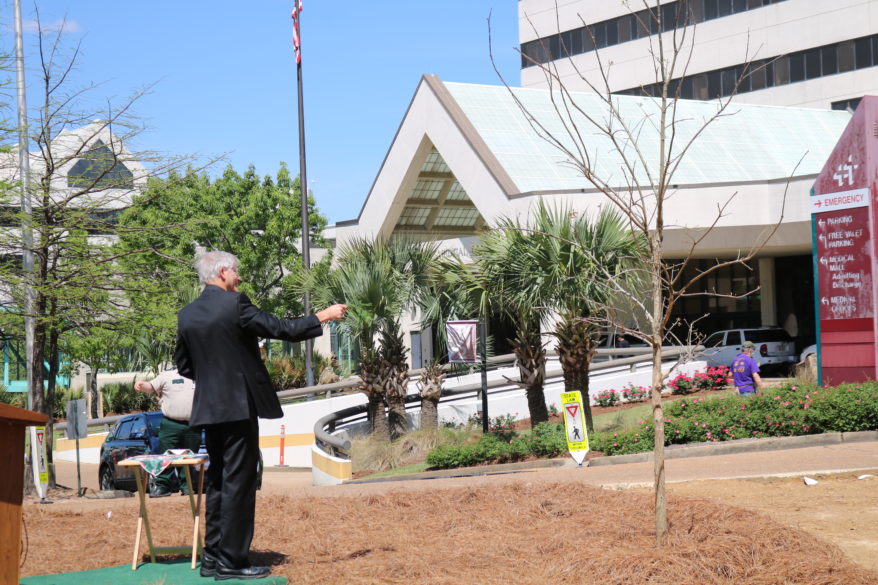
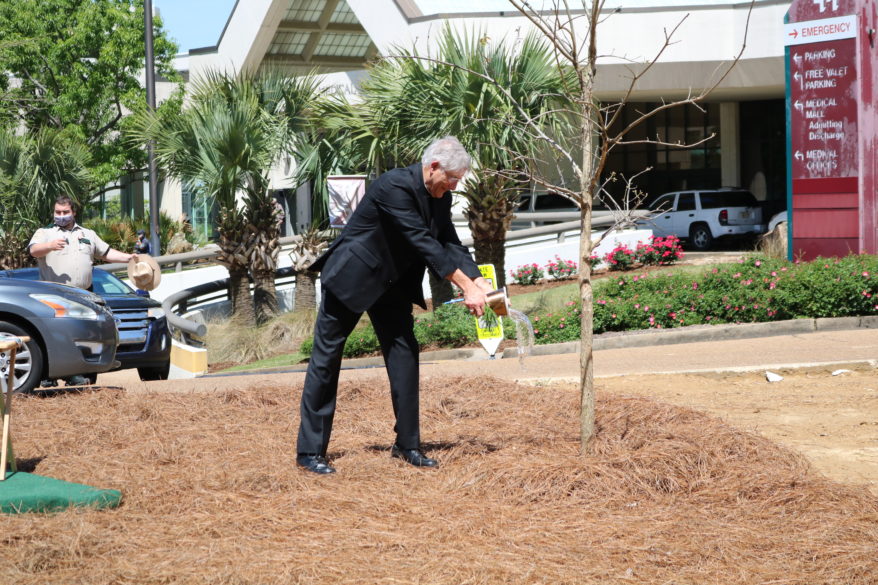
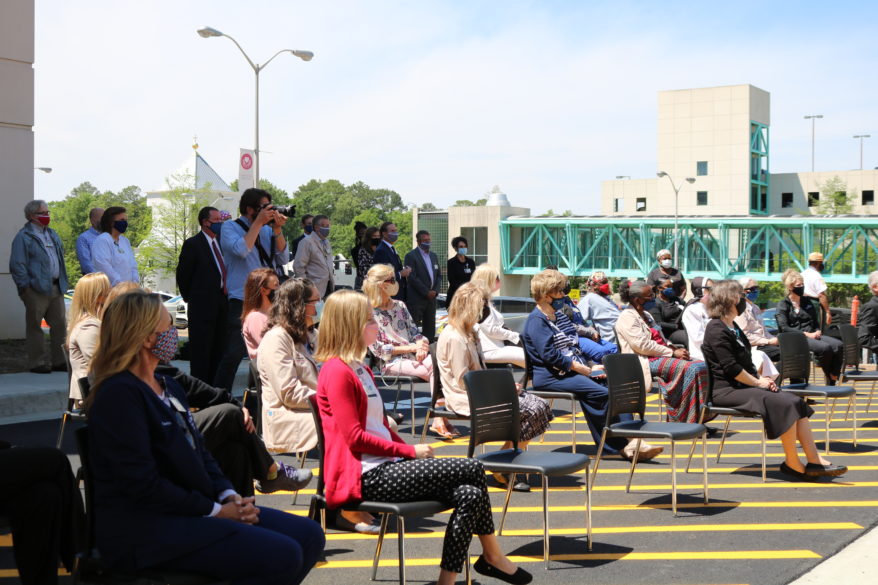
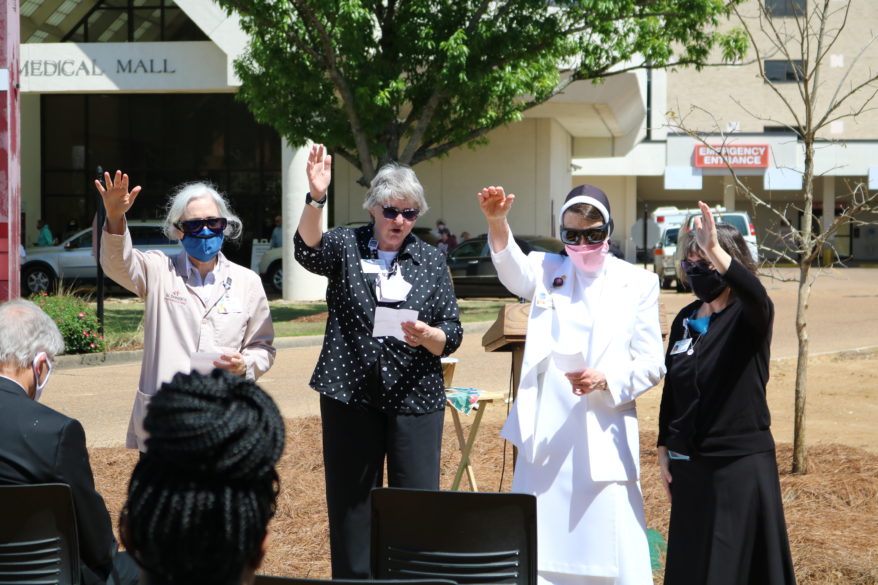
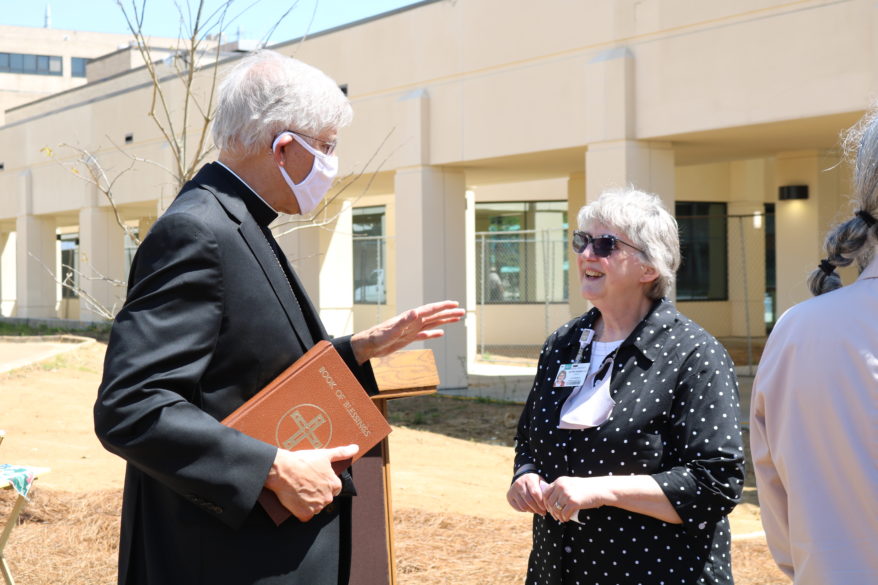
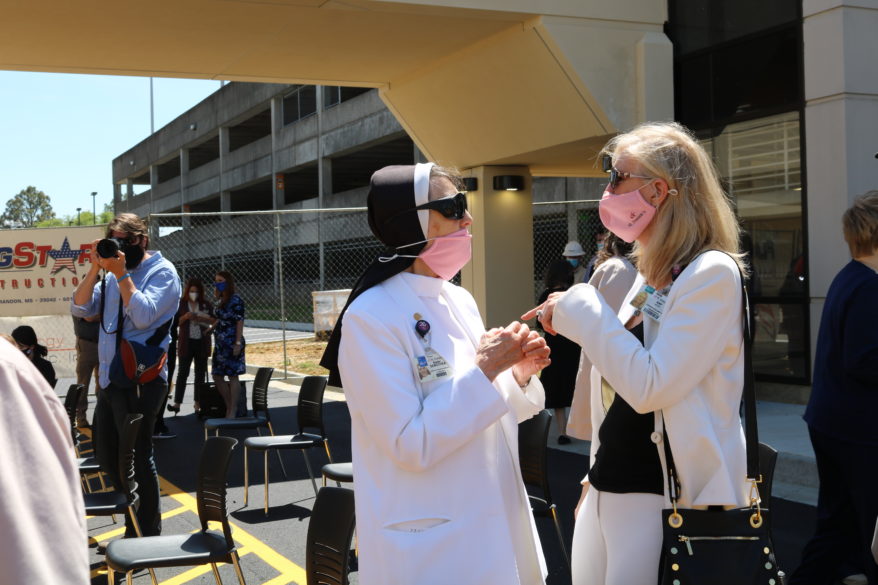
By Joanna Puddister King JACKSON – On April 15, a small group gathered near the St. Dominic Medical Mall building, close to the northeast corner of the parking garage to mark a significant moment in history – the hospital’s 75th anniversary. As has been done on previous milestone anniversaries, St. Dominic’s planted a white oak, the state tree of Illinois, on its campus in honor of the founding Dominican Sisters of Springfield, Illinois. At the same time in Springfield and in Baton Rouge at the Franciscan Missionaries of Our Lady convent, magnolia trees were planted to signify the shared mission and ministry with St. Dominic Health Services. “The significance of today is to recall our roots, the dedication and the sacrifices of those early sisters. [And] the foundation that they laid for a successful ministry,” said Sister Karina Dickey, O.P., vice president of mission integration. St. Dominic Hospital traces its history to 1946, when the Dominican Sisters of Springfield purchased the Jackson Infirmary in the center of the city of Jackson on Amite Street. The infirmary was the foundation for a health system that today includes the acute care hospital, a continuing care community, and a full range of outpatient and community services. “Today creates a great length all the way back to Bishop Gerow when in the mid-1940s … [he] invited the sisters to come begin this ministry, which is just so very special. Here we are 75 years later and Catholic healthcare throughout the central region of Mississippi is just blossoming. I’m in a way representing that line of bishops going back to Bishop Gerow, Bishop Brunini, Bishop Houck, Bishop Latino and myself. It is an honor really to be here in their names, but also be with the sisters here, who are just a remarkable presence of our Catholic faith in many ways, especially healthcare,” said Bishop Joseph Kopacz. At the simultaneously magnolia tree planting ceremony in Springfield, Sister Rebecca Ann Gemma, O.P., the prioress general of the Springfield Dominican Sisters, said that the sisters were gathered with “deep gratitude in their hearts,” at the planting of the 75th anniversary magnolia. “For 75 years our sisters have co-created God’s mission in Jackson, Mississippi. … For all of you who have served in God’s mission at St. Dominic’s, those that are here, those that are with our God, and for those who will come in our future, we take this time of prayer with deep gratitude for the abundance of God who is with us.” Healthcare is truly a vehicle for lifting people up for St. Dominic Health Services. Sister Karina said, “Healthcare is the method, not the end of what we are about. Because we are here to minister to the human spirit, not just the human body.”
(St. Dominic Health Services is sponsored by the Franciscan Missionaries of Our Lady, and is a part of the Franciscan Missionaries of Our Lady Health System. St. Dominic Health Services, Inc. is the parent company for a large group of subsidiary organizations and programs dedicated to providing compassionate care and hope as a healing ministry. These include St. Dominic Hospital, the Community Health Clinic, St. Dominic Medical Associates (physician network), New Directions for Over 55, MEA Clinics, The Club at St. Dominic’s, the School Nurse Program, St. Dominic Health Services Foundation, St. Catherine’s Village and Care-A-Van. St. Dominic Behavior Health Services will be celebrating their 50th anniversary on Friday, May 14. )
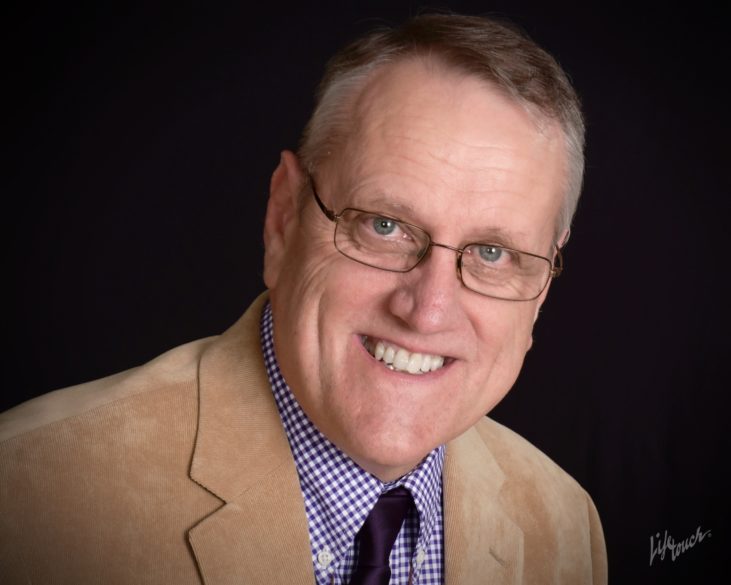
By Deacon John McGregor JACKSON – Do you think that God might be calling you to be a permanent deacon? Do you see yourself as an ordained minister in the church, called to the functions of Word, Sacrament, and Charity? As ministers of Word, deacons proclaim the Gospel, preach, and teach in the name of the church. As ministers of Sacrament, deacons baptize, lead the faithful in prayer, witness marriages, and conduct wake and funeral services. As ministers of Charity, deacons are leaders in identifying the needs of others, then marshaling the church’s resources to meet those needs. Deacons are also dedicated to eliminating the injustices or inequities that cause such needs. But no matter what specific functions a deacon performs, they flow from his sacramental identity. In other words, it is not only WHAT a deacon does, but WHO a deacon is, that is important. Bishop Joseph Kopacz has given his permission to begin the application process for a new cohort of permanent deacons for the Diocese of Jackson.
Deacon John McGregor
Applicants will only be accepted into the program if there is evidence that the community needs the service of the applicant and is willing to support the applicant through his formation period. The local pastor’s recommendation is also necessary because he will be working closely with the applicant before and after ordination. The applicant’s wife must also give her consent to his participation in the program and later to his ordination. The screening process includes the following elements: • The applicant must be at least 35 years of age at the time of ordination. Bishop Kopacz may waive the upper age limit at his discretion. • A letter of recommendation from the local pastor or LEM stating impressions about the applicant’s service in community and potential as a deacon is required. Additionally, the pastor or LEM and Sacramental Minister must complete his/her part of the deacon’s application. • Psychological testing will be conducted by a licensed psychologist to help determine emotional health and stability of both the applicant and his wife. • A series of interviews with the applicant and his wife will be conducted once the completed application has been received at the Office of the Permanent Diaconate. A final interview with the applicant only will be conducted by the Deacon Advisory Board. The purpose of these interviews will be to determine the attitudes of the applicant and his wife about the church, pastoral care, and program requirements. • After the interview has been completed, the Director of the Diaconate Program will forward to the diocesan bishop a recommendation to accept or reject the application of the applicant for admission to study for the diaconate. The diocesan bishop has the final authority as to who will be accepted. Applications must be completed and submitted to the Office of the Permanent Diaconate no later than July 31, 2021. If you are interested in learning more about the permanent diaconate, contact Deacon John McGregor at john.mcgregor@jacksondiocese.org.
(Deacon John McGregor is the Director for the Permanent Diaconate for the Diocese of Jackson.)
SPIRITUAL ENRICHMENT GRAND COTEAU, La. Our Lady of the Oaks, Ladies Annual Retreat, Dec. 2-5 for ladies of the Natchez area. Would you like to grow closer to God? Do you need some time away to listen to Him, to grow, to rest? Experience the natural beauty of oak trees and the beautiful setting of nature. You are invited to join us to rest in the care of the Lord in silence, solitude, deep prayer and reflection. $50 deposit due as soon as possible to hold room as they fill up quickly. Details: Please contact Kot Morris at (601) 334-8339. NEW ORLEANS Our Lady of the Cenacle Retreat Center, Women’s Retreat, “Blessed are the Peacemakers,” April 30 – May 2. Preventing and Resolving Conflicts from our Christian Faith Perspective Jesus preached and lived love, forgiveness, peace and unity. In this retreat we will be offered a deeper understanding of and commitment to Christian peacemaking as well as practical and effective human relationship skills to prevent and resolve conflicts. Presenter: Father Doug Doussan, who is a retired priest of the Archdiocese of New Orleans and is serving as Chaplain of the Archdiocesan Retreat Center. He has given countless training workshops locally and nationally in inclusive parish organization, lay leadership formation, and consensus decision making. The retreat center’s capacity is limited due to COVID-19 and they are currently accepting registration on a first come first serve basis. A non-refundable deposit is required. Details: to register, contact the retreat office at (504) 267-9604 or www.neworleansretreats.org/retreats. MOBILE, Ala. Spring Hill College, Summer Institute of Christian Spiritualty is offering courses that are appropriate with our current world situation. Those interested do not have to be enrolled in their Theology programs to take courses either for credit, audit, or easy listening. They offer both in person and virtual courses, as well as on-campus housing. One of the courses is “Black and Catholic, Faithful and Free” on Sister Thea Bowman and M. Shawn Copeland, on June 14-17, 6:30-9:30 p.m. (also available online). Emily Reimer-Barry, Ph.D. is the guest lecturer. It will explore the Black Catholic experience in America, with the goal of recognizing the impact of bias, and fostering genuine-if-imperfect-solidarity in the ongoing struggle for racial justice. Details: Visit the online catalogue at: https://springhill.catalog.instructure.com/browse/sics.
PARISH, FAMILY AND SCHOOL EVENTS CLARKSDALE Catholic Community of St. Elizabeth, Intercessory Prayer Group meets in the meeting room on Tuesdays at 2 p.m. All are invited to come and pray and praise God. You can write prayer requests and place in the prayer boxes at church. Details: church office (662) 624-4301. NATCHEZ Cathedral School, Save the Date, 27th Annual Crawfish Countdown, Friday, May 7 from 6-10 p.m. Join them for crawfish, jambalaya, cold beverages, and a chance to win $5,000! Live music from the band Parish County Line. Details: school office (602) 442-1988. JACKSON Catholic Charities Run Foster Run, 5K Run, Walk. Event kicks off with a children’s 1 mile fun run at 5:30 pm, followed by a 5K sunset run/walk at 6 p.m. on Thursday, May 6. It will take place at the Township at Colony Park, Highland Colony Parkway, Ridgeland. All race participants receive a t-shirt, swag bag, and a free drink ticket (age 21 or over). There will be music, libations and fun. This is a dog-friendly race. All proceeds will benefit the foster care programs of Catholic Charities. Details: Michael Thomas at michael.thomas@ccjackson.org or (601) 331-1152. St. Richard, Bereavement Support Group, Thursday, May 13 at 6:30 p.m. in Foley Hall. This group is for those who are hurting from the loss of a loved one or for those who are trying to comfort and understand the grief of a family member or friend, no matter how long ago the loss. All are invited. Details: Nancy McGhee at (601) 942-2078 or ncmcghee@bellsouth.net.
YOUTH BRIEFS BROOKHAVEN St. Francis, Faith Formation meets Wednesday, May 5 from 6-7 p.m. with a meal beforehand at 5:30 p.m. We will continue to follow diocese guidelines. Face masks must be worn. Details: church office (601) 833-1799 MADISON St. Anthony School is currently enrolling new students for the 2021-22 school year. St. Anthony serves children in Pre-K3 to 6th grade. Several classes are nearing capacity, so please make plans to visit us today. Details: For more information or to schedule a tour, please call (601) 607-7054 or go to www.stanthonyeagles.org. St. Francis of Assisi, Senior Recognition Mass for all high school seniors on Sunday, May 16 at 5 p.m. Be sure to complete the senior profile sent through Flocknote. Details: church office (601) 856-5556. St. Joseph School, Now enrolling students for the 2021-22 school year, grades 7-12. Details: contact Tricia Harris, Advancement Director at (601) 898-4803, tharris@stjoebruins.com or www.stjoebruins.com. SOUTHAVEN Sacred Heart School, recognized by Today’s Catholic Teacher as one of three most innovative Catholic Identity Schools in the U.S., provides a small, close knit family atmosphere with students representing 25 different countries. They are now accepting applications for the 2021-22 school year. Details: (662) 349-0900 or bmartin@shsm.org.
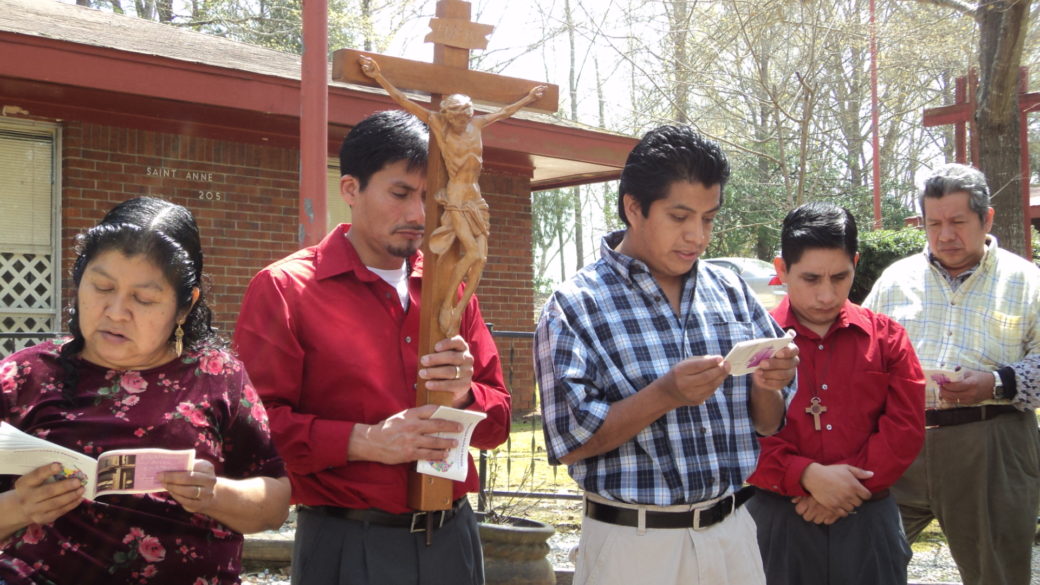
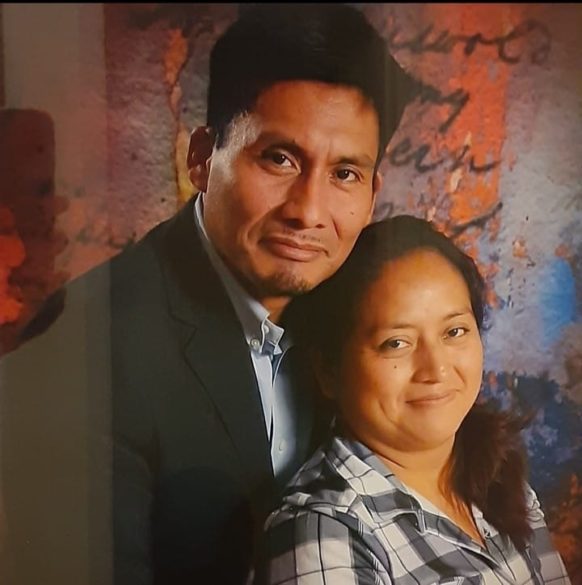
By Ann Rodgers Angelus News CARTHAGE – For nearly a quarter century, Edgar Lopez was a pillar of St. Anne Church in Carthage, Mississippi. The devoted husband and father of three spent four years studying pastoral ministry to better lead prayer groups, youth ministry, and social outreach. He gave generously from his wages as a mechanic at a local poultry plant. On Jan. 22, his charred remains were found with those of 18 others in and around a bullet-blasted truck in the Mexican-American border town of Camargo in Tamaulipas. Lopez, 49, an undocumented worker who had been deported to Guatemala after a notorious 2019 immigration raid on Mississippi poultry plants, had tried to return to his wife, children, and grandchildren in Carthage.
CARTHAGE – In this undated photo at St. Anne, parishioner Edgar Lopez is pictured with the Crucifix. Lopez was deported after the ICE raids in 2019 and was on his return trip to his family and home in Carthage in January 2021 when he and 18 others were killed in Mexico. (Photo from archives/courtesy of Sister María Elena Mendez, MGSpS)
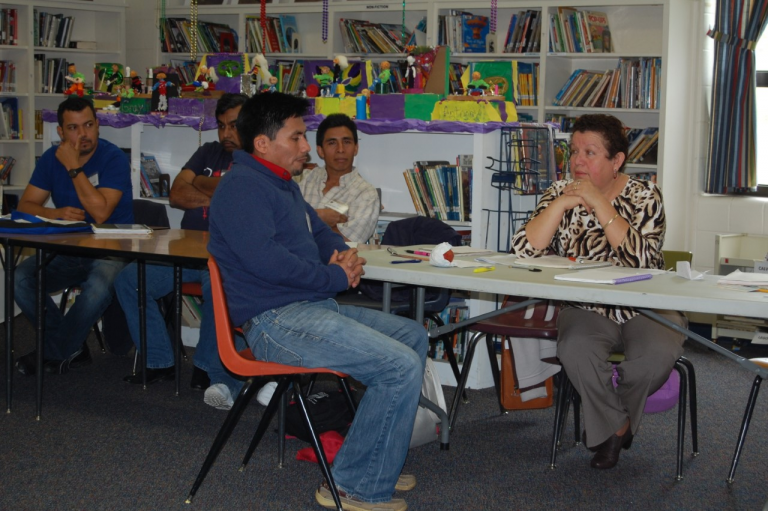
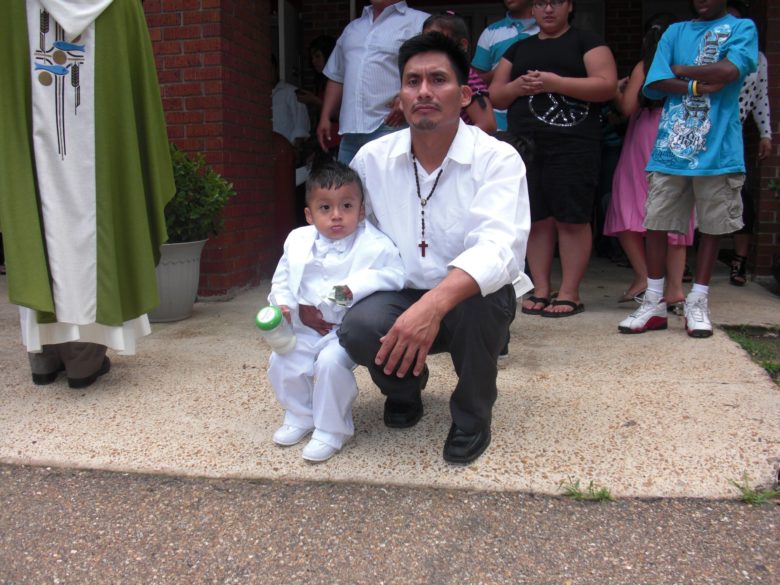
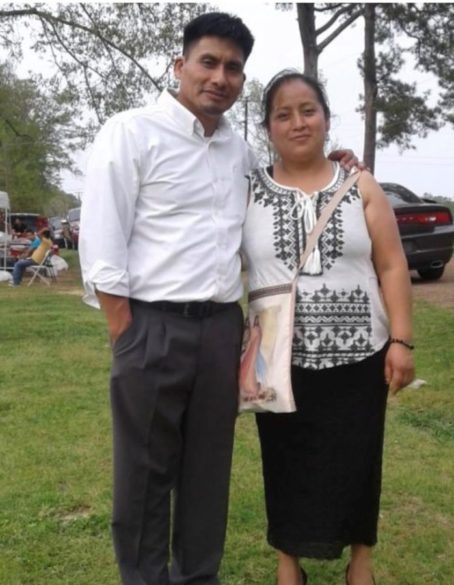
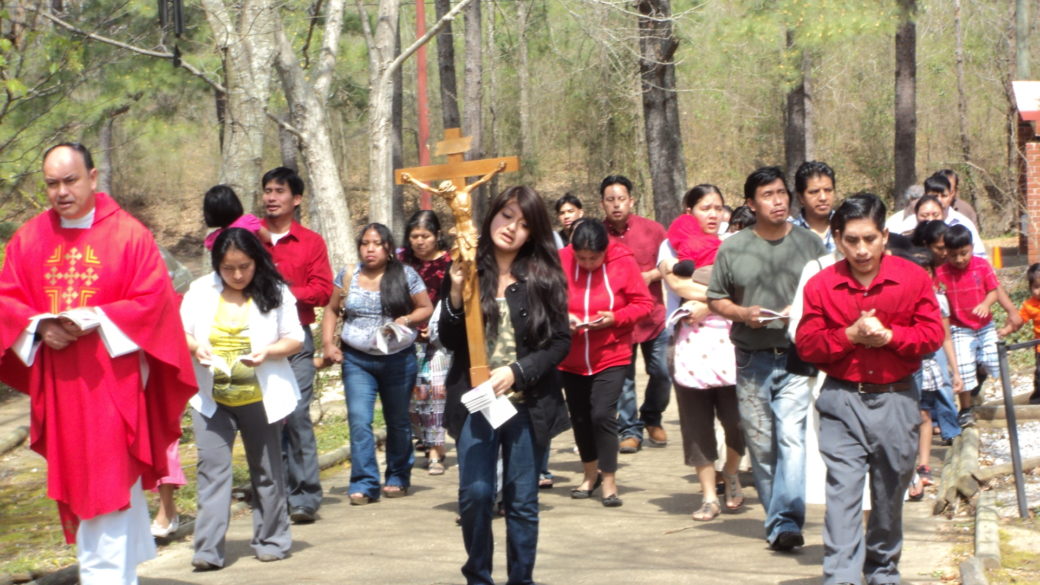
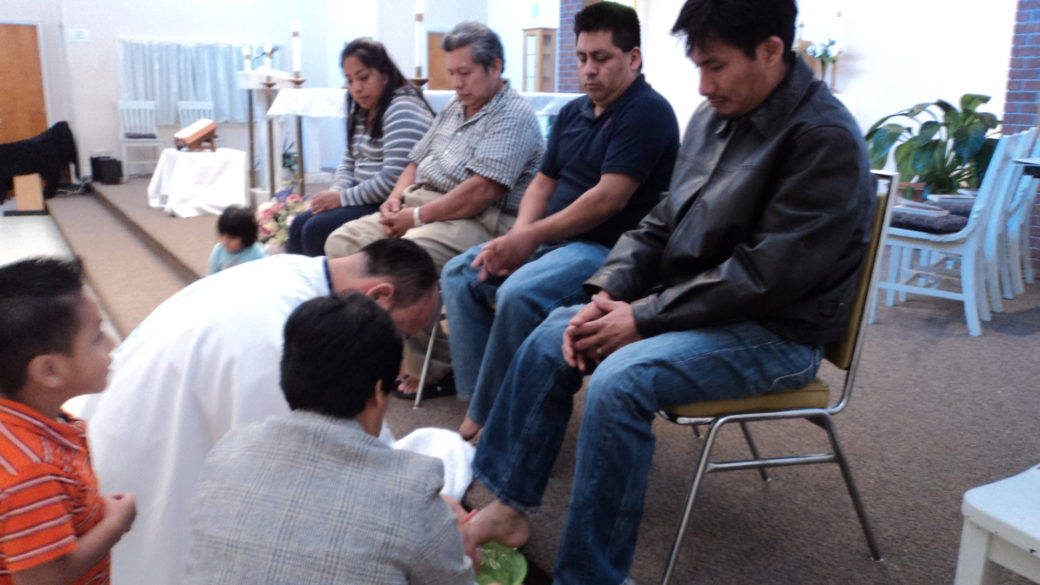
“People are in shock. They can’t believe that something like this could have happened,” said Father Odel Medina, a priest of the Missionary Servants of the Most Holy Trinity, and pastor of St. Anne. Most of the dead had relatives among Carthage’s burgeoning population of indigenous Mayan workers from Guatemala. Poultry jobs were arduous, dirty, and dangerous, but paid more for an hour of labor than the Guatemalans would make in two days in their villages. Most of the massacred migrants were from the desperately poor town of Comitancillo, seeking jobs in Carthage that Americans had long refused, Father Medina said. He called it a bitter irony that, seven months after the government deported hundreds of undocumented poultry plant employees, they were declared “essential workers” during COVID-19. “If they didn’t work, you would not have food on anyone’s table,” Father Medina said. Lopez grew up in the village of Chicajala, where death from malnutrition is common. He had no shoes for school and was bullied by other students and teachers alike. His response, Father Medina said, was to say, “I’d like to be a teacher and change the way they teach children.” He left for Guatemala City in his teens, entering the United States in his mid-20s. He was deported a year later, but soon returned to his wife and baby in Carthage. They bought a modest house in which they raised three children, now ages 11 to 21. He organized the first Spanish Masses at St. Anne. In addition to being a lector, extraordinary minister of Holy Communion, and youth minister, Lopez was the head of the St. Anne “directiva,” a pastoral advisory board that looked after the needs of the Latino community. He spent four years studying for certification in Hispanic ministry through the Southeast Pastoral Institute in Miami. Whether he was in a leadership role or simply participating, “he was always at the service of others,” Father Medina wrote in the parish newsletter. Juanatano Cano, who ministers among Guatemalans in the Archdiocese of Los Angeles, never met Lopez, but had a parallel childhood. Their adulthoods diverge because Cano, a leadership development consultant who is finishing his doctorate, received asylum and working papers after entering the U.S. illegally in the late 1980s. Cano pins their early hardships on prejudice against their indigenous heritage. “Racism in Guatemala is worse than in the United States. To call someone ‘an Indian’ is the worst insult if they want to humiliate someone,” he said. He described indigenous Guatemalans as descendants of those who survived the Spanish conquest 500 years ago by fleeing to the hinterlands. No government has ever tried to integrate them into the Guatemalan economy. “There was no money for education or health care for us,” he said, “According to the government, we are an obstacle to the prosperity of the whole country.” People in Cano’s village were stunted physically and intellectually from malnutrition. “They said that we are stupid, that we don’t want to learn, that we don’t want to succeed,” he said. In 1981, Guatemala’s long-running civil war escalated. “I saw the military bombing little towns and little Indian villages. I told my mom, ‘Let’s get out of here. They are going to wipe us out,’ ” Cano said. She would not leave. So in 1982, at age 13, he left alone for the city. There he did housework in exchange for room and board, while attending night school. When his high school diploma brought no opportunities for advancement, he traveled by bus and train through Mexico, walking across the border into California. “At that time it was not as bad as it is now,” he said. He graduated from college, taught math for 15 years, earned his principal’s certificate, then made a career shift to leadership formation. He is a consultant to the U.S. Catholic Bishops’ Subcommittee on Native American Affairs and volunteers at Immaculate Conception Church, Holy Cross Church, and La Placita Church in LA. Today’s Guatemalan migrants bring the same dreams and needs that he did, he said. He blames the government of Guatemala for their suffering. Even by U.S. standards, health care costs are high in Guatemala, he said. At least two migrants killed with Lopez were seeking jobs to pay for relatives’ medical care: surgery for a baby with a cleft lip and medication for a mother with diabetes. “These people died because they wanted to make a little money for surgery that was so basic. Why does the Guatemalan government ignore this? Why? Why? It makes me sick to think about it,” he said. “That is why people leave their country. They are aware that it is dangerous, but they take the risk, even knowing it could be deadly.” Smugglers, known as “coyotes,” are luring customers with claims that the Biden administration has opened the border, Cano said. “They are telling them to come and the United States will accept you and give you legal status,” Cano said. “They are lying to people.” Catholic social teaching calls nations to regulate their borders in a humane manner, recognizing both security and a human right to migrate in search of food, medical care, and safety, said Christopher Ljundquist, adviser for Latin America in the U.S. Bishops’ Office of International Justice and Peace. The church views immigration as a source of, not an obstacle to, economic development, he said. Since about 2010, however, the journey through Mexico has become far more deadly as cartels became increasingly savage. “Migrants en route to the United States are perfect prey to these cartel killers, who force them into smuggling, kidnap them, extort them and, as we have seen, murder them in cold blood without the least scruple,” he said. Many cartels promote devotion to a “horrible female grim reaper” whose name, “Santisima Muerte,” means “Holy Death,” he said. Anyone considering migration, he said, needs to understand that “the journey north is dangerous, that there are killers en route who often literally worship death, and that [migrants] are seen by the cartels as human merchandise.” The August 2019 immigration raids that led to Lopez’s deportation were national news. Of nearly 700 workers detained, two-thirds remained in the U.S. Lopez was deported as a repeat criminal due to his earlier deportation in the 1990s. He spent nearly a year in detention, surviving COVID-19 while ministering to inmates. “He never lost his faith, even with those terrible experiences that he had passed through,” Father Medina said. “When he was in the detention center, he called me and asked for books and rosaries in order to make a prayer group. He said that, even in those circumstances, you always cry out to God.” Many people in Carthage tried to help the detainees. St. Anne’s hosted a legal clinic. Father Medina accompanied Lopez to court. “We tried to do our best for him, to fight for his freedom, to say that he was a person with character,” he said. The federal judge called Lopez the kind of man he would like to have as a neighbor, but said that the law tied his hands. “It hurts my heart to see what this great nation is doing to you,” he told Lopez as he ordered the deportation. In July 2020 Lopez was flown to Guatemala. While volunteering in the parish he had built through his donations, he longed for his family. “I tried to give him support and prayer and spiritual guidance,” Father Medina said. When the priest left for vacation in late December, however, Lopez had said nothing about returning. “I think he wanted it to be a surprise,” Father Medina said. Lopez contracted with a local coyote who was trusted, Father Medina said. The group set out on Jan. 12. Their families last heard from them on Jan. 21. The next day, “The coyote called his family in Guatemala and said that they had all been killed,” said Father Medina. “The coyote had a son who was with the group, and he was killed as well.” Mexican investigators found bodies burned beyond recognition in a truck pierced by 113 bullets. Identification came through DNA. Twelve police officers were arrested for killing them, though authorities have identified no motive. Speculation ranges from mistaken identity to a cartel refusing to let others move human merchandise on its turf. Guatemala declared three days of national mourning. The nation’s president met the flag-draped coffins at the airport, in a ceremony televised live nationwide. Father Medina went to the funeral for the Comitancillo victims, held on a soccer field. A local priest denounced the injustice that forced villagers to seek work in another country and the deportation of a man who had been a beloved neighbor for two decades. Migration will not stop, Father Medina said. While he was there, two families asked him to bless their sons for the journey north. Men from the parish carried the heavy coffin on their shoulders to be buried at his village parish in Chicajalaj, an hour’s walk on a hard, hilly road. They told Father Medina that bearing the coffin on their shoulders was a tradition to honor those who had made great contributions to the community. “I have witnessed the burial of an apostle, a man who recognized God’s call and who lived his baptismal life with great hope,” Father Medina wrote to his parishioners. “Now Edgar goes to enjoy the presence of God. May the soul of Edgar and the soul of all his companions by the mercy of God, rest in peace.”
(Reprinted with permission of Angelus News, the newspaper for the Archdiocese of Los Angeles.)