Youth

SEPI student reflections

CANTON – Three young adults from Holy Child Jesus parish in Canton traveled to Miami to attend the “Journeying Together” youth leadership gathering that SEPI (Southeast Pastoral Institute) hosted Jan. 3-7. The program was centered on Pope Francis’ call to journey with the church towards synodality. Below are reflections of the young adults who attended the conference.

Victoria Alexander
I had the honor to be invited along with two parishioners from Holy Child Jesus Catholic Church of Canton to attend the SEPI journey in Miami. I learned so much from this journey through the five days that we were attending. We had various activities and experiences that we went through. We were given three spiritual words to reflect on the whole time we were there: community, beauty and mercy. We all experienced demonstrations of these words and the meanings behind them through the people we encountered or events we went to, and inspirational speakers that spoke to us about their journey on how they got where they are.
One of my favorite parts of the experience was the morning sunrise prayer we had on the beach early that morning and listening to Father read the word and Gospel was so beautiful during that moment. I had never experienced the Holy Spirit like I did that moment.
I am so thankful that I learned more about how beautiful and diverse our Catholic community and church are and what an impact young people can make in the world as young parishioners or missionaries in the church. We were so very blessed to attend this institute and I will never forget this as it has changed the way I view society and the church culture around the world.
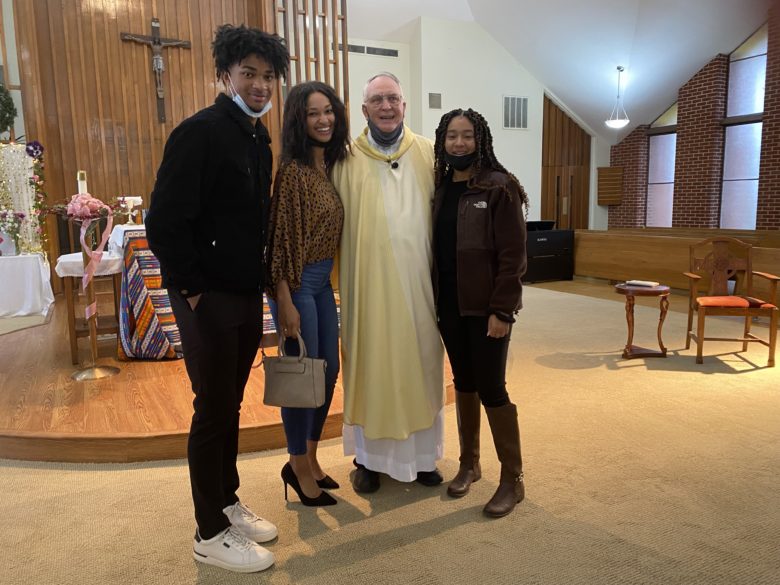
CANTON – Left to right: Vincent Alexander, Victoria Alexander, Father Guy Wilson and DeAsia Evans. The group bid farewell to Father Guy and the congregation of Holy Child Jesus on Sunday, Jan. 2 before their trip to Miami for the SEPI “Journeying Together” conference. (Photo by Sister Mary Anne Poeschl, RSM)

DeAsia Evans
My experience of going to Miami for the Youth Leadership gathering was very inspiring. I had the honor of going to the gathering with the help of SEPI and Catholic Extension. Youth leaders from different states all gathered to share their experiences and what they are doing to better their parish when it comes to the youth. While we were at the gathering, there were three words to remember during our time there. They were beauty, mercy and community.
Throughout my trip, I was able to experience all of those things. I saw beauty when we had sunrise prayer on the beach. We read the Gospel and said prayers as we watched the sun rise. There were even two seminarians there who shared their experience of being in seminary school and talking about how they were born in the Catholic faith. Mercy was shown through adoration when we spent a precious moment with the blessed sacrament and worshiped with The EPIC band. Lastly, community was shown when we came together and made hygiene bags, lunch and provided Christmas presents to those in need and for those who did not have a place to stay. Overall, it was such memorable experience that I will never forget, and it is something that I will do again.

Vincent Alexander
I am blessed and honored to have been chosen to attend the SEPI trip; I learned a lot and thoroughly enjoyed myself. I learned about the diversity in the Catholic community, as well as how things get more interesting within SEPI and other organizations.
One of the days I learned about how to connect with others, even those you might not expect to have a story. I learned about meeting and having a relationship with God, not just having a relationship, but also telling others to believe in him and trust in him. Making sure you have a relationship with him helps you to get where you need to go in life and to always have a relationship with him. Prioritize him.
I’ve also realized that God can change my church and help people in a variety of ways. I’d like to thank SEPI and everyone who helped make this possible for me, my church, and so many others. It was a true blessing and life-changing event.
Bishop reconsecrates church, parish community stronger after desecration

By Joanna Puddister King

GREENWOOD – The faith-filled parishioners of Immaculate Heart of Mary in Greenwood refuse to let a break-in that desecrated their parish triumph over their spirit, choosing to forgive and pray for the Holy Spirit to fill the hearts of the perpetrators.

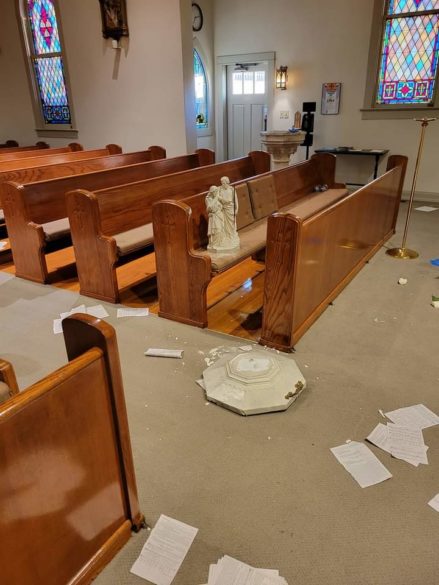
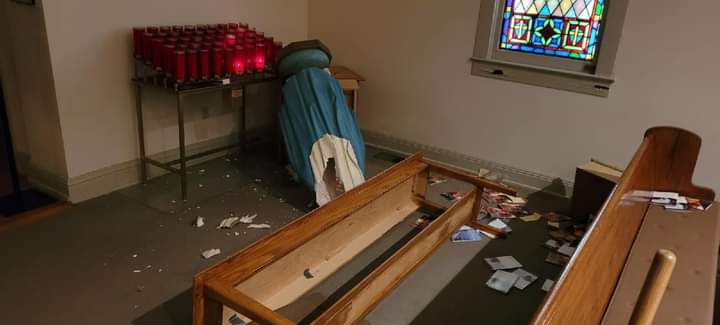
On Wednesday, Jan. 26 choir members arriving for practice discovered their parish had been vandalized. Some parishioners described the scene as if a tornado had blown through it.

The altar was overturned, hymnals were ripped from their spines with papers strewn around the sanctuary, the pulpit was overturned, as well. A statue of Mary, over 100 years old, was pulled down and her face broken into pieces. Many other items were turned over and bent. Also broken was an antique baptismal font.

Most disturbing for some parishioners was that the tabernacle was breached and the Blessed Sacrament removed, it being place on the church’s original altar. But through grace, the hosts did not appear to be touched. Parishioners like Mary Jane Faulkner felt the situation could have been worse.

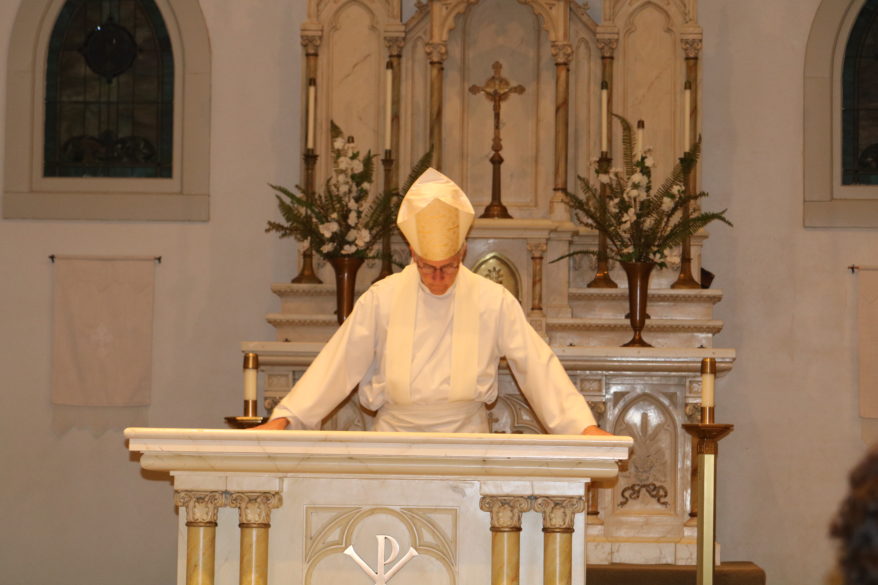
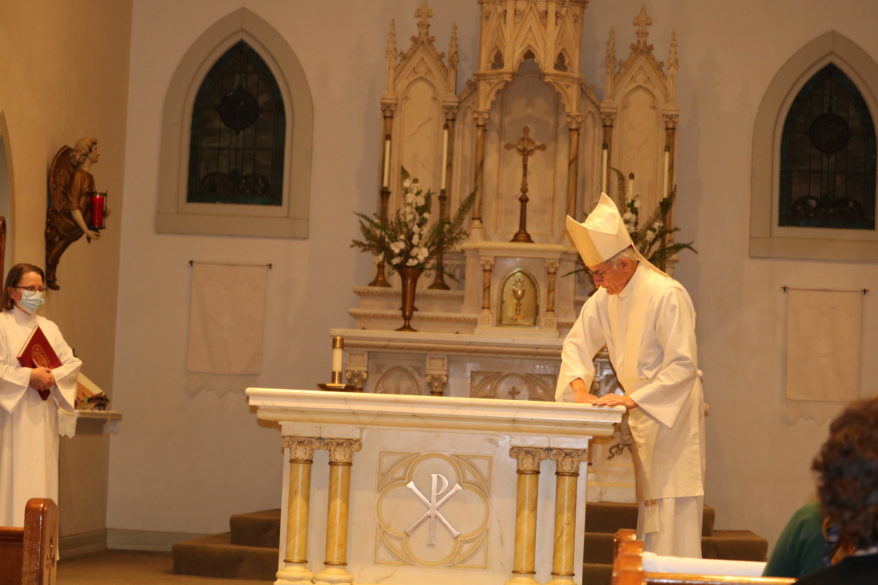
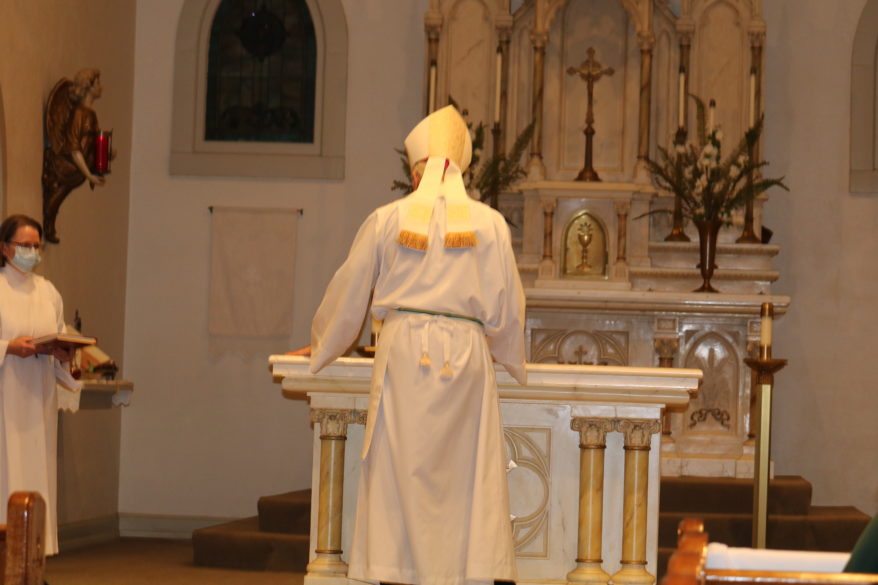
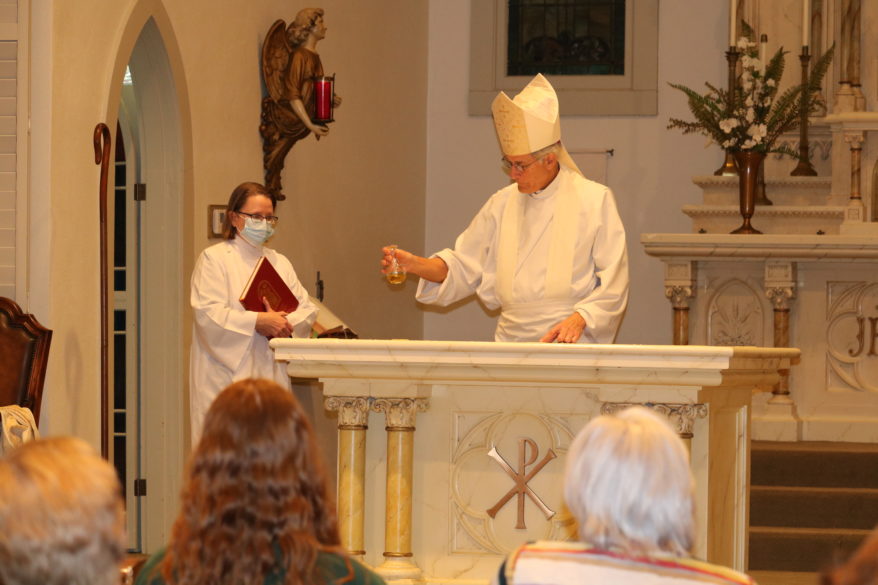
GREENWOOD – Bishop Joseph Kopacz pours Chrism on the altar at Immaculate Heart of Mary parish after a break-in desecrated the altar, statues and other sacred items in the church. (Photo by Joanna Puddister King)

“They didn’t break the windows … they could have caught the church on fire, when they destroyed Mary next to the candles,” said Faulkner, who also works for the parish in communications. “So, we were blessed. It is amazing they didn’t demolish some of the other things they could have,” she concluded.

According to the USCCB at least 120 incidents, like the one occurring at Immaculate Heart, have occurred across 31 states and the District of Columbia since May 2020. Incidents include arson, statues beheaded, limbs cut, and smashed and painted, gravestones defaced with swastikas and anti-Catholic language and American flags next to them burned, and other destruction and vandalism. The conference even has a dedicated page on its website listing news stories that detail vandalism by month, since they began tracking incidents in May of 2020.

Pastor of Immaculate Heart, José de Jesús Sánchez expressed his “shock and grief” over the break-in over social media to the Catholic community, alerting them of the destruction in his parish. He was away at a family wedding in his home country of Mexico at the time of the incident.

People were hit hard by the images shared by Father Sánchez, including Bishop Joseph Kopacz, who said “at the same time, much prayer has been offered” from those across the diocese through the power of social media.
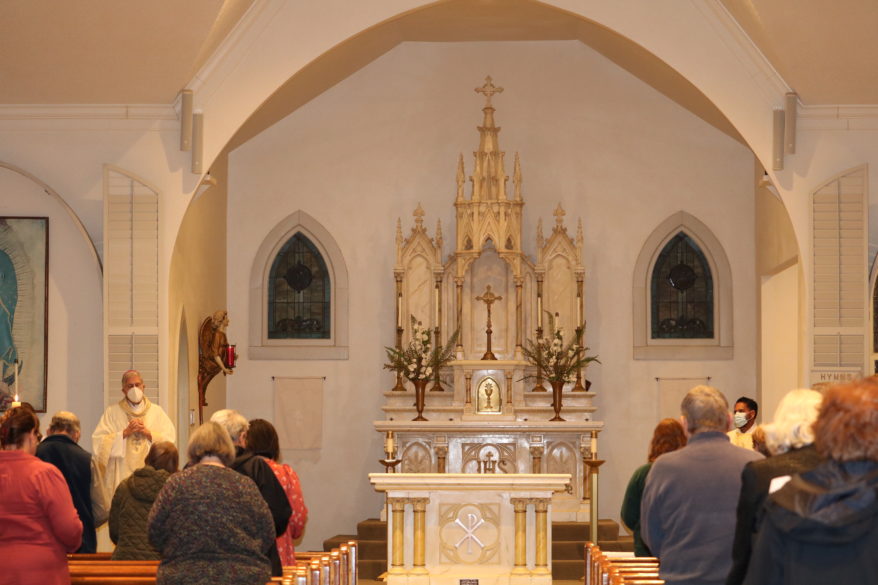
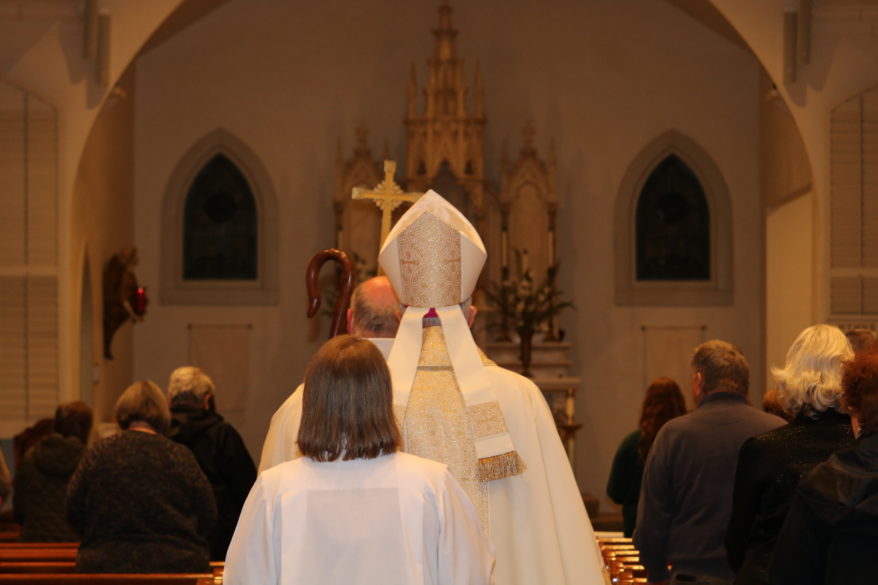
Amid all of the destruction at Immaculate Heart, Bishop Kopacz traveled to the parish on Wednesday, Feb. 1 to reconsecrate the church.

“We will reconsecrate this church once again to God in the Lord,” said Bishop Kopacz. “With great faith, hope and love with the desire to truly go forward, knowing that we have reconciled on a very deep level.”

Some in the parish, felt that the intent behind the destruction was to have parishioners lose their faith but the faith of the Immaculate Heart community is strong.

“We give thanks for this gift of faith, that can be assaulted, that can be hurt, but cannot be overcome in the Lord,” said Bishop Kopacz.

During his homily, Bishop Kopacz spoke of the destruction and evil that occurred within the walls of the church, mentioning the overturned pulpit and altar.

“The Word of God, another sacred part of who we are, was overturned, as if to say ‘We don’t want this Word proclaimed from this pulpit,’” said Bishop Kopacz, likening the destruction as malice. “That’s not just juvenile, ‘let’s just wreak a little havoc in this building.’”

Additionally, mentioned was the overturned altar and disturbed sacrament with Bishop Kopacz stating that “it was a deliberate blow to all that is sacred to us.”

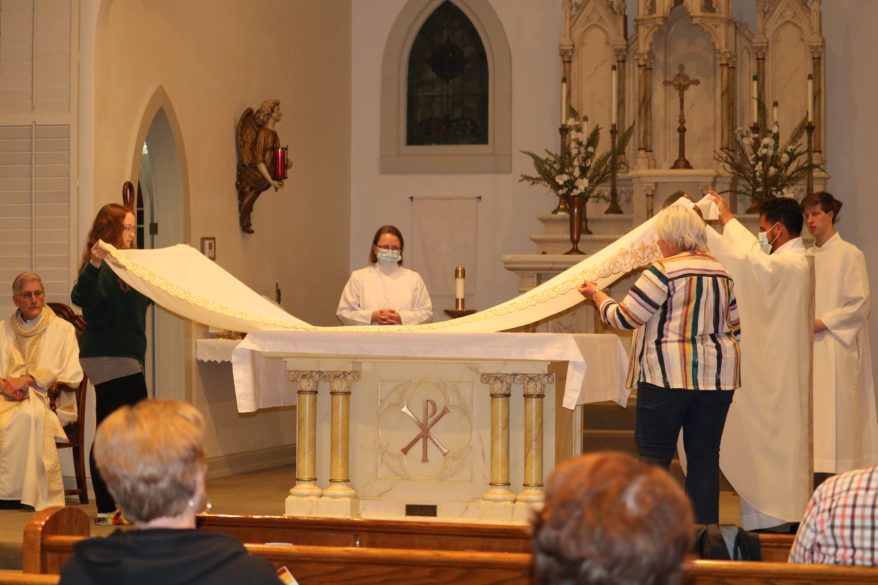
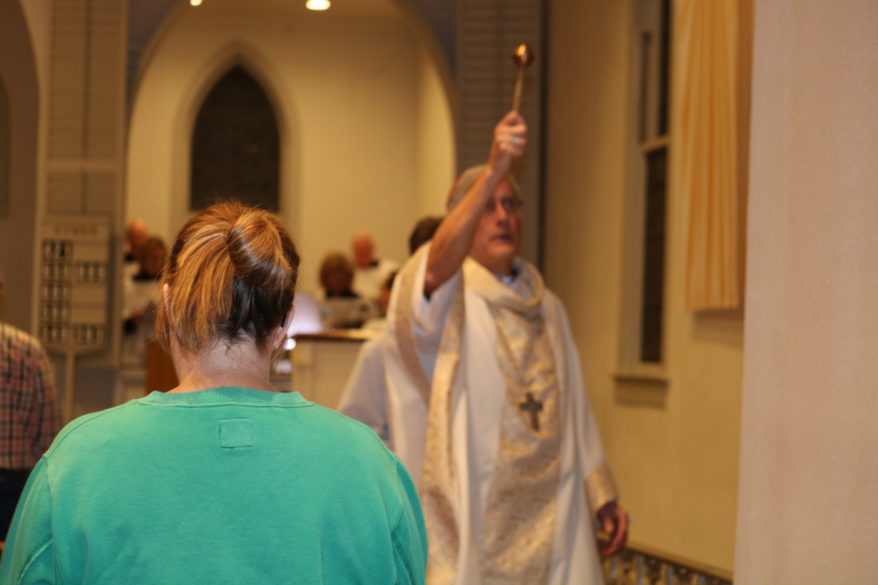
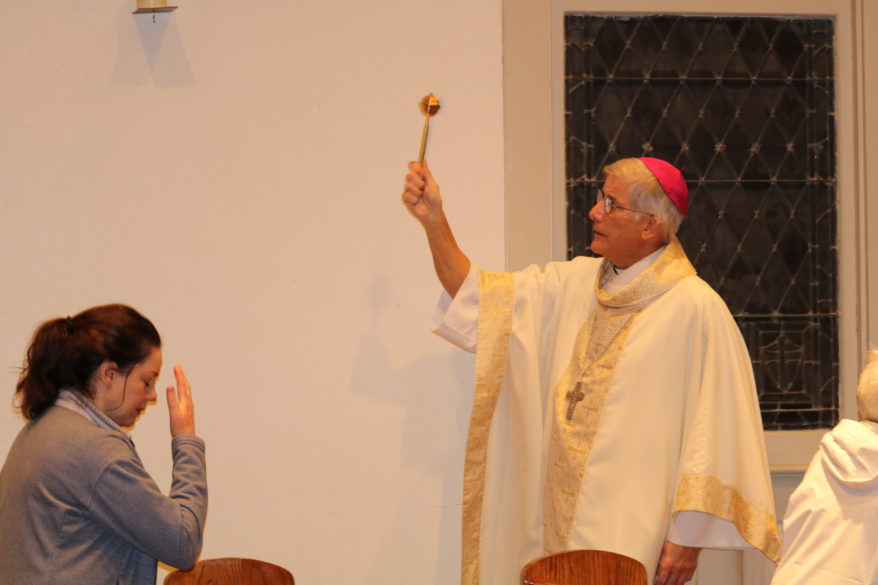
As a part of the reconsecration of the church, Bishop Kopacz took great care in anointing the altar and with Chrism, in addition to the use of holy water to renew the baptismal promise of those present. “This seeks to make right, what has been wronged,” he said.

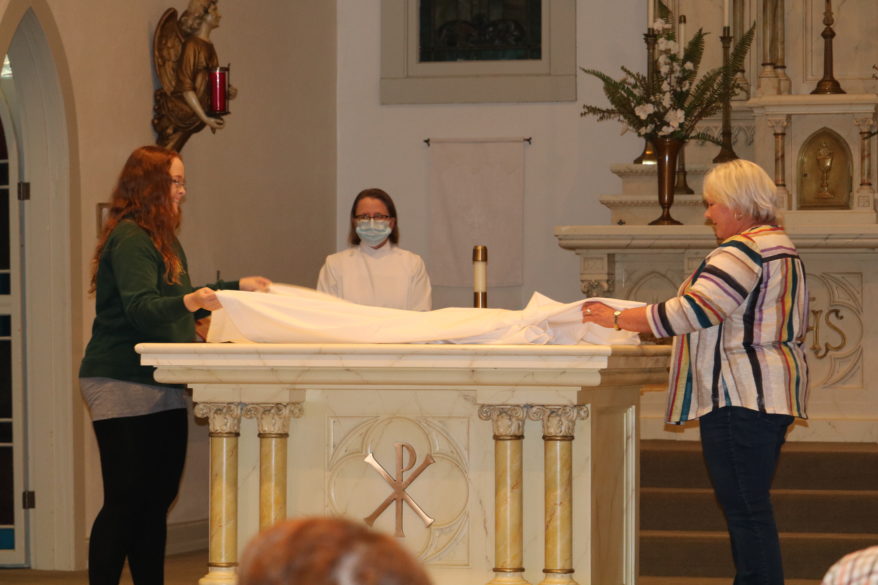
On Feb. 1, parishioners assist Father Sánchez in replacing the altar linens after Bishop Joseph Kopacz reconsecrated the altar after the parish was broken into and the altar overturned a week earlier.

“Our altar represents Christ – it is Christ. … In the anointing, we are allowing the Lord to again come before us in a most powerful way to be our Good Shepherd and for us to know Him. For us to then enter deeply into the mystery of his life. … Heaven and earth are joined together each time we celebrate the Eucharist.”

After the Mass, parishioners like Faulkner expressed their gratitude and were moved by the beauty in the care of the reconsecration.

“I have never seen anything like it. It was extremely moving and beautiful,” said Faulkner.

Father Sánchez gave thanks for the experience of the reconsecration and was grateful for the feeling of hope, also witnessing a consecration of a church for the first time. “It was really beautiful and we know that we are not alone.”

“It is a new opportunity for all of us in the Body of Christ … and we can say to the enemy that if Christ is with us, who is against us.”

Parish coordinator and director of religious education, Emelia Joseph, who has worked tirelessly getting new keys, meeting with police officers and more in the wake of the break-in, is thankful for the support of the Greenwood community and the people of the diocese.

“We know through the grace of God and all the people who have contacted us, with prayer and their support, that we are not only going to rally through this, but we are going to be stronger than ever.”

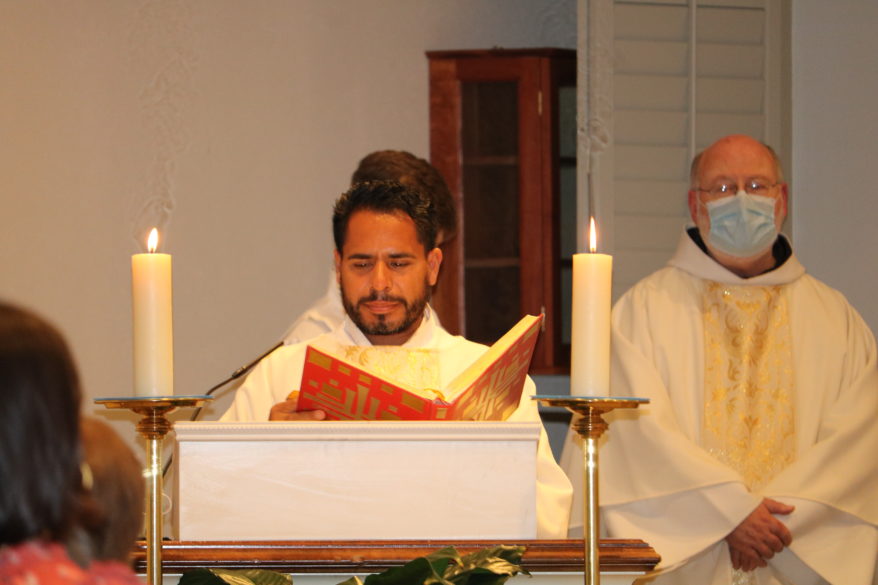
Father José de Jesús Sánchez prepares to read the Gospel during the reconsecration Mass at Immaculate Heart of Mary parish, while Father Joachim Studwell, OFM looks on. (Photos by Joanna Puddister King)

Synod, foundation of church restoration

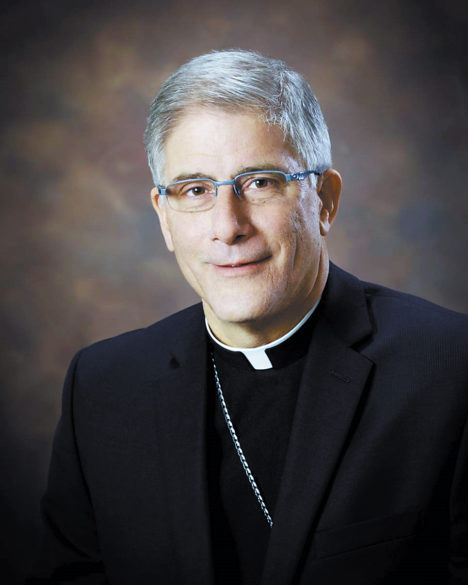
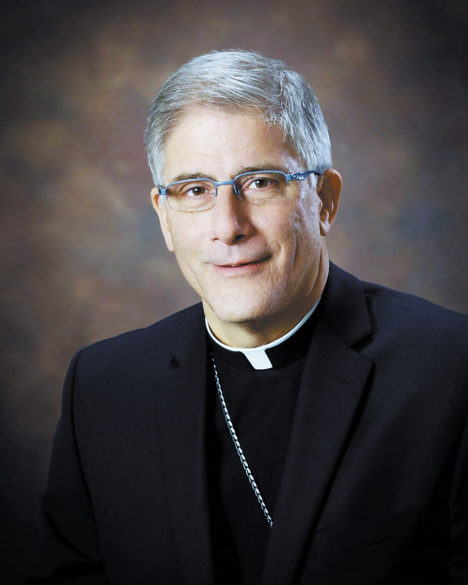
By Bishop Joseph R. Kopacz, D.D.
The fire that nearly destroyed Notre Dame Cathedral in Paris seems like a distant memory. In fact, it occurred less than three years ago on April 15, 2019, but we would agree that it has faded from the public’s awareness. This is due in large part to the pandemic which has been burning non-stop for the past two years with its accompanying social and economic upheavals. Yet, the labor of love to restore this world-renowned icon has not lost momentum, although it progresses out of the public view.

Bishop Joseph R. Kopacz

The massive undertaking for the complete restoration of Our Lady’s house of worship is slated for 2024. This anticipated time frame is nothing short of a miracle, and it brings to light the commitment of the French nation, believer and non-believer alike, to restore this priceless national treasure.

Although the practice of the Catholic faith in France and in much of Europe is struggling to emerge out of the ashes of disregard, the flow of pilgrims and tourists to this 800-year-old Medieval masterpiece is robust. Neither the church nor the state wants to face the future in the absence of this transcendent icon of faith and culture. Fortunately, the statues of the 12 Apostles got out of town four days before the fire for their own scheduled restoration. They are providing a good foundation upon which to rebuild.

On that note, Pope Francis, the successor of St. Peter, in collaboration with bishops throughout the world, the successors of the Apostles, is calling for a grass roots effort among the faithful to embrace a process of renewal and restoration in the church through the Synod on Synodality. In recent times, many forces have ravaged the church like a destructive fire and scattered the faithful, including the pandemic, scandals, divisions and a general hostility toward all things religious. Pope Francis hopes that the Synodal process of communion, participation and mission can be a counterweight to the pressures that are tearing at the fabric of the church’s unity and integrity.

The spirit of the Synod has been evident in the major works of Pope Francis since the outset of his papacy. From the Joy of the Gospel to his most recent works, Fratelli Tutti and Let us Dream as the pandemic continued to engulf the world, his heartfelt vision is that fraternity will rise to the level of liberty and equality, creating an authentic solidarity within the church and among the nations of our world in the face of glaring disparity. His hope is that through a world-wide synodal process the Holy Spirit can breathe new life into the church, and in turn the church can be a witness to the world of the good fruit of dialogue, respectful listening and discernment on behalf of the common good.

Experience informs us that this Synodal process of encounter and accompaniment cannot succeed apart from prayer and the Word of God. Otherwise, polarization and politicization will derail the best of intentions, and the divisions within the church and all around her will spoil the moment. Rather, arising from our fundamental identity as the Body of Christ, we have developed a process in the Diocese of Jackson of communion, participation and mission that appeals to our better angels.

Under the gaze of the Holy Spirit seeks to kindle the voice of the faithful in order to better read the signs of the times with the mind and heart of Jesus Christ. We have developed the process in order to maximize the level of participation in our parishes and schools, and in a whole host of organizations and extra-parochial ministries. We hope that there will be much to digest from which will emerge our diocesan 10-page synthesis that eventually will be a stream flowing into a mighty river that will flow all the way to Rome.

If believers and non-believers in admirable fraternity can commit themselves to the full restoration of Notre Dame, a transcendent icon of faith and culture, then it is our hope that the Holy Spirit will guide the people of God in the Diocese of Jackson and throughout the world in the restoration of the church which is the icon and sacrament of salvation.

Mary, Mother of the Church, pray for us!

Be moved by Spirit, not ‘mechanical repetition,’ pope says

By Junno Arocho
VATICAN CITY (CNS) – The Holy Spirit, and not the need for recognition, must be the primary motivation in one’s religious life, Pope Francis told consecrated men and women.

“Sometimes, even behind the appearance of good works, the canker of narcissism, or the need to stand out, can be concealed. In other cases, even as we go about doing many things, our religious communities can appear moved more by mechanical repetition – acting out of habit, just to keep busy – than by enthusiastic openness to the Holy Spirit,” the pope said in his homily Feb. 2.

“Let us today examine our interior motivations and discern our spiritual movements, so that the renewal of consecrated life may come about, first and foremost, from there,” he said.

Hundreds of men and women belonging to religious orders attended the Mass for the celebration of Candlemas – the feast of the Presentation of the Lord – which also marks the Vatican celebration of the World Day for Consecrated Life.

During the Mass, Pope Francis exchanged consecrated bread and wine with Armenian Catholic Patriarch Raphaël Pierre XXI Minassian, who was elected in September, thus sealing their ecclesial communion.

In September, after the election, the pope granted the Armenian patriarch’s request for unity, which is sealed with the gesture of partaking of the Eucharist together. The Armenian Patriarchate, based in Beirut, is one of 22 Eastern Catholic Churches that is in full unity with the Holy See and the Catholic Church.

The Mass began with the traditional blessing of candles. Led by several candle-bearing acolytes, Pope Francis processed toward the Altar of the Chair in a darkened St. Peter’s Basilica, faintly lit by the congregation’s candles as the choir sang, “O radiant light, eternal splendor of the father, Christ the Lord immortal.”

Pope Francis blessed the candles and prayed that the Lord would guide all men and women “on the path of good” toward his Son, “the light that has no end.”

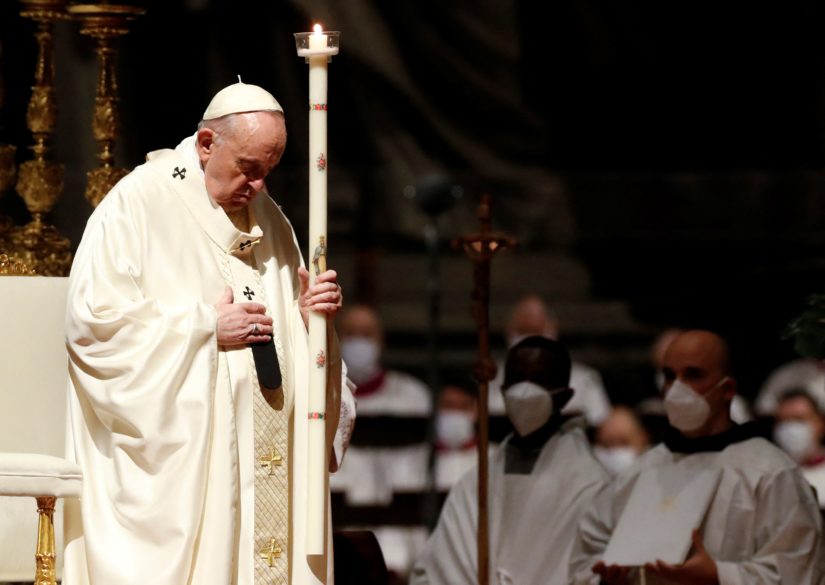
Pope Francis holds a candle as he celebrates Mass marking the feast of the Presentation of the Lord in St. Peter’s Basilica at the Vatican Feb. 2, 2022. The Mass also marked the Vatican celebration of the World Day for Consecrated Life. (CNS photo/Remo Casilli, Reuters)

In his homily, the pope reflected on the Gospel reading from St. Luke, in which the young Mary and Joseph, along with baby Jesus, meet the elderly Simeon and Anna, who “await in the Temple the fulfilment of the promise that God made to his people: the coming of the Messiah.”

Just like the elderly Simeon recognizes the Messiah “in the guise of a poor little baby,” religious men and women are called to be “moved by the Spirit” rather than success or prestige in their congregations.

“The spirit moves us to see God in the littleness and vulnerability of a baby, yet we at times risk seeing our consecration only in terms of results, goals and success: We look for influence, for visibility, for numbers,” the pope said. “The Spirit, on the other hand, asks for none of this. He wants us to cultivate daily fidelity and to be attentive to the little things entrusted to our care.”

Secondly, Simeon’s example of seeing and recognizing Christ is a testament to the “great miracle of faith” that “opens eyes, transforms gazes and changes perspectives.”

“Let us open our eyes: The spirit is inviting us amid our crises, decreasing numbers and diminishing forces, to renew our lives and our communities. Let us look at Simeon and Anna: Although they were advanced in years, they did not spend their days mourning a past that never comes back, but instead embraced the future opening up before them,” he said.

Sínodo, Fundamento de Iglesia Restaurada

Por Obispo Joseph R. Kopacz, D.D.
El incendio que casi destruye la catedral de Nuestra Señora de París (Notre Dame) parece un recuerdo lejano. De hecho, ocurrió hace menos de tres años, el 15 de abril de 2019, pero estaríamos de acuerdo en que el hecho se ha desvanecido de la conciencia del público. Esto se debe en gran parte a la pandemia, que ha estado ardiendo sin parar durante los dos últimos años, con todos los trastornos sociales y económicos que la acompañan. Sin embargo, el trabajo de amor para restaurar este ícono de renombre mundial no ha perdido impulso, aunque la restauración progrese fuera de la vista del público.

Obispo Joseph R. Kopacz

La masiva empresa para la completa restauración de la casa de culto de Nuestra Señora está programada para 2024. Este marco de tiempo anticipado es nada menos que un milagro, y saca a la luz el compromiso de la nación francesa, creyentes y no creyentes por igual, para restaurar este tesoro nacional de valor incalculable.

Aunque la práctica de la fe católica en Francia y en gran parte de Europa está luchando por emerger de las cenizas del desprecio, el flujo de peregrinos y turistas a esta medieval obra maestra de 800 años es muy fuerte. Ni la iglesia ni el estado quieren enfrentar el futuro sin este ícono trascendente de fe y cultura. Afortunadamente, las estatuas de los 12 Apóstoles salieron de la ciudad, cuatro días antes del incendio, para su propia restauración programada y las mismas están proporcionando una buena base sobre la cual reconstruir.

En ese sentido, el Papa Francisco, el sucesor de San Pedro, en colaboración con los obispos de todo el mundo, los sucesores de los Apóstoles, está llamando a un esfuerzo de base entre los fieles para abrazar un proceso de renovación y restauración en la iglesia a través del Sínodo sobre la Sinodalidad. En los últimos tiempos, muchas fuerzas han devastado la iglesia como un fuego destructivo y dispersado a los fieles, incluida la pandemia, los escándalos, las divisiones y la hostilidad general hacia todo lo religioso. El Papa Francisco espera que el proceso sinodal de comunión, participación y misión pueda ser un contrapeso a las presiones que están desgarrando el tejido de la unidad e integridad de la iglesia.

El espíritu del Sínodo ha sido evidente en las principales obras del Papa Francisco desde el comienzo de su papado. Desde la Alegría del Evangelio hasta sus obras más recientes, Fratelli Tutti y Soñemos, mientras la pandemia continuaba envolviendo al mundo, su visión sincera es que la fraternidad se elevará al nivel de libertad e igualdad, creando una auténtica solidaridad dentro de la iglesia y entre las naciones de nuestro mundo frente a la flagrante disparidad. Su esperanza es que, a través de un proceso sinodal mundial, el Espíritu Santo pueda dar nueva vida a la iglesia y, a su vez, la iglesia pueda ser testigo al mundo del buen fruto del diálogo, la escucha respetuosa y el discernimiento en nombre del bien común.

La experiencia nos enseña que este proceso sinodal de encuentro y acompañamiento no puede tener éxito sin la oración y la Palabra de Dios. De lo contrario, la polarización y la politización harán descarrilar las mejores intenciones y las divisiones dentro y alrededor de la iglesia estropearán el momento. Más bien, surgiendo de nuestra identidad fundamental como el Cuerpo de Cristo, en la Diócesis de Jackson hemos desarrollado un proceso de comunión, participación y misión que apela a nuestros mejores ángeles.

Bajo la mirada del Espíritu Santo buscamos encender la voz de los fieles para leer mejor, con la mente y el corazón de Jesucristo, los signos de los tiempos. Hemos desarrollado el proceso para maximizar el nivel de participación en nuestras parroquias, escuelas y en una gran cantidad de organizaciones y ministerios extra parroquiales. Esperamos que haya mucho que digerir, de lo cual surgirá nuestra síntesis diocesana de 10 páginas que, eventualmente, será una corriente que desemboque en un río caudaloso que fluirá hasta Roma.

Si creyentes y no creyentes, en una fraternidad admirable, pueden comprometerse con la restauración completa de Notre Dame, un ícono trascendente de fe y cultura, entonces esperamos que el Espíritu Santo guíe al pueblo de Dios en la Diócesis de Jackson y en todo el mundo en la restauración de la iglesia que es icono y sacramento de salvación.

María, Madre de la Iglesia, ¡Ruega por nosotros!

We need more funerals

SPIRIT AND TRUTH
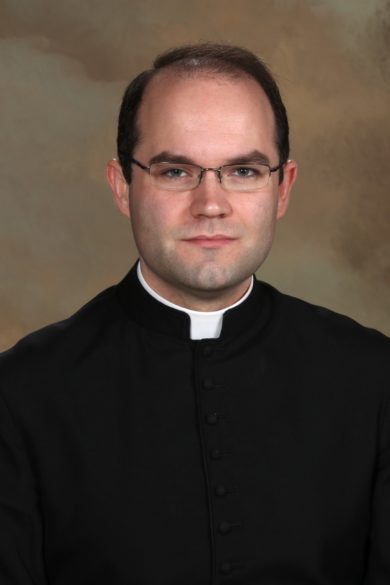
By Father Aaron Williams

It seems that more and more we are referencing time today by “before” or “after” COVID. One of the effects of the pandemic has been a tendency for families to request to forego the normal funeral Mass and to simply have an outdoor graveside service for their deceased loved ones. Usually this is done to avoid gathering a large crowd, and because it is outside and in open air. However, I fear that sometimes families are having graveside services in order to avoid the stress or expense that usually comes with planning a full funeral. In these situations, I usually like to counsel people that it is far less likely they will regret having a funeral for their deceased loved one, than they would regret not having one.

Father Aaron Williams

But we as Catholics do not believe in the necessity of funeral Masses simply because it seems like “the right thing to do.” The Catholic Funeral Mass, we believe, accomplishes a spiritual work, which is absent in a funeral outside a Mass, let alone a graveside service. (Perhaps it is important to mention that there is technically not a Catholic rite for a ‘graveside service.’ There is simply the rite of burial which is always done at a graveside whether a funeral Mass precedes it or not).

The secular world has started to call funerals “celebrations of life,” but this opposes the Catholic understanding of a funeral. When a Catholic goes to a funeral, we are not there because we need to celebrate a life lived. In death “life is changed, not ended,” we say in the funeral preface. A funeral which merely makes mention of a person’s earthly life denies our belief in the resurrection, and the very real need that the dead have of our prayers.

In the Second Book of Maccabees, we hear the story of Judas Maccabeus and his soldiers gathering the bodies of the those who had fallen in battle and offering prayers and sacrifices for them. This was done because Judas realized these fallen men had committed the sin of idolatry, which needed to be atoned. Afterwards, the sacred author records, “they turned to prayer, beseeching that the sin which had been committed might be wholly blotted out … [and they] also took up a collection, man by man, to the amount of two thousand drachmas of silver, and sent it to Jerusalem to provide for a sin offering. In doing this [Judas] acted very well and honorably, taking account of the resurrection. For if he were not expecting that those who had fallen would rise again, it would have been superfluous and foolish to pray for the dead.” (2 Maccabees 12:42-44)
The fundamental purpose of the Catholic funeral is to pray for the dead, and the most efficacious prayer we can ever offer is the Holy Mass. Hence, there is no greater prayer for our dead loved ones than a funeral Mass. In doing so we fulfill both a spiritual and corporal work of mercy, by praying for and burying the dead.

All of the texts and prayers of the Catholic funeral point to this double reality: that the dead are in need of prayer and purification because of their sins; and that God is merciful and promises us the hope of resurrection unto eternal life. We come to the funeral, in the words of Father Paul Scalia (preaching at his father — Antonin Scalia’s funeral) “to lend our prayers to that perfecting, to that final work of God’s grace, in freeing [the dead] from every encumbrance of sin.”

The overall emotion of the funeral Mass is mercy, which is why even in the reformed liturgy the prescribed liturgical color for a funeral is violet or black. In the Dioceses of the U.S., white is given by indult as a third option “when pastorally appropriate.” It should be noted that in some cultures, particularly in some Asian cultures, white is the color of mourning.

The funeral Mass is not, as some call it, a “celebration of resurrection,” as we know that before being raised to the perfection of heaven, most Christians must undergo the spiritual purification that God offers to souls in purgatory. We do our deceased loved ones a great injustice by failing to pray for them.

Often, when planning funerals, we are filled with difficult emotions, and we want to forget the reality of death by distracting us with happier thoughts. But the truth is that death is a result of the fall — of the sin of our first parents, and our inherited sinfulness. The hope and joy of Christian death is that Christ can purify us with His grace and make us worthy of His presence forever. And we can lend our aid to this perfecting by our own works of prayer, fasting and almsgiving and most especially by our offering of the Holy Mass.

(Father Aaron Williams is parochial vicar at St. Patrick and St. Joseph Meridian.)

New monastery established at Edgewood

By G. Mark LaFrancis

NATCHEZ – The broad stately oaks and rolling manicured lawns of Edgewood just off Airport Road beckon those who visit to enjoy its serenity.

Thus, it seems, Edgewood has become a natural setting for a monastery, the new home of a chapter of the international Institute of the Incarnate Word, a Catholic religious order of missionary priests and brothers.
“So, the monastery is a place where he (the monk) can find solitude where he has everything that he needs, and, and it’s the place where he can orient his whole life towards God, through work, through prayer, through silence,” said Father Charles Yaklin, a member of the order and local superior.

The institute will occupy a portion of the property, which is owned by Jerry and Hedy Boelte. Including Father Charles, there are four monks living there who are from around the globe.

Establishing a monastery at Edgewood was, in a way, decades in the making. Hedy Boelte has attended and organized many religious retreats and prayer groups in her Roman Catholic life. “Ever since I was a little girl, I have always desired to do things for others based on my Catholic faith, so I was born to serve. And in doing that, I worked with the nuns at my school and my priest. And I love my Catholic faith more than anything.”

The moment of significant religious transformation for Boelte came in 1987 when she attended a retreat. “I went on a pilgrimage to Medjugorje and had the call to devote the rest of my life to serving Jesus through Mary. Starting prayer groups, organizing retreats, giving testimonies, serving God by living a fully dedicated Catholic life was the outcome of this willingness to work for the Kingdom of God. The Monastery is the pearl of great price, and we will continue to pray, serve and trust.”

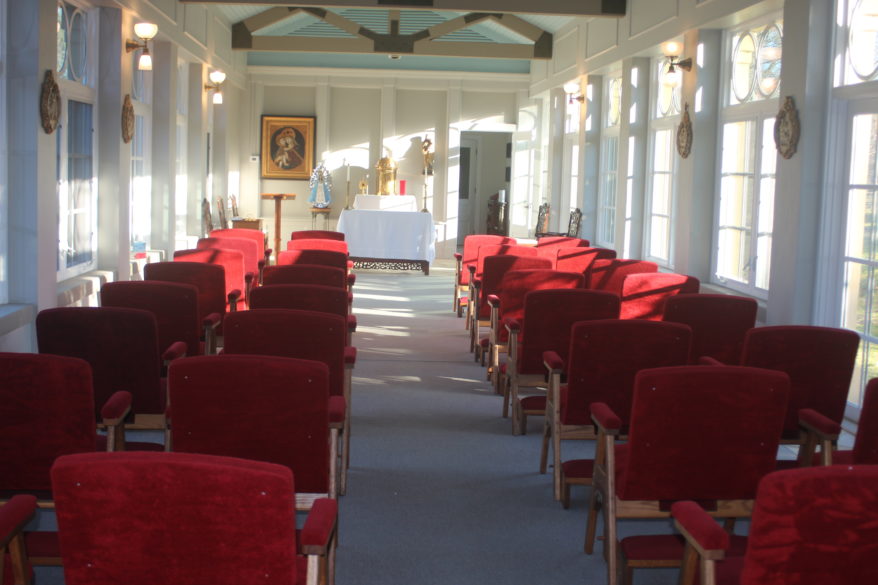
NATCHEZ – The chapel at Edgewood was created for religious activities and celebration of the Mass at the new St. Joseph Monastery. (Photos courtesy of G. Mark LaFrancis)

She began what could be described as a religious stepladder, each new rung creating a new opportunity for her to invest her life and property to serve the Lord. All the while, she said, she prayed for direction. “Every time my husband would buy a piece of property as an investment or for the protection of the land and wildlife, I would always dedicate that property to a saint. And I would ask the saint, ‘What are we going to do with this property?’”

For years, Boelte sponsored retreats, prayer groups and events at those properties and at Edgewood, but the concept of the 100-acre property becoming a monastery gelled several years ago when she and her husband traveled to Wyoming where they own a ranch. There, she learned about Institute of the Incarnate Word and the monks. After a series of meetings and consultations, including with Father Scott Thomas, pastor at St. Mary Basilica in Natchez, wheels were in motion for the establishment of the monastery at Edgewood.

“It’s stunning,” Father Charles said of his first impression of Edgewood. “So, we’re seeing how we can make our mission work in this beautiful place to foster a move to prayer, which is really what we’re trying to do.”

Father Charles said the monks will pray for the entire Natchez community, not just Roman Catholics. “Yes, absolutely, for everyone. God wants all men to be saved and to come the knowledge of the truth. So, we pray for everyone.”

He said other monks may arrive and become part of the local monastery. Although the order is contemplative, that is, they spend considerable portions of the day in prayer, there will be opportunities for interaction with the community.

Already, retreats and prayer groups are in the planning session. “As a rule, we will be staying put here in the house and working on the grounds here, but we do have to get groceries, for example. So, you may see us at Walmart; that has happened a few times already, but other than that, we try to stay put.”

Father Charles said his journey in the religious life took many turns until he said he discovered his calling with the Institute of the Incarnate Word, a missionary religious congregation established in Argentina in 1984, which now has missionaries working in more than 40 different countries. Its members are priests, seminarians and brothers, the majority of them forming part of the “apostolic branch” of the Institute, typically working in parishes. The four monks who now live in Natchez belong to the “contemplative branch” of the Institute and contribute to the missionary work by their life of prayer.

A brochure about St. Joseph Monastery and the congregation states, “We want to be rooted in Jesus Christ. We want to love and serve Jesus Christ, and to help others love and serve Him. The Eucharist is the center and root of our consecration as religious.”

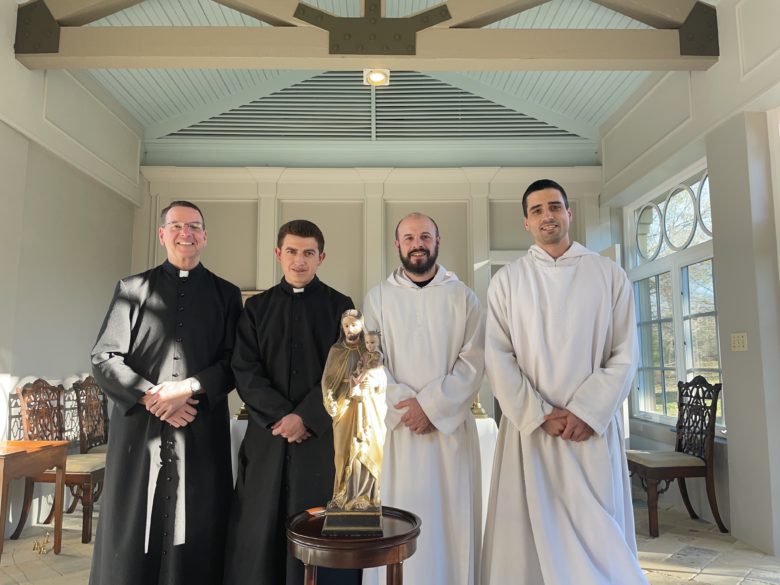
NATCHEZ – Monks who have moved to the St. Joseph Monastery off Airport Road are, from left, Brother Denis Lemire, Brother Nelson Pena, Father Gabriel Prado, and Father Charles Yaklin, local superior.

Father Charles added, “Seven times a day, we go to the chapel to pray the Liturgy of the Hours. This is a way of sanctifying all the hours of our day by interrupting our activities and returning to chapel, to pray, to be in the presence of God, and in this way to prolong each morning’s Mass throughout the whole day.” The pool house has been converted to a chapel for the monks and the celebration of the Mass for the community. Special additions to the chapel will be made soon, Boelte said.

A monastery in Natchez might seem unusual, but monasteries exist worldwide. Father Charles said, “Monastery comes from the Greek ‘monos’ meaning alone. And so, the monk lives alone, even though he can be in a community. He spends the majority of his time in solitude and not for the sake of being away from other people, but for the sake of being in silence with God.”

Father Charles said that a Spanish Mass is under consideration as well as regular Masses on weekends. Also, the monks are considering producing items to sell as a way to help sustain their lives at Edgewood.

(Story special to Mississippi Catholic. More information is available at the website saintjosephmonastery.com.)

For the love of stewardship: a valentine’s day reflection

By Julia Williams
JACKSON – Stewardship is about love, and love is about stewardship. It is about loving your neighbor, loving your enemy and loving God. Stewardship is about how we live our lives and make our choices.

Love, as an expression of stewardship, means that we consider all of God’s abundant gifts and how we can make best use of these gifts so that we can love our neighbor, so that we can return our thanks and praise to God, and so that we can do every little thing with great love.

The word ‘love’ appears more than 500 times in the Bible. Clearly this idea of loving is important for us as Christian Catholics, and the Lord makes it eminently obvious that love of one another needs to be at the center of our way of life.

GOD IS LOVE
“God is love. Whoever lives in love, lives in God, and God in them.” 1 John 4:16

ACT OF LOVE
O my God, I love Thee above all things with my whole heart and soul, because Thou art all good and worthy of all love. I love my neighbor as myself for love of Thee. I forgive all who have injured me, and I ask pardon for all whom I have injured. Amen.

Excerpts: SOLI, Stewardship of Life Institute, stewardshipoflife.org

NFL Hall of Famer Bettis goes back to Notre Dame for degree

By Catholic News Service
NOTRE DAME, Ind. – Jerome Bettis, in his football days, got the nickname “The Bus” because he was carrying would-be tacklers along with him during his punishing runs from scrimmage.

Today, what Bettis is carrying is a full load of classes at the University of Notre Dame, as he strives to finish what he started in his college days more than 30 years ago – a bachelor’s degree in business.

Bettis, now 49, is on track to graduate this spring and get that coveted Notre Dame diploma. If he does, the Pro Football Hall of Famer will have made good on a promise to his mother, Gladys – you may remember their Campbell’s Chunky Soup commercial from 20 years ago – that he would get his sheepskin.

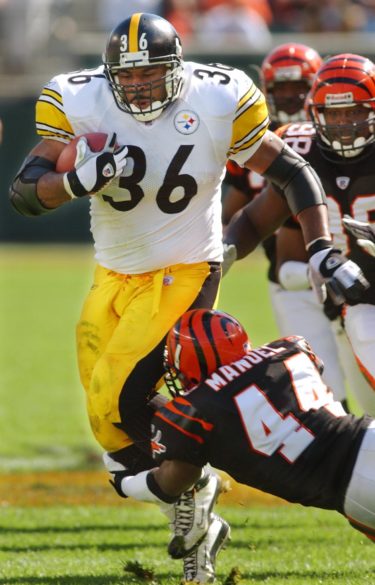
Pittsburgh Steelers running back Jerome Bettis competes against the Cincinnati Bengals in this 2002 file photo. He played three years at the University of Notre Dame in the early 1990s. (CNS photo/John Sommers II, Reuters)

“I promised my mother that I would get my degree,” he said. “In my immediate family, I’ll be the first person to graduate from college,” Bettis told NBC’s “Today” show Jan. 28. And at commencement exercises in May, Bettis getting a diploma means that all 21 Notre Dame football recruits from 1990 will have graduated.

Bettis has lived much of his life in public eye as a throwback of sorts. In an era of pro football where running backs dipped, dived and swerved to avoid tacklers, Bettis was the hard-charging fullback who plunged into the line, dragging defenders with him as he motored for that extra yard.
It served him well: Bettis is eighth all-time in NFL rushing yardage at 13,662 yards, not to mention eight 1,000-yard seasons, 91 touchdowns, six Pro Bowl selections and a Super Bowl championship after the 2005 season, his final season before retiring as a player.

On campus, Bettis is another throwback. Most of the students at Notre Dame aren’t even half his age; Bettis turns 50 Feb. 16. They take their class notes on tablets or laptops; Bettis takes his notes with pen and paper.

Still, he told NBC’s Anne Thompson – herself a Notre Dame graduate: “I am a much better student at 49 because I want to learn, I want to know all of this information.”

The degree will come in handy in his post-football career, which has involved trucking, staffing, development and marketing companies as well as his career as a television personality, where Bettis is on camera for the NFL Network.
“I say to all our coaches that there are three things we should be concerned about versus integrity: Do things the right way, second is help these kids get a degree and do well in their lives, and the third is winning on the field,” said Holy Cross Father John Jenkins, Notre Dame’s president, on “Today.” “And Jerome getting a degree after all his success just underscores how important that is.”

Xavier University of Louisiana receives bomb threats Feb. 1

By Carol Zimmermann
WASHINGTON (CNS) – On Feb. 1, Xavier University of Louisiana was among a group of several historically Black colleges and universities in the United States that received bomb threats.

The threats to the university and at least 12 other historically Black colleges and universities came a day after at least six other similar schools received these same threats.

A tweet issued by the university Feb. 1 said: “Xavier University of Louisiana received a bomb threat early this morning and is cooperating with investigating law enforcement. The campus has been cleared and classes will continue as scheduled starting at noon.”

A statement from Patrice Bell, the university’s vice president and chief of staff, said that when the school received the threat “an immediate evacuation of the area and a shelter in place for our residential students were issued” until the university received clearance to from campus, local, state and federal agencies.

She also noted the university would “continue to increase surveillance and mitigation efforts to safeguard its community.”

Xavier University of Louisiana, the nation’s only historically Black Catholic university, held its classes virtually that morning.

This was the second bomb threat the university received in less than a month. On Jan. 4, the university also was targeted along with other historically Black colleges and universities.

The recent wave of threats falling just before or at the start of Black History Month, observed every February, was not lost on school leaders and others.

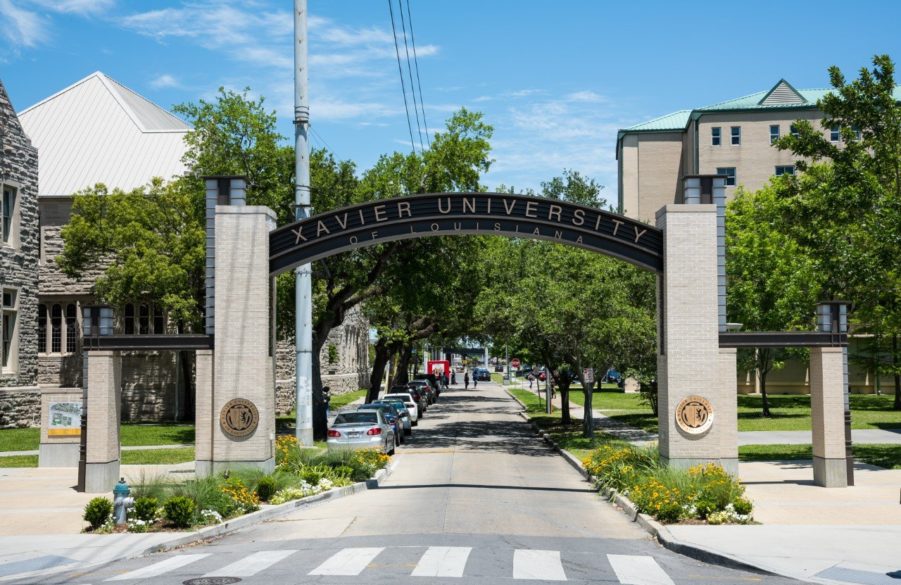
Xavier University of Louisiana in New Orleans is seen in this undated photo. The Catholic university, along with other historically Black colleges and universities, received a bomb threat Feb. 1, 2022. Areas of Xavier were evacuated and classes held virtually until about noon while the incident was investigated. Residential students also were told to shelter in place for a time. It was the second time in a less than a month that Xavier had been threatened. (CNS photo/courtesy Xavier University of Louisiana)

A Feb. 2 statement by the general council of the Adrian Dominican Sisters said they were “horrified by the series of bomb threats that have closed down historically Black colleges and universities during the past month” including those that occurred on “the first day of Black History Month.”

“Although no bombs have been found, these terrifying and disruptive threats of violence against innocent students, faculty and staff are an assault against the foundational freedoms of our democracy — and a threat to us all,” the sisters added.

They said that as women of faith, they “stand in solidarity with our Black brothers and sisters at these iconic educational institutions and call for a thorough investigation and prosecution of these despicable hate crimes.”
The sisters said they prayed that “God’s loving care and protection” would surround and safeguard theses schools and also prayed “for the conversion of all whose hearts are poisoned by hatred.”

Both the FBI and the Bureau of Alcohol, Tobacco, Firearms and Explosives said they were investigating the school threats.

On Jan. 31, after the first wave of recent threats, White House Press Secretary Jen Psaki said they were “certainly disturbing” and said the White House was in touch with federal law enforcement leadership about them.

In a Feb. 1 statement, the NAACP said it was monitoring these threats and noted that the “Black community has long been plagued by threats of domestic terrorism against them in their schools, homes and houses of worship.”

In other reaction, the leaders of the Congressional Bipartisan Historically Black Colleges and Universities Caucus said in a Jan. 31 statement that they were deeply disturbed by recent bomb threats at these campuses.

“Learning is one of the most noble and most human pursuits, and schools are sacred places that should always be free from terror,” the statement said. The group also stressed that “solving these crimes and bringing those responsible to justice should be a top priority for federal law enforcement.”

Xavier University of Louisiana opened in 1925 and currently has about 3,000 students. It got its start from St. Katharine Drexel, who opened a high school in 1915 on the property where the university was founded by the saint and the Sisters of the Blessed Sacrament, the order St. Katharine founded in 1891.

Follow Zimmermann on Twitter: @carolmaczim