
On being single in the church

THINGS OLD AND NEW
By Ruth Powers
Right now there is a debate going on in some quarters in the church regarding whether or not there is such a thing as a vocation to the single life, in addition to the unquestioned vocations to ordained, married, or vowed religious life. Part of the reason for the debate is that, unlike the other vocations, there is a great diversity of reasons why people are single, therefore it is difficult to make statements about what “being single” means.
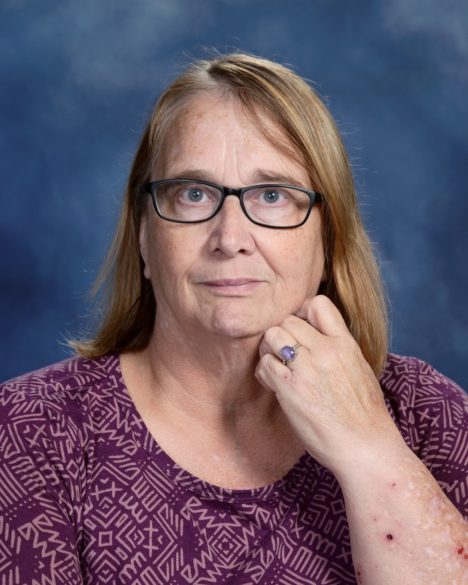
Ruth Powers

We are all single for some part of our lives. We marry or enter priesthood or religious life after some period of living as a single person. We may become single again due to divorce or the death of a spouse. We may actively choose not to marry for a wide variety of reasons. Better theological minds than mine are grappling with this question, and I will leave it to them. However, I would like to propose a shift in the way we look at vocation for single people that makes it plain that it is not a second class state of life, but rather it is an opportunity to live out the vocation given to all of us at our Baptism, no matter who we are.
In Lumen Gentium, one of the primary documents of the Second Vatican Council, the fathers of the Council wrote of the universal vocation of all Christians, the call to holiness. They wrote, “Thus it is evident to everyone, that all the faithful of Christ of whatever rank or status, are called to the fullness of the Christian life and to the perfection of charity; by this holiness as such a more human manner of living is promoted in this earthly society. In order that the faithful may reach this perfection, they must use their strength accordingly as they have received it, as a gift from Christ. They must follow in His footsteps and conform themselves to His image seeking the will of the Father in all things. They must devote themselves with all their being to the glory of God and the service of their neighbor. In this way, the holiness of the People of God will grow into an abundant harvest of good, as is admirably shown by the life of so many saints in church history.” In other words, we are all called to be holy by following the teachings of Christ and through service to others. The single person is just as capable of living this call as is the married person, the priest, or the person who has taken religious vows.
Whether a person is single by choice or by chance does not change the fact that we are still made for love, self-gift and service. There are many ways that the single person can be true to this call. First of all, it does not require religious life to develop a relationship with God; and depending on the individual situation, the single person may have more time to develop a relationship with God because as St. Paul says, it is a time where you can give your “undivided attention to the Lord” (1 Corinthians 7:35) by reading, studying and prayer. Live your whole life with passion and purpose as an offering to God for the gifts you have been given rather than actively seeking something to make you happy, and you may find that happiness will sneak up on you. The single person has the time and opportunity to develop many friendships if he or she wishes to, and in these loving friendships they can help others live more faithful lives as well. As it says in Hebrews 10:24-25, “And let us consider how we may spur one another on toward love and good deeds. Let us not give up meeting together … but let us encourage one another.” Finally, the single person has the freedom to devote time to service, and finding an area of service that one is passionate about can often be another avenue to a happy and fulfilled life.
With this said, the church also has a responsibility to her single members, who all too often get overlooked. In Familiaris Consortio, St. John Paul II wrote that those without a family must be able to find their family within the church. The Catechism of the Catholic Church, in paragraph 1658 also speaks to the church’s role in serving its single members: “We must also remember the great number of single persons who, because of the particular circumstances in which they live – often not of their choosing – are especially close to Jesus’ heart and therefore deserve the special affection and active solicitude of the church, especially of pastors. … Some live their situation in the spirit of the Beatitudes, serving God and neighbor in exemplary fashion. The doors of homes, the ‘domestic churches’ and of the great family which is the church must be open to all of them.” As a church which calls itself the People of God, we have the responsibility both as a group and as individuals to work to make sure that all are included and no one suffers loneliness needlessly.
Single people have an important though sometimes unrecognized role (sometimes even unrecognized even by themselves) in the Body of Christ. They have a unique opportunity to live out their baptismal call to holiness and service, and we as the church have a responsibility to include and support them.

(Ruth is the Program Coordinator for St. Mary Basilica Parish in Natchez.)

Sacred time

THINGS OLD AND NEW
By Ruth Powers
Christ yesterday and today,
the Beginning and the End,
the Alpha and the Omega,
All time belongs to him and all the ages.
To him be glory and power through every age and forever. Amen.

This beautiful prayer is said each year on the Easter Vigil as the Easter candle is inscribed with the cross and the numerals of the current year.

Ruth Powers

It reminds us of something very important: time itself is part of God’s creation and, as such, is sacred. Modern people tend to view time as an arrow, always moving into the future. Pre-Industrial cultures, however, often viewed time as an ever-repeating cycle of seasons tied to the natural world.

The church combines these two ideas. The great wheel of our liturgical calendar retells the story of our salvation each year, while at the same time moving us forward towards the promised fulfillment of time that will happen when Christ returns. If we want to become more conscious in our own lives of the holiness of time, what better way to do it than through the church’s yearly cycle of feasts and fasts?

You are probably familiar with major seasons and feasts of the liturgical year — Advent, Lent, Christmas, Easter, Pentecost, etc., but there are other less well known feasts and fasts that are part of the traditions of the church. One such set of observances are the Ember Days. Four times a year, near each solar season, the church sets aside three days to ask for the blessings of nature, to thank God for the sacraments and to pray for priests. These days are times marked with prayer, fasting, and abstinence and are meant to serve as a kind of quarterly “spiritual check-up.” These days have been observed since the very early centuries of the church and remain part of her traditions, even though they were removed from the official liturgical calendar in the 1960s. The words “Ember Days” have nothing to do with embers or ashes but are thought to come from the Anglo-Saxon word ymbren, meaning circle or revolution, a reference to their ties to the cycle of the seasons.

Ember Days are observed on Wednesday, Friday and Saturday following certain liturgical celebrations that are near the change of seasons. The choice of these days of the week is meant to remind us of events leading to Christ’s death and resurrection: Wednesday for the day of his betrayal, Friday for his death and Saturday for his time in the tomb. Thursday is skipped because it should be a day of celebration for the gifts of the Eucharist and the priesthood. In fact, at one time the Ember Days were the favored days for celebrating ordinations of priests.

These days also have a specific tie to our liturgy, as they also correspond to the times of certain agricultural harvests in the Mediterranean world that are of importance to our liturgical celebrations. The Winter Ember days take place in December after the Feast of St. Lucy on Dec. 13. This is the time of the olive harvest and pressing, and reminds us of the holy oils used in the sacraments. The Spring Ember Days are observed the week after the First Sunday of Lent at the time that bees again become active and beeswax is harvested to make the candles used for the Mass and for the Easter Candle used at the Vigil. Summer Ember Days are the week following Pentecost, and they mark the beginning of the grain harvest, yielding the flour for the Eucharistic bread. Finally, the Autumn Ember Days are observed following the Feast of the Exaltation of the Holy Cross on Sept. 14, marking the grape harvest which yields the wine for Precious Blood.

So, the question arises, why revive the observance of these days? These days may seem to some to be a quaint relic of the “old” church, but I believe there are a number of reasons why the time may be right and beneficial to our spiritual growth.

First, many live lives that are disconnected from God’s creation in the natural world. We live in urban areas, tethered to technology almost 24/7. Most of our food arrives packaged in plastic, and we have no real idea of its origins. Our relationship to the weather revolves around how it affects our personal plans, not how it affects the farmers who provide our food. By pausing for a little while and acknowledging the change of seasons and the various harvests, we can refocus our thoughts on God and his Creation and our need to care for it.

In addition, the penitential focus of the 3-day observance can also serve as a mini-Lent: a time to step back from the concerns of our daily lives and turn our attention to our relationship with God.
Finally, our priests and religious need prayers to support them in their service of God and the church. We can use the Ember Days as special times to thank God for their devotion, pray for their continued strength, and pray for vocations.

(Ruth is the Program Coordinator for St. Mary Basilica Parish in Natchez. She has over 35 years experience as a catechist and theology teacher at all levels from preschool to graduate school.)

An indulgent treasure

THINGS OLD AND NEW
By Ruth Powers
The Portiuncula Indulgence is coming up! What is that? Let me explain.

Ruth Powers

Possibly one of the most misunderstood teachings in the Catholic treasury is that of indulgences, and because many Catholics misunderstand this gift of God through His church, we do not take advantage of them when they are available to us. In order to understand indulgences one must first understand a little bit about church teaching on the consequences of sin and the nature of penance. First of all, sin has consequences: guilt and punishment, and punishment is both eternal and temporal (in this world). The idea that we have consequences for sin in the world goes all the way back to the story of the Fall in Genesis, where God tells Eve, “I will greatly multiply your pain in childbearing, in pain you shall bring forth children.” (Genesis 3:16) When the sinner repents God removes both the guilt and the eternal punishment, but the temporal punishment may remain, as we see in the story of David when he repents of his sin with Bathsheba, and the prophet Nathan tells him that God has forgiven him, but that he will still have to suffer some consequences for his act. (2 Samuel 12)
Temporal penalties can also be remitted or removed, and God uses the church to do so. This is the basis of both the idea of the penances given as part of the Sacrament of Reconciliation, and the church’s teaching on indulgences, which are closely connected. In the early church when one confessed sins one was given a penance that was often public and severe to lessen that temporal punishment for sin, but the church realized that the sinner could shorten the time of that penance by pious acts of prayer or charity that expressed sorrow for the sin concretely. The concept of indulgences developed as a way to shorten the time one would have been required to spend in doing a particular penance. It became customary to assign a particular number of “days” to a particular indulgence, meaning that performing this act would have removed that number of days from the person’s penitential discipline. Unfortunately, many people misinterpreted this to mean that a certain number of days would be removed from their time in Purgatory. This is not possible, as time in Purgatory does not exist in the same way we know time here. Instead, we can look at the definition of indulgences given by Pope Paul VI in his Apostolic Constitution on indulgences. He said, “an indulgence is a remission before God of the temporal punishment due to sins whose guilt has already been forgiven, which the faithful Christian who is duly disposed gains under certain defined conditions through the church’s help when, as a minister of redemption, she dispenses and applies with authority the treasury of the satisfactions won by Christ and the saints.” In an attempt to eliminate the confusion around “days” of indulgences, at the time he issued this teaching, he reduced the terminology around indulgences to partial (removes some of the temporal punishment due to sin) or plenary (removes all of the temporal punishment due to sin). However, he is clear that only God knows exactly how efficacious any particular indulgence is, because only God can read the heart of the person seeking it.
The church offers numerous opportunities throughout the year for us to obtain a plenary indulgence, and one of my favorites as a Franciscan Secular is coming up soon. On Aug. 2 we celebrate the Feast of the Portiuncula. The Church of St. Mary of the Angels, which was called the Portiuncula or “Little Portion” was one of the chapels repaired by St. Francis of Assisi in the time after his conversion. It became the chapel where he lived and where he began to gather the followers who would eventually become the Order of Friars Minor, or Franciscans. It was also the place where he came to die in 1226. The little church, which is the cradle of the Franciscan Order, is now completely enclosed by the beautiful Basilica of St. Mary of the Angels in Assisi. In the beginning the indulgence could only be obtained at the little church itself, but in 1967 when Pope Paul VI reformed the teaching on indulgences he reaffirmed the Portiuncula Indulgence and extended it to all parish churches. A plenary indulgence can be obtained on that feast day by devoutly visiting the parish church, and there reciting at least the Lord’s Prayer and the Creed for the intentions of the Pope, and receiving sacramental confession and Holy Communion. In order to gain the indulgence one should also be free from any attachment to sin, even venial sin.
In these times of stress especially it is important to avail ourselves of the many helps the church holds out to us to help us remain faithful to the gospel, and draw closer to God, and the gift of indulgences is an underused treasure.

(Ruth Powers is the Program Coordinator for St. Mary Basilica Parish in Natchez. She has over 35 years’ experience as a catechist and theology teacher at all levels from preschool to graduate school.)

Praying by the bead

Ruth Powers

THINGS OLD AND NEW
By Ruth Powers
In the long tradition of the church, the month of May has been traditionally devoted our Blessed Mother. The catholic devotion that is probably most closely connected to her is the rosary, so let’s take a look at how that form of prayer developed.
Catholics are not the first people to pray using beads. Beads or knotted cords were used by Hindus and Buddhists to keep track of prayers long before they advent of Christianity. In Christian practice the Desert Fathers in the third century were known to use stones or knotted “prayer ropes” to keep track of their daily recitation of the 150 psalms. A little later in the Eastern church the Jesus Prayer (“Lord Jesus Christ, Son of God, have mercy on me”) became popular and was repeated over and over while counting beads. In the Middle Ages the common people, who were often illiterate, wished to join in some way with the devotional prayer taking place in monasteries, where recitation of the 150 psalms was done daily. Since most people know the Our Father, they began to use strings of beads (called paternosters for the first words of the prayer) to count out the recitation of 150 Our Fathers in place of the psalms. In fact, the word bead, comes from the Old English word “bede,” which means prayer. These beads, and the prayers that went with them were sometimes called the poor man’s breviary.
The prayer most closely associated with the rosary, the Hail Mary, took over a thousand years to reach its modern form. The earliest version simply added the name of Mary to the words spoken by the angel in Luke 1:28. Repeating this phrase while counting 150 beads was popularized by Pope Gregory the Great (590-604). The second phrase from Luke 1:42 began to be added sometime between then and the early 13th century. The final petition (Holy Mary, mother of God, etc.) was added by St. Peter Canisius in his first catechism in 1555 and finalized in the Catechism of the Council of Trent in 1566.
Another development in the monasteries, that of adding a phrase relating to the life of Christ and His mother after each of the 150 psalms, led to the development of the mysteries of the rosary. These were simplified into the Joyful, Sorrowful, and Glorious Mysteries in the late 15th and early 16th centuries.
In 1569 Pope St. Pius V officially promulgated the rosary in the form we know now: 15 decades of Hail Marys introduced by the Our Father and concluded with the Glory Be, along with the 15 mysteries. The rosary remained unchanged for over 400 years until 2002, when Pope St. John Paul II introduced a fourth set of mysteries, the Luminous Mysteries. These mysteries add events of Christ’s public ministry to the meditations of the rosary. In his Apostolic Letter Rosarium Virginis Mariae, he proposed including events from Jesus ministry to help catholics enter more fully into the life of Jesus through the rosary.
Another addition to the rosary, although unofficial, occurred as a result of the appearances of Mary at Fatima in 1917. Mary told the three children who saw her to pray for world peace by reciting the rosary every day. She also asked the children to add a short prayer at the end of each decade: “O my Jesus, forgive us our sins, save us from the fires of hell; lead all souls to heaven, especially those in most need of thy mercy.” Many catholics today incorporate this prayer into the rosary.
No discussion of the rosary would be complete without mention of St. Dominic Guzman (died 1221). There is a tradition that he devised the rosary as we know it after a vision of the Blessed Mother. The first written mention of this did not come until more than 250 years later in 1495 when it was mentioned by Pope Alexander VI as a “pious belief.” Scholars tend to doubt the story, as there are no mentions of it in the earliest accounts of Dominic’s life or in the Dominican constitutions, and paintings of St. Dominic from his lifetime and shortly after do not include it as a symbol to identify the saint. What cannot be doubted is that St. Dominic had great devotion to Mary, which he used effectively in his crusade to convert the Albigensian heretics in France and Italy, and may well have used the version of the rosary available in his time. However, we have seen that the form of the rosary that most catholics recognize today was the result of a long process of development culminating long after Dominic’s death. Some scholars think that this belief tying St. Dominic to the rosary may be due to confusing him early on with Dominic of Prussia, who did a great deal to promote the idea of meditating on the mysteries in the early 15th century). What we cannot doubt is that the rosary at all its stages of development has been a valuable practice for enriching the spiritual life of catholics.

(Ruth is the Program Coordinator for St. Mary Basilica Parish in Natchez. She has over 35 years’ experience as a catechist and theology teacher at all levels from preschool to graduate school.)