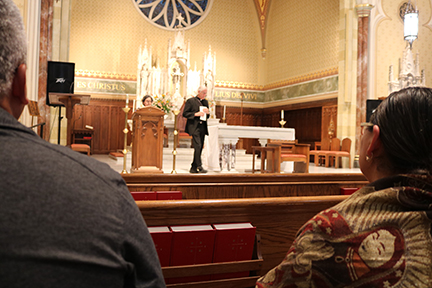
Ursuline Sister of Louisville Mary Donata Kokot, O.S.U., age 98, died in the 76th year of her religious life on June 26, 2025, at Baptist Health Louisville. Sister Donata was born in Daguscahonda, Pennsylvania, but grew up in Bretz, West Virginia. She entered the Ursuline Sisters of Louisville in 1949.
Her first encounter with the Ursuline Sisters was at age 7, when the Sisters came every summer to teach catechism lessons to the children of Bretz, West Virginia. Sister Donata, one of five children, said, “I had never seen nuns before. I told my mother I wanted to be just like them when I grew up. I thought they were dropped from heaven.”
Sister was a primary educator for 48 years, teaching first and second grade in Louisville for 10 of those years at Saints Boniface, Therese, Helen and Clement parish schools, and at Sacred Heart Model School. She also taught at parish grade schools in Pittsburgh and Conemaugh, Pennsylvania, and in Cumberland, Maryland. Sister Donata and her dear friend, Sister Julienne Guy, taught together in Columbia, South Carolina. Sister Donata then taught for 22 years in Jackson, Mississippi.
After retiring from teaching, Sister Donata served as a medical records clerk at St. Dominic Hospital in Jackson, Mississippi, from 1999 to 2006, and as sacristan at the Ursuline Motherhouse Chapel from 2012 to 2018.
Sister Donata earned a bachelor of arts degree from the former Ursuline College (now Bellarmine University) in Louisville, and a master’s degree in education from Duquesne University in Pittsburgh. She received the Wal-Mart Teacher of the Year Award in 1997.
Sister Donata was the daughter of the late Mark and Anna Markovich Kokot. She is survived by her sister-in-law, Barbara Kokot, and many nephews and nieces, great-nephews and great-nieces, as well as her community of Ursuline Sisters and Associates.
Expressions of sympathy may be made to the Ursuline Sisters of Louisville and mailed to the Donor Relations Office, 3115 Lexington Road, Louisville, KY 40206.
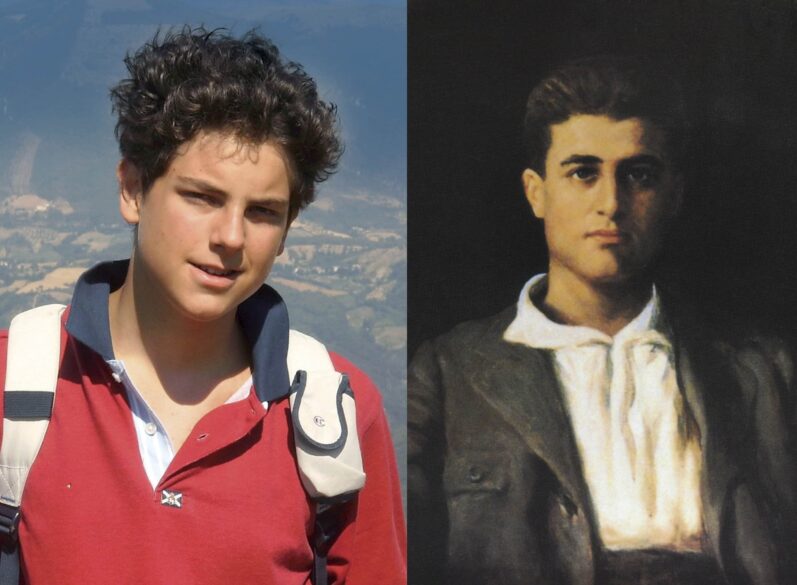
By Carol Glatz VATICAN CITY (CNS) – The greatest risk in life is to waste it by not seeking to follow God’s plan, Pope Leo XIV said, proclaiming two new saints – two young laymen of the 20th and 21st centuries.
“Sts. Pier Giorgio Frassati and Carlo Acutis are an invitation to all of us, especially young people, not to squander our lives, but to direct them upward and make them masterpieces,” the pope said Sept. 7.
“The simple but winning formula of their holiness,” he said, is accessible to everyone at any time. “They encourage us with their words: ‘Not I, but God,’ as Carlo used to say. And Pier Giorgio: ‘If you have God at the center of all your actions, then you will reach the end.’”
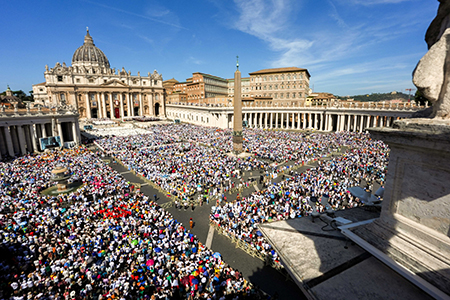
Before canonizing the first saints of his pontificate, Pope Leo greeted the more than 80,000 faithful who had gathered early in St. Peter’s Square because he wanted to share his joy with them before the start of the solemn ceremony.
“Brothers and sisters, today is a wonderful celebration for all of Italy, for the whole church, for the whole world,” he said before the Mass.
“While the celebration is very solemn, it is also a day of great joy, and I wanted to greet especially the many young people who have come for this holy Mass,” he said, also greeting the families of the soon-to-be saints and the associations and communities to which the young men had belonged.
Pope Leo asked that everyone “feel in our hearts the same thing that Pier Giorgio and Carlo experienced: this love for Jesus Christ, especially in the Eucharist, but also in the poor, in our brothers and sisters.”
“All of you, all of us, are also called to be saints,” he said, before leaving to prepare for Mass and paying homage to a statue of Mary with baby Jesus and the reliquaries containing the relics of the two young men.
More than 80,000 people gather in St. Peter’s Square at the Vatican for the canonization Mass of Sts. Pier Giorgio Frassati and Carlo Acutis celebrated by Pope Leo XIV Sept. 7, 2025. (CNS photo/Lola Gomez)
In his homily, the pope underlined Jesus’ call in the day’s Gospel reading “to abandon ourselves without hesitation to the adventure that he offers us, with the intelligence and strength that comes from his Spirit, that we can receive to the extent that we empty ourselves of the things and ideas to which we are attached, in order to listen to his word.”
That is what the two new saints did and what every disciple of Christ is called to do, he said.
Many people, especially when they are young, he said, face a kind of “crossroads” in life when they reflect on what to do with their life. The saints of the church are often portrayed as “great figures, forgetting that for them it all began when, while still young, they said ‘yes’ to God and gave themselves to him completely, keeping nothing for themselves,” the pope said.
“Today we look to St. Pier Giorgio Frassati and St. Carlo Acutis: a young man from the early 20th century and a teenager from our own day, both in love with Jesus and ready to give everything for him,” he said. Pope Leo then dedicated a large portion of his homily to sharing quotes from the two and details of their lives, which is something Pope Francis had shifted away from, preferring to focus more on the day’s readings.
“Pier Giorgio’s life is a beacon for lay spirituality,” Pope Leo said.
“For him, faith was not a private devotion, but it was driven by the power of the Gospel and his membership in ecclesial associations,” he said. “He was also generously committed to society, contributed to political life and devoted himself ardently to the service of the poor.”
“Carlo, for his part, encountered Jesus in his family, thanks to his parents, Andrea and Antonia – who are here today with his two siblings, Francesca and Michele,” he said, as the crowd applauded, and Antonia smiled shyly at the camera.
St. Acutis also encountered Jesus at the Jesuit-run school he attended and “above all in the sacraments celebrated in the parish community,” he said. “He grew up naturally integrating prayer, sport, study and charity into his days as a child and young man.”
The pope said the new saints “cultivated their love for God and for their brothers and sisters through simple acts, available to everyone: daily Mass, prayer and especially Eucharistic adoration.”
St. Frassati was born April 6, 1901, in Turin and died there July 4, 1925, of polio at the age of 24. St. Acutis was born to Italian parents May 3, 1991, in London and died in Monza, Italy, Oct. 12, 2006, of leukemia at the age of 15.
The pope said that “even when illness struck them and cut short their young lives, not even this stopped them nor prevented them from loving, offering themselves to God, blessing him and praying to him for themselves and for everyone.”
Several family members and people closely associated with the new saints attended the Mass, along with dignitaries, such as Italian President Sergio Mattarella.
St. Acutis’ parents, Andrea and Antonia, and his twin siblings, Michele and Francesca, who were born four years after their brother died, were present and together brought the pope the offertory gifts. Michele also did the first reading at the Mass in English.
Valeria Valverde, who read the first prayer of the faithful, is a young Costa Rican woman who suffered a severe head injury while living in Italy. It was her unexplained healing that provided the second miracle needed for St. Acutis’ canonization.
St. Frassati was active with Catholic Action, the St. Vincent de Paul Society, the Italian Catholic University Federation and the Dominican Third Order. Lorenzo Zardi, vice president of the youth group of Italy’s Catholic Action read the second reading at the Mass and Michele Tridente, the secretary general of the lay movement, also presented the pope with offertory gifts.
Before praying the Angelus, the pope once again thanked everyone for coming to celebrate the church’s two new saints.
However, he also called for people’s “incessant prayer for peace, especially in the Holy Land, and in Ukraine and in every other land bloodied by war.”
“To governing leaders, I repeat, listen to the voice of conscience,” he said.
“The apparent victories won with weapons, sowing death and destruction, are really defeats and will never bring peace and security,” he said.
“God does not want war. God wants peace!” he exclaimed to applause. God gives strength to those who work toward leaving behind the cycle of hatred and pursue the path of dialogue.
By Gina Christian (OSV News) – The U.S. Catholic bishops have deepened their commitment to combating racism, by making permanent a subcommittee dedicated to working for racial justice and reconciliation in society.
The U.S. Conference of Catholic Bishops announced Sept. 10 that its Ad Hoc Committee Against Racism – established in 2017 under then-USCCB president, and now retired, Cardinal Daniel N. DiNardo Galveston-Houston, Texas – has been made a permanent USCCB body.
The move, approved by the USCCB’s administrative committee Sept. 9, will place the committee, now named the Subcommittee for the Promotion of Racial Justice and Reconciliation, under the conference’s Committee on Domestic Justice and Human Development.
That committee’s mandate “includes Catholic social teaching on issues of domestic concern such as poverty, housing, the environment, criminal justice, and other challenges that often have a disproportionate impact on communities of color,” said the USCCB in its Sept. 10 media release. USCCB president Archbishop Timothy P. Broglio of the Archdiocese for the Military Services, USA, said the subcommittee “continues the important work of the temporary ad hoc committee.”
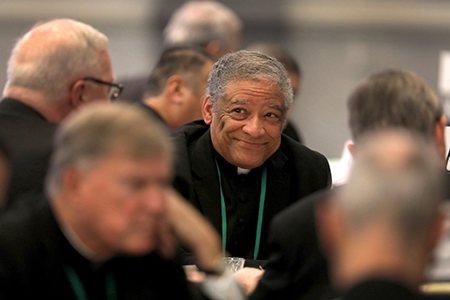
Retired Chicago Auxiliary Bishop Joseph N. Perry, chair of the U.S. Conference of Catholic Bishops’ Ad Hoc Committee on Racism and the USCCB Subcommittee on African American Affairs, smiles during a Nov. 14, 2023, session of the USCCB’s fall general assembly in Baltimore. (OSV News photo/Bob Roller)
The bishops had formed the racism ad hoc committee just days after the violent Aug. 11-12, 2017 “Unite the Right” rally in Charlottesville, Virginia, at which white supremacists protested the planned removal of Confederate statues there, following two city council votes. Amid clashes between rally participants and counterprotestors, James Fields drove his vehicle through a crowd of the latter, killing paralegal Heather Heyer and injuring dozens. Fields is now serving two life sentences.
In his Sept. 10 statement, Archbishop Broglio – who referenced the USCCB’s 2018 pastoral letter against racism, “Open Wide Our Hearts” – said, “As we call for a genuine conversion of heart that will compel change at both individual and institutional levels, I invite all Catholics to join us as we carry forward this work to recognize and uphold the inherent dignity of every person made in the image and likeness of God.”
“I speak on behalf of the bishop members, staff and consultants of the Ad Hoc Committee Against Racism in expressing gratitude for the transition of our committee to a standing subcommittee so that the important work of evangelization of the faithful and the community at large may continue in the spirit of the Gospel of Jesus Christ,” said retired Auxiliary Bishop Joseph N. Perry of Chicago, who has been serving as chair of the committee.
With the new subcommittee set to begin work after the USCCB’s November plenary assembly, members will have plenty to do.
According to a Gallup poll released Aug. 20, 64% of U.S. adults believe racism against Black people is widespread, with 83% of Black adults and 61% of white adults expressing this view.
Police interactions are seen as the “most racially inequitable” among six possible scenarios, said respondents.
At the same time, Gallup found that “68% of U.S. adults think civil rights have improved in their lifetime.” Human Rights Watch said that “racial justice remained a pressing human rights concern in the United States in 2024.”
While the U.S. “ratified the International Convention on the Elimination of All Forms of Racial Discrimination nearly 60 years ago,” the nation “has done far too little to implement its provisions,” said HRW, adding that “living legacies of slavery and the slaughter and dispossession of Native peoples remain largely unaddressed.”
(Gina Christian is a multimedia reporter for OSV News. Follow her on X @GinaJesseReina.)
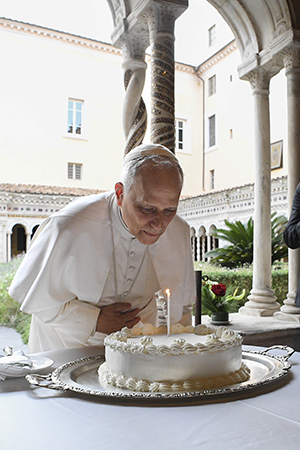
Pope Leo XIV blows out a candle on a cake for his 70th birthday Sept. 14, 2025, as cardinals, Vatican officials and ecumenical leaders look on after a prayer service at Rome’s Basilica of St. Paul Outside the Walls. (CNS photo/Vatican Media)
By Cindy Wooden VATICAN CITY (CNS) – At a time when people feel powerless to help migrants and refugees, Christians must continue to insist that “there is no justice without compassion, no legitimacy without listening to the pain of others,” Pope Leo XIV said.
In a video message Sept. 12, the pope gave his full support to a bid by the people of the Italian island of Lampedusa to win UNESCO recognition for their “gestures of hospitality” to migrants as an example of an “intangible cultural heritage” that should be protected.
For decades the small island, which lies between Sicily and the northern African nations of Tunisia and Libya, has been a major arrival point for migrants from Africa, the Middle East and Asia seeking a new life in Europe. However, many migrants make the journey in unsafe vessels or without needed provisions. Shipwrecked boats and dead bodies have washed up on the island’s shores.
Pope Leo paid tribute to “the volunteers, the mayors and local administrations that have succeeded one another over the years,” to “the priests, doctors, security forces, and to all those who, often invisibly, have shown and continue to show the smile and attention of a human face to those who have survived their desperate journey of hope.”
But the pope also noted the political divisions and backlash that have accompanied the continued arrival of migrants and refugees on Lampedusa’s shores and to other nations.
“It is true that over the years fatigue can set in. Like in a race, we can run out of breath,” he said.
“Hardships tend to cast doubt on what has been done and, at times, even divide us. We must respond together, staying united and opening ourselves once again to the breath of God.”
“All the good you have done may seem like drops in the sea,” Pope Leo told the island’s people. “But it’s not so – it is much more than that!”
Many of the migrants, including mothers and children, never made it to shore and from the depths of the sea “cry out not only to heaven, but to our hearts,” he said. Others died and are buried on Lampedusa “like seeds from which a new world longs to sprout.”
But, he said, “thank God, there are thousands of faces and names of people who today are living a better life and will never forget your charity. Many of them have themselves become workers for justice and peace, because goodness is contagious.”
Pope Leo said his thanks is the thanks “of the whole church for your witness,” and is meant to renew the thanks of the late Pope Francis, who made a trip to Lampedusa the first official trip of his papacy. He said he hoped he, too, would be able to visit the island soon.
The islanders’ hospitality and welcome, he said, are “a bulwark of humanity, which loud arguments, ancient fears and unjust policies try to erode.”
“The ‘globalization of indifference,’ which Pope Francis denounced beginning from Lampedusa, today seems to have turned into a globalization of powerlessness,” Pope Leo said.
Thanks to the media, people are more aware of “injustice and innocent suffering,” he said, but increasingly “we risk standing still, silent and saddened, overcome by the feeling that nothing can be done.”
People ask themselves, “What can I do in the face of such great evils?” he said.
“The globalization of powerlessness is the child of a lie: that history has always been this way, that history is written by the victors, which makes it seem that we can do nothing,” the pope said. “But that is not true: history is ravaged by the powerful, but it is saved by the humble, the just, the martyrs, in whom goodness shines and true humanity endures and is renewed.”
The antidote, Pope Leo said, is to work to create “a culture of reconciliation.”
“Reconciliation is a special kind of encounter. Today we must meet one another, healing our wounds, forgiving each other for the wrong we have done – and even for the wrong we have not done but which we still bear the consequences of,” the pope said. “So much fear, so many prejudices, so many walls – even invisible ones – exist between us and between our peoples, as consequences of a wounded history.”
While fear and evil can be passed from one generation to the next, he said, so can goodness.
“We must repair what has been broken, delicately treat bleeding memories, draw close to one another with patience, put ourselves in the place of others’ stories and suffering, and recognize that we share the same dreams and the same hopes,” Pope Leo said. “There are no enemies – only brothers and sisters. This is the culture of reconciliation.”
Pope Leo XIV blows out a candle on a cake for his 70th birthday Sept. 14, 2025, as cardinals, Vatican officials and ecumenical leaders look on after a prayer service at Rome’s Basilica of St. Paul Outside the Walls. (CNS photo/Vatican Media)
NATION MIAMI (OSV News) – Dressed in the customary yellow colors of the event and with umbrellas in hand, elementary school student Aniela Alejandra Garcia and her mother, Yeily Garcia, didn’t let the weather stop them from approaching the statue of the Cuban Virgin of Our Lady of Charity. “I was helping people with the candles,” Aniela told the Florida Catholic, Miami’s archdiocesan news outlet. She made the remarks as she joined the local Cuban-American community Sept. 8 in placing bright yellow sunflowers and candles outdoors during a recitation of the rosary followed by Mass at the the National Shrine of Our Lady of Charity in Miami. The color yellow is customarily associated with the Virgin of Charity, and her shrines – including the one in Miami – are often graced with yellow flowers. Affectionately known as La Ermita de La Caridad, the shrine is located near Coconut Grove. This year was also the 25th anniversary of La Ermita’s designation as a national shrine by the U.S. Conference of Catholic Bishops in 2000. Flash flood warnings and epic rain may have shut down flights at the Miami Airport Sept. 8 but it didn’t stop faithful from making the pilgrimage to Biscayne Bay for the annual feast event.
VATICAN VATICAN CITY (CNS) – Dozens of small handmade signs and large bold banners waved in the crowd of some 30,000 visitors in St. Peter’s Square wishing Pope Leo XIV a happy birthday Sept. 14. Two gold mylar balloons with the numbers “7” and “0” were held up high. The largest banner, in red and white, was held by a group from the Peruvian city of Monsefú in the province of Chiclayo, where the pope had served as bishop for eight years. “Dear friends, it seems that you know that today I turn 70 years old,” the pope said to huge cheers and shouts of “auguri,” meaning “congratulations” and “happy birthday” in Italian. “I give thanks to the Lord and to my parents; and I thank all those who have remembered me in their prayers,” he said after reciting the Angelus with the faithful in St. Peter’s Square. Musicians and musical bands in the square struck up the “Happy Birthday” tune, and people sang and clapped along. “Many thanks to everyone!” he said, followed by someone shouting, “Long live the pope!” “Thank you! Have a good Sunday!” he said.
VATICAN CITY (CNS) – Pain must never give rise to violence, and every Catholic needs to learn to safeguard with tenderness those who are vulnerable, Pope Leo XIV said during a prayer vigil dedicated to people experiencing pain and affliction due to illness, bereavement, violence or abuse. Recognizing that some members of the church “have unfortunately hurt you,” the pope said, the church “kneels with you today before our Mother (Mary). May we all learn from her to protect the most vulnerable with tenderness!” “May we learn to listen to your wounds and walk together,” he said in his homily Sept. 15, the feast of Our Lady of Sorrows. “May we receive from Our Lady of Sorrows the strength to recognize that life is not defined only by the evil we suffer, but by the love of God, who never abandons us and guides the whole church.” The pope led the prayer vigil in St. Peter’s Basilica Sept. 15 as part of the Jubilee of Consolation, which is “dedicated to all those who are experiencing or have experienced moments of particular difficulty, grief, suffering or hardship in their lives,” according to the section of the Dicastery for Evangelization in charge of organizing the Holy Year. Pope Leo said, “pain must not give rise to violence, and that violence never has the final say, for it is conquered by a love that knows how to forgive.” “Where there is evil, we must seek the comfort and consolation that can overcome it and give it no respite,” he said. “In the church, this means never being alone.”
WORLD VITERBO, Italy (OSV News) – Italian police say they’ve prevented what could have been a deadly attack at one of the country’s most cherished Catholic traditions. On Sept. 3, counterterrorism officers raided a bed and breakfast near the route of the famous “Macchina di Santa Rosa” procession in Viterbo, arresting two Turkish men. Authorities say the men were found with automatic weapons, including an assault rifle, just steps away from where 40,000 people had gathered for the centuries-old festival honoring St. Rose of Viterbo. Italian Foreign Minister Antonio Tajani, who had been scheduled to attend, was quickly moved to safety. Prime Minister Giorgia Meloni praised the swift police action, saying it ensured the peaceful celebration of an event UNESCO recognizes as cultural heritage. While investigators say the suspects appear tied to organized crime rather than international terror networks, prosecutors are still weighing charges of arms trafficking and possible plans for a terrorist act.
SPIRITUAL ENRICHMENT NATCHEZ – Diocesan Young Adult Pilgrimage to St. Mary Basilica in Natchez, Nov. 8. Register by Nov. 1. Cost $25. Fee does not include transportation, meals or optional overnight stay. Details: https://jacksondiocese.flocknote.com/signup/222556 or email amelia.rizor@jacksondiocese.org.
CAMDEN – Sacred Heart, “Living our Best Life in Christ” Women’s Retreat, Saturday, Oct. 25, registration at 8 a.m. with retreat from 9 a.m. to 3 p.m. Participants will engage in a series of enriching guest speakers, group discussions, prayer sessions, and interactive workshops designed to inspire and uplift. Cost: $25 before Oct. 20 or $30 at the door. Registration includes lunch. Details: call Dr. Kathy McMurty, Ph.D. (601) 566-2769.
JACKSON – Cathedral of St. Peter, “Gratitude Through All Life’s Mysteries” – a Reflection for Women on the Holy Rosary, Saturday Oct. 18 from 9 a.m. to 1 p.m. Don’t miss this spiritual event with speaker Ann Cook. Details: to sign up email lnblaylock@me.com.
JACKSON – St. Richard, An Evening with Mary, Thursday, Oct. 16 from 5:30-7:30 p.m. in Foley Hall. All ladies are invited for a special evening with speaker Kimberly Harkins on “My Year with Mary.” Details: RSVP by Oct, 10 to bulletin@saintrichard.com.
VIRTUAL – The North American Vocation Team (NAVT) of the School Sisters of Notre Dame (SSND) invites young adults ages 18 and older to a monthly online evening prayer on Tuesdays at 7 p.m. CST via Zoom. Remaining dates for evening prayer in 2025 are Oct. 28, Nov. 25 and Dec. 16. Details: ssnd.org/events.
PARISH & YOUTH EVENTS BROOKHAVEN – St. Francis, Parish Picnic, Sunday, Oct. 5 after 10 a.m. Mass. Meat, beans, potato sald, drinks and desserts will be provided. Details: (601) 833-1799.
CLINTON – Holy Savior, Blessing of the Pets, Saturday, Oct. 4 at 9 a.m. Details: church office (601) 924-6344.
COLUMBUS – Annunciation, Parish Fall Festival, Sunday, Oct. 26 from 4-6:30 p.m. Join us on College Street in downtown Columbus for fun for all with trunk or treat, cake walk, games, food and more. No pets please. Details: church office (662) 328-2927.
HOLLY SPRINGS – St. Joseph, Blessing of the Pets, Saturday, Oct. 4 at 10 a.m. All pets must be on a leash or in a cage. Details: church office (662) 985-3209.
JACKSON – Cathedral of St. Peter the Apostle, Parish Gala, Saturday, Nov. 1 at 6 p.m. at the Capitol Club Rooftop. Join us for this no tie occasion to raise funds for the Cathedral kitchen and promote community across all of our Masses and events. Details: church office (601) 969-3125.
JACKSON – Sister Thea Bowman School, Adopt-A-Student Scholarship Program – Consider sponsoring a full or partial tuition for a child to experience the benefit of a Catholic education. Donations are tax deductible. Details: email Chris Payne at principal@theabowmanschool.com.
St. Richard, Cardinal Fest and Chili Cookoff, Saturday, Oct. 18 from 11 a.m. to 4 p.m. on the football field. Enjoy food, music, games, art and more! Details: purchase your tickets here https://bit.ly/StRCardinalFest2025.
JACKSON AREA – Theology on Tap, Tuesday, Oct. 7 at 7 p.m. at Blaylock Photography in Ridgeland. Catholic comedian Jason Price will speak on the topic – Blessed are the Laughmakers. Details: email amelia.rizor@jacksondiocese.org.
MADISON – St. Francis, Parish Mission “Hope and Pilgrimage,” Oct. 26-27 from 5:30-7:45 p.m., with speaker and author Joan Watson. All are welcome. Please RSVP. Details: church office at (601) 856-5556.
MERIDIAN – St. Joseph, Jubilee Year October Festival and Health Fair: Sunday, Oct. 5, 11 a.m. to 2 p.m. Enjoy a day of fellowship, family and faith. Details: church office (601) 693-1321.
St. Patrick, Second Annual St. Ann/St. Catherine Brunch, Saturday, Oct. 11 from 10 a.m. to 2 p.m. in the Father Vally Room. Join this special support group gathering for all who have experienced infertility, miscarriage, or the loss of a child at any age. Details: church office (601) 693-1321.
OLIVE BRANCH – Queen of Peace, Knights of Columbus Silver Rose Prayer Service, Thursday, Oct. 2 at 7 p.m. All are invited to this service honoring Mary, Our Lady of Guadalupe and reaffirming our dedication to human life.
Queen of Peace, Blessing of the Pets, Saturday, Oct. 4 at 9 a.m. All pets must be on a leash or in a cage.
SENATOBIA – St. Gregory, Blessing of the Pets, Saturday, Oct. 4 at 10 a.m. Details: church office (662) 342-1073.
SOUTHAVEN – Christ the King, Blessing of the Animals, Saturday, Oct. 4 at 10 a.m. All pets should be on a leash or in a cage for their safety.
Christ the King, Fall Festival, Saturday, Oct. 18 from 10 a.m. to 5:30 p.m. Don’t miss this fun day of fellowship filled with international foods, games, cake walk, live music, white elephant sale and more! Details: church office (662) 342-1073.
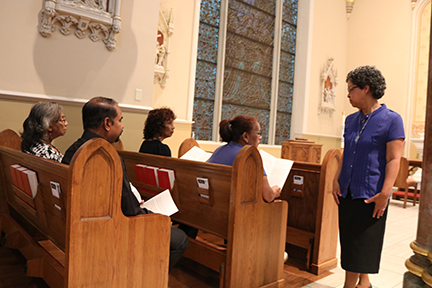
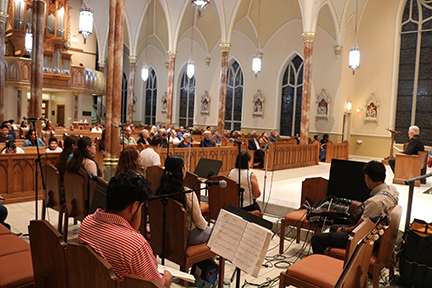
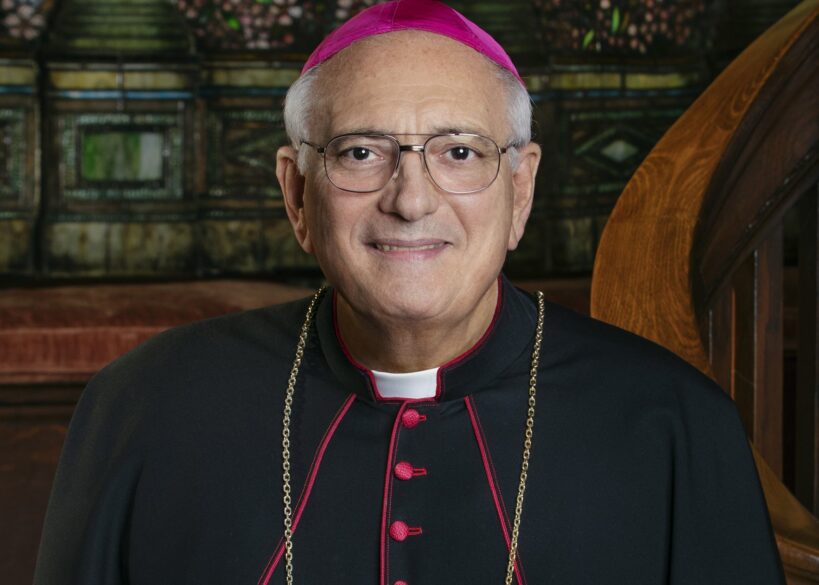
JACKSON –Sister Amelia Breton of the Office of Intercultural Ministry and Bishop Joseph Kopacz lead a Prayer Service in Solidarity with Dreamers and Migrants at the Cathedral of St. Peter the Apostle on Sept. 18. (Photo by Tereza Ma)
Santos Miguel, Gabriel y Rafael Arcángeles. 29 de septiembre
Santa Teresa del Niño Jesús. 1 de octubre
Santos Angeles Custodios. 2 de octubre
San Francisco de Asís. 4 de octubre
Bienaventurada Virgen María del Rosario. 7 de octubre
Día de Cristobal Colón. 13 de octubre
Envíenos sus fotos a editor@jacksondiocese.org
Síganos en Facebook: @DiócesisCatólicadeJackson
Únase a lista de correos electrónicos Mande un texto: MSCATHOLIC a 84576
LÍNEA DIRECTA DE PREVENCIÓN DE FRAUDE El Departamento de Asuntos Temporales de la Diócesis de Jackson ha contratado a Lighthouse Services para proporcionar una línea directa anónima de fraude financiero, cumplimiento, ética y recursos humanos. Esta línea directa permite un método adecuado para reportar sucesos relacionados con la administración temporal dentro de parroquias, escuelas y la oficina de cancillería.
CAMINANDO CON LOS MIGRANTES Por el obispo Nicholas DiMarzio
La opinión pública parece afectar de manera directa las políticas sociales relacionadas con la migración. Entre diciembre de 2003 y diciembre de 2005, representé a Estados Unidos como uno de los 19 comisionados de la Comisión Mundial sobre Migración Internacional, que rendía informes a las Naciones Unidas. Durante mi mandato, visitamos los cinco continentes en busca de las causas del fenómeno migratorio mundial.
Si bien se encontraron pocos elementos en común, en todos los continentes el efecto de la opinión pública, moldeada por los medios de comunicación, parecía determinar las políticas públicas adoptadas por los gobiernos. ¿Por qué existe una relación tan estrecha entre la opinión pública y las políticas migratorias de un gobierno? Parece que los funcionarios públicos son muy sensibles a la percepción que tiene la población sobre cómo implementan las leyes y regulaciones relacionados con la migración. Hoy en día, la opinión pública suele estar influida por los medios de comunicación en todas sus formas, y cualquier representación negativa de las cuestiones migratorias parece afectar la opinión pública de manera especial.
El obispo Nicholas DiMarzio es obispo jubilado de la Diócesis de Brooklyn, Nueva York.
Esto quedó comprobado en julio, cuando se produjo un cambio drástico en la opinión pública respecto al programa de deportaciones masivas del gobierno actual.
Una encuesta de Gallup publicada el mes pasado reveló que solo el 30 % de los estadounidenses está a favor de reducir la inmigración, frente al 55 % de hace apenas un año. Un número récord del 79 % considera que la inmigración es beneficiosa para el país, y el apoyo a la construcción del muro fronterizo y a las deportaciones masivas ha disminuido. Estos cambios revierten una tendencia de cuatro años de creciente preocupación por la inmigración que se había registrado antes de la nueva administración.
¿Qué ha provocado este cambio en la opinión pública? Parece que la cobertura mediática sobre la detención de migrantes, como si fueran ganado, sumado a los esfuerzos de grupos de derechos humanos que se manifestaron pacíficamente, ha provocado este cambio en la percepción pública.
Los ciudadanos estadounidenses no están acostumbrados a ver a los agentes del ICE y al personal del Ejército involucrados en operaciones de deportación masiva. De alguna manera, esto parece antiestadounidense y nos recuerda las tácticas brutales de regímenes autoritarios.
La opinión pública sobre la deportación de extranjeros delincuentes no ha cambiado. Sin embargo, ahora hay una mayor aceptación de que se ofrezca a los trabajadores indocumentados con muchos años de residencia en el país un camino hacia la ciudadanía y de legalizar a quienes fueron traídos al país siendo menores de edad.
Las medidas de control en los lugares de trabajo también han influido en la opinión pública, ya que las operaciones policiales en los centros de trabajo suponen un riesgo para la seguridad tanto de los agentes como de los inmigrantes, y provocan confusión, lesiones y, como se confirmó el mes pasado, incluso una víctima fatal.
La actitud del presidente Donald Trump hacia las industrias afectadas por la deportación de trabajadores necesarios también ha cambiado.
El presidente ya ha insinuado que los trabajadores agrícolas, si cuentan con el apoyo de los propietarios de las granjas, podrían quedarse. Sin embargo, todavía no se ha tomado ninguna medida al respecto. Además, ha dado a entender que los trabajadores de la industria hotelera y otros empleados de trabajos básicos, como los del sector de la carne, serían considerados de manera especial.
Está claro que no solo estamos ante una cuestión migratoria, sino también ante un problema del mercado laboral. Los trabajos que la mayoría de los estadounidenses no quiere ocupar son fundamentales para nuestra economía y bienestar. Los trabajadores de la salud, y en particular los cuidadores a domicilio, son empleos de este tipo que en gran medida ocupan inmigrantes, especialmente indocumentados.
La historia de nuestra nación está marcada por inmigrantes que han ocupado puestos necesarios que la mayoría evita, para brindar a sus hijos la oportunidad de alcanzar el Sueño Americano.
Sería interesante identificar los puestos básicos que ocupaban nuestros antepasados inmigrantes. Tengo la fortuna de conocer los empleos de mis cuatro abuelos, todos inmigrantes procedentes de Italia antes de las restricciones de 1924 sobre la migración del sur y este de Europa. Incluso conservo algunas fotos de sus lugares de trabajo.
Mi abuelo paterno trabajó en una fábrica de muñecas Kewpie en Newark, Nueva Jersey, y una foto suya en esa fábrica muestra a un joven demacrado. Mi abuela paterna y su hermana trabajaban en una fábrica de pañuelos, donde debían usar uniformes impecables. Mi abuelo materno trabajó en una fábrica de botones y material de costura, donde finalmente llegó a ser capataz.
Quizás el caso más interesante sea el de mi abuela materna, quien era una campesina en Italia y cuyo primer trabajo en Estados Unidos consistía en enrollar cigarros en una tabaquería en Newark.
Si conociéramos y valoráramos nuestras propias historias de inmigración, tal vez tendríamos una visión muy diferente de los migrantes actuales.
Existen mejores soluciones que las deportaciones masivas para resolver la situación actual. Necesitamos trabajadores inmigrantes para cubrir puestos esenciales, algo que siempre ha ocurrido en Estados Unidos. Sin embargo, nuestras leyes de inmigración no se han adaptado a nuestras necesidades laborales. No obstante, el trato despectivo e inhumano hacia nuestros trabajadores nunca ha sido la forma de actuar estadounidense, al menos en la historia reciente.
Esperamos que la administración comprenda esto y tome medidas para otorgar un estatus legal a los trabajadores indocumentados, una medida que, además de beneficiarlos, contribuiría al bienestar y progreso de toda la nación.
(El obispo Nicholas DiMarzio es obispo jubilado de la Diócesis de Brooklyn, Nueva York. Escribe la columna “Walking With Migrants” para The Tablet y OSV News.)
By Cindy Wooden CIUDAD DEL VATICANO (CNS) – En un momento en el que las personas se sienten impotentes para ayudar a los migrantes y refugiados, los cristianos deben seguir insistiendo en que “no hay justicia sin compasión, ni legitimidad sin escuchar el dolor de los demás”, afirmó el Papa León XIV.
En un mensaje de video publicado el 12 de septiembre, el Papa dio su pleno apoyo a la petición del pueblo de la isla italiana de Lampedusa de que la UNESCO reconozca sus “gestos de hospitalidad” hacia los migrantes como un ejemplo de “patrimonio cultural inmaterial” que debe protegerse.
Durante décadas, la pequeña isla, situada entre Sicilia y los países norteafricanos de Túnez y Libia, ha sido un importante punto de llegada para los migrantes de África, Oriente Medio y Asia que buscan una nueva vida en Europa. Sin embargo, muchos migrantes realizan el viaje en embarcaciones inseguras o sin las provisiones necesarias. Barcos naufragados y cadáveres han aparecido en las costas de la isla.
El Papa León rindió homenaje a “los voluntarios, los alcaldes y las administraciones locales que se han sucedido a lo largo de los años”, a “los sacerdotes, los médicos, las fuerzas de seguridad y a todos aquellos que, a menudo de forma invisible, han mostrado y siguen mostrando la sonrisa y la atención de un rostro humano a quienes han sobrevivido a su desesperado viaje de esperanza”.
Pero el Papa también señaló las divisiones políticas y las reacciones negativas que han acompañado a la continua llegada de migrantes y refugiados a Lampedusa.
“Es cierto que con el paso de los años puede aparecer el cansancio. Como en una carrera, podemos quedarnos sin aliento”, dijo. “Las dificultades tienden a sembrar dudas sobre lo que se ha hecho y, a veces, incluso nos dividen. Debemos responder juntos, permaneciendo unidos y abriéndonos una vez más al aliento de Dios”.
“Todo el bien que han hecho puede parecer una gota en el mar”, dijo el Papa León a los habitantes de la isla. “Pero no es así, ¡es mucho más que eso!”
Muchos de los migrantes, entre ellos madres y niños, nunca llegaron a la costa y desde las profundidades del mar “claman no solo al cielo, sino a nuestros corazones”, dijo. Otros murieron y están enterrados en Lampedusa “como semillas de las que un nuevo mundo anhela brotar”.
Pero, dijo, “gracias a Dios, hay miles de rostros y nombres de personas que hoy viven una vida mejor y nunca olvidarán vuestra caridad. Muchos de ellos se han convertido en trabajadores por la justicia y la paz, porque la bondad es contagiosa”.
El Papa León dijo que su agradecimiento es el gracias “de toda la Iglesia por su testimonio” y pretende renovar el agradecimiento del difunto Papa Francisco, que hizo de Lampedusa el primer viaje oficial de su Papado. Dijo que esperaba poder visitar también él la isla pronto.
La hospitalidad y la acogida de los isleños, dijo, son “un baluarte de la humanidad, que las discusiones ruidosas, los miedos ancestrales y las políticas injustas intentan erosionar”.
“La ‘globalización de la indiferencia’, que el Papa Francisco denunció desde Lampedusa, parece haberse convertido hoy en una globalización de la impotencia”, afirmó el Papa León.
Gracias a los medios de comunicación, la gente es más consciente de “la injusticia y el sufrimiento inocente”, dijo, pero cada vez más “corremos el riesgo de quedarnos quietos, en silencio y entristecidos, abrumados por la sensación de que no se puede hacer nada”.
La gente se pregunta: “¿Qué puedo hacer ante males tan grandes?”, dijo.
“La globalización de la impotencia es fruto de una mentira: que la historia siempre ha sido así, que la historia la escriben los vencedores, lo que hace parecer que no podemos hacer nada”, afirmó el Papa. “Pero eso no es cierto: la historia es devastada por los poderosos, pero es salvada por los humildes, los justos, los mártires, en quienes brilla la bondad y perdura y se renueva la verdadera humanidad”.
El antídoto, dijo el Papa León, es trabajar para crear “una cultura de la reconciliación”.
“La reconciliación es un tipo especial de encuentro. Hoy debemos encontrarnos unos con otros, sanar nuestras heridas, perdonarnos mutuamente por el mal que hemos hecho, e incluso por el mal que no hemos hecho pero cuyas consecuencias aún soportamos”, dijo el Papa. “Hay tanto miedo, tantos prejuicios, tantos muros, incluso invisibles, entre nosotros y entre nuestros pueblos, como consecuencia de una historia herida”.
Si bien el miedo y el mal pueden transmitirse de una generación a otra, también puede transmitirse la bondad, afirmó.
“Debemos reparar lo que se ha roto, tratar con delicadeza los recuerdos dolorosos, acercarnos unos a otros con paciencia, ponernos en el lugar de las historias y el sufrimiento de los demás, y reconocer que compartimos los mismos sueños y las mismas esperanzas”, dijo el Papa León. “No hay enemigos, solo hermanos y hermanas. Esta es la cultura de la reconciliación”.