Hope over fear, love over hate

Millennial reflections
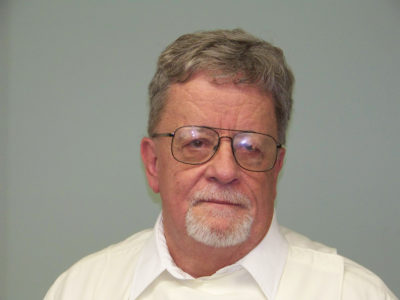
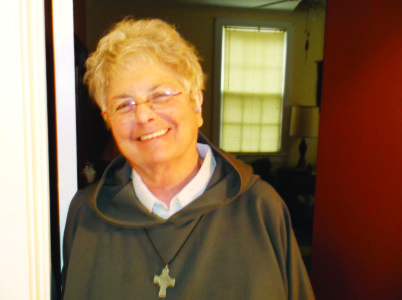
Father Jeremy Tobin

By Father Jeremy Tobin
I cannot count the number of times that our democracy is under attack. Institutions that exist to preserve the common values and human rights we take for granted are ridiculed. Their credibility is attacked. Facts are irrelevant. Articles about creeping fascism pop up everywhere. It is like the 1960s all over again. Our current president’s rhetoric is more than shocking. It is unacceptable.
Hate groups are demonstrating freely and openly. If anyone should take the lead in denouncing all this is the president. I am going to stop there.
Those of us who participated in the Civil Rights Movement have seen this all before. We are different now. Americans have done soul searching and developed unity in diversity. The country really has changed since 1950, dramatically so., no better region than the South. People have learned to come together, to embrace diversity , all for the betterment of all. People I have known up North most of my life fled Mississippi during the “Great Migration”, returned in the early 1980s because so much change took place here. They returned home and stayed. Yes, great change took place, and we moved a little closer to becoming the “beloved community” that Dr. King preached about.
The Church changed too. Churches desegregated. Gospel Music, became basic to predominantly African American Catholic churches. This was a major work championed by Sister Thea Bowman, FSPA, Servant of God, now on the way to sainthood., and others like Father Clarence Rivers etc. The Second Vatican Council made possible so many things, enculturation in the liturgy being one of them. The influx of Latino Catholics further promoted this. The Church was looking a lot more like small “c” catholic.
Across the country in many ways people are growing to not only accept, but like diversity. The political experience of these past two years is jarring, not the values we embraced.
The last 50 years saw a promotion of social justice in new and powerful ways. Catholic Social Justice Teaching is well known. Our Catholic Charities has it on hand out cards to make it very clear. Times have changed,
So has the reaction. The country is more divided than ever. Hate groups have multiplied. Students find nooses in their lockers. The KKK holds marches. Neo-Nazi groups stage torchlight marches reminiscent of a past era. Now the worst killing of Jews in the nation’s history took place in Pittsburgh. What could slow down the positive movement of social change is the appointment of federal judges by this administration.
Those of us who dedicated our lives to implement the Second Vatican Council, to promote social justice and human rights say there is no going back..
November 1 we celebrated the Feast of All Saints. The Gospel reading was from Matthew, the eight Beatitudes. Each of them are directed to the weak not the powerful. The “crowds” who hung on Jesus’ words were the poor and marginalized. Pope Francis tells us that’s the direction to go. Lift up those who are persecuted. Reach out to those who are discriminated. The psalms we pray daily are the cries of those who have no voice. Psalm 34, the “Lord hears the cry of the poor,” Mary’s Canticle, we sing at Vespers daily says, “The Lord fills the starving, and lets the rich go hungry.”
Catholic social teaching is not just words. It is action to push back against hate. The New Testament teaches the primacy of love. Only love can melt hate and endure. These times we live in will change. The old ways are really gone. Young people today have new fire to bring positive change. They are diverse. They are literate of the issues. They will make real the hope we old folks have for a new world.

(Father Jeremy Tobin, O.Praem, lives at the Priory of St. Moses the Black, Jackson.)
Faith and levity

IN EXILE
By Father Ron Rolheiser, OMI
Shusaku Endo, the Japanese author of the classic novel, Silence (upon which Martin Scorsese based his movie) was a Catholic who didn’t always find his native land, Japan,

sympathetic to his faith. He was misunderstood but kept his balance and good heart by placing a high value on levity. It was his way of integrating his faith with his own experience of occasional personal failure and his way of keeping his perspective on a culture which misunderstood him. Levity, he believed, makes faith livable.
He’s right. Levity is what makes faith livable because humor and irony give us the perspective we need to forgive ourselves and others for our weaknesses and mistakes. When we’re too serious there’s no forgiveness, least of all for ourselves.

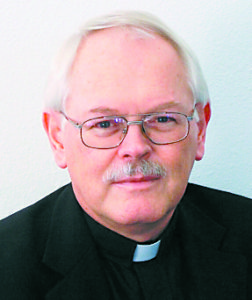
Father Ron Rolheiser, OMI

What is humor? What’s its meaning? A generation ago, Peter Berger wrote a book, A Rumor of Angels, in which he looked at the question of humor philosophically. I like his conclusion. In humor, he submits, we touch the transcendent. To be able to laugh at a situation, no matter how dire or tragic, shows that we’re in some way above that situation, that there’s something in us that’s not imprisoned by that situation, or any situation.
There’s a wonderful example of this in the writings of the Russian poet, Anna Akhmatova. During the purges of Stalin, her husband had been arrested, as had many others. She occasionally tried to visit the prison he was in to leave letters and packages for him. Standing in long lines outside of that prison in St. Petersburg, she waited alongside other women whose husbands or sons had also been arrested. The situation bordered on the absurd. None of them even knew whether their loved ones were even alive and the guards made them wait for hours without explanation, often in the cold of winter. One day, as she was standing in line waiting, another woman recognized her, approached her, and asked: “Can you describe this?” Akhmatova replied: “I can,” and when she said this something like a smile passed between them.
A smile passed between them. That smile contained some levity and that allowed them both to realize, however unconsciously, that they were transcendent to that situation. The smile that passed between them alerted them both to the fact that they were more than what they were in that moment. Awful as it was, they weren’t ultimately prisoners to that moment. Moreover that smile was a prophetic and political act of defiance, based upon faith. Levity is subversive.
This is true too not just for how we live inside our faith lives; it’s true too for how we live, healthily, inside our families. A family that’s too serious will not allow for forgiveness. Its heaviness will eventually drive its members either into depression or away from the family. Moreover it will make an idol out of itself. Conversely, a family that can take itself seriously but still laugh at itself will be a family where there is forgiveness because levity will give them a healthy perspective on their foibles. A family that’s healthy will sometimes look at itself honestly and with the kind of smile that passed between Anna Akhmatova and her friend, say of itself: “Aren’t we pathetic!”
That’s true too of nationalism. We need to take our nation seriously, even as a certain kind levity keeps this seriousness in perspective. I’m a Canadian. As Canadians, we love our country, are proud of it, and would, if push came to shove, die for it. But we have a wonderful levity about our patriotism. We make jokes about it and enjoy it when others make jokes about us. Consequently we don’t have any bitter controversies regarding who loves the country and who doesn’t. Our lightness keeps us in unity.
All of this, of course, is doubly true of faith and spirituality. Real faith is deep, an indelible brand inside the soul, a DNA that dictates behavior. Moreover, real faith does not sidestep the tragic within our lives but equips us to face the heaviness in life where we meet disappointment, personal failure, heartbreak, injustice, betrayal, the breakdown of cherished relationships, the death of loves ones, sickness, the diminishment of our own health, and ultimately our own death. This is not to be confused with any natural or contrived optimism that refuses to see the dark. Rather real faith, precisely because it is real and therefore keeps us inchoately aware of our identity and transcendence, will always allow us a discreet, knowing, smile, no matter the situation. Like the English martyr, Thomas More, we will be able to joke a bit with our executioner and we will also be able to forgive others and ourselves for not being perfect.
Our lives often are pathetic. But it’s okay. We can still laugh with each other! We’re in good hands. The God who made obviously has a sense of humor – and therefore understanding and forgiveness.
Too many books on Christian spirituality might more aptly be entitled: The Unbearable Heaviness of Faith.

(Oblate Father Ron Rolheiser, theologian, teacher and award-winning author, is President of the Oblate School of Theology in San Antonio, TX.)

Called to renewal

GUEST COLUMN
By Catholic News Service
(The following titled: “Called to renewal” appeared in the Sept. 26 issue of Our Sunday Visitor, a weekly Catholic publication based in Huntington, Indiana. It was written by the editorial board.)
Most people will never have the jarring experience of divine intervention that Francis of Assisi had when the figure of Jesus on the San Damiano cross called out to him, “Francis, rebuild my church, which has fallen into ruin.” Likewise, most people won’t set about founding an order of friars with a charism of radical Gospel poverty that becomes one of the most prominent religious orders of the universal church.
But the extraordinary nature of the witness of Sts. Francis and Clare, which continues to bear fruit today, shouldn’t obscure for the rest of us that God calls all Christians to be part of the renewal and rebuilding of the church. The vocations special section in this week’s issue is dedicated to the theme of “Vocations renew the church” and shows men and women religious at work in ministries of renewal – whether responding to violence and other tragedies or to the scourge of addiction. We also see religious, priests and laypeople responding to God’s call in ways that promote even wider renewal in their communities and societies.
This can be our story as well.
For months, Catholics in the United States and elsewhere have felt the blow of revelations of clergy sexual abuse and cover-up. In the midst of such horror, the temptation to become disillusioned with the church is strong. But as members of the body of Christ, all Catholics would do well to remember that God calls and raises up great saints during times of turmoil for the church.
It’s reassuring to think that we could experience the witness of another Francis or Clare, or Teresa of Avila and John of the Cross, reforming the Carmelites; or St. Catherine of Siena, in complete obedience to the pope, nonetheless calling on him to reform the clergy; or Ignatius Loyola, founding the Jesuits; or Charles Borromeo, implementing the reforms of the Council of Trent; or Thomas More, calling those in his life to greater accountability to themselves and the Gospel. In each of these cases, we can only marvel at how far-reaching the reforms of these saints were for the church.
While being open to God’s will and using their gifts and talents to serve the church, the church’s saintly reformers weren’t satisfied with maintaining the status quo or what was comfortable. They abandoned those things that prevented the church from effectively preaching the Gospel. They were unconcerned with power, prestige or honor and lived only for Jesus Christ himself. They took great risks, often at great costs.
And, as Joseph Pearce reminds us in “Heroes of the Catholic Reformation: Saints Who Renewed the Church,” being a holy witness is a difficult and ultimately self-emptying task.
“To love as God loves is, therefore, to die. To love is to lay down our lives for our friends,” he writes. “Since we are commanded to love all our neighbors, including those of our neighbors who are our enemies, we are called to lay down our lives even for those whom we don’t like. To do this, to die to ourselves that others might live, is loving as God loves; and, paradoxically, it is also living as God lives. This is holiness.”
As difficult as this past summer has been, it has also served as our wake-up call. The church is in need of a new generation of saintly reformers. We need men and women, religious and lay, who know who the Lord is and are willing to risk everything not only to follow him, but to bring others to him as well. This is the opportunity open to each one of us as we seek, together, to renew our wounded church.

(The views or positions presented in this or any guest editorial are those of the individual publication and do not necessarily represent the views of Catholic News Service or of the U.S. Conference of Catholic Bishops.)

Where are you called? Discerning our vocations

Kneading Faith
By Fran Lavelle

Fran Lavelle

I remember when I was in fifth grade I wanted to learn how to play the saxophone. My parents made it clear that I would not get a brand-new saxophone until I showed I was committed to and had an aptitude for learning how to play it. I wasn’t, and I didn’t. The old saxophone that we borrowed from family friends was quickly returned and replaced with drum sticks. They used the same reasoning with my desire to buy a horse. I was able to make said purchase after I had demonstrated that I would take care of a pony that we boarded at our farm (ironically for the same family who lent me the old saxophone.) I faithfully took care of Queenie and demonstrated that I would do well in caring for a horse of my own. Wildfire the Arabian/Quarter horse was my pride and joy until the day we sold our farm and I could no longer keep her. I take this walk down memory lane to illustrate how our appetites, aspirations and ambitions develop and deepen as we age. Looking back, I see that my parents were teaching me responsibility and lessons in discernment. They were also giving me opportunities to see what I excelled at and what I struggled with – like that old saxophone.
Several years ago, I was asked to give a talk on vocations to an RCIA group. The more I thought about the subject and what insights I may have to share, the more I realized that our traditional view of vocations needed to be reexamined. Growing up, any lesson or homily on vocations would include a short description of the three states: ordained or consecrated, married, and single. It sometimes felt like one was being asked to order off a menu, “I’ll take a married vocation with three children, please.” Or worse yet, a one and done proposition, “I’m sorry you chose a single vocation in your 20s, don’t even think of getting married at 45.” Vocation Q&A sessions often included the timid individual who, with great effort, asked the question, “What if God is calling me to be a sister/priest and I don’t want to be one?” There seemed to be so much mystery and a good dose of fear in the dreaded vocation talk that everyone was happy when it was over, so they could put it out of their minds until the next time the subject came up.
Because of this many of us were not challenged to ask the question, “God what are you calling me to?” Or make the offer, “Take me Lord and do with me what you will.” I had the good fortune to have spiritual director when I was in my late 20s who invited me to make that very offer every – time I received the Eucharist. For a solid year, I did. I had thought that I may be called to a women’s religious community. About a year later I remember telling my spiritual director that I had taken his advice, but nothing seemed to be happening. He laughed, at me – not with me, and said that if I was being called to be a Sister that I would have been moved to act on it already. With an open heart and great discernment, I am confident that in that simple prayer God led me to where I am today. Mind you the clouds never parted, nor did I hear the voice of God give me directions; it doesn’t work like that. But I have been steadfast in that post Eucharist offering to this very day.
I remember a priest once asked in a homily, “What would you have if you got everything you wanted, right when you wanted it?” I looked to my friend and whispered, “At least seven ex-husbands.” We idealize love, marriage, raising children. We romanticize what our life will be like when… The reality is often quite different from what our dreams are made of. In my teens and early 20s, I truly wanted a large family. I wanted to live somewhere in the foothills of the Appalachian Mountains on a large farm with lots of horses and livestock. Childless, single and writing this from my home in Starkville, Mississippi, my life does not look like anything I had expected then. But I would not change anything about my journey. Too often we need to be in control and do it Sinatra style-my way. How many times have you willfully chose what you wanted despite what you really felt God was calling you to? How many times did those decisions end in disaster?
Discernment is never a “one and done” proposition. Discernment leads us to not only honestly know ourselves, but to also allow God to guide us in our journey. In my 20s or even 30s, I could not have named my vocation. I am not sure I really need to. I have come to understand that the most important thing I can do is ask God how I can love and serve more fully. If we love well, we will live well.

“Love is the fundamental and innate vocation of every human being” CCC 2392

(Fran Lavelle is the director of the Department of Faith Formation for the Diocese of Jackson.)

Life, dignity…an end to the death penalty

Sister alies therese

FROM THE HERMITAGE
By Sister alies terese
We often narrowly attach life-giving terms like ‘pro-life’ only to abortion or euthanasia and we forget the field is much broader than that. Let’s not forget that there are many people trapped in the death-dealing of starvation, poverty, lack of face or voice, racism, abuse and even the thirst that drives one to daily drink dirty, infected water. In all this, we still face the horrors of the death penalty.
“Well, I filed my appeal to the Supreme Court. I received a copy of it last night. I haven’t read it yet. I know what it says. We only brought up three issues. I’ll let you know when I learn new information – or something happens…” (death row inmate and friend of mine).
Actually what he didn’t say was it was his last appeal and a negative report will mean an execution date. He and I have been friends since 1996. There have been others – three executed and another three moved into general population coming off “the Row” to life without parole (whether they consider themselves innocent or not).
My heart skips a beat or two each time I get a letter from one of my friends. I am sickened even more when I hear of an execution that has been horrific and botched: wrong drugs, blocked lines, or even voltage from the electric chair was not effective.
Over many years there have been folks opposing the death penalty. There are the protestors who arrive to pray in vigil for the inmate, for the victims (if there were any) for the Church and even for the guards and ‘doctors’ who are “only doing their job” of executing. There are those who have befriended inmates, writing letters and maybe providing money to their accounts for small items. Consider St. Therese and Pranzini! There are those lawyers, often pro bono, who can defend as most condemned inmates are indigent.
In 1980, the US Catholic Bishops voted to end the death penalty. And now, in the summer of 2018, we hear this from Pope Francis:“The death penalty is never admissible and the Catholic Church will work towards its abolition around the world.”
What is even more important is that this declaration changes the Catholic Catechism. Prior to this declaration we find in the CC2267 the following:
“…the traditional teaching of the Church does not exclude recourse to the death penalty, if this is the only possible way of effectively defending human lives against the unjust aggressor. If, however, non-lethal means are sufficient to defend and protect people’s safety from the aggressor, authority will limit itself to such means, as these are more in keeping with the concrete conditions of the common good and more in conformity with the dignity of the human person. …the cases in which the execution of the offender is an absolute necessity ’are very rare’, if not practically non-existent.”
Now the Church teaches: “The death penalty is inadmissible because it is an attack on the inviolability and dignity of the person.”
In his speech to the U.S. Congress in 2015, Pope Francis reminded those gathered: “human life must be defended at every stage of development. This conviction has led me from the beginning of my ministry, to advocate at different levels for the global abolition the death penalty. I am convinced every life is sacred!”
And yet, 53 percent of U.S. Catholics support the death penalty though Pew indicates that white, evangelical Protestants’ support is the highest. Not long after the declaration, the governor of Nebraska went ahead with an execution. He frequently boasts of how he faithfully follows Church teaching: “it was what the people wanted.” Really? The discourse in the marketplace has heightened on most every topic and the death penalty is right in the middle.
And finally, let’s consider Mississippi’s legislators who voted to make available a firing squad if the drugs used in the current method of lethal injection are not available. And even more recently along with Alabama and Oklahoma, we have been given the “go ahead” to execute prisoners with nitrogen gas. This is a “new, untested, and untried method of killing women and men — or as the OK State Rep. Mike Christian refers to them as ‘these beasts,’” wrote Mike Farrell, president of the advocacy group Death Penalty focus. He continues: “Mississippi stopped using the gas chamber partly because of 1983 execution of Jimmy Lee Gray who died ‘banging his head against a steel pole…while reporters counted his moans.’”
How shall we in Mississippi vote, protest, write, pray, engage others as we apply this teaching of the Church?
One need not be ‘soft on crime’ to oppose the death penalty. Remember to pray for those on the death rows of the USA and world.
BLESSINGS.

(Sister alies therese is a vowed Catholic solitary who lives an eremitical life. Her days are formed around prayer, art and writing. She is author of six books of spiritual fiction and is a weekly columnist. She lives and writes in Mississippi.)

The Tuskegee airman that got away

Father Jerome LeDoux, SVD,

REFLECTIONS ON LIFE
By Father Jerome LeDoux, SVD
When I was told that Charles Clifford Chenier had died and that his funeral was assigned to me, I was calm until I heard that he was a Tuskegee Airman.
“Oh no!” I told myself. “How did I live so near Charles Clifford Chenier for two years without discovering that he was a Tuskegee Airman?” No one mentioned it in my hearing and, looking back, I saw no dots that I could connect to find out. I now regret that I did not ask proactively, “Is there a Tuskegee Airman living nearby?”
It was quite different at Our Mother of Mercy Church in Fort Worth, Texas, where Claude Platte was a faithful member and where there was periodical chatter about him and the Tuskegee Airmen. At Tuskegee in Alabama, he went through the paces of the “Tuskegee Experience” where he received the Flight Instructor rating. This rating cleared him to train cadets and to fly dignitaries around the country to exciting places such as Bethune College where legendary educator Mary McLeod Bethune was officiating a graduation at her school. As a primary flight instructor, Captain Platte trained more than 400 blacks to solo and fly PT13s, PT17s and PT19s.
A native of Opelousas, Louisiana, Charles Chenier came into the world courtesy of Theodore and Albertha Chenier on October 27, 1924. He left us for the wide blue yonder of heaven on September 23. Between those bookends, he did primary and high school at Holy Ghost Church in Opelousas until his interest turned toward a hot, new experiment for Negro pilots in Tuskegee, Alabama. So, several years after Claude Platte, he cast his lot with the pilots in Tuskegee.
Shame to tell, World War II was still a time when many people thought that black men lacked intelligence, skill, courage and patriotism. When political pressure challenged the government to expand the role of blacks in the military, the Army Air Corps was the first agency to accept the challenge.
Tuskegee Institute, a small black Alabama college, was chosen to host the “military experiment” to train black pilots and support staff. 
With a strong desire to serve the United States of America to the best of their ability, young blacks came from all over, especially New York City, Washington, Los Angeles, Philadelphia, Chicago and Detroit. This was an amazing response from “second-rate citizens.”
Those who possessed the physical and mental qualifications were accepted as aviation cadets to be trained initially as single-engine pilots and later as either twin-engine pilots, navigators or bombardiers. Most were college graduates or undergraduates. Others demonstrated their qualifications through comprehensive entrance examinations. They became known as the Tuskegee 332nd Fighter Group, or, popularly, as the Red Tails, identified by the brilliant color of the fighter tails.
It is important to note that no standards were lowered for the pilots or any of the others who trained in operations, meteorology, intelligence, engineering, medicine or any of the other officer fields. Being black did not equate to getting a break or pass on standards.
Enlisted members were trained to be aircraft and engine mechanics, armament specialists, radio repairmen, parachute riggers, control tower operators, policemen, administrative clerks and all of the other skilled jobs necessary to fully function as an Army Air Corps flying squadron or ground support unit. They, too, had prime training.
During World War II, segregation was the order of the day, even in the U.S. Army, with no respect given to the Negroes who put their lives on the line for their country. Nevertheless, white bomber pilots did not want any but the Negro pilots of the Tuskegee 332nd Fighter Group to escort them on their missions whenever that bomber escort group was available. “Give us the Red Tails!” they always insisted.
Those white bomber pilots did not care what color the Tuskegee 332nd Fighter Group was. All they knew was that, uniquely, the bombers escorted by that group always returned home to fly another mission some other day.
Charles Clifford Chenier returned home after the Red Tails disbanded in 1946 and busied himself as a civil rights activist in the ongoing fight against racism. He was a physical education instructor and basketball coach at D.C. Wolfe High School. He worked with the State Health Department and the Tuskegee Job Corps and was a master welder who taught veterans. He loved his 49-year wife Margaret and their children: Deborah, Brenda, Lois, stepdaughter Sonja (of wife Sonja after Margaret’s death). Charles served Holy Ghost Church and the Knights of Peter Claver.

(Father Jerome LeDoux, SVD, has written “Reflections on Life since 1969.)

Beyond criticism, anger lies invitation to deeper empathy

Father Ron Rolheiser, OMI

IN EXILE
By Father Ron Rolheiser, OMI
Recently I attended a symposium where the keynote speaker was a man exactly my age. Since we had both lived through the same cultural and religious changes in our lives, I resonated with much of what he said and with how he felt about things. And in his assessment of both the state of affairs in our politics and our churches today, he was pretty critical, even angry. Not without reason. In both our governments and our churches today there isn’t just a bitter polarization and an absence of fundamental charity and respect, there’s also a lot of seemingly inexcusable blindness, lack of transparency and self-serving dishonesty. Our speaker was plenty eager to point these out.
And for the most part, I agreed with him. I feel the same way that he does. The current state of affairs, whether you’re looking at politics or the churches, is depressing, bitterly polarized and cannot but leave you feeling frustrated and accusatory at those whom you deem responsible for the blindness, dishonesty and injustice that seem inexcusable. But, while I shared much of his truth and his feelings, I didn’t share where he landed. He landed in pessimism and anger, seemingly unable to find anything other than indignation within which to stand. He also ended very negative in terms of his attitude towards those whom he blames for the problem.
I can’t fault his truth and I can’t fault his feelings. They’re understandable. But I’m not at ease with where he landed. Bitterness and anger, no matter how justified, are not a good place to stay. Both Jesus and what’s noble inside of us invite us to move beyond anger and indignation.
Beyond anger, beyond indignation and beyond justified criticism of all that’s dishonest and unjust, lies an invitation to a deeper empathy. This invitation doesn’t ask us to be stop being prophetic in the face of what’s wrong but it asks us to be prophetic in a deeper way. A prophet, as Daniel Berrigan so often said, makes a vow of love not of alienation.
But that’s not easy to do. In the face of injustice, dishonesty and willful blindness, all of our natural instincts militate against empathy. Up to a point, this is healthy and shows that we’re still morally robust. We should feel anger and indignation in the face of what’s wrong. It’s understandable too that we might also feel some hateful, judgmental, thoughts towards those whom we deem responsible. But that’s a beginning (a healthy enough starting point) but it’s not where we’re meant to stay. We’re called to move towards something deeper, namely, an empathy which previously we did not access. Deep anger invites deep empathy.
At the truly bitter moments of our lives, when we’re feeling overwhelmed by feelings of misunderstanding, slight, injustice and rightful indignation and we’re staring across at those whom we deem responsible for the situation, anger and hatred will naturally arise within us. It’s okay to dwell with them for a time (because anger is an important mode of grieving) but, after a time we need to move on. The challenge then is to ask ourselves: How do I love now, given all this hatred? What does love call me to now in this bitter situation? Where can I now find a common thread that can keep me in family with those at whom I’m angry? How do I reach through, reach through the space that now leaves me separated by my own justified feelings of anger? And, perhaps most important of all: “From where can I now find the strength to not give into hatred and self-serving indignation?
How am I called to love now? How do I love in this new situation? That’s the challenge. We’ve never before been called upon to love in a situation like this. Our understanding, empathy, forgiveness and love have never before been tested in this way. But that’s the ultimate moral challenge, the “test” that Jesus himself faced in Gethsemane. How do you love when everything around you invites you to the opposite?
Almost all of our natural instincts militate against this kind of empathy, as does most everything around us. In the face of injustice our natural instincts spontaneously begin, one by one, to shut the doors of trust and make us judgmental. They also invite us to feel indignation and hatred. Now those feelings do produce a certain catharsis in us. It feels good. But that kind of cathartic feeling is a drug that doesn’t do much for us long range. We need something beyond feelings of bitterness and hatred for our long range health. Empathy is that something.
While not denying what’s wrong, nor denying the need to be prophetic in the face of all that’s wrong, empathy still calls us to a post-anger, a post-indignation and a post-hatred. Jesus modeled that for us and today it’s singularly the most needed thing in our society, our churches and our families.

(Oblate Father Ron Rolheiser, theologian, teacher and award-winning author, is President of the Oblate School of Theology in San Antonio, TX.)

Sorrow can lead to unity, reform

Complete circle
By George Evans

George Evans

I have struggled recently, like most of you, with the situation of clerical sex abuse and cover up in the church I love. Most thought that the zero tolerance policy adopted by the American Catholic Bishops in Dallas in 2002 had dealt effectively with the sexual abuse problem related to the Boston scandal.
Things seemed to have settled down. We were as a Church back to worship, school, good works and paying the bills.
Then came the 2018 bombshell from Washington with extraordinary facts concerning the former Archbishop of Washington, Cardinal Theodore McCarrick and his alleged abuses reaching seminarians and even young priests. The rumored cover up of this activity reached all the way to Rome and possibly the Pope. Cardinal McCarrick has been disciplined to a private life of prayer and repentance. The Pope has demurred from any further comment about Cardinal McCarrick. Shortly after the McCarrick episode Pennsylvania exploded with a report from its Attorney General, based on an 18 month investigation of clerical sex abuse in seven Pennsylvania dioceses.
The report found more than 1,000 child victims of 300 priests over seven decades and alleges Catholic officials constructed a
“playbook for concealing the truth.” Pope Francis responded with a letter to the world’s 1.2 billion Catholics saying the church has “abandoned” its children and no effort must be spared to prevent further abuses and cover-ups.
This is the greatest scandal to hit the Catholic Church in a long, long time. The U.S. Conference of Catholic Bishops is scrambling to meaningfully respond. Significant numbers of Catholics have left the church of their birth or choice. Many others have had their trust in their leaders (bishops and priests) seriously damaged. I may be wrong, but I don’t believe the disaffection is as serious in the Diocese of Jackson as it may be elsewhere. Only time will tell.
What do we do to respond to the crisis? I think all of us – bishops, priests and laity – need to be honest about what has apparently gone on. Facts need to be acknowledged. If disclosure has not been made, now is the time to do so. Civil authorities need to be notified, if they have not been to date. If there are victims, aid must be provided to them in the form of psychological treatment and counseling assistance and even financial assistance if the situation demands it. It is my understanding the Diocese of Jackson has done these things. After all, the injury is enormous if there has been sexual abuse of a child. Jesus frequently tells us how special children are. Sexual abuse to children is not only sinful but may be criminal. Perpetrators should be held accountable be they clerical or lay. Gospel values apply to all.
If clericalism is part of the problem, as many assert, then laity should be included in whatever action is taken to resolve the problem. There are many catholic laity deeply passionate about their church with all sorts of expertise in medicine, business, law, counseling, administration, etc. who could be called on to help. It would appear to me that church leadership, being clerical could and should use the help. If clerical power is the problem or part of the problem, lay involvement should assist in the solution.
God loves our church. He knows we are hurt, embarrassed and disgusted, and rightly so. The old hymn tells us: Where Christ is, His Church is There. He will help us heal our church. We are the People of God. We must be honest, transparent, open and inclusive. If we are ready to listen to God’s voice and hear where he leads us in prayer and humility we can do what is necessary to bring our church to where it needs to be, the Body of Christ loving the Father and serving His people in need. Now is the time to join together, not to run away. Now is the time to reform the Church in action to again be the shining light on the mountain top for all to see and trust.

(George Evans is a retired pastoral minister at Jackson St. Richard Parish.)

Scripture’s place in liturgy

Spirit and truth

Father Aaron Williams

By Father Aaron Williams
Fifty-five years ago, when the Second Vatican Council promulgated the Constitution on the Sacred Liturgy (Sacrosanctum Concilium), there was a great move in the Church for an increased emphasis on the role of Sacred Scripture in the lives of Catholics. The Council, at that time, called for a reworking of the lectionary readings in order to allow for a wider selection of scripture to be read in the Mass. In order to meet this demand, a three-year cycle of readings was developed and a third reading was added to the Mass on Sundays and Feast days — thus allowing for a much wider exposure of Sacred Scripture to the faithful at weekend Masses.
But, I am not sure if many Catholics understand the structure of the modern lectionary. Besides simply giving us more varied readings, the new lectionary also gives a sort of systematic approach to reading the Bible, by demonstrating both the way that the New Testament is a fulfillment of the Old, and also by providing a community with a more continuous reading of various passages. So, I thought it would be helpful to give insight into this structure, as well as provide a few comments on other ways the Scriptures may be opened to us in all our liturgical gatherings.
Generally speaking, the Gospel readings of the lectionary during the three-year cycle are taken from the Gospel of Matthew (in year A), Mark (in year B), and Luke (in year C). The Gospel of John, as is tradition in the Church, is reserved to major feasts of the Church — except during the summer of year B when six weeks are devoted to the reading of the ‘Bread of Life’ discourse from John’s Gospel (as we just completed a few weeks ago).
During Ordinary Time, these passages from the Gospel are read semi-continuously. In other words, they generally flow one story to the next as laid out in the Gospels, so that if we are paying attention we will hear the full story over the thirty-four weeks of Ordinary time in the Church’s liturgical year. During this time as well, the first reading at Sunday Masses is selected to as to comment on the Gospel. In this way, the Gospel demonstrates the fulfillment of the passage chosen as the first reading. The psalm of this Mass is chosen to comment on the first reading. For this reason, when I prepare my homilies, I always read the Gospel first, then the first reading, and then the psalm.
The second reading is always a passage from an Epistle (a New Testament letter). During Ordinary Time, these passages are also read semi-continuously. That means that the second reading is selected not to comment on any other reading that day, but to simply be read from start to finish as its own separate text. This essentially means that a priest could choose for three years to focus just on the Gospel and first reading, and then for the next three years to focus on the epistles — providing a six year rotation of readings. (That’s one term as a pastor!)
In the other seasons of the year, all the readings are selected thematically in order to represent a unified expression of the mystery of that particular feast or season.
Another area where Sacred Scripture is used in the liturgy, which is less-commonly seen in parishes today, are the texts chosen as antiphons. An antiphon is a short passage of scripture which is traditionally sung at various moments of the Mass. The Roman Missal gives antiphons for each Mass at the Entrance and at Communion. The chant editions published by the Church also give antiphons at the offertory. Some parishes may read these texts at daily Mass, but they are intended to be sung — and many settings of these texts are available today from various publishers (even for free).
The benefit of these texts is that often they are chosen to comment on the particular mystery being celebrated, or to reflect the readings. In this way, they are sort of an extension of the lectionary. During Ordinary time, for example, the Communion Antiphons on Sunday are selected to comment on the Gospel passage read that day. Sometimes they are even direct excerpts in order to remind us that the presence of Christ and his works which we heard in scripture is now made manifest to us in the Real Presence of Our Lord in the Eucharist.
The Entrance Antiphons are beautiful passages given to introduce the feast. Thus, on Christmas morning we hear: “A child is born for us, and a son is given to us” (Is., 9:5). Or, on Easter Sunday: “I have risen, and I am with you still, alleluia. You have laid your hand upon me, alleluia, too wonderful for me, this knowledge, alleluia, alleluia.” (cf. Ps. 139:18, 5-6).

(Father Aaron Williams is the parochial vicar at Greenville St. Joseph Parish.)

Search for indubitable faith

IN EXILE
By Father Ron Rolheiser, OMI

Father Ron Rolheiser, OMI

In a book, 12 Rules for Life – An Antidote to Chaos, that’s justifiably making waves in many circles today, Jordan Peterson shares about his own journey towards truth and meaning. Here’s that story:
At one point in his life, while still young and finding his own path, he reached a stage where he felt agnostic, not just about the shallow Christianity he’d been raised on, but also about most everything else in terms of truth and trust. What really can we believe in? What’s ultimately to be trusted?
Too humble to compare himself to one of the great minds in history, Rene Descartes, who, five hundred years ago, struggled with a similar agnosticism, Peterson nonetheless could not help but employ Descartes’ approach in trying to find a truth that you could not doubt. So, like Descartes, he set off in search off an “indubitable” (Descartes’ term), that is, to find a premise that absolutely cannot be doubted. Descartes, as we know, found his “indubitable” in his famous dictum: I think, therefore, I am! Nobody can be deceived in believing that since even to be deceived would be indisputable proof that you exist. The philosophy that Descartes then built upon the indubitable premise is left for history to judge. But history doesn’t dispute the truth of his dictum.
So Peterson sets out with the same essential question: What single thing cannot be doubted? Is there something so evidently true that nobody can doubt it? For Peterson, it’s not the fact that we think which is indisputable, it’s the fact that we, all of us, suffer. That’s his indubitable truth, suffering is real. That cannot be doubted: “Nihilists cannot undermine it with skepticism. Totalitarians cannot banish it. Cynics cannot escape its reality.” Suffering is real beyond all doubt.
Moreover, in Peterson’s understanding, the worst kind of suffering isn’t that which is inflicted upon us by the innate contingencies of our being and our mortality, nor by the sometimes blind brutality of nature. The worst kind of suffering is the kind that one person inflicts upon another, the kind that one part of humankind inflicts upon another part, the kind we see in the atrocities of the 20th century – Hitler, Stalin, Pol Pot and countless others responsible for the torture, rape, suffering and death of millions.
From this indubitable premise he submits something else that too cannot be disputed: This kind of suffering isn’t just real, it’s also wrong! We can all agree that this kind of suffering is not good and that there is something that is (beyond dispute) not good. And if there’s something that is not good, then there’s something that is good. His logic: “If the worst sin is the torment of others, merely for the sake of the suffering produced – then the good is whatever is diametrically opposed to that.”
What flows from this is clear: The good is whatever stops such things from happening. If this is true, and it is, then it is also clear as to what is good, and what is a good way of living: If the most terrible forms of suffering are produced by egotism, selfishness, untruthfulness, arrogance, greed, lust for power, willful cruelty and insensitivity to others, then we are evidently called to the opposite: selflessness, altruism, humility, truth-telling, tenderness and sacrificing for others.
Not incidentally, Peterson affirms all of this inside a chapter within which he highlights the importance of sacrifice, of delaying private gratification for a greater good long-range. His insight here parallels those of Rene Girard and other anthropologists who point out that the only way of stopping unconscious sacrifice to blind gods (which is what happened in the atrocities of Hitler and what happens in our own bitter slandering of others) is through self-sacrifice. Only when we accept at the cost of personal suffering our own contingencies, sin and mortality will we stop projecting these on to others so to make them suffer in order to feel better about ourselves.
Peterson writes as an agnostic or perhaps, more accurately, as an honest analyst, an observer of humanity, who for purposes of this book prefers to keep his faith private. Fair enough. Probably wise too. No reason to impute motives. It’s where he lands that’s important, and where he lands is on very solid ground. It’s where Jesus lands in the Sermon on the Mount, it’s where the Christian churches land when they’re at their best, it’s where the great religions of the world land when they’re at their best, and it’s where humanity lands when it’s at its best.
The medieval mystic, Theresa of Avila, wrote with great depth and challenge. Her treatise on the spiritual life is now a classic and forms part of the very canon of Christian spiritual writings. In the end, she submits that during our generative years the most important question we need to challenge ourselves with is: How can I be more helpful? Jordan Peterson, with a logic and language that can be understood by everyone today, offers the same challenge.

(Oblate Father Ron Rolheiser, theologian, teacher and award-winning author, is President of the Oblate School of Theology in San Antonio, TX.)