

Ordinary Times in St. John Paul II’s Hometown

Lucia A. Silecchia

ON ORDINARY TIMES
By Lucia A. Silecchia

Had this May unfolded differently, I planned to be in Rome to celebrate the 100th anniversary of St. John Paul II’s birth in the jubilant grandeur of St. Peter’s Square. I was eager to celebrate because he was the first pope I really remember and the one who shaped my youth and young adulthood as part of the “John Paul II generation.” I remember the way he confronted a broken world in the vigor of his youth and how he faced his very public suffering and death with the strong serenity of his age.

Since the extraordinary celebration is no longer on my calendar, my thoughts turn instead to more ordinary times and some days I spent in St. John Paul II’s Polish hometown of Wadowice. There, I saw the places sacred to his youth that may have seemed ordinary at the time, as so many of our own hometowns seem ordinary simply because they are so familiar. But, it was this small town that shaped the life of an extraordinary man.

I saw the parish church where St. John Paul II was baptized and the baptismal font where, in his words, “it all began.” I saw the town square where he played with his friends — many of whom would soon have their lives stolen from them in Nazi death camps or on the bloody battlefields that engulfed their young lives. I saw the programs from his high school drama productions, and thought about how different the world would be if he had followed his early ambitions to be a poet or an actor.

I saw the photographs of the whole Wojtyla family he loved and lost — a sister, Olga, whom he never knew; a beloved mother, Emilia, who died when he was only eight; a brother, Edmund, who died as a physician caring for his patients; and his devoted father, Karol Sr., who died suddenly when young Karol was merely twenty. Years before Karol Wojtyla was ever ordained a priest, his entire family had already passed from this life.

I saw the dining hall where his father took him to eat when the two lived alone. I saw the orphanage run by religious sisters who cared for him as a boy during the times when his father was traveling. In the interest of serious historic inquiry, I ate at more than one bakery that claimed to sell the very crème cakes the future pope enjoyed as a boy. In the interest of curiosity, I visited the museum devoted to his life.
Most poignant to me, I visited his very ordinary childhood home. In a small flat on the second floor of a modest building, was a simple bedroom he shared with his father, a tiny kitchen and a neat sitting room. The sitting room was the nicest – and it went unused after the shadow of Emilia’s death. In those few rooms, he grew up and came to know the God who would sustain him in the many sufferings of his youth, the blessed Mother who would comfort him in the trials of his life, and the understanding of what it is to live with fear and hope, with joy and sorrow, with great love and great loss.

This home was located just across an alley from the parish church where Karol and his father would go to Mass each morning. What caught my eye was a large sundial mounted on the side of the church — a sundial now permanently marked with the precise time of Saint John Paul II’s death. Over the sundial was, and is, a Polish inscription that read, “Czas Ucieka Wiecznosc Czeka” or “Time Flies, Eternity Waits.”

These were words that young Karol Wojtyla would have seen out of his window every day. In those words, lies an important truth by which to live. It is a reminder to do what is urgent, pressing and necessary — but not at the expense of those things and people who are truly important because they point the way toward eternity.

For me, it is so easy to get caught up in the things of this world that keep life busy and make time fly. But, perhaps what gave St. John Paul II the serenity, courage, and fortitude to live the life he did was knowing that, in spite of all that makes time fly here on earth, it is eternity that waits — patiently and peacefully. It was a truth learned in his own hometown.

I would like to think that, in the joy of eternity, St. John Paul II prays for those of us still occupied with the busy-ness of life that makes time fly. I hope too, that the same eternity waits for us when we, cross the “threshold of hope” and leave behind our ordinary times.

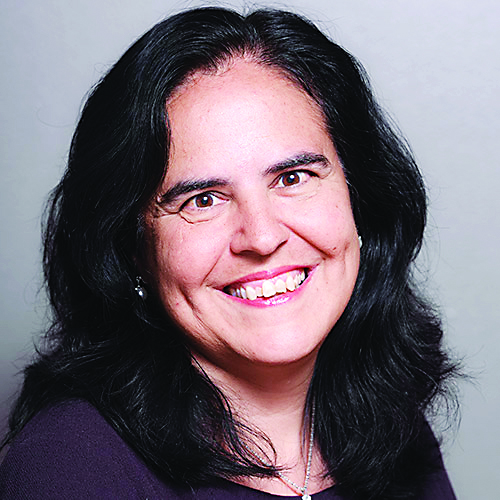
(Lucia A. Silecchia is a Professor of Law at the Catholic University of America.)
All creatures of ordinary times

Lucia Silecchia

ON ORDINARY TIMES
By Lucia Silecchia

Kittens have eyelashes. I distinctly remember the moment I first noticed this. Years ago, a cat welcomed a litter of kittens in my family’s backyard. Happily, they were unafraid of their accidental landlords but had a wide-eyed curiosity about us. As they let me approach them, I saw perfect, nearly invisible, rows of eyelashes above the bright yellow eyes that looked up at me.

I was well beyond the age when this sort of discovery should have struck me so deeply. Yet, it did. There was something about such minute detail on such tiny creatures that overwhelmed me with a sense of creation’s glory – and the far greater glory of the Creator. God had planned every tiny eyelash above every tiny eye on every tiny face of every tiny kitten throughout time.

Often, it can be overwhelming to think directly of the glory of God because it is so far beyond what I can start to comprehend. Indeed, it is also overwhelming to contemplate the great dignity of human persons created in the image and likeness of God. Thus, I am grateful for all the ways in which the more accessible, but often overlooked, everyday miracles of creation show a glimpse of the face of God.

Each autumn, October’s feast day of St. Francis of Assisi turns our attention to the particular way in which the creatures of this world reflect their awesome Creator. In so many churches, blessings of animals take place – perhaps with some trepidation! Household pets are blessed during these days in an expression of gratitude for the ways in which they brighten our ordinary times in so many ways.

Cats will come, with that look of disgruntled ennui that cats wear better than anyone else can. Good-hearted dogs will frolic joyfully at the chance to meet new two and four-footed friends. Fish will slosh around in their bowls when they are carried to church steps and gardens – and it is hard to fathom what they may be thinking as their serene existence is interrupted in this way. Birds will dart around in their cages as they go on this peculiar fieldtrip, and the turtles, toads and lizards will wear the inscrutable looks they always sport. Gerbils and hamsters may nervously burrow in their cages when they discover that they are in a crowd that includes cats and the occasional snake. More exotic and larger animals will be welcomed too, in the hopes that nothing unexpected happens as they assemble.

As people and pets gather in holy places, I hope it will be a chance to think again of the ordinary extraordinariness of the animals who share our world. If I had an eternity, I could never imagine into creation the octopus, the elephant, the starfish or the giraffe – or any of the creatures that dart in the depths of the sea and fill the sky with fluttering. Who but God could conceive of a butterfly, a dolphin, a porcupine or a sea urchin? Yet, they grace my world and for the gifts of them, I am grateful.

Paradoxically, there are circumstances in which it seems as though our animals are treated better than our neighbors are. Conversely, there are other times when animals are treated with cruel neglect and thoughtlessness. Yet, despite these failings in the ways we share our world with others, I hope that this year, our tributes to St. Francis are a time for gratitude.

It is a time for gratitude for the blessed gift of creation, and for the gentle power of God the Creator who brought humanity and all else that lives into creation. It is a time for gratitude for the animals who share our homes, hearths and hearts – and for all those creatures we do not know. Most importantly, it is a time to be grateful to a God who even gives kittens those eyelashes that to this day remind me to be thankful for the smallest of miracles in ordinary times.

(Lucia A. Silecchia is a Professor of Law at the Catholic University of America. “On Ordinary Times” is a biweekly column reflecting on the ways to find the sacred in the simple. Email her at silecchia@cua.edu.)

The elders of ordinary times

Lucia A. Silecchia

ON ORDINARY TIMES
By Lucia A. Silecchia

Late July brings one of my favorite celebrations in the Church year: the July 26 Memorial of Saints Ann and Joachim, the parents of Mary, the Mother of God.

I had some early biases toward this feast. I grew up in a New York parish named for St. Ann. My parents gave me that moniker for my middle name when I was baptized and I took it again when I was confirmed. My family always celebrated our patron saints’ feast days and I was competitively (but uncharitably) pleased that I had two celebrations rather than one because I was the only one of my siblings to be baptized with a middle name.

However, what I liked the most about this celebration was the thought that Christ – God Himself – had grandparents. I remember my own grandparents with much love and joy. These elders of my family were my roots, my heritage and a cherished center of my early life.

Most pictures I see of St. Ann (and the oft-neglected St. Joachim) show her, or them, in their role as parents to Mary. They are often depicted teaching Mary to read, celebrating her presentation or witnessing her wedding. Occasionally, they are added to portraits of the Holy Family, gazing with love and awe from the corner of a painting of their daughter and her family.

Yet, I also like to think of them as the grandparents of God. I wonder whether, in that extraordinary role, they experienced any ordinary times.

When Mary and Joseph were planning to marry, did her parents eagerly anticipate becoming grandparents, as do so many parents-of-the-bride? When Mary told them of the Annunciation, how much did they understand? Was their joy about their grandson mixed with fear? Did they worry, as parents do, when their pregnant daughter traveled to visit her cousin Elizabeth in the “hill country of Judea” or accompany Joseph to Bethlehem while carrying their grandson in her womb? Did they visit their infant grandson at His birth or His presentation and give their daughter, a new mother, advice on caring for Him? Did they ever watch Him play as a toddler and hear His first words or see His first steps? Did they ever make a special food He liked as a treat or tuck Him into bed at night? In those “hidden” years of Christ’s youth, did they watch Him grow in strength and knowledge? Did they ever have the chance to tell Him childhood stories of His mother’s life as a young girl? Did they speak of Him to their friends and pray for Him when they worshipped at the temple?

Were they still living when their daughter feared for her lost 12-year old and rejoiced when He was found? Was their grandson their final thought and last joy when, after their holy lives, they closed their eyes on this world? I will never know. But I do know the importance of grandparents. As parents to our parents, they shape the lives of those who most shape our own. They are so often the link to a distant time, a foreign land and a different life. They are the elders who guard the heritage of a family and who, so often, hold it together in difficult times. When Pope Francis visited Philadelphia in 2015, he said, “Grandparents are a family’s memory. They are the ones who gave us the faith, they passed the faith on to us.”

I am so grateful for the inheritance of faith and memories I received from my own grandparents. I am also so grateful that in the extraordinary way in which Christ dwelt among us, he had the gift of grandparents – one of the greatest blessings of ordinary times.

(Lucia A. Silecchia is a Professor Law at the Catholic University of America. “On Ordinary Times” is a biweekly column reflecting on the ways to find the sacred in the simple. Email her at silecchia@cua.edu.)