
By Katarzyna Szalajko
OBERNDORF, Austria (OSV News) – As Christmas nears and “Silent Night” echoes through churches worldwide, its origins point to hardship rather than holiday calm.
The world’s most famous Christmas carol – “Stille Nacht” in German – was not born in a peaceful, picture-book setting. There was no postcard village, no soft snowfall, no glowing atmosphere.
The beloved carol was first sung on Christmas Eve 1818 in Oberndorf, Austria – a town battered by war, famine and political upheaval after the Napoleonic Wars and a global climate crisis triggered by a volcanic eruption.
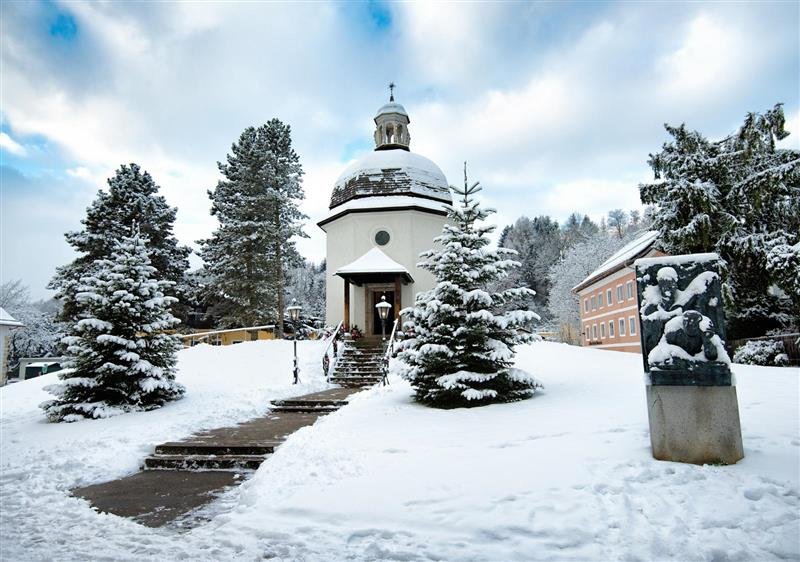
Museum officials say the song emerged from poverty and uncertainty. Its creators, Father Joseph Mohr and schoolteacher Franz Xaver Gruber, both rose from humble beginnings thanks to mentors who recognized their musical gifts.
Mohr’s lyrics speak of God entering a troubled world in quiet humility, while Gruber’s simple melody conveys warmth and hope. “The melody is simple but creates a feeling of warmth and safety,” Martina Knall, a representative of the Stille-Nacht-Museum, said.
“The text speaks of rescue from distress, hope and love – themes that speak to everyone.”
For Father Thomas Kunnappallil, pastor of Oberndorf’s parish since September, said that for him as a priest, “Silent Night” is more than a Christmas song, leading back “to the deep mystery that God does not appear in the splendor and noise of this world, but in the silence of a child who gives peace and hope.”